
Get our latest staff recommendations, award news and digital catalog links right to your inbox.
Published by Wisdom Publications
Distributed by Simon & Schuster
Table of Contents
About The Book
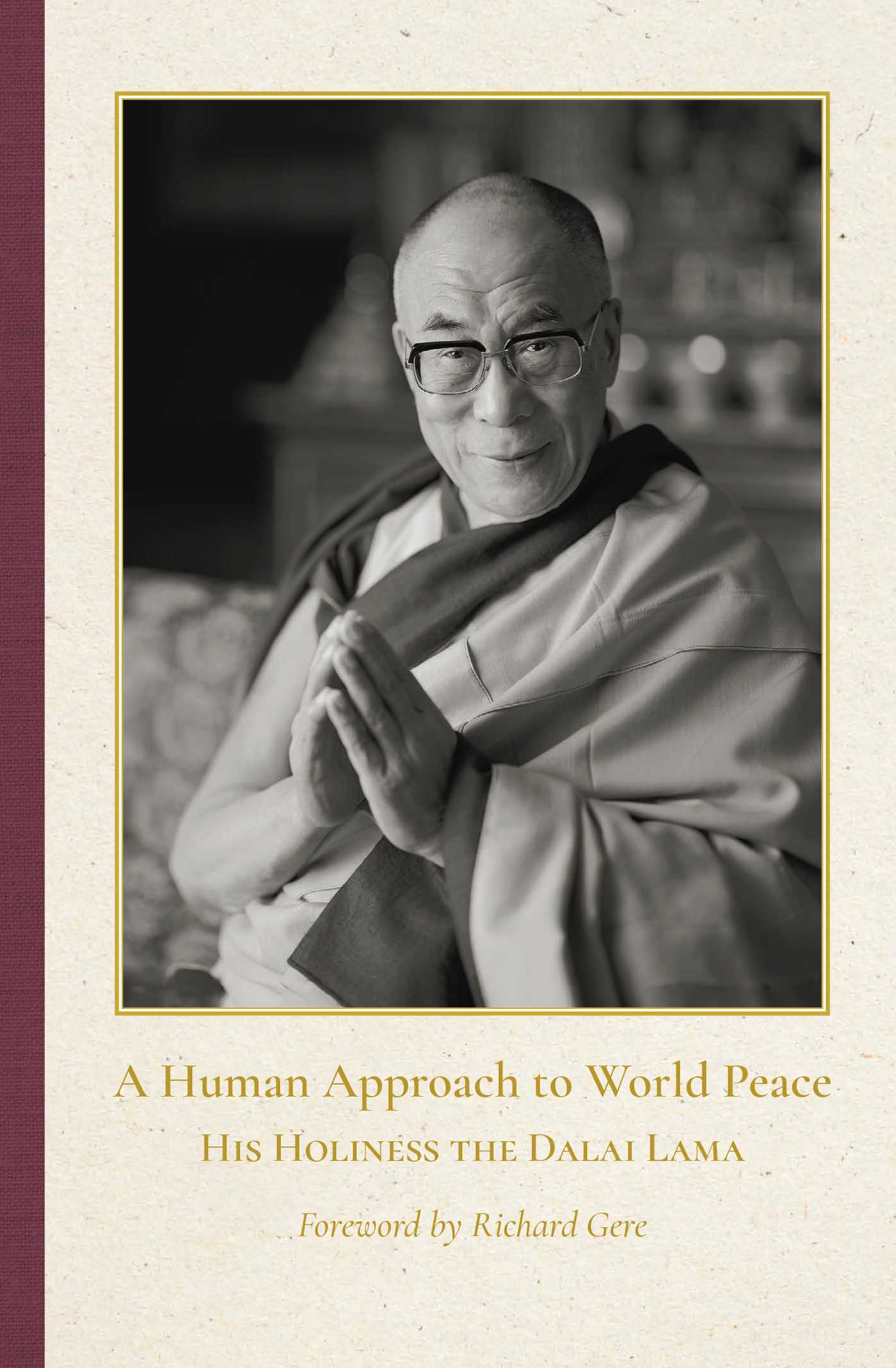
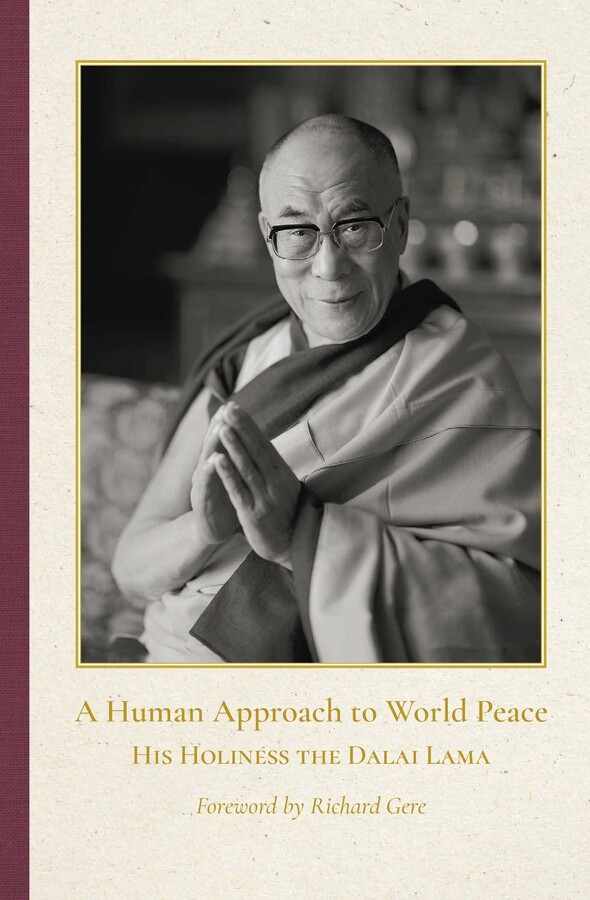
This beautiful keepsake edition of His Holiness’s classic essay is updated and expanded for today’s world, with a new foreword from Richard Gere and beautiful, intimate photographs of His Holiness.
In this moving book His Holiness the Dalai Lama shares his perspective on the urgent question facing the world today: How do we make our societies more humane, just, and equitable?
Created to commemorate the occasion of His Holiness’s ninetieth birthday, this special edition contains fourteen rare and beautiful photographs from throughout his life, taken by world-renowned photographers: Manuel Bauer, Kenro Izu, Richard Gere, Jetsun Pema, Raghu Rai, Herb Ritts, A. T. Steele, Nicky Vreeland , and Sonam Zoksang.
This is a monument to honor a life spent ceaselessly calling for peace and tolerance, as well as a clarion call to all citizens of the world.
As Richard Gere writes in the foreword, “The healing has begun if we want it.”
In this moving book His Holiness the Dalai Lama shares his perspective on the urgent question facing the world today: How do we make our societies more humane, just, and equitable?
Created to commemorate the occasion of His Holiness’s ninetieth birthday, this special edition contains fourteen rare and beautiful photographs from throughout his life, taken by world-renowned photographers: Manuel Bauer, Kenro Izu, Richard Gere, Jetsun Pema, Raghu Rai, Herb Ritts, A. T. Steele, Nicky Vreeland , and Sonam Zoksang.
This is a monument to honor a life spent ceaselessly calling for peace and tolerance, as well as a clarion call to all citizens of the world.
As Richard Gere writes in the foreword, “The healing has begun if we want it.”
Excerpt
Introduction
When we rise in the morning and listen to the radio or read the newspaper, we are confronted with the same sad news: violence, crime, wars, and disasters. I cannot recall a single day without a report of something terrible happening somewhere. Even in these modern times it is clear that one’s precious life is not safe. No former generation has had to experience so much bad news as we face today; this constant awareness of fear and tension should make any sensitive and compassionate person question seriously the progress of our modern world.
It is ironic that the more serious problems emanate from the more industrially advanced societies. Science and technology have worked wonders in many fields, but the basic human problems remain. There is unprecedented literacy, yet this universal education does not seem to have fostered goodness, but only mental restlessness and discontent instead. There is no doubt about the increase in our material progress and technology, but somehow this is not sufficient as we have not yet succeeded in bringing about peace and happiness or in overcoming suffering.
We can only conclude that there must be something seriously wrong with our progress and development, and if we do not check it in time there could be disastrous consequences for the future of humanity. I am not at all against science and technology—they have contributed immensely to the overall experience of humankind: to our material comfort and well-being, and our greater understanding of the world we live in. But if we give too much emphasis to science and technology, we are in danger of losing touch with those aspects of human knowledge and understanding that inspire us toward honesty and altruism.
Science and technology, though capable of creating immeasurable material comfort, cannot replace the age-old spiritual and humanitarian values that have largely shaped world civilization, in all its national forms, as we know it today. No one can deny the unprecedented material benefit of science and technology, but our basic human problems remain; we are still faced with the same, if not more, suffering, fear, and tension. Thus, it is only logical to try to strike a balance between material developments on the one hand and the development of spiritual, human values on the other. In order to bring about this great adjustment, we need to revive our humanitarian values.
When we rise in the morning and listen to the radio or read the newspaper, we are confronted with the same sad news: violence, crime, wars, and disasters. I cannot recall a single day without a report of something terrible happening somewhere. Even in these modern times it is clear that one’s precious life is not safe. No former generation has had to experience so much bad news as we face today; this constant awareness of fear and tension should make any sensitive and compassionate person question seriously the progress of our modern world.
It is ironic that the more serious problems emanate from the more industrially advanced societies. Science and technology have worked wonders in many fields, but the basic human problems remain. There is unprecedented literacy, yet this universal education does not seem to have fostered goodness, but only mental restlessness and discontent instead. There is no doubt about the increase in our material progress and technology, but somehow this is not sufficient as we have not yet succeeded in bringing about peace and happiness or in overcoming suffering.
We can only conclude that there must be something seriously wrong with our progress and development, and if we do not check it in time there could be disastrous consequences for the future of humanity. I am not at all against science and technology—they have contributed immensely to the overall experience of humankind: to our material comfort and well-being, and our greater understanding of the world we live in. But if we give too much emphasis to science and technology, we are in danger of losing touch with those aspects of human knowledge and understanding that inspire us toward honesty and altruism.
Science and technology, though capable of creating immeasurable material comfort, cannot replace the age-old spiritual and humanitarian values that have largely shaped world civilization, in all its national forms, as we know it today. No one can deny the unprecedented material benefit of science and technology, but our basic human problems remain; we are still faced with the same, if not more, suffering, fear, and tension. Thus, it is only logical to try to strike a balance between material developments on the one hand and the development of spiritual, human values on the other. In order to bring about this great adjustment, we need to revive our humanitarian values.
About The Author
His Holiness the Dalai Lama is the spiritual leader of the Tibetan people, a Nobel Peace Prize recipient, and a beacon of inspiration for Buddhists and non-Buddhists alike. He has persistently reached out across religious and political lines and has engaged in dialogue with scientists in his mission to advance peace and understanding in the world. In doing so, he embodies his motto: “My religion is kindness.”
Product Details
- Publisher: Wisdom Publications (February 17, 2026)
- Length: 80 pages
- ISBN13: 9798890700438
Browse Related Books
Resources and Downloads
High Resolution Images
-
Book Cover Image (jpg): A Human Approach to World Peace Special Edition
Special Edition Hardcover 9798890700438
-
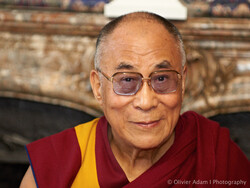
Author Photo (jpg): Dalai Lama
(0.1 MB)
Any use of an author photo must include its respective photo credit
Published by Wisdom Publications
Distributed by Simon & Schuster
Join our mailing list!
By clicking 'Sign me up' I acknowledge that I have read and agree to the privacy policy and terms of use.