
Get our latest staff recommendations, award news and digital catalog links right to your inbox.
Table of Contents
About The Book
Two starred reviews!
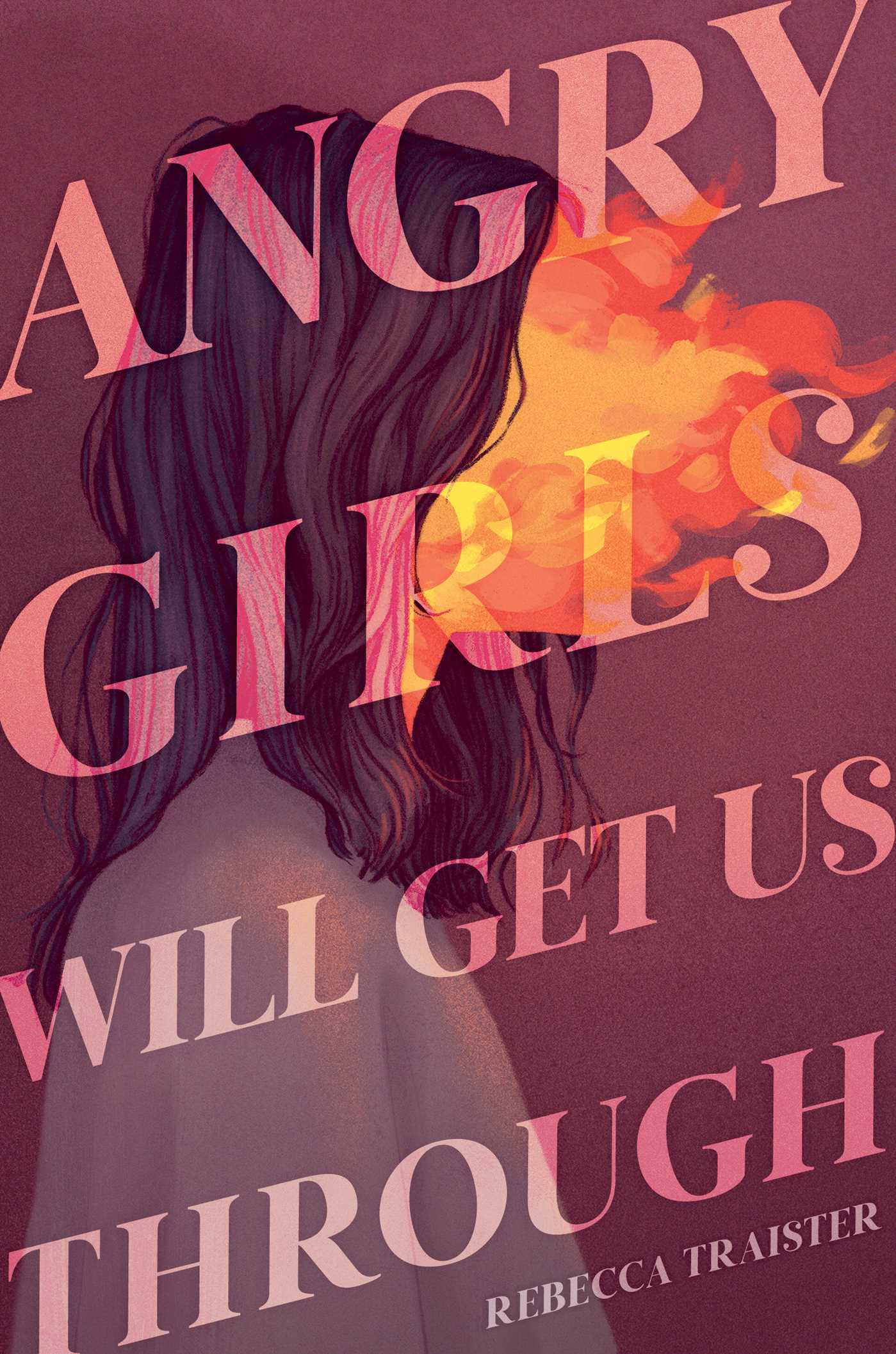
In her “brilliant” (Kirkus Reviews, starred review) first book for young readers, New York Times bestselling author and New York magazine writer-at-large Rebecca Traister draws material from her award-winning books and articles to show girls their anger has the power to be a force of change, just like for many trailblazers before them.
From an early age, young girls are taught that anger isn’t an emotion they should express. They’re told—either implicitly or explicitly—to spend their lives keeping their fury locked inside for the benefit of others. But partly, Traister argues, that’s because the anger of women and girls has been a crucial catalyst for change, putting in motion some of the most defining social and political movements in our nation’s history. And it’s that anger that will blaze the path forward for the future.
Traister chronicles a concise history from the colonial era to the Women’s March of 2016 demonstrating how women’s rage has forged coalitions and created political change through movements for women’s and civil rights and more, and how the past decade has created an inflection point for women and girls who have yet to experience rights equal to men’s in the United States.
In her “brilliant” (Kirkus Reviews, starred review) first book for young readers, New York Times bestselling author and New York magazine writer-at-large Rebecca Traister draws material from her award-winning books and articles to show girls their anger has the power to be a force of change, just like for many trailblazers before them.
From an early age, young girls are taught that anger isn’t an emotion they should express. They’re told—either implicitly or explicitly—to spend their lives keeping their fury locked inside for the benefit of others. But partly, Traister argues, that’s because the anger of women and girls has been a crucial catalyst for change, putting in motion some of the most defining social and political movements in our nation’s history. And it’s that anger that will blaze the path forward for the future.
Traister chronicles a concise history from the colonial era to the Women’s March of 2016 demonstrating how women’s rage has forged coalitions and created political change through movements for women’s and civil rights and more, and how the past decade has created an inflection point for women and girls who have yet to experience rights equal to men’s in the United States.
Excerpt
Chapter 1: Containment of Women • 1 • CONTAINMENT OF WOMEN
For centuries, women have been treated in law and custom as inferior to men, the very men who wrote those laws and enforced those social customs. This would logically make anyone mad. But the furious female is—we are told to this day in countless ways, both subtle and stark—unnatural. She is ugly, emotional, out of control, sick, unhappy, unpleasant to be around, unpersuasive, irrational, crazy, childish. Above all, she must not be heard.
The brank—also known as a scold’s bridle or a witch’s bridle—was a sixteenth-century European torture device used to muzzle a defiant or cranky woman, her head and jaw clamped into a metal cage. Some of the bridles, which were made of iron, included tongue depressors that would be inserted into the woman’s mouth; some of those had spikes on the bottom to pierce the tongues of unruly women should they insist on speaking out of turn. The Tower of London features an internally spiked metal neck collar dating from 1588, labeled a “collar for torture,” but described in guidebooks as a device to be “put around the necks of scolding or wayward wives.”
Despite attempts to physically or otherwise shut them up, angry women have been waging their battle for independence and equality, against politicians, preachers, and the popular press, since well before America’s founding. But some of the earliest, most formative battles were on a smaller, closer scale: at home, pushing back against the institution of marriage. Why? Because women’s oppression was not limited to the public sphere, where they were denied the rights of citizenship—like voting rights—and equal opportunity to work or own property or get an education. Women’s oppression started in, and all those other facets of it were enabled by, one of the smallest units of society: the family.
There was no way to imagine women’s social and political independence if they were not fully free even in their own homes. Marriage laws in colonial America were highly restrictive contracts, which some crusading married women fought to change. There were also women who chose to live singly. These unmarried women were considered pitiable or abnormal, but they were partly responsible for the social and economic upheavals that have made the possibility of independent life for today’s women so much more plausible.
In the early colonial United States, the family was the center of social control. In Plymouth, in the Massachusetts Bay Colony, and in New Haven, in Connecticut, during the seventeenth century, unmarried people were required to live with families that were “well governed” by a churchgoing, land-owning man. Unmarried women were expected to stay home and serve the families with whom they lived and never enter the world in a way that might convey independence.
Keeping women dependent on men—their husbands and fathers and brothers, the kinds of people who at the time could hold jobs, earn money, and own land—was a way of keeping them powerless. Permitting them land gave them some degree of economic autonomy, and even opened up the possibility that they could demand a vote in the communities in which they owned land, so the practice was quickly discouraged.
For example, the town fathers of Salem, Massachusetts, very briefly allowed unmarried women their own property, until the governor amended the oversight by noting that in the future it would be best to avoid “all presedents & evil events of graunting lotts unto single maidens not disposed of.” Because, as historian Alice Kessler-Harris has observed, the possibility of land ownership created a path to existence outside marriage, other colonies “began to recognize that giving land to women undermined their dependent role” and thus took measures to limit the option. In 1634, a bill was introduced to the House of Delegates in Maryland proposing that land owned by a spinster must be forfeited should she fail to marry within seven years. This was just part of how women who were not married, for one reason or another, were shamed socially and punished through policy. The term “spinster” was derived from the word “spinner,” which, since the thirteenth century in Europe, had been used to refer to women, often widows and orphans, who spun cotton, wool, and silk into thread for fabric. By the sixteenth century, spinster referred to unmarried women, many of whom made themselves valuable in households by taking on the ceaseless, thankless work of textile manufacture into old age. In the New World, “spinster” gained a more precise meaning: In colonial times, it indicated an unmarried woman over the age of twenty-three and under the age of twenty-six. At twenty-six, women without spouses became “thornbacks,” a reference to a sea-skate with sharp spines covering its back and tail. It was not a compliment.
Boston bookseller John Dunton wrote in 1686 that “an old (or Superannuated) Maid, in Boston, is thought such a curse as nothing can exceed it, and look’d on as a dismal spectacle.” But in fact, the “dismal spectacle” of unmarried womanhood was quite rare in the colonies. Many more men than women were settlers, creating a high sex ratio, in which men outnumber women, a dynamic that usually results in high marriage rates and low marriage ages. As Benjamin Franklin noted in 1755: “Hence, marriages in America are more general, and more generally early, than in Europe.”
Almost the only kind of woman who might assert individual power was the wealthy widow, afforded social standing since she had been married and was a legal inheritor of money or property, but left without a master. This was rare. Most widows were poor, with no means to support themselves or their children, and lived at the mercy of their communities for help in feeding and housing themselves and their families. Mostly, unmarried women were considered a drain on society and on the families with whom they were forced to find refuge.
The early American attitude toward marriage, and men’s and women’s roles within it, was influenced by the English policy known as coverture, in which a woman’s legal, economic, and social identity was “covered” by the legal, economic, and social identity of the man she married; her identity as a separate person was wiped away the moment she said “I do.” William Blackstone’s Commentaries on the Laws of England interpreted coverture as meaning that “the very being or legal existence of the woman is suspended during the marriage, or at least is incorporated and consolidated into that of the husband: under whose wing, protection, and cover, she performs every thing.… A man cannot grant any thing to his wife, or enter into covenant with her: for the grant would suppose her separate existence; and to covenant with her, would be only to covenant with himself.”
“In its strictly economic aspect the traditional marriage contract resembled” the relationship “between master and servant,” writes historian Nancy Cott. Coverture prevented wives from keeping their own wages, entering into contracts, or suing someone in court, what legal historian Ariela Dubler has called “a stunning array of status-defining legal restrictions.” And while scholars have shown that many women in Europe and the New World found ways to act independently, both within their homes and in the outside world, the foundational unfairness of marriage laws made it a tough battle. For women who escaped marriage and coverture, there were other roadblocks to thriving. There were only a few poorly paid professions at which they could earn a meager wage; they might be midwives, seamstresses, caretakers, governesses, or tutors, all jobs that mirrored broader ideas about women’s nature as nurturers.
The colonies’ violent break from England, the American Revolution, on which the nation was officially founded, complicated gender relations. For one thing, it drained households of their able-bodied men, who fought the British in the 1770s, the 1780s, and in the War of 1812. These conflicts, followed by an era of exploration, which would draw men west and leave tens of thousands of women back east, scrambled sex ratios across the country, with disproportionately high numbers of women on the East Coast and disproportionately high numbers of men in the West.
But the rethinking of women’s relationship to marriage wasn’t just about numbers. The end of the eighteenth century was a time of political instability; the War of American Independence was followed by the French Revolution, which helped spawn the Saint-Domingue revolution that freed enslaved people and established the Republic of Haiti in 1804. Power structures were crumbling under the weight of ideas about liberty, personal freedom, and representation in this period known as the Enlightenment. In England, author Mary Wollstonecraft challenged the French philosopher Jean-Jacques Rousseau’s vision of women as submissive to their husbands and instead pushed for female education and independence. She angrily declared war in 1792’s A Vindication of the Rights of Woman on “the sensibility that led [Rousseau] to degrade woman by making her the slave of love.”
Women were angry at the laws and customs that boxed them in. The language of freedom and equality that fired the Revolution “provided the women’s rights movement with its earliest vocabulary,” historian Mary Beth Norton argues. Lee Virginia Chambers-Schiller describes how “beginning in about 1780 women in the middle and upper classes… manifested a dramatic new form of female independence. In increasing numbers, the daughters of northeastern manufacturers, merchants, farmers, and ‘poor professionals’ rejected the ‘tie that binds’?”: marriage.
All Men Would Be Tyrants
Married and single, women began to use revolutionary rhetoric to push for their own rights.
In the spring of 1776, Abigail Adams wrote a letter to her husband John in which she warned, “Do not put such unlimited power into the hands of the husbands.” John would become America’s first vice president and its second president, and in that 1776 note, Abigail cautioned him that women denied equal rights and opportunities would ultimately rise up, just as had the male colonists who birthed this nation over their ire at being taxed and policed without government representation. “Remember all men would be tyrants if they could,” Abigail noted sharply. “If particular care and attention is not paid to the ladies, we are determined to foment a rebellion.” Abigail was purposely using language that mirrored that of her husband’s revolutionary rhetoric: In the period in which she was writing to him, the “tyrant” was King George of England, against whom the colonists were fomenting a “rebellion” that was a war that formed this nation. Her assertions extended beyond the domestic: They were pointed and political. And yet, in the founding documents of the new nation, the revolutionary white men had promptly codified into law precisely the kinds of inequalities that they had so furiously fought; they built their country out of a genocide of its native inhabitants, the enslavement of African Americans, the denial of the vote and full economic, legal, and social equality to women.
The notion of individual liberty during the revolutionary era was sharply at odds with the limitations put on some of America’s inhabitants by marriage and by slavery. Marriage and slavery were not equivalent practices. Enslaved people were treated as chattel, counted in the Constitution as three-fifths human; they could be purchased and sold and had no freedom, no rights over their own bodies. Marriage, while a contract by which women lost rights and identities, was one that free people, acknowledged as human beings, officially entered into of their own choice (though any number of economic, family, or community pressures may have pushed them into choosing marriage). Through marriage, wives gained economic advantage, the rights of inheritance; they also enjoyed social and religious approval and an increase in status.
But the similarities between slave and marital law show how political, social, and sexual power over a population can be enforced by both urging marriage and by forbidding it, as well as how systems of racism and sexism doubly oppressed Black women. In the United States in the years before the Civil War, marriages between enslaved people were not legal, which both prevented the formation of legally sanctioned unions and allowed slavers to have sexual relations with people they enslaved without violating a marital bond. Conversely, some slave owners forced enslaved people into unwanted marriages, perhaps to produce more enslaved children or to cement family ties that might discourage escape. “[W]hen they could not marry whom they chose under circumstances of their own choosing, some enslaved people chose not to marry at all,” historian Frances Smith-Foster writes, citing Harriet Jacobs, an enslaved woman who, prevented from marrying the free man she loved and told to choose a husband from among other men her owner enslaved, asked, “Don’t you suppose, sir, that a slave can have some preference about marrying?”
Of course, enslaved women and men fell in love, married on their own terms, and created loving families all the time. But those families often were separated by sale; women and girls were forced to bear children by their owners and their owners’ sons. Control over women’s marital and reproductive lives was one of the surest ways to suppress their power.
And yet, despite tremendous risk, some enslaved women found ways to protest their treatment, and ultimately to free themselves and others using the very tools created by America’s founders. Elizabeth Freeman, known then as Mum Bett, was born into slavery in upstate New York around 1744. When she was just seven years old, she was torn away from her parents and sent to serve in the household of their owner’s daughter in Massachusetts, who was said to be particularly vicious and violent. The master of the house was less cruel, but Freeman understood that whether kind or abusive, no human should enslave another. “Any time while I was a slave, if one minute’s freedom had been offered to me, and I had been told I must die at the end of that minute I would have taken it—just to stand one minute on God’s earth a free woman—I would.”
She grabbed her opportunity at freedom after she happened to hear a reading of the revolutionary rhetoric of the Declaration of Independence. In angry response to abuses she suffered at the hands of the people who enslaved her, including being hit with hot kitchen tools, she used the principles of the Declaration to petition for her freedom. The next day she went to the office of a local attorney, Theodore Sedgwick, and said, “I heard that paper read yesterday, that says, ‘all men are born equal,’ and that every man has the right to freedom. I am not a dumb critter; won’t the law give me my freedom?” Sedgwick filed a lawsuit on Freeman’s behalf, which she won. Her case was among those that would become the basis for the abolition of slavery in Massachusetts several years later. It was a demonstration of how outrage at injustice could in time spark the reform of law and policy.
For centuries, women have been treated in law and custom as inferior to men, the very men who wrote those laws and enforced those social customs. This would logically make anyone mad. But the furious female is—we are told to this day in countless ways, both subtle and stark—unnatural. She is ugly, emotional, out of control, sick, unhappy, unpleasant to be around, unpersuasive, irrational, crazy, childish. Above all, she must not be heard.
The brank—also known as a scold’s bridle or a witch’s bridle—was a sixteenth-century European torture device used to muzzle a defiant or cranky woman, her head and jaw clamped into a metal cage. Some of the bridles, which were made of iron, included tongue depressors that would be inserted into the woman’s mouth; some of those had spikes on the bottom to pierce the tongues of unruly women should they insist on speaking out of turn. The Tower of London features an internally spiked metal neck collar dating from 1588, labeled a “collar for torture,” but described in guidebooks as a device to be “put around the necks of scolding or wayward wives.”
Despite attempts to physically or otherwise shut them up, angry women have been waging their battle for independence and equality, against politicians, preachers, and the popular press, since well before America’s founding. But some of the earliest, most formative battles were on a smaller, closer scale: at home, pushing back against the institution of marriage. Why? Because women’s oppression was not limited to the public sphere, where they were denied the rights of citizenship—like voting rights—and equal opportunity to work or own property or get an education. Women’s oppression started in, and all those other facets of it were enabled by, one of the smallest units of society: the family.
There was no way to imagine women’s social and political independence if they were not fully free even in their own homes. Marriage laws in colonial America were highly restrictive contracts, which some crusading married women fought to change. There were also women who chose to live singly. These unmarried women were considered pitiable or abnormal, but they were partly responsible for the social and economic upheavals that have made the possibility of independent life for today’s women so much more plausible.
In the early colonial United States, the family was the center of social control. In Plymouth, in the Massachusetts Bay Colony, and in New Haven, in Connecticut, during the seventeenth century, unmarried people were required to live with families that were “well governed” by a churchgoing, land-owning man. Unmarried women were expected to stay home and serve the families with whom they lived and never enter the world in a way that might convey independence.
Keeping women dependent on men—their husbands and fathers and brothers, the kinds of people who at the time could hold jobs, earn money, and own land—was a way of keeping them powerless. Permitting them land gave them some degree of economic autonomy, and even opened up the possibility that they could demand a vote in the communities in which they owned land, so the practice was quickly discouraged.
For example, the town fathers of Salem, Massachusetts, very briefly allowed unmarried women their own property, until the governor amended the oversight by noting that in the future it would be best to avoid “all presedents & evil events of graunting lotts unto single maidens not disposed of.” Because, as historian Alice Kessler-Harris has observed, the possibility of land ownership created a path to existence outside marriage, other colonies “began to recognize that giving land to women undermined their dependent role” and thus took measures to limit the option. In 1634, a bill was introduced to the House of Delegates in Maryland proposing that land owned by a spinster must be forfeited should she fail to marry within seven years. This was just part of how women who were not married, for one reason or another, were shamed socially and punished through policy. The term “spinster” was derived from the word “spinner,” which, since the thirteenth century in Europe, had been used to refer to women, often widows and orphans, who spun cotton, wool, and silk into thread for fabric. By the sixteenth century, spinster referred to unmarried women, many of whom made themselves valuable in households by taking on the ceaseless, thankless work of textile manufacture into old age. In the New World, “spinster” gained a more precise meaning: In colonial times, it indicated an unmarried woman over the age of twenty-three and under the age of twenty-six. At twenty-six, women without spouses became “thornbacks,” a reference to a sea-skate with sharp spines covering its back and tail. It was not a compliment.
Boston bookseller John Dunton wrote in 1686 that “an old (or Superannuated) Maid, in Boston, is thought such a curse as nothing can exceed it, and look’d on as a dismal spectacle.” But in fact, the “dismal spectacle” of unmarried womanhood was quite rare in the colonies. Many more men than women were settlers, creating a high sex ratio, in which men outnumber women, a dynamic that usually results in high marriage rates and low marriage ages. As Benjamin Franklin noted in 1755: “Hence, marriages in America are more general, and more generally early, than in Europe.”
Almost the only kind of woman who might assert individual power was the wealthy widow, afforded social standing since she had been married and was a legal inheritor of money or property, but left without a master. This was rare. Most widows were poor, with no means to support themselves or their children, and lived at the mercy of their communities for help in feeding and housing themselves and their families. Mostly, unmarried women were considered a drain on society and on the families with whom they were forced to find refuge.
The early American attitude toward marriage, and men’s and women’s roles within it, was influenced by the English policy known as coverture, in which a woman’s legal, economic, and social identity was “covered” by the legal, economic, and social identity of the man she married; her identity as a separate person was wiped away the moment she said “I do.” William Blackstone’s Commentaries on the Laws of England interpreted coverture as meaning that “the very being or legal existence of the woman is suspended during the marriage, or at least is incorporated and consolidated into that of the husband: under whose wing, protection, and cover, she performs every thing.… A man cannot grant any thing to his wife, or enter into covenant with her: for the grant would suppose her separate existence; and to covenant with her, would be only to covenant with himself.”
“In its strictly economic aspect the traditional marriage contract resembled” the relationship “between master and servant,” writes historian Nancy Cott. Coverture prevented wives from keeping their own wages, entering into contracts, or suing someone in court, what legal historian Ariela Dubler has called “a stunning array of status-defining legal restrictions.” And while scholars have shown that many women in Europe and the New World found ways to act independently, both within their homes and in the outside world, the foundational unfairness of marriage laws made it a tough battle. For women who escaped marriage and coverture, there were other roadblocks to thriving. There were only a few poorly paid professions at which they could earn a meager wage; they might be midwives, seamstresses, caretakers, governesses, or tutors, all jobs that mirrored broader ideas about women’s nature as nurturers.
The colonies’ violent break from England, the American Revolution, on which the nation was officially founded, complicated gender relations. For one thing, it drained households of their able-bodied men, who fought the British in the 1770s, the 1780s, and in the War of 1812. These conflicts, followed by an era of exploration, which would draw men west and leave tens of thousands of women back east, scrambled sex ratios across the country, with disproportionately high numbers of women on the East Coast and disproportionately high numbers of men in the West.
But the rethinking of women’s relationship to marriage wasn’t just about numbers. The end of the eighteenth century was a time of political instability; the War of American Independence was followed by the French Revolution, which helped spawn the Saint-Domingue revolution that freed enslaved people and established the Republic of Haiti in 1804. Power structures were crumbling under the weight of ideas about liberty, personal freedom, and representation in this period known as the Enlightenment. In England, author Mary Wollstonecraft challenged the French philosopher Jean-Jacques Rousseau’s vision of women as submissive to their husbands and instead pushed for female education and independence. She angrily declared war in 1792’s A Vindication of the Rights of Woman on “the sensibility that led [Rousseau] to degrade woman by making her the slave of love.”
Women were angry at the laws and customs that boxed them in. The language of freedom and equality that fired the Revolution “provided the women’s rights movement with its earliest vocabulary,” historian Mary Beth Norton argues. Lee Virginia Chambers-Schiller describes how “beginning in about 1780 women in the middle and upper classes… manifested a dramatic new form of female independence. In increasing numbers, the daughters of northeastern manufacturers, merchants, farmers, and ‘poor professionals’ rejected the ‘tie that binds’?”: marriage.
All Men Would Be Tyrants
Married and single, women began to use revolutionary rhetoric to push for their own rights.
In the spring of 1776, Abigail Adams wrote a letter to her husband John in which she warned, “Do not put such unlimited power into the hands of the husbands.” John would become America’s first vice president and its second president, and in that 1776 note, Abigail cautioned him that women denied equal rights and opportunities would ultimately rise up, just as had the male colonists who birthed this nation over their ire at being taxed and policed without government representation. “Remember all men would be tyrants if they could,” Abigail noted sharply. “If particular care and attention is not paid to the ladies, we are determined to foment a rebellion.” Abigail was purposely using language that mirrored that of her husband’s revolutionary rhetoric: In the period in which she was writing to him, the “tyrant” was King George of England, against whom the colonists were fomenting a “rebellion” that was a war that formed this nation. Her assertions extended beyond the domestic: They were pointed and political. And yet, in the founding documents of the new nation, the revolutionary white men had promptly codified into law precisely the kinds of inequalities that they had so furiously fought; they built their country out of a genocide of its native inhabitants, the enslavement of African Americans, the denial of the vote and full economic, legal, and social equality to women.
The notion of individual liberty during the revolutionary era was sharply at odds with the limitations put on some of America’s inhabitants by marriage and by slavery. Marriage and slavery were not equivalent practices. Enslaved people were treated as chattel, counted in the Constitution as three-fifths human; they could be purchased and sold and had no freedom, no rights over their own bodies. Marriage, while a contract by which women lost rights and identities, was one that free people, acknowledged as human beings, officially entered into of their own choice (though any number of economic, family, or community pressures may have pushed them into choosing marriage). Through marriage, wives gained economic advantage, the rights of inheritance; they also enjoyed social and religious approval and an increase in status.
But the similarities between slave and marital law show how political, social, and sexual power over a population can be enforced by both urging marriage and by forbidding it, as well as how systems of racism and sexism doubly oppressed Black women. In the United States in the years before the Civil War, marriages between enslaved people were not legal, which both prevented the formation of legally sanctioned unions and allowed slavers to have sexual relations with people they enslaved without violating a marital bond. Conversely, some slave owners forced enslaved people into unwanted marriages, perhaps to produce more enslaved children or to cement family ties that might discourage escape. “[W]hen they could not marry whom they chose under circumstances of their own choosing, some enslaved people chose not to marry at all,” historian Frances Smith-Foster writes, citing Harriet Jacobs, an enslaved woman who, prevented from marrying the free man she loved and told to choose a husband from among other men her owner enslaved, asked, “Don’t you suppose, sir, that a slave can have some preference about marrying?”
Of course, enslaved women and men fell in love, married on their own terms, and created loving families all the time. But those families often were separated by sale; women and girls were forced to bear children by their owners and their owners’ sons. Control over women’s marital and reproductive lives was one of the surest ways to suppress their power.
And yet, despite tremendous risk, some enslaved women found ways to protest their treatment, and ultimately to free themselves and others using the very tools created by America’s founders. Elizabeth Freeman, known then as Mum Bett, was born into slavery in upstate New York around 1744. When she was just seven years old, she was torn away from her parents and sent to serve in the household of their owner’s daughter in Massachusetts, who was said to be particularly vicious and violent. The master of the house was less cruel, but Freeman understood that whether kind or abusive, no human should enslave another. “Any time while I was a slave, if one minute’s freedom had been offered to me, and I had been told I must die at the end of that minute I would have taken it—just to stand one minute on God’s earth a free woman—I would.”
She grabbed her opportunity at freedom after she happened to hear a reading of the revolutionary rhetoric of the Declaration of Independence. In angry response to abuses she suffered at the hands of the people who enslaved her, including being hit with hot kitchen tools, she used the principles of the Declaration to petition for her freedom. The next day she went to the office of a local attorney, Theodore Sedgwick, and said, “I heard that paper read yesterday, that says, ‘all men are born equal,’ and that every man has the right to freedom. I am not a dumb critter; won’t the law give me my freedom?” Sedgwick filed a lawsuit on Freeman’s behalf, which she won. Her case was among those that would become the basis for the abolition of slavery in Massachusetts several years later. It was a demonstration of how outrage at injustice could in time spark the reform of law and policy.
About The Author
Photograph © Victoria Stevens
Rebecca Traister is writer at large for New York magazine and a contributing editor at Elle. A National Magazine Award finalist, she has written about women in politics, media, and entertainment from a feminist perspective for The New Republic and Salon and has also contributed to The Nation, The New York Observer, The New York Times, The Washington Post, Vogue, Glamour, and Marie Claire. She is the author of Good and Mad, All the Single Ladies and the award-winning Big Girls Don’t Cry. She lives in New York with her family.
Product Details
- Publisher: Simon & Schuster Books for Young Readers (February 17, 2026)
- Length: 240 pages
- ISBN13: 9781665943352
- Grades: 5 - 7
- Ages: 10 - 12
Browse Related Books
Raves and Reviews
"This book is comprehensive, engaging, and motivating... A brilliant overview of essential history."
– Kirkus Reviews, STARRED REVIEW
Resources and Downloads
High Resolution Images
-
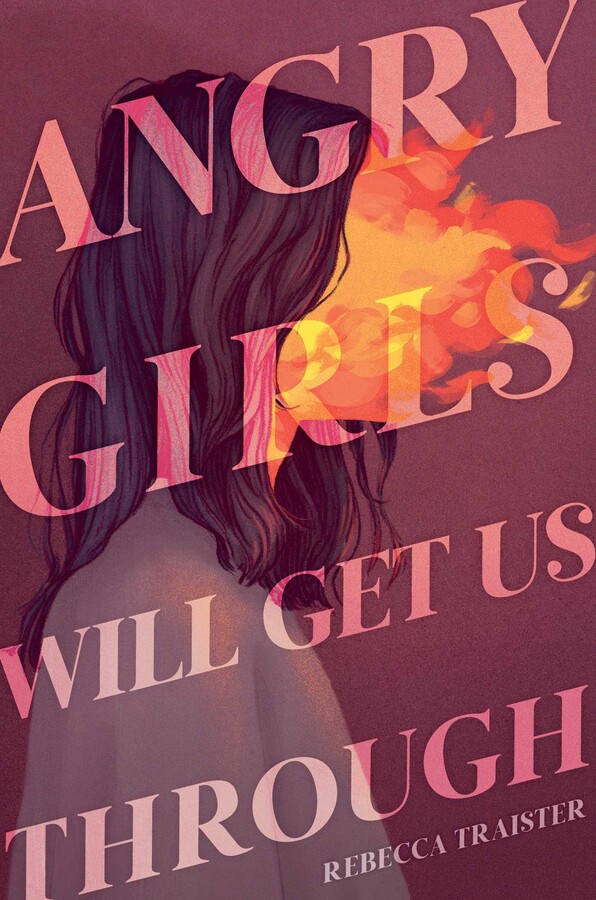
Book Cover Image (jpg): Angry Girls Will Get Us Through
Hardcover 9781665943352
-
Author Photo (jpg): Rebecca Traister Photograph © Victoria Stevens(0.1 MB)
Any use of an author photo must include its respective photo credit
Join our mailing list!
By clicking 'Sign me up' I acknowledge that I have read and agree to the privacy policy and terms of use.