Get our latest staff recommendations, award news and digital catalog links right to your inbox.
Table of Contents
About The Book
Read by the author with appearances from family and friends. The program also features bonus commentary and clips from her wildly popular podcast, For The Love.
NAMED A BEST BOOK OF THE YEAR BY THE NEW YORK TIMES, OPRAH DAILY, GOODREADS, KIRKUS REVIEWS, AND MORE
A NEW YORK TIMES BESTSELLER
“I can’t imagine any woman reading this without feeling seen, inspired, and totally empowered.” —Mel Robbins, #1 New York Times bestselling author
“A MASTERPIECE, you guys. This memoir by the great Jen Hatmaker *cannot* be missed. I was riveted as if to a thriller and touched/moved/inspired in ways I can’t quite articulate yet. Just please read. You’ll thank me.” —Elin Hilderbrand
From Jen Hatmaker—beloved New York Times bestselling author and host of the For the Love podcast—a brutally honest, funny, and revealing memoir about the traumatic end of her twenty-six-year-long marriage, and the beginning of a different kind of love story.
At 2:30 a.m. on July 11, 2020, Jen Hatmaker woke up to her husband of twenty-six years whispering into his phone to another woman from their bed. It was the end of life as she knew it. In the months that followed, she went from being a shiny, funny, popular leader to a divorced wreck on antidepressants and antianxiety meds, parenting five kids alone with no clue about the functioning of her own bank accounts. Having led millions of women for over a decade—urging them to embrace authenticity, find radical agency, and create healthy relationship—she felt like a catastrophic failure.
In Awake, Jen shares for the first time what happened when she found herself completely lost at sea—and how she made it to shore. In candid, surprisingly funny vignettes spanning forty years of girlhood, marriage, and parenting, Jen lays bare the disorienting upheaval of midlife—the implosion of a marriage, the unraveling of religious and cultural systems, and the grief that accompanies change you didn’t ask for. And, drawing on all resources—from without and within—Jen dares to question the systems beneath the whole house of cards, and to reckon with the myths, half-truths, and lies that brought her to this point.
More than one woman’s story, Awake is a critical analysis of the story given to all of us: the story of gender limitations, religious subservience, body shame, self-erasure. With refreshing candor, Jen explores a midlife renaissance—grieving what’s lost, cherishing possibility, and entering the second half of life wide awake.
NAMED A BEST BOOK OF THE YEAR BY THE NEW YORK TIMES, OPRAH DAILY, GOODREADS, KIRKUS REVIEWS, AND MORE
A NEW YORK TIMES BESTSELLER
“I can’t imagine any woman reading this without feeling seen, inspired, and totally empowered.” —Mel Robbins, #1 New York Times bestselling author
“A MASTERPIECE, you guys. This memoir by the great Jen Hatmaker *cannot* be missed. I was riveted as if to a thriller and touched/moved/inspired in ways I can’t quite articulate yet. Just please read. You’ll thank me.” —Elin Hilderbrand
From Jen Hatmaker—beloved New York Times bestselling author and host of the For the Love podcast—a brutally honest, funny, and revealing memoir about the traumatic end of her twenty-six-year-long marriage, and the beginning of a different kind of love story.
At 2:30 a.m. on July 11, 2020, Jen Hatmaker woke up to her husband of twenty-six years whispering into his phone to another woman from their bed. It was the end of life as she knew it. In the months that followed, she went from being a shiny, funny, popular leader to a divorced wreck on antidepressants and antianxiety meds, parenting five kids alone with no clue about the functioning of her own bank accounts. Having led millions of women for over a decade—urging them to embrace authenticity, find radical agency, and create healthy relationship—she felt like a catastrophic failure.
In Awake, Jen shares for the first time what happened when she found herself completely lost at sea—and how she made it to shore. In candid, surprisingly funny vignettes spanning forty years of girlhood, marriage, and parenting, Jen lays bare the disorienting upheaval of midlife—the implosion of a marriage, the unraveling of religious and cultural systems, and the grief that accompanies change you didn’t ask for. And, drawing on all resources—from without and within—Jen dares to question the systems beneath the whole house of cards, and to reckon with the myths, half-truths, and lies that brought her to this point.
More than one woman’s story, Awake is a critical analysis of the story given to all of us: the story of gender limitations, religious subservience, body shame, self-erasure. With refreshing candor, Jen explores a midlife renaissance—grieving what’s lost, cherishing possibility, and entering the second half of life wide awake.
Reading Group Guide
Join our mailing list! Get our latest staff recommendations, award news and digital catalog links right to your inbox.
By clicking 'Sign me up' I acknowledge that I have read and agree to the privacy policy and terms of use.
This reading group guide for Awake includes an introduction, discussion questions, ideas for enhancing your book club, and a Q&A with author Jen Hatmaker. The suggested questions are intended to help your reading group find new and interesting angles and topics for your discussion. We hope that these ideas will enrich your conversation and increase your enjoyment of the book.
Introduction
At 2:30 a.m. on July 11th, 2020, Jen Hatmaker woke up to her husband of twenty-six years whispering in his phone to another woman from their bed. It was the end of life as she knew it. In the months that followed, she went from being a shiny, funny, popular leader, to a divorced wreck on antidepressants and anti-anxiety meds parenting five kids alone with no clue about her own bank accounts. Having led millions of women for over a decade—urging them to embrace authenticity, find radical agency, and create healthy relationships—this seemed nothing less than total failure.
In Awake, Jen shares for the first time what happened when she found herself completely lost at sea—and how she made it to shore. In candid, surprisingly funny vignettes spanning forty years of girlhood, marriage, and parenting, Jen lays bare the disorienting upheaval of midlife—the implosion of a marriage, the unraveling of religious and cultural systems, and the grief that accompanies change you didn’t ask for. And, drawing on all her resources—from without and from within—Jen dares to question the systems beneath the whole house of cards, and to reckon with the myths, half-truths, and lies that brought her to this point.
More than one woman’s story, Awake is a critical analysis of the story given to all of us: the story of gender limitations, religious subservience, body shame, self-erasure. With refreshing candor, Jen explores a Midlife Renaissance—grieving what’s lost, cherishing possibility, and entering the second half of life wide awake.
Topics & Questions for Discussion
1. Jen Hatmaker begins Awake with the moment she knew her marriage was over. Why do you think she chose to open this way? What feelings did that choice bring up for you?
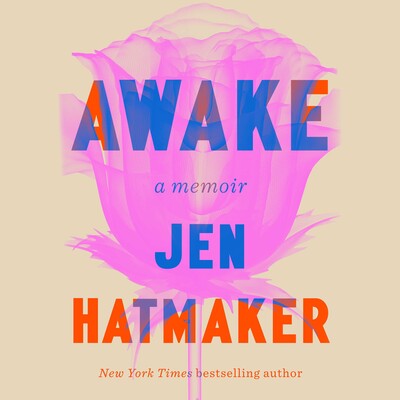
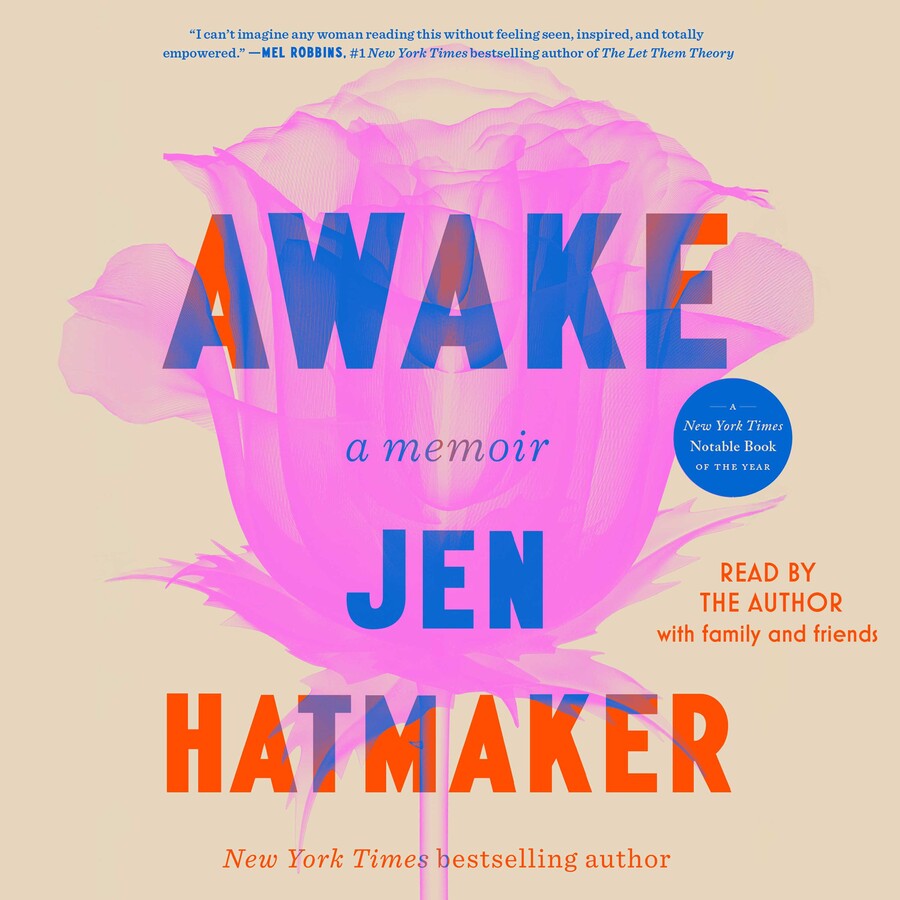
2. In the second chapter, “Dead Rose,” Jen takes us back to her freshmen year of high school. How does the content here reverberate throughout the rest of the book—including the cover? If you grew up immersed in a similar religious environment, does Jen’s experience resonate with you?
3. On page 28, Jen lists some potential “hidden corners” of a person’s life. Can you think of any other possible “hidden corners”? Have you or someone you loved ever confronted any “hidden corners”? What was that experience like?
4. Think back to the snapshots of her childhood and young adulthood that Jen features in Awake, from the county fair anecdote to her time at Falls Creek. Are there any motifs to the stories she incorporates? What do they tell us about Jen’s life and worldview?
5. Do you think Awake has any villains? If so, who? And if not, what might that say about how Jen has told the story? Is there anyone you wanted more of on the page?
6. Awake features many loving acts of Jen’s sprawling community. From booking Jen her first energetic body healing session to building her a porch swing bed, what is your favorite gesture? If you were in Jen’s position, how would you want your support system to show up for you?
7. The vignettes in Awake are relatively short, and Jen sprinkles poems and lyrics throughout. How did you feel about this departure from a more standard prose memoir? What is your favorite extract?
8. The structure of this memoir is not at all conventional. Why do you think Jen chose to order the sections “The End,” The Middle,” “The Beginning”? If you had to choose just one epiphany from each section, what would it be?
9. In the chapter “Jenna,” Jen writes how her father got in trouble for having a woman teach Sunday school, which is forbidden according to Southern Baptist theology. Hearing this, “a key quietly turns a lock on an internal door and it cracks open” (103). Can you identify other similar moments in Awake that allowed Jen to access a new part of herself? What are some moments like this in your own life?
10. What adjectives would you use to describe Jen? In what ways does she grow and change by the book’s end?
11. What were your favorite lines or scenes from the memoir? Did any make you laugh? What about cry?
12. What will you take away from Awake?
Enhance Your Book Club
1. As a group, come up with a list of other memoirs that deal with divorce and coming into one’s own in midlife, and discuss how these selections differ from or are similar to Awake.
2. Take inspiration from Jen and plan your dream “Me Camp” vacation. Where would you go, and what would you prioritize?
3. Cast the Awake movie or miniseries: Choose your top picks for the main roles, and make a case to the larger group about who would best embody each character.
A Conversation with Jen Hatmaker
You’ve written fourteen previous books—could you tell us about the ways in which Awake felt similar or different to those previous projects?
Awake is different from any book I’ve ever written in basically every way. I wrote it through vignettes and memories in real time without much commentary. My publishing history typically involves me writing long chapters about a solitary idea, drawing all the conclusions, then handing them to my readers on a silver platter: “Here is what we think about this. I’ve done all the work for us.” But in Awake, I rarely offer wisdom in hindsight or even conclusions. I just tell the small moments and leave the rest up to the readers. I trust them to take what they need, answer their own questions, and light their own path. Also, I have never in my life written such tender, vulnerable things. I still can hardly believe I did it.
Your Author’s Note could have been just a brief disclaimer, but you chose to leave readers with a longer reflection on story and perspective before they began Awake. Why?
I hope it will become obvious to my readers, but telling a hard story that involves so many other people is daunting, and I tried to take great care with that responsibility. It felt crucial to recognize that a memoir is one person’s experience, and anyone else in the story would tell it a little differently. It was profoundly important for me to be self-aware and honest. I didn’t want this book to be a trope. Life isn’t that tidy, and the end of any marriage is complex. My North Star is always: “Will I be proud of this in ten years?” That question alone kept my delete button in good working order when I wrote Awake.
What was your day-to-day writing process like for Awake?
I started writing Awake long before I had a contract. It felt imperative to write it without the pressure of a deadline. I simply couldn’t write this story in a rush. I needed the whole process to belong to me: on my terms, at my pace, at my discretion. The front half was so hard to write, and I wanted all the time I needed. So by the time we sent out the proposal to publishers, I had over half of it written. That made Awake, in some ways, a less stressful writing process, which was helpful, because it is the hardest material I’ve ever written. I wrote a huge chunk of it at Me Camp 2024 in South Haven, Michigan, which readers will recognize at the beginning of Part Three. (That, by the way, was my favorite vignette grouping to write in the whole book.)
Though you share a lot of your life on social media, writing a memoir seems like deeper, more exposing work. Was it scary to get vulnerable in that way?
Oh my gosh, I didn’t sleep for a year. My friends will tell you I HOUNDED them upon every reading for their feedback: Did I share too much? Was it gratuitous? Was I fair? Can I admit that? I actually have no idea how readers will respond. Before I started writing, my agent Margaret told me: “Save nothing for the swim home.” I wrote my story all the way out to the middle of the ocean. Scariest thing I’ve ever done.
A large part of your journey in Awake is getting back in touch with your body as someone who had been a historically cerebral internal processor. What was it like translating that feeling of embodied-ness into words?
I had no idea how to describe it! I wrote and rewrote those sections, because the experiences were so new. On any retelling, it becomes clear what areas of your life are still in process, and embodiment is certainly in that category. It is so challenging to make peace with your body after four decades of waging war against it. But my body was my truest source of wisdom over the course of this memoir, and it was important to honor her. My body led me through trauma, grief, and recovery when my mind was still locked in a poisonous loop. I’ll never abandon her again.
As you were developing and writing Awake, did you reach for any books or other media for inspiration?
For better or worse, I don’t read other adjacent books while I am writing, particularly when I am as far outside my comfort zone as this one. My approach is to write without self-editing, and looking to other books for structure or tone or language is a version of self-editing. It is erasing my own voice or instincts in favor of what has already proven successful. I knew I needed to write Awake exactly in my own way, whether or not that had any precedence in the genre. Going back to my North Star (“Will I be proud of this in ten years?”), the only way to stay in integrity was to follow every single one of my own instincts without outside influence.
How did you choose the epigraph? What does it mean to you?
Rupi Kaur’s quote was essentially my thesis for telling the whole world the hardest story of my life, an impulse most people don’t have. Namely, that my heart will tell me how to heal, and that writing has always been my healing path. Is that right for everyone? Clearly not. But for whatever reason, when Divine Love handed out assignments, mine was writing; not just for readers but for me. This is how I make sense of the world. This is how I process. This is how I heal. And this is how I serve. So when my heart said “write the book,” I listened.
If you could update the chapter “Moments I Felt Beautiful and Free” to include the time from when you wrote this book until now, what would you add?
Nurturing my INDOOR PLANTS with love and music and plant food and gorgeous sunlight because that is who I am now. I became a plant person, and I love that for me. Also, I have found a love that makes me feel like the most beautiful woman on earth, because that is how he treats me. The outer relationship finally matches the inner knowing, and every day feels like a miracle.
Is there a scene or sentence about which you are especially proud or fond?
Writing about Me Camp was my favorite section, and every time I read it, I am delighted. To be sure, I am very proud of the fierce honesty throughout and the courage to share the crushing parts. But if you are asking me what I am “fond” of, Me Camp was a turning point in my story when the arrow tipped toward joy. I can feel it in my bones as I type this answer.
What do you hope readers will leave with after reading your story?
Because I decided not to prescribe, I look forward to finding out what readers take away. I didn’t hand over any instruction or even conclusions. My guess is that each reader will pull something wildly unique to them. (One of my early readers told me her first response was to text the closest male friend in her life and tell him “he would have been outside her office in the car holding vigil” during her worst moment like my friends were. This reference will make sense upon reading Awake.) Anyway, I am like a kid on Christmas Eve waiting to see what becomes meaningful to my readers, who I treasure.
Introduction
At 2:30 a.m. on July 11th, 2020, Jen Hatmaker woke up to her husband of twenty-six years whispering in his phone to another woman from their bed. It was the end of life as she knew it. In the months that followed, she went from being a shiny, funny, popular leader, to a divorced wreck on antidepressants and anti-anxiety meds parenting five kids alone with no clue about her own bank accounts. Having led millions of women for over a decade—urging them to embrace authenticity, find radical agency, and create healthy relationships—this seemed nothing less than total failure.
In Awake, Jen shares for the first time what happened when she found herself completely lost at sea—and how she made it to shore. In candid, surprisingly funny vignettes spanning forty years of girlhood, marriage, and parenting, Jen lays bare the disorienting upheaval of midlife—the implosion of a marriage, the unraveling of religious and cultural systems, and the grief that accompanies change you didn’t ask for. And, drawing on all her resources—from without and from within—Jen dares to question the systems beneath the whole house of cards, and to reckon with the myths, half-truths, and lies that brought her to this point.
More than one woman’s story, Awake is a critical analysis of the story given to all of us: the story of gender limitations, religious subservience, body shame, self-erasure. With refreshing candor, Jen explores a Midlife Renaissance—grieving what’s lost, cherishing possibility, and entering the second half of life wide awake.
Topics & Questions for Discussion
1. Jen Hatmaker begins Awake with the moment she knew her marriage was over. Why do you think she chose to open this way? What feelings did that choice bring up for you?
2. In the second chapter, “Dead Rose,” Jen takes us back to her freshmen year of high school. How does the content here reverberate throughout the rest of the book—including the cover? If you grew up immersed in a similar religious environment, does Jen’s experience resonate with you?
3. On page 28, Jen lists some potential “hidden corners” of a person’s life. Can you think of any other possible “hidden corners”? Have you or someone you loved ever confronted any “hidden corners”? What was that experience like?
4. Think back to the snapshots of her childhood and young adulthood that Jen features in Awake, from the county fair anecdote to her time at Falls Creek. Are there any motifs to the stories she incorporates? What do they tell us about Jen’s life and worldview?
5. Do you think Awake has any villains? If so, who? And if not, what might that say about how Jen has told the story? Is there anyone you wanted more of on the page?
6. Awake features many loving acts of Jen’s sprawling community. From booking Jen her first energetic body healing session to building her a porch swing bed, what is your favorite gesture? If you were in Jen’s position, how would you want your support system to show up for you?
7. The vignettes in Awake are relatively short, and Jen sprinkles poems and lyrics throughout. How did you feel about this departure from a more standard prose memoir? What is your favorite extract?
8. The structure of this memoir is not at all conventional. Why do you think Jen chose to order the sections “The End,” The Middle,” “The Beginning”? If you had to choose just one epiphany from each section, what would it be?
9. In the chapter “Jenna,” Jen writes how her father got in trouble for having a woman teach Sunday school, which is forbidden according to Southern Baptist theology. Hearing this, “a key quietly turns a lock on an internal door and it cracks open” (103). Can you identify other similar moments in Awake that allowed Jen to access a new part of herself? What are some moments like this in your own life?
10. What adjectives would you use to describe Jen? In what ways does she grow and change by the book’s end?
11. What were your favorite lines or scenes from the memoir? Did any make you laugh? What about cry?
12. What will you take away from Awake?
Enhance Your Book Club
1. As a group, come up with a list of other memoirs that deal with divorce and coming into one’s own in midlife, and discuss how these selections differ from or are similar to Awake.
2. Take inspiration from Jen and plan your dream “Me Camp” vacation. Where would you go, and what would you prioritize?
3. Cast the Awake movie or miniseries: Choose your top picks for the main roles, and make a case to the larger group about who would best embody each character.
A Conversation with Jen Hatmaker
You’ve written fourteen previous books—could you tell us about the ways in which Awake felt similar or different to those previous projects?
Awake is different from any book I’ve ever written in basically every way. I wrote it through vignettes and memories in real time without much commentary. My publishing history typically involves me writing long chapters about a solitary idea, drawing all the conclusions, then handing them to my readers on a silver platter: “Here is what we think about this. I’ve done all the work for us.” But in Awake, I rarely offer wisdom in hindsight or even conclusions. I just tell the small moments and leave the rest up to the readers. I trust them to take what they need, answer their own questions, and light their own path. Also, I have never in my life written such tender, vulnerable things. I still can hardly believe I did it.
Your Author’s Note could have been just a brief disclaimer, but you chose to leave readers with a longer reflection on story and perspective before they began Awake. Why?
I hope it will become obvious to my readers, but telling a hard story that involves so many other people is daunting, and I tried to take great care with that responsibility. It felt crucial to recognize that a memoir is one person’s experience, and anyone else in the story would tell it a little differently. It was profoundly important for me to be self-aware and honest. I didn’t want this book to be a trope. Life isn’t that tidy, and the end of any marriage is complex. My North Star is always: “Will I be proud of this in ten years?” That question alone kept my delete button in good working order when I wrote Awake.
What was your day-to-day writing process like for Awake?
I started writing Awake long before I had a contract. It felt imperative to write it without the pressure of a deadline. I simply couldn’t write this story in a rush. I needed the whole process to belong to me: on my terms, at my pace, at my discretion. The front half was so hard to write, and I wanted all the time I needed. So by the time we sent out the proposal to publishers, I had over half of it written. That made Awake, in some ways, a less stressful writing process, which was helpful, because it is the hardest material I’ve ever written. I wrote a huge chunk of it at Me Camp 2024 in South Haven, Michigan, which readers will recognize at the beginning of Part Three. (That, by the way, was my favorite vignette grouping to write in the whole book.)
Though you share a lot of your life on social media, writing a memoir seems like deeper, more exposing work. Was it scary to get vulnerable in that way?
Oh my gosh, I didn’t sleep for a year. My friends will tell you I HOUNDED them upon every reading for their feedback: Did I share too much? Was it gratuitous? Was I fair? Can I admit that? I actually have no idea how readers will respond. Before I started writing, my agent Margaret told me: “Save nothing for the swim home.” I wrote my story all the way out to the middle of the ocean. Scariest thing I’ve ever done.
A large part of your journey in Awake is getting back in touch with your body as someone who had been a historically cerebral internal processor. What was it like translating that feeling of embodied-ness into words?
I had no idea how to describe it! I wrote and rewrote those sections, because the experiences were so new. On any retelling, it becomes clear what areas of your life are still in process, and embodiment is certainly in that category. It is so challenging to make peace with your body after four decades of waging war against it. But my body was my truest source of wisdom over the course of this memoir, and it was important to honor her. My body led me through trauma, grief, and recovery when my mind was still locked in a poisonous loop. I’ll never abandon her again.
As you were developing and writing Awake, did you reach for any books or other media for inspiration?
For better or worse, I don’t read other adjacent books while I am writing, particularly when I am as far outside my comfort zone as this one. My approach is to write without self-editing, and looking to other books for structure or tone or language is a version of self-editing. It is erasing my own voice or instincts in favor of what has already proven successful. I knew I needed to write Awake exactly in my own way, whether or not that had any precedence in the genre. Going back to my North Star (“Will I be proud of this in ten years?”), the only way to stay in integrity was to follow every single one of my own instincts without outside influence.
How did you choose the epigraph? What does it mean to you?
Rupi Kaur’s quote was essentially my thesis for telling the whole world the hardest story of my life, an impulse most people don’t have. Namely, that my heart will tell me how to heal, and that writing has always been my healing path. Is that right for everyone? Clearly not. But for whatever reason, when Divine Love handed out assignments, mine was writing; not just for readers but for me. This is how I make sense of the world. This is how I process. This is how I heal. And this is how I serve. So when my heart said “write the book,” I listened.
If you could update the chapter “Moments I Felt Beautiful and Free” to include the time from when you wrote this book until now, what would you add?
Nurturing my INDOOR PLANTS with love and music and plant food and gorgeous sunlight because that is who I am now. I became a plant person, and I love that for me. Also, I have found a love that makes me feel like the most beautiful woman on earth, because that is how he treats me. The outer relationship finally matches the inner knowing, and every day feels like a miracle.
Is there a scene or sentence about which you are especially proud or fond?
Writing about Me Camp was my favorite section, and every time I read it, I am delighted. To be sure, I am very proud of the fierce honesty throughout and the courage to share the crushing parts. But if you are asking me what I am “fond” of, Me Camp was a turning point in my story when the arrow tipped toward joy. I can feel it in my bones as I type this answer.
What do you hope readers will leave with after reading your story?
Because I decided not to prescribe, I look forward to finding out what readers take away. I didn’t hand over any instruction or even conclusions. My guess is that each reader will pull something wildly unique to them. (One of my early readers told me her first response was to text the closest male friend in her life and tell him “he would have been outside her office in the car holding vigil” during her worst moment like my friends were. This reference will make sense upon reading Awake.) Anyway, I am like a kid on Christmas Eve waiting to see what becomes meaningful to my readers, who I treasure.
About The Author
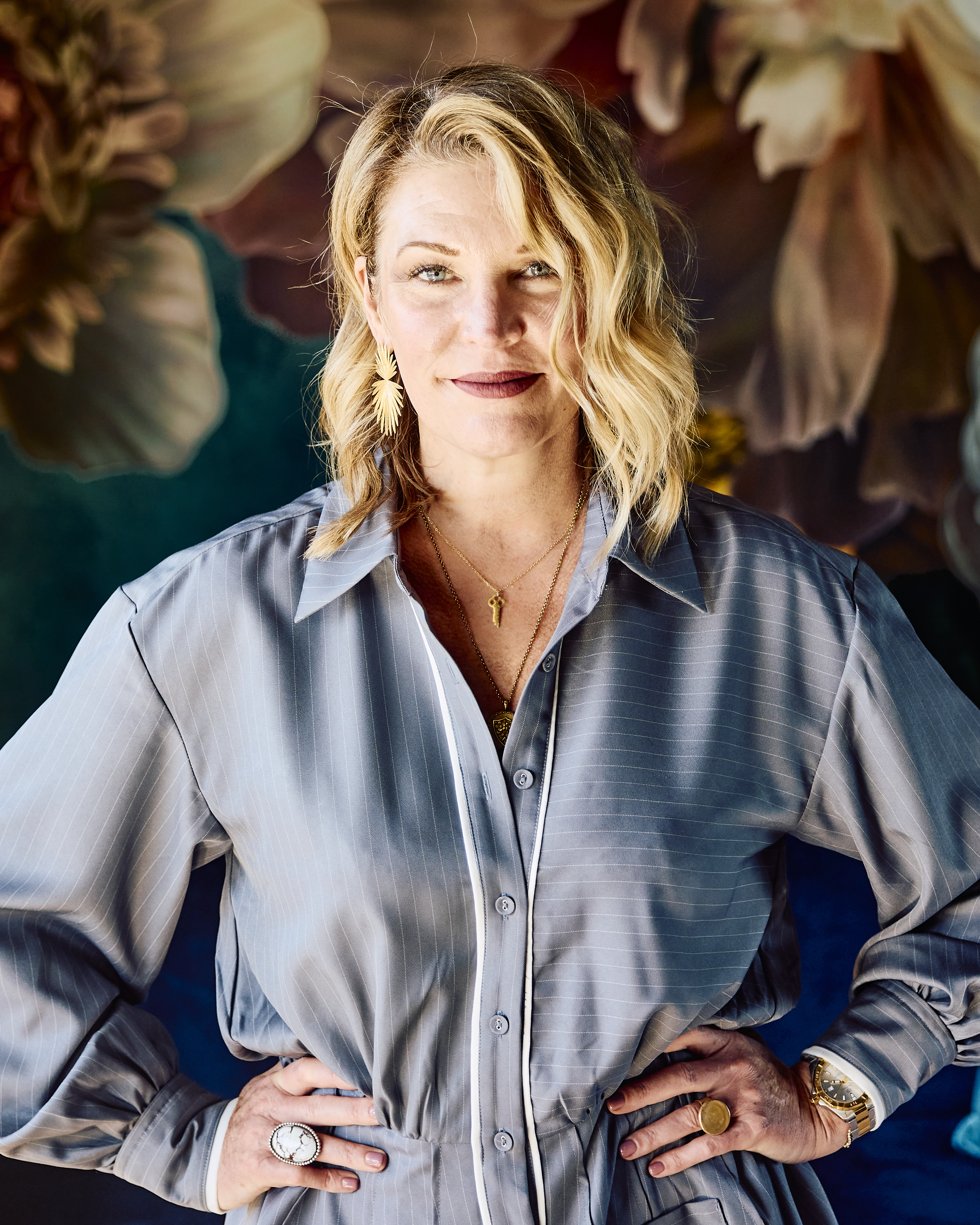
Photograph by Mackenzie Smith
Jen Hatmaker is the author of fourteen books, including four New York Times bestsellers, and the host of the award-winning podcast For the Love. She is an author, podcaster, speaker, advocate, educator, mother, and a textbook Enneagram 3.
About The Reader
Photograph by Mackenzie Smith
Jen Hatmaker is the author of fourteen books, including four New York Times bestsellers, and the host of the award-winning podcast For the Love. She is an author, podcaster, speaker, advocate, educator, mother, and a textbook Enneagram 3.
Product Details
- Publisher: Simon & Schuster Audio (September 23, 2025)
- Runtime: 7 hours and 30 minutes
- ISBN13: 9781668124758
Browse Related Books
Raves and Reviews
"If social media numbers and my math are correct, Jen Hatmaker has 1,518,500 combined followers on Facebook, Instagram, and X—and they will love this book. Those who have watched her videos or listened to her podcasts will immediately recognize her distinctive speaking style in this memoir recounting her journey from the trauma of divorce and evangelicalism to the healing and rebuilding of her life. Her cadence is energetic, and listeners will be captivated by her combination of gravity and humor overlaid with forthright sincerity. Also, featured in the audiobook are asides voiced by friends and family, as well as audio clips of interviews from Jen’s podcasts (not found in the print edition). It all adds up to a candid, earnest, and engaging portrayal of her life."
– Winner of an AudioFile Earphones Award, AudioFile magazine
Resources and Downloads
High Resolution Images
-
Book Cover Image (jpg): Awake
Unabridged Audio Download 9781668124758
-
Author Photo (jpg): Jen Hatmaker Photograph by Mackenzie Smith(0.1 MB)
Any use of an author photo must include its respective photo credit
Join our mailing list!
By clicking 'Sign me up' I acknowledge that I have read and agree to the privacy policy and terms of use.