Get our latest staff recommendations, award news and digital catalog links right to your inbox.
Published by Prometheus
Distributed by Simon & Schuster
Table of Contents
About The Book
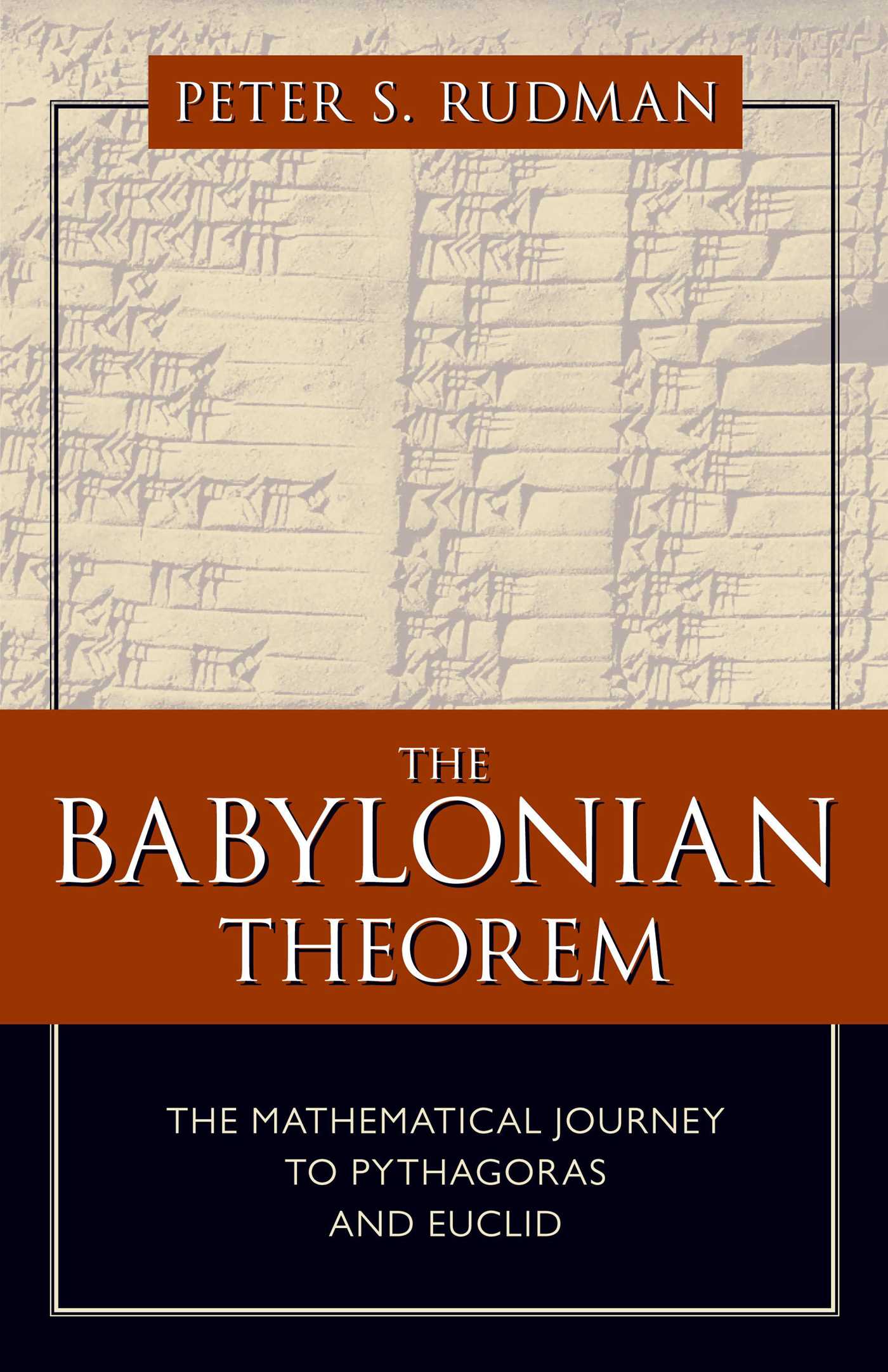
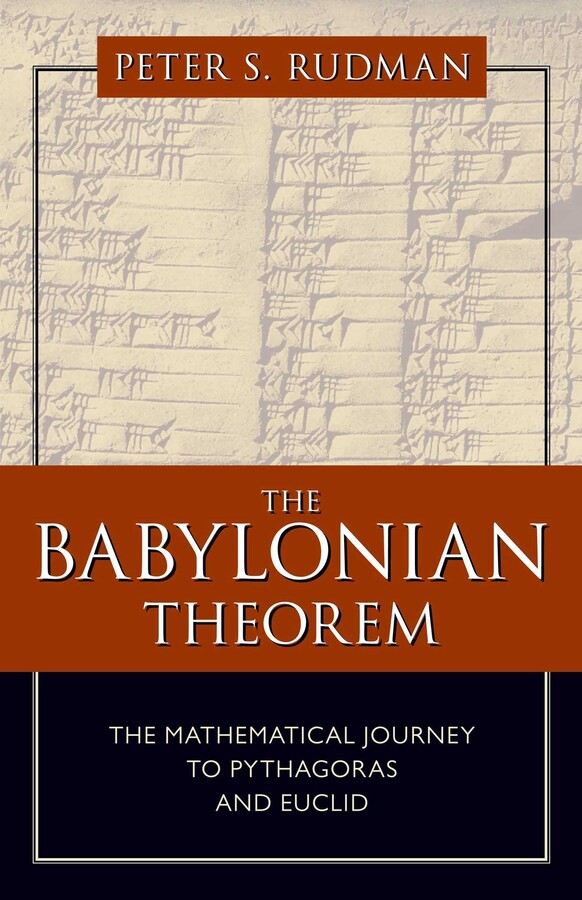
A physicist explores the history of mathematics among the Babylonians and Egyptians, showing how their scribes in the era from 2000 to 1600 BCE used visualizations of plane geometric figures to invent geometric algebra, even solving problems that we now do by quadratic algebra. Rudman traces the evolution of mathematics from the metric geometric algebra of Babylon and Egypt-which used numeric quantities on diagrams as a means to work out problems-to the nonmetric geometric algebra of Euclid (ca. 300 BCE). From his analysis of Babylonian geometric algebra, the author formulates a "Babylonian Theorem", which he demonstrates was used to derive the Pythagorean Theorem, about a millennium before its purported discovery by Pythagoras.He also concludes that what enabled the Greek mathematicians to surpass their predecessors was the insertion of alphabetic notation onto geometric figures. Such symbolic notation was natural for users of an alphabetic language, but was impossible for the Babylonians and Egyptians, whose writing systems (cuneiform and hieroglyphics, respectively) were not alphabetic. This is a masterful, fascinating, and entertaining book, which will interest both math enthusiasts and students of history.
Product Details
- Publisher: Prometheus (January 26, 2010)
- Length: 248 pages
- ISBN13: 9781591027737
Browse Related Books
Resources and Downloads
High Resolution Images
-
Book Cover Image (jpg): Babylonian Theorem
Hardcover 9781591027737
Published by Prometheus
Distributed by Simon & Schuster
Join our mailing list!
By clicking 'Sign me up' I acknowledge that I have read and agree to the privacy policy and terms of use.