
Get our latest staff recommendations, award news and digital catalog links right to your inbox.
Table of Contents
About The Book
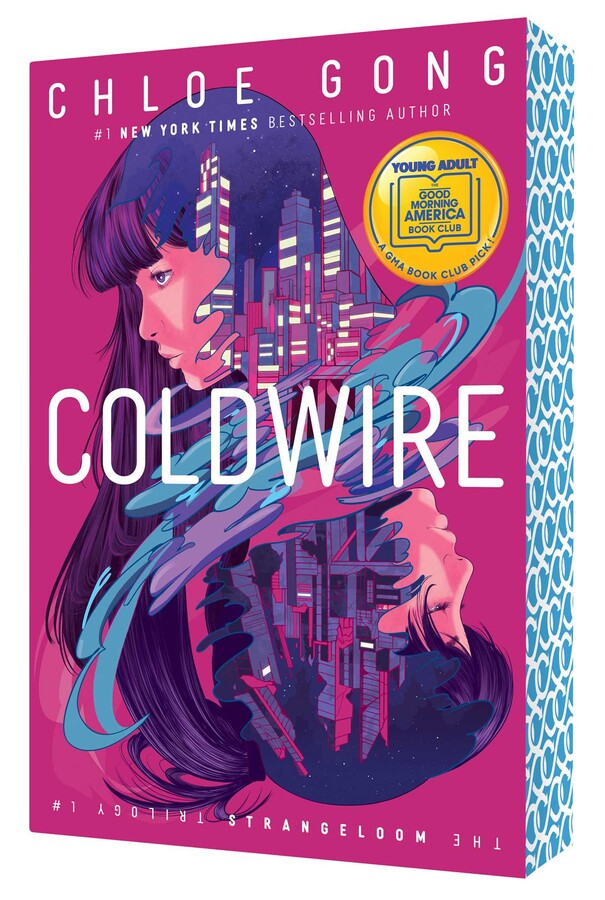
For the first printing only! This paperback features sprayed stenciled edges while the special edition supply lasts.
An instant New York Times bestseller!
“Super-charged with electrifying action, mind-blowing twists, and timely commentary.” —Xiran Jay Zhao, #1 New York Times bestselling author of Iron Widow
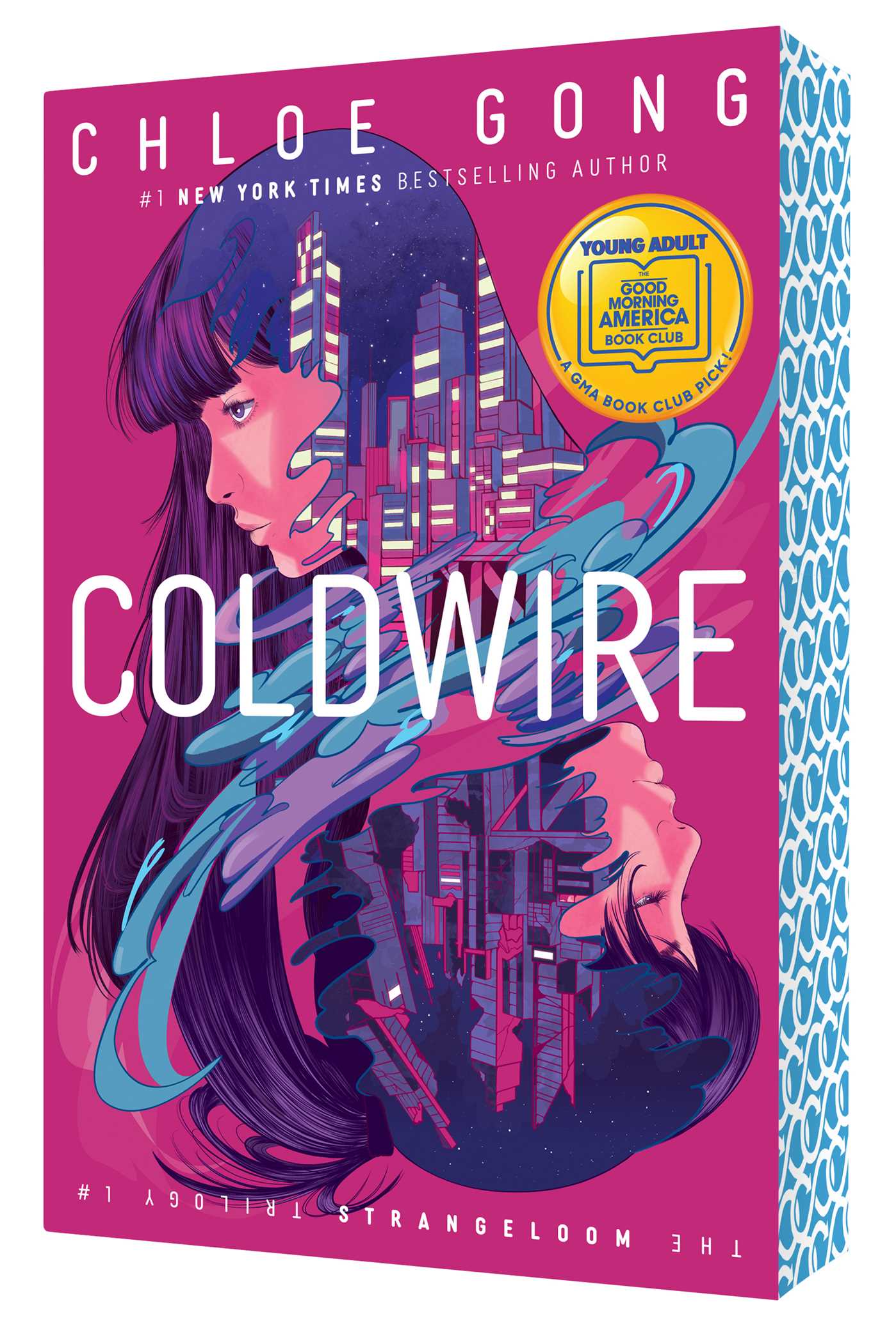
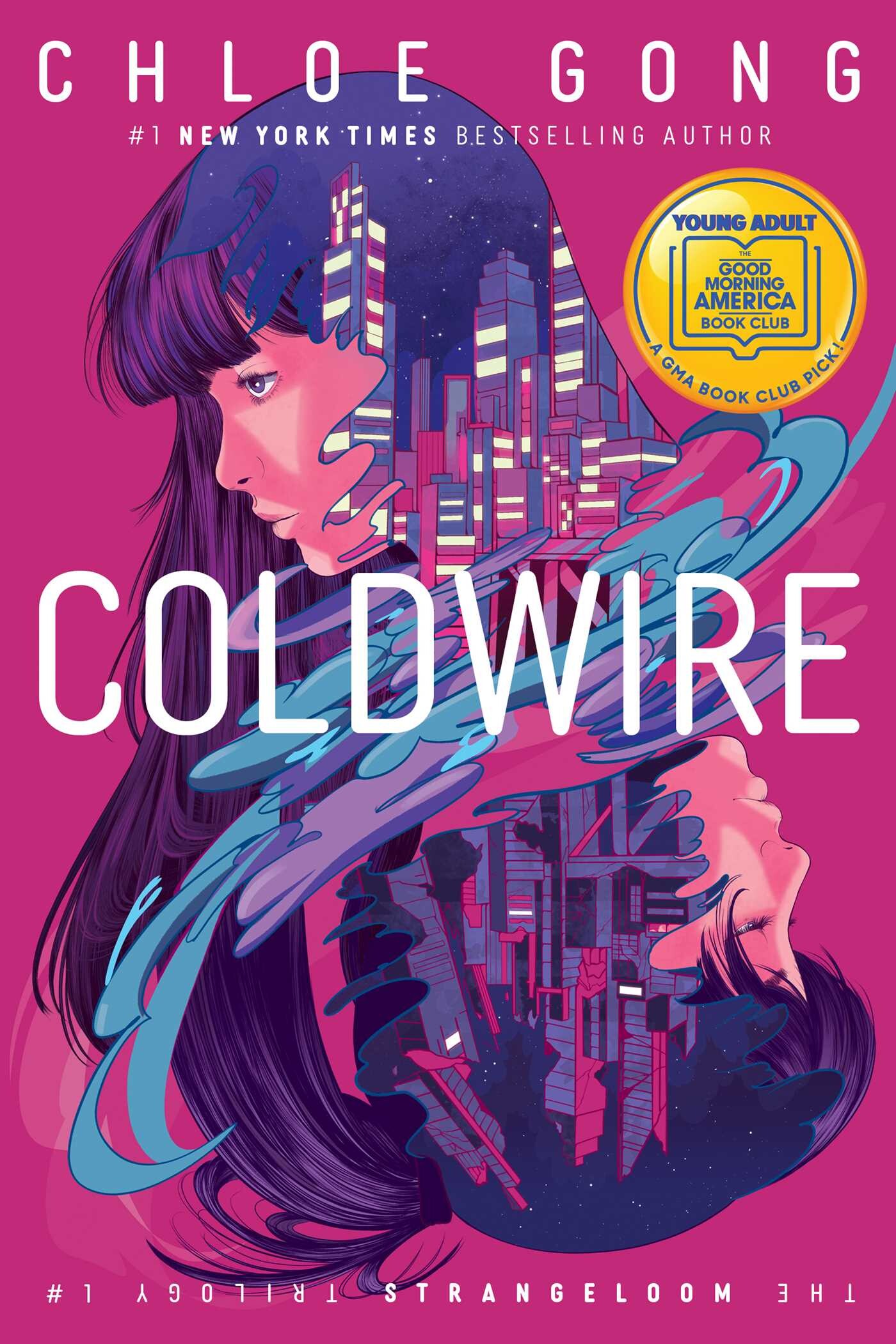
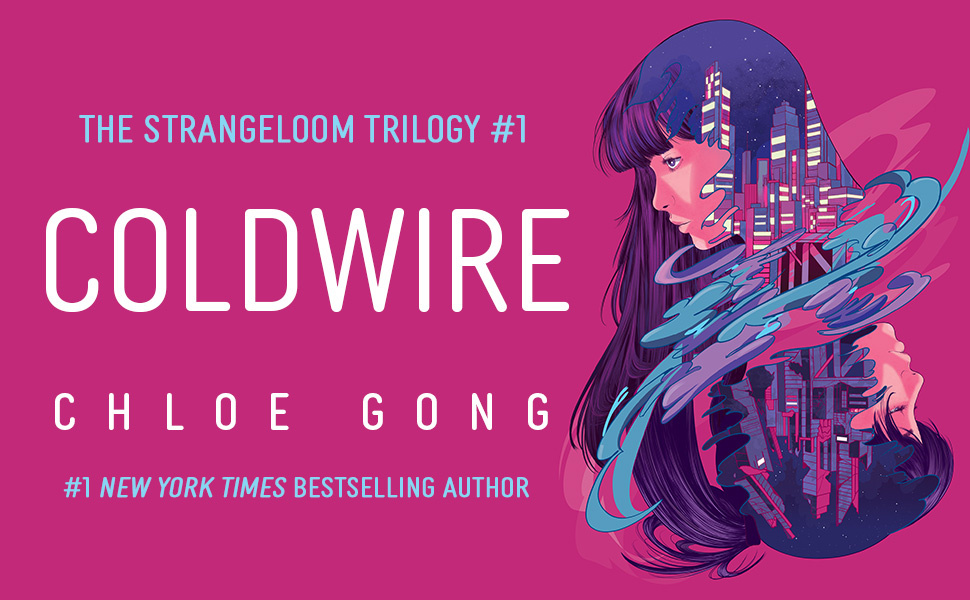
From #1 New York Times bestselling author Chloe Gong comes the first book in the dystopian StrangeLoom trilogy, an “adrenaline-fueled mystery” (School Library Journal, starred review) in which humanity has moved to virtual reality to flee their deteriorating world, following two young soldiers who must depend on unlikely allies in their fight for survival.
The future is loading…
To escape rising seas and rampant epidemics, most of society lives “upcountry” in glistening virtual reality, while those who can’t afford the subscription are forced to remain in crumbling “downcountry.”
But upcountry isn’t perfect. A cold war rages between two powerful nations, Medaluo and Atahua—and no one suffers for it more than the Medan orphans in Atahua. Their enrollment at Nile Military Academy is mandatory. Either serve as a soldier, or risk being labelled a spy.
Eirale graduated the academy and joined NileCorp’s private forces downcountry, exactly as she was supposed to. Then Atahua’s most wanted anarchist frames her for assassinating a government official, and she’s given a choice: cooperate with him to search for a dangerous program in Medaluo or go down for treason.
Meanwhile, Lia is finishing her last year upcountry at Nile Military Academy. Paired with her academic nemesis for their final assignment, Lia is determined to beat him for valedictorian and prove her worth. But there may be far more at stake when their task to infiltrate Medaluo and track down an Atahuan traitor goes wrong…
Though Eirale and Lia tear through Medaluo on different planes of reality, the two start to suspect they are puzzle pieces in a larger conspiracy—and the closer they get to the truth, the closer their worlds come to a shattering collision.
An instant New York Times bestseller!
“Super-charged with electrifying action, mind-blowing twists, and timely commentary.” —Xiran Jay Zhao, #1 New York Times bestselling author of Iron Widow
From #1 New York Times bestselling author Chloe Gong comes the first book in the dystopian StrangeLoom trilogy, an “adrenaline-fueled mystery” (School Library Journal, starred review) in which humanity has moved to virtual reality to flee their deteriorating world, following two young soldiers who must depend on unlikely allies in their fight for survival.
The future is loading…
To escape rising seas and rampant epidemics, most of society lives “upcountry” in glistening virtual reality, while those who can’t afford the subscription are forced to remain in crumbling “downcountry.”
But upcountry isn’t perfect. A cold war rages between two powerful nations, Medaluo and Atahua—and no one suffers for it more than the Medan orphans in Atahua. Their enrollment at Nile Military Academy is mandatory. Either serve as a soldier, or risk being labelled a spy.
Eirale graduated the academy and joined NileCorp’s private forces downcountry, exactly as she was supposed to. Then Atahua’s most wanted anarchist frames her for assassinating a government official, and she’s given a choice: cooperate with him to search for a dangerous program in Medaluo or go down for treason.
Meanwhile, Lia is finishing her last year upcountry at Nile Military Academy. Paired with her academic nemesis for their final assignment, Lia is determined to beat him for valedictorian and prove her worth. But there may be far more at stake when their task to infiltrate Medaluo and track down an Atahuan traitor goes wrong…
Though Eirale and Lia tear through Medaluo on different planes of reality, the two start to suspect they are puzzle pieces in a larger conspiracy—and the closer they get to the truth, the closer their worlds come to a shattering collision.
Reading Group Guide
Join our mailing list! Get our latest staff recommendations, award news and digital catalog links right to your inbox.
By clicking 'Sign me up' I acknowledge that I have read and agree to the privacy policy and terms of use.
Reading Group Guide
Coldwire
By Chloe Gong
About the Book
In the year 2058, two competing nations, Medaluo and Atahua, launch a cold war over control of StrangeLoom, the software powering the virtual reality that keeps society alive after natural disasters and plagues have ravaged the organic world. Those who can afford subscriptions visit virtual “upcountry,” a replica of the decaying land “downcountry.” Two Medan orphans, Eirale and Lia, share their stories through alternating viewpoints: one a jaded NileCorp soldier framed by an anarchist group, the other a Nile Military Academy cadet eager to prove her worth. With each new clue and rescued piece of programming, Lia and Eirale discover not only treachery, but also what it means to be true to oneself.
Discussion Questions
1. Coldwire opens up with a demonstration shut down by NileCorp riot bots. Throughout the book, there are scenes of civilians, anarchists, activists, and government officials protesting across a spectrum of intensity. What are the concerns voiced? Cite examples from the text.
2. Lia experiences episodes where she questions reality, wondering if she has Wakeman Syndrome. Does using technology ever cause you stress and anxiety? Why? As a class, identify physical and mental signs of anxiety or stress. What are ways to help alleviate those feelings?
3. There is a distinction between monthly and daily subscribers of StrangeLoom—those that can afford to ignore the harsh realities of downcountry for extended periods of time, and those that work hard to spend even one hour upcountry. Why does so much of life in upcountry include consumer activities like shopping and eating out? If you lived in the book’s world, how would you spend your time if money was no obstacle? Discuss in small groups.
4. Lia fondly thinks “Kieren, consequently, may be my primary competitor, but he’s also my greatest source of joy.” (Chapter two) What does Lia mean by this? Can you relate? What or who are your greatest sources of joy?
5. The downcountry deteriorated because of mutating pandemics, factories releasing toxins into the air, and megacorporations eliminating freshwater supply. Lia reflects on how “the government refused to do anything about it, people chose the selfish option, the easy option, the pretty option. They built another world and fled.” (Chapter six) How do you feel about this? How far would you go to escape reality and seek comfort? Is it wrong to do so? Explain your answers.
6. Eirale fights Nik and is upset when he calls her a bootlicker, especially since she believes he holds a level of privilege she doesn’t. She thinks, “The paltry existence I’ve been granted in Atahua is a life that I have worked for, bled for, no matter how corrupt NileCorp is. . . . Working for NileCorp is something. What else do I have?” (Chapter five) What do you think of this mindset? What are some scenes in the book where her mindset begins shifting?
7. Lia gives herself the following affirmation when she experiences Wakeman Syndrome: “I need to remember I have no physical form here. I am an avatar, and if something were to go wrong, someone only needs to yank the Claw off my head downcountry for me to exist again.” (Chapter six) How could this be considered foreshadowing? What does it actually take for Lia to exist again after she sacrifices herself in Kunlun?
8. Kieren tells Lia that the story about Threto’s “panda dog” was a propaganda campaign to portray Medaluo negatively. Lia finds a clarifying note on the news, but who among us has never been fooled by propaganda or an AI video of a cute animal? In pairs, discuss a time when you trusted a social media post or news article without investigating it further. What are some ways you can identify misinformation? What about an AI-generated video?
9. The A.I. Love Psychic tells Lia, “‘I see love for you. It’s up to you to let yourself have it rather than keep it outside.’” (Chapter twelve) What does this refer to? Is it about romantic love or something else? Do you agree with the psychic? Explain your answer using evidence from the book and your own experiences.
10. Both Lia and Eirale find themselves drawn to Medan culture despite knowing any semblance of allegiance could mark them traitors. Why are Medan orphans kept away from their culture, and why are they forced to join the military? Cite examples from the book.
11. After Headmaster Murray retires from his post as NileCorp’s head of security, Kieren suspects his dad was manipulated into a cult or worse, a victim of NileCorp’s Indisposition. In real life, we don’t have chips in our brains that can be used to wipe our values and memories, so what do you think Indisposition is meant to represent? Explain your answer.
12. What is the significance of the old man helping Eirale escape the Threto surveillance drones? Explain your answer.
13. While Eirale waits for the influenza pill to work its curing effects on Nik, she debates whose actions are worse: Nik or NileCorp. What does she come to understand? Answer her question about remaining loyal to NileCorp: “So what am I exchanging to be a part of this?” (Chapter thirty-one)
14. Nik makes the statement, “‘I’m Atahuan. I have the right to protest how Atahua is being run.’” (Chapter thirty-three) Why don’t all Atahuans feel the same way? Use examples from the text and your own experiences to answer.
15. When Lia realizes she would never be treated fairly by NileCorp, she cries, “‘I just want to be Atahuan…I want to be respected. I want to be more than the enemy’s face.’” (Chapter thirty-four) Research “the perpetual foreigner” stereotype via your preferred trusted resource center, or through the Pew Research Center, here: https://www.pewresearch.org/race-and-ethnicity/2023/11/30/asian-americans-and-the-forever-foreigner-stereotype/. What are examples in the book of Medan characters experiencing this stereotype? What are examples of how real-life people perpetuate or experience this stereotype? If you can relate and want to share with the class, please do. What actions can we take to end stereotypes like these?
16. Why was Lia never motivated before to explore downcountry? What was preventing her from learning the truth about herself?
17. Eirale did not have friends at the Nile Military Academy and was confused as to why Miz would trust someone she hasn’t been in contact with for over ten months. Miz states, “‘That’s why it’s called friendship. . . . There’s nothing to uphold. It just is.’” (Chapter thirty-five) What does Miz mean by this? What does friendship mean to you? What do you value in a friend?
18. Compare Lia’s and Eirale’s experiences as wards of the state, specifically how they form relationships. How much of their personalities are because of how they were raised versus their programming?
19. As a class, discuss the social and economic barriers to accessing StrangeLoom. Why is it necessary to maintain a downcountry replica? Who has to work in the real, and why?
20. In response to Chung’s explanation of Medaluo funding Project Wit, Lia thinks, “There is nothing in our current landscape that is no longer political. Even the color of someone’s shoes is political.” (Chapter forty) Find evidence in the book to support Lia’s claim. How does this claim compare to current events?
21. Despite Chung regarding Lia as a being with consciousness who learned to become human, he still views her as a science experiment he owns. What do you think about Henry? Does he view Lia as his daughter and her own person? What about Nik, Miz, and Blare? Discuss with a partner, then share with the class.
Extension Activities
1. Downcountry continues to suffer from illness, violence, and natural disasters while upcountry’s coding prohibits real harm from occurring. Regardless of virtual regulations, the public health issues in downcountry don’t disappear. Research a public health issue you’re passionate about, and create an infographic about it using trusted internet and library resources to inform the facts and statistics in it.
2. NileCorp is described as the following:
A mass retailer for people to buy everything under the sun, and in the years it had been around, it had streamlined operations to the point of controlling each logistical node. It made sense for them to continue expanding into the arms of more powerful consumers. (Chapter four)
Do you think there are real life businesses that inspired the fictionalized NileCorp? Could the setting in Coldwire become reality? Why or why not? In groups of four, create a vision board for what 2058 could look like, and include actions that can be taken now to ensure your group’s dream future can exist.
3. The worldbuilding in the novel can get pretty intense, especially with all the technological and scientific elements. Create a one-minute video, a flowchart, or a comic explaining how StrangeLoom works to someone who has not read the book. Be sure to include the differences between Atahua’s and Medaluo’s servers.
4. Nik, Miz, and Blare each have different motivations for joining the revolution against NileCorp, and as Eirale spends more time with them, she begins to understand their perspectives and broaden her own. She notices each has different strengths. In 2017, Deepa Iyer created a tool called “The Social Change Map,” which outlines ten different roles individuals can take on when participating in social change movements. (https://www.socialchangemap.com/home/understanding-the-framework) Look over the different roles and write a reflection essay on the role(s) that fit you best.
5. Divide the class into four groups (A, B, C, and D) to debate the following topics:
a. Nik wants to hack and unlock NileCorp’s settings on every nation’s servers to “‘make upcountry a public right and freely accessible to anyone with a plugin.’” (Chapter twenty-two) Consider the value of open-source AI as well as regulations needed so that upcountry can be a safe environment; groups A & B will debate whether StrangeLoom should be a public right.
b. When Lia learns about her identity as a sentient AI, she is convinced she made herself wrong, but Chung reassures her that “To be human is to feel different” and that her self-realization is consciousness. (Chapter forty) Consider what it means to be human; groups C & D will debate whether a sentient AI should be considered human.
6. Pretend that Lia chose to stay in Medaluo with her friends. Write a new brief for the epilogue based on that choice.
Guide written by Cynthia Medrano, librarian at the Highland Park Public Library.
The websites referenced above are provided for informational purposes only and are not intended as an endorsement or promotion of any website. Simon & Schuster is not responsible for the functionality or content of any external website and expressly disclaims all responsibility and liability in connection therewith.
This guide has been provided by Simon & Schuster for classroom, library, and reading group use. It may be reproduced in its entirety or excerpted for these purposes. For more Simon & Schuster guides and classroom materials, please visit simonandschuster.net/m/prek12-teachers-librarians/teaching-resources
Coldwire
By Chloe Gong
About the Book
In the year 2058, two competing nations, Medaluo and Atahua, launch a cold war over control of StrangeLoom, the software powering the virtual reality that keeps society alive after natural disasters and plagues have ravaged the organic world. Those who can afford subscriptions visit virtual “upcountry,” a replica of the decaying land “downcountry.” Two Medan orphans, Eirale and Lia, share their stories through alternating viewpoints: one a jaded NileCorp soldier framed by an anarchist group, the other a Nile Military Academy cadet eager to prove her worth. With each new clue and rescued piece of programming, Lia and Eirale discover not only treachery, but also what it means to be true to oneself.
Discussion Questions
1. Coldwire opens up with a demonstration shut down by NileCorp riot bots. Throughout the book, there are scenes of civilians, anarchists, activists, and government officials protesting across a spectrum of intensity. What are the concerns voiced? Cite examples from the text.
2. Lia experiences episodes where she questions reality, wondering if she has Wakeman Syndrome. Does using technology ever cause you stress and anxiety? Why? As a class, identify physical and mental signs of anxiety or stress. What are ways to help alleviate those feelings?
3. There is a distinction between monthly and daily subscribers of StrangeLoom—those that can afford to ignore the harsh realities of downcountry for extended periods of time, and those that work hard to spend even one hour upcountry. Why does so much of life in upcountry include consumer activities like shopping and eating out? If you lived in the book’s world, how would you spend your time if money was no obstacle? Discuss in small groups.
4. Lia fondly thinks “Kieren, consequently, may be my primary competitor, but he’s also my greatest source of joy.” (Chapter two) What does Lia mean by this? Can you relate? What or who are your greatest sources of joy?
5. The downcountry deteriorated because of mutating pandemics, factories releasing toxins into the air, and megacorporations eliminating freshwater supply. Lia reflects on how “the government refused to do anything about it, people chose the selfish option, the easy option, the pretty option. They built another world and fled.” (Chapter six) How do you feel about this? How far would you go to escape reality and seek comfort? Is it wrong to do so? Explain your answers.
6. Eirale fights Nik and is upset when he calls her a bootlicker, especially since she believes he holds a level of privilege she doesn’t. She thinks, “The paltry existence I’ve been granted in Atahua is a life that I have worked for, bled for, no matter how corrupt NileCorp is. . . . Working for NileCorp is something. What else do I have?” (Chapter five) What do you think of this mindset? What are some scenes in the book where her mindset begins shifting?
7. Lia gives herself the following affirmation when she experiences Wakeman Syndrome: “I need to remember I have no physical form here. I am an avatar, and if something were to go wrong, someone only needs to yank the Claw off my head downcountry for me to exist again.” (Chapter six) How could this be considered foreshadowing? What does it actually take for Lia to exist again after she sacrifices herself in Kunlun?
8. Kieren tells Lia that the story about Threto’s “panda dog” was a propaganda campaign to portray Medaluo negatively. Lia finds a clarifying note on the news, but who among us has never been fooled by propaganda or an AI video of a cute animal? In pairs, discuss a time when you trusted a social media post or news article without investigating it further. What are some ways you can identify misinformation? What about an AI-generated video?
9. The A.I. Love Psychic tells Lia, “‘I see love for you. It’s up to you to let yourself have it rather than keep it outside.’” (Chapter twelve) What does this refer to? Is it about romantic love or something else? Do you agree with the psychic? Explain your answer using evidence from the book and your own experiences.
10. Both Lia and Eirale find themselves drawn to Medan culture despite knowing any semblance of allegiance could mark them traitors. Why are Medan orphans kept away from their culture, and why are they forced to join the military? Cite examples from the book.
11. After Headmaster Murray retires from his post as NileCorp’s head of security, Kieren suspects his dad was manipulated into a cult or worse, a victim of NileCorp’s Indisposition. In real life, we don’t have chips in our brains that can be used to wipe our values and memories, so what do you think Indisposition is meant to represent? Explain your answer.
12. What is the significance of the old man helping Eirale escape the Threto surveillance drones? Explain your answer.
13. While Eirale waits for the influenza pill to work its curing effects on Nik, she debates whose actions are worse: Nik or NileCorp. What does she come to understand? Answer her question about remaining loyal to NileCorp: “So what am I exchanging to be a part of this?” (Chapter thirty-one)
14. Nik makes the statement, “‘I’m Atahuan. I have the right to protest how Atahua is being run.’” (Chapter thirty-three) Why don’t all Atahuans feel the same way? Use examples from the text and your own experiences to answer.
15. When Lia realizes she would never be treated fairly by NileCorp, she cries, “‘I just want to be Atahuan…I want to be respected. I want to be more than the enemy’s face.’” (Chapter thirty-four) Research “the perpetual foreigner” stereotype via your preferred trusted resource center, or through the Pew Research Center, here: https://www.pewresearch.org/race-and-ethnicity/2023/11/30/asian-americans-and-the-forever-foreigner-stereotype/. What are examples in the book of Medan characters experiencing this stereotype? What are examples of how real-life people perpetuate or experience this stereotype? If you can relate and want to share with the class, please do. What actions can we take to end stereotypes like these?
16. Why was Lia never motivated before to explore downcountry? What was preventing her from learning the truth about herself?
17. Eirale did not have friends at the Nile Military Academy and was confused as to why Miz would trust someone she hasn’t been in contact with for over ten months. Miz states, “‘That’s why it’s called friendship. . . . There’s nothing to uphold. It just is.’” (Chapter thirty-five) What does Miz mean by this? What does friendship mean to you? What do you value in a friend?
18. Compare Lia’s and Eirale’s experiences as wards of the state, specifically how they form relationships. How much of their personalities are because of how they were raised versus their programming?
19. As a class, discuss the social and economic barriers to accessing StrangeLoom. Why is it necessary to maintain a downcountry replica? Who has to work in the real, and why?
20. In response to Chung’s explanation of Medaluo funding Project Wit, Lia thinks, “There is nothing in our current landscape that is no longer political. Even the color of someone’s shoes is political.” (Chapter forty) Find evidence in the book to support Lia’s claim. How does this claim compare to current events?
21. Despite Chung regarding Lia as a being with consciousness who learned to become human, he still views her as a science experiment he owns. What do you think about Henry? Does he view Lia as his daughter and her own person? What about Nik, Miz, and Blare? Discuss with a partner, then share with the class.
Extension Activities
1. Downcountry continues to suffer from illness, violence, and natural disasters while upcountry’s coding prohibits real harm from occurring. Regardless of virtual regulations, the public health issues in downcountry don’t disappear. Research a public health issue you’re passionate about, and create an infographic about it using trusted internet and library resources to inform the facts and statistics in it.
2. NileCorp is described as the following:
A mass retailer for people to buy everything under the sun, and in the years it had been around, it had streamlined operations to the point of controlling each logistical node. It made sense for them to continue expanding into the arms of more powerful consumers. (Chapter four)
Do you think there are real life businesses that inspired the fictionalized NileCorp? Could the setting in Coldwire become reality? Why or why not? In groups of four, create a vision board for what 2058 could look like, and include actions that can be taken now to ensure your group’s dream future can exist.
3. The worldbuilding in the novel can get pretty intense, especially with all the technological and scientific elements. Create a one-minute video, a flowchart, or a comic explaining how StrangeLoom works to someone who has not read the book. Be sure to include the differences between Atahua’s and Medaluo’s servers.
4. Nik, Miz, and Blare each have different motivations for joining the revolution against NileCorp, and as Eirale spends more time with them, she begins to understand their perspectives and broaden her own. She notices each has different strengths. In 2017, Deepa Iyer created a tool called “The Social Change Map,” which outlines ten different roles individuals can take on when participating in social change movements. (https://www.socialchangemap.com/home/understanding-the-framework) Look over the different roles and write a reflection essay on the role(s) that fit you best.
5. Divide the class into four groups (A, B, C, and D) to debate the following topics:
a. Nik wants to hack and unlock NileCorp’s settings on every nation’s servers to “‘make upcountry a public right and freely accessible to anyone with a plugin.’” (Chapter twenty-two) Consider the value of open-source AI as well as regulations needed so that upcountry can be a safe environment; groups A & B will debate whether StrangeLoom should be a public right.
b. When Lia learns about her identity as a sentient AI, she is convinced she made herself wrong, but Chung reassures her that “To be human is to feel different” and that her self-realization is consciousness. (Chapter forty) Consider what it means to be human; groups C & D will debate whether a sentient AI should be considered human.
6. Pretend that Lia chose to stay in Medaluo with her friends. Write a new brief for the epilogue based on that choice.
Guide written by Cynthia Medrano, librarian at the Highland Park Public Library.
The websites referenced above are provided for informational purposes only and are not intended as an endorsement or promotion of any website. Simon & Schuster is not responsible for the functionality or content of any external website and expressly disclaims all responsibility and liability in connection therewith.
This guide has been provided by Simon & Schuster for classroom, library, and reading group use. It may be reproduced in its entirety or excerpted for these purposes. For more Simon & Schuster guides and classroom materials, please visit simonandschuster.net/m/prek12-teachers-librarians/teaching-resources
About The Author
One Grid Studio
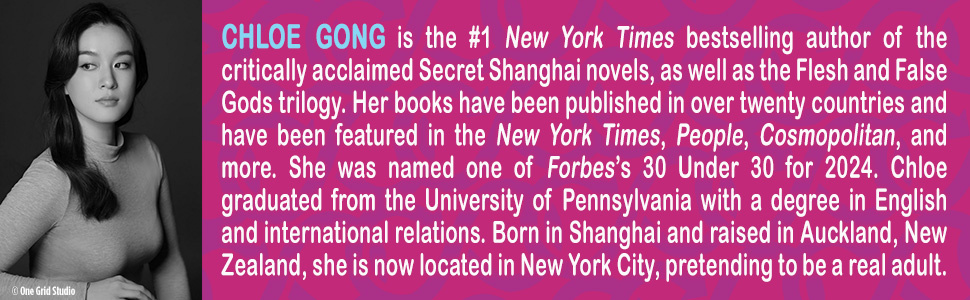
Chloe Gong is the #1 New York Times bestselling author of critically acclaimed fantasy and science fiction novels, including These Violent Delights, Immortal Longings, and Coldwire. Her books have been published in over twenty countries, and she was named one of Forbes’s 30 Under 30 for 2024. Chloe graduated from the University of Pennsylvania with a degree in English and international relations. Born in Shanghai and raised in Auckland, New Zealand, she is now located in New York City. Visit her online at TheChloeGong.com and on Instagram and TikTok at @TheChloeGong.
Product Details
- Publisher: Margaret K. McElderry Books (November 3, 2026)
- Length: 512 pages
- ISBN13: 9781665960144
- Grades: 9 and up
- Ages: 14 - 99
Browse Related Books
Awards and Honors
- Junior Library Guild Gold Standard Selection
Resources and Downloads
High Resolution Images
-
Book Cover Image (jpg): Coldwire
Trade Paperback 9781665960144
-
Author Photo (jpg): Chloe Gong One Grid Studio(0.1 MB)
Any use of an author photo must include its respective photo credit
Join our mailing list!
By clicking 'Sign me up' I acknowledge that I have read and agree to the privacy policy and terms of use.