Get our latest staff recommendations, award news and digital catalog links right to your inbox.
Published by Upper Access
Distributed by Simon & Schuster
Table of Contents
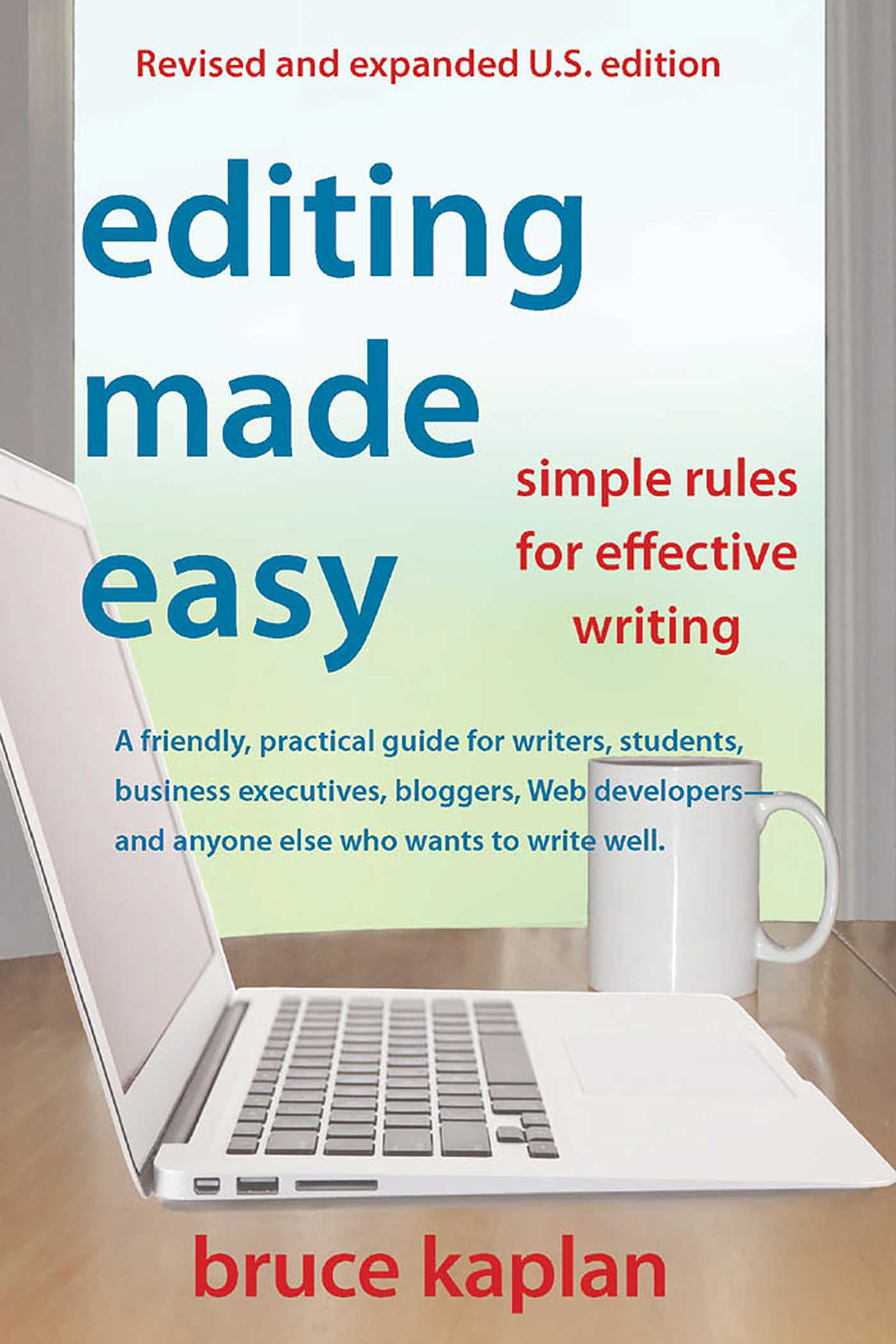
About The Book
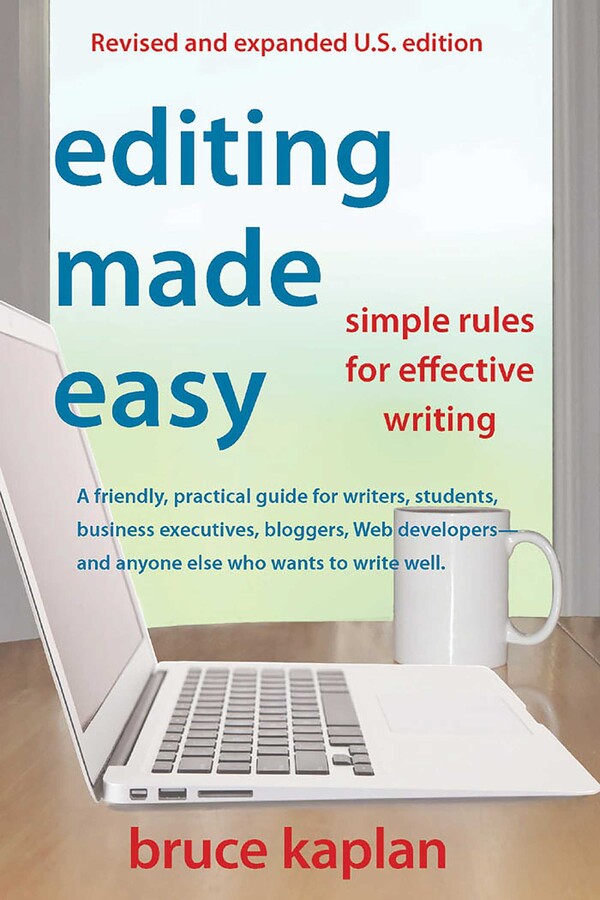
As the title states, this book is designed to be easy to use for all writers. It offers straightforward, practical guidelines for editing, without getting into the weeds of advanced English grammar. You will find no loftier technical grammatical terms here, such as present perfect progressive, correlative conjunctions, imperative mood or interrogative adjective. However, much of the advice in this book is not to be written in stone. English is a flexible language, and writing a creative calling. As you will see, there are many acceptable ways for writers to express themselves. What you will find in this book is:
--How to avoid the most common errors of grammar and spelling.
--How to spot typographical and factual errors.
--Understanding the styles of print and online media.
--How to make your writing more exciting and dynamic.
--And improving your odds of having your work published.
The goal of this book is simple—to put the odds on the writers’ side; to increase your chances of being published or finding success as a reporter, feature writer, novelist, freelance writer, blogger, Web developer, Web editor, communications consultant, advertising copywriter, speechwriter or public relations consultant—in fact, anything involving the written word.
--How to avoid the most common errors of grammar and spelling.
--How to spot typographical and factual errors.
--Understanding the styles of print and online media.
--How to make your writing more exciting and dynamic.
--And improving your odds of having your work published.
The goal of this book is simple—to put the odds on the writers’ side; to increase your chances of being published or finding success as a reporter, feature writer, novelist, freelance writer, blogger, Web developer, Web editor, communications consultant, advertising copywriter, speechwriter or public relations consultant—in fact, anything involving the written word.
Excerpt
Why learn editing?
The benefit to you
So why learn how to edit? Most importantly, learning to edit will make you more proficient, more polished writer. It will improve your writing in more ways than you might ever imagine. It will do the same for people whose writing you edit.
This book will give you the practical skills that techniques that professional editors use every day. The advice applies to almost all forms of writing. Exceptions may occur with diction, scientific and academic writing, and personal expressions such as e-mail and Facebook. But most of the rules apply across the board.
Essentially, this book is about plain English. The advice will help you add news, newsletters, brochures, business communicatios, short stories, staff bulletins, business proposals,non-fiction books, and—yes—even novels.
Writing is demanding, exacting, rewarding, and enriching craft. Proficiency in editing is the key to excellence in writing.
The benefit to you
So why learn how to edit? Most importantly, learning to edit will make you more proficient, more polished writer. It will improve your writing in more ways than you might ever imagine. It will do the same for people whose writing you edit.
This book will give you the practical skills that techniques that professional editors use every day. The advice applies to almost all forms of writing. Exceptions may occur with diction, scientific and academic writing, and personal expressions such as e-mail and Facebook. But most of the rules apply across the board.
Essentially, this book is about plain English. The advice will help you add news, newsletters, brochures, business communicatios, short stories, staff bulletins, business proposals,non-fiction books, and—yes—even novels.
Writing is demanding, exacting, rewarding, and enriching craft. Proficiency in editing is the key to excellence in writing.
Product Details
- Publisher: Upper Access (July 27, 2021)
- Length: 112 pages
- ISBN13: 9780942679366
Browse Related Books
Raves and Reviews
Longtime newspaper editor Kaplan offers no-frills advice to self-editors. He stresses the value of writers who know how to edit their own work. His approach is similar to Bruce Ross-Larson’s Edit Yourself. In 37 short chapters, Kaplan covers most thorny writing difficulties, such as split infinitives, tautologies, and misplaced modifiers. This is a book with lots of lists and white space: it would seem just as well suited to use in a digital format as in the traditional print version. The book’s portability and its low price make it especially useful for college students and bloggers. VERDICT This affordable, bare-bones guide will appeal to writers (and others who have to write) – especially those who like referring to a handy list of do’s and don’ts.
– Library Journal
It is rare that even an experienced and successful author has not needed the services of an editor. In “Editing Made Easy: Simple Rules for Effective Writing,” Bruce Kaplan draws upon his more than forty years of professional experience and expertise as a newspaper copy editor and an editorial trainer to create a succinct, thoroughly ‘user friendly,’ 112-page compendium of instruction, information, commentary, examples, and techniques for editing a manuscript to make the writing energized, engaging, and just plain better. “Editing Made Easy” lays out common errors of grammar and spelling; reveals how best to avoid typographical and factual errors; become informed as to the diverse styles of print and the varied online media. One of the principal reasons for the novice author to give “Editing Made Easy” a careful reading is to substantially improve their chances of having their manuscripts published, and as published books have them achieve a marketplace success. Covering the rules and conventions of American English, “Editing Made Easy” is informed, informative, and highly recommended for both personal reference shelves and community library Writing/Publishing instructional collections.
– Midwest Book Review
Resources and Downloads
High Resolution Images
-
Book Cover Image (jpg): Editing Made Easy
Trade Paperback 9780942679366
Published by Upper Access
Distributed by Simon & Schuster
Join our mailing list!
By clicking 'Sign me up' I acknowledge that I have read and agree to the privacy policy and terms of use.