



Get our latest staff recommendations, award news and digital catalog links right to your inbox.
Published by Destiny Books
Distributed by Simon & Schuster
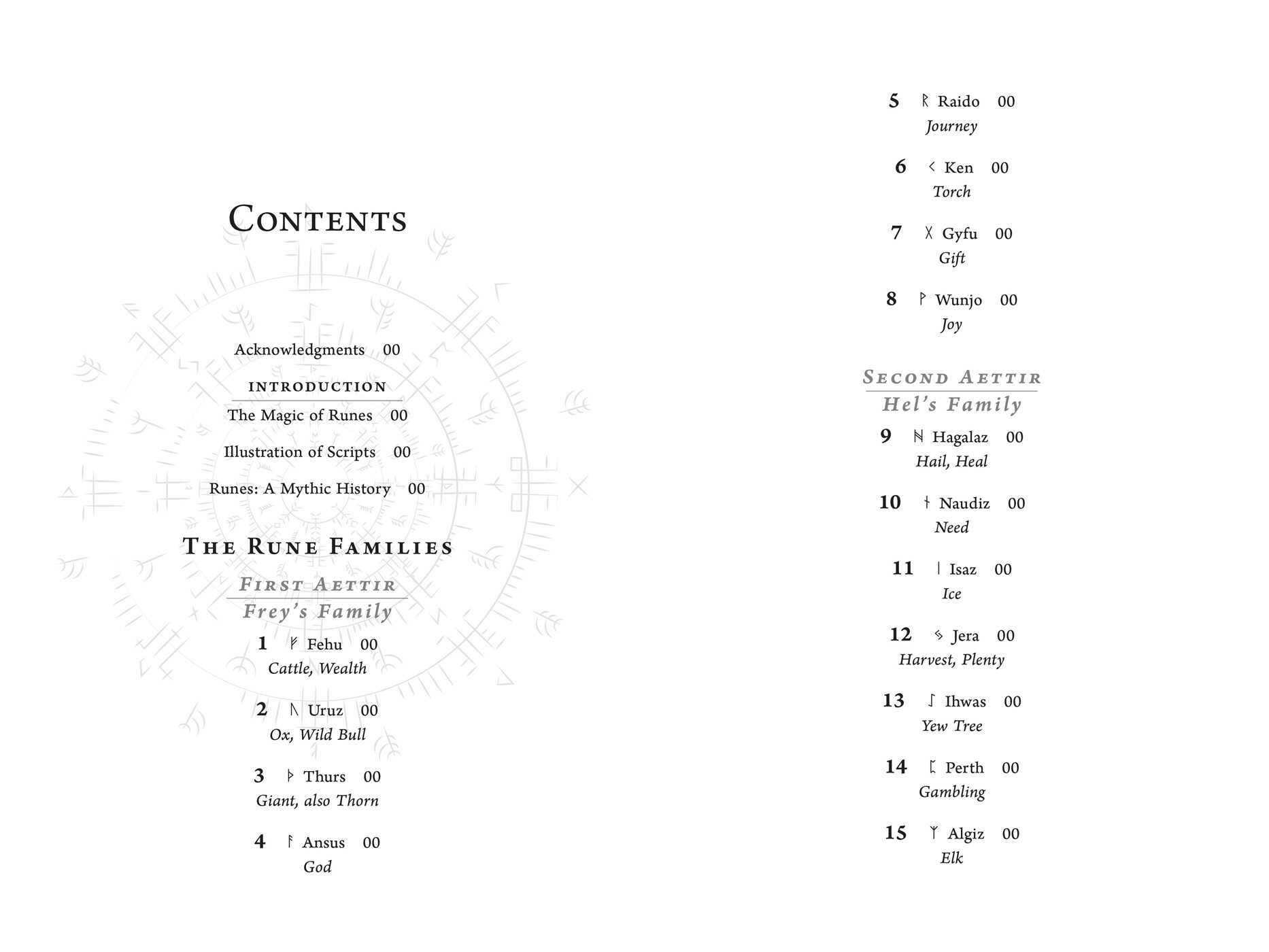
Table of Contents
About The Book
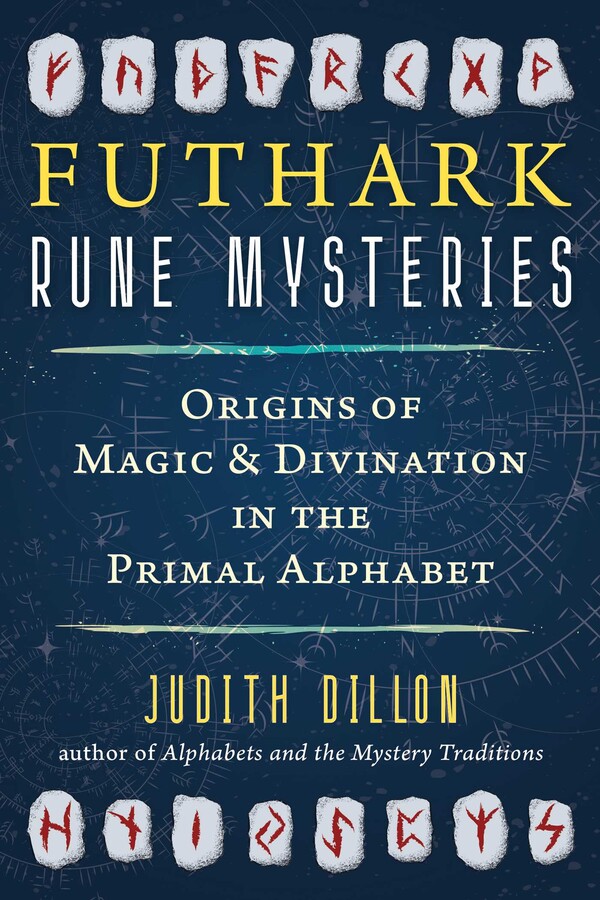
Uncovers the ancient Egyptian origin and magical power of the runes
• Reveals the lineage of the runes by tracing their historical journey from Egyptian hieroglyphs through the Semitic Phoenician language to northern Europe
• Draws on stories of the Norse sagas to show the runes’ spiritual attributes by looking at the physical characteristics of the objects that represent them
• Illustrates the initiatory nature of the runes and how they, like Egyptian hieroglyphs, reveal mysteries of passage through life, death, and the afterlife
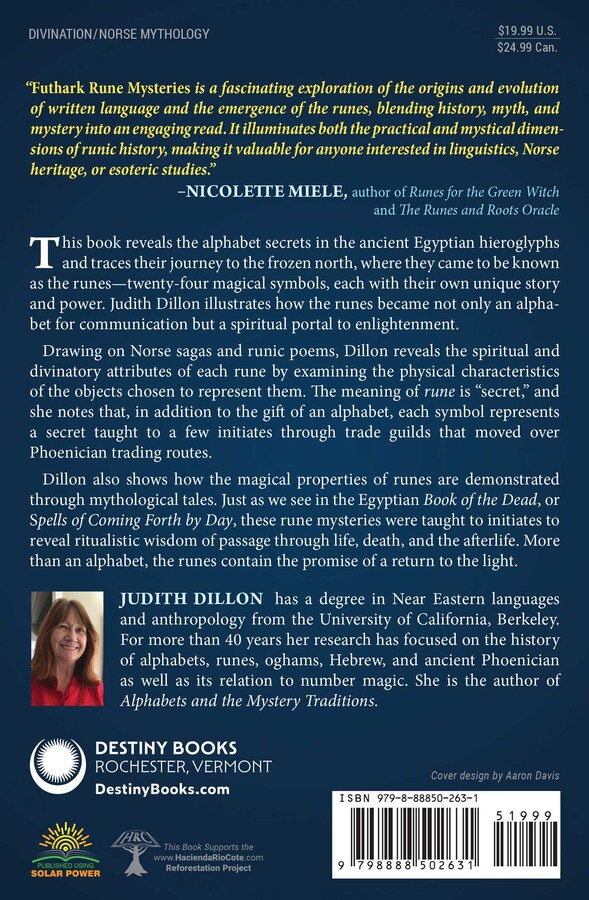
This book reveals the alphabet secrets in the ancient Egyptian hieroglyphs and traces their journey to the frozen north, where they came to be known as the runes—twenty-four magical symbols, each with their own unique story and power. Judith Dillon illustrates how the runes became not only an alphabet for communication but a spiritual portal to enlightenment.
Drawing on Norse sagas and runic poems, Dillon reveals the spiritual and divinatory attributes of each rune by examining the physical characteristics of the objects chosen to represent them. The meaning of rune is “secret,” and she notes that, in addition to the gift of an alphabet, each symbol represents a secret taught to a few initiates through trade guilds that moved over Phoenician trading routes.
Dillon also shows how the magical properties of runes are demonstrated through mythological tales. Just as we see in the Egyptian Book of the Dead, or Spells of Coming Forth by Day, these rune mysteries were taught to initiates to reveal ritualistic wisdom of passage through life, death, and the afterlife. More than an alphabet, the runes contain the promise of a return to the light.
• Reveals the lineage of the runes by tracing their historical journey from Egyptian hieroglyphs through the Semitic Phoenician language to northern Europe
• Draws on stories of the Norse sagas to show the runes’ spiritual attributes by looking at the physical characteristics of the objects that represent them
• Illustrates the initiatory nature of the runes and how they, like Egyptian hieroglyphs, reveal mysteries of passage through life, death, and the afterlife
This book reveals the alphabet secrets in the ancient Egyptian hieroglyphs and traces their journey to the frozen north, where they came to be known as the runes—twenty-four magical symbols, each with their own unique story and power. Judith Dillon illustrates how the runes became not only an alphabet for communication but a spiritual portal to enlightenment.
Drawing on Norse sagas and runic poems, Dillon reveals the spiritual and divinatory attributes of each rune by examining the physical characteristics of the objects chosen to represent them. The meaning of rune is “secret,” and she notes that, in addition to the gift of an alphabet, each symbol represents a secret taught to a few initiates through trade guilds that moved over Phoenician trading routes.
Dillon also shows how the magical properties of runes are demonstrated through mythological tales. Just as we see in the Egyptian Book of the Dead, or Spells of Coming Forth by Day, these rune mysteries were taught to initiates to reveal ritualistic wisdom of passage through life, death, and the afterlife. More than an alphabet, the runes contain the promise of a return to the light.
Excerpt
Runes: A Mythic History
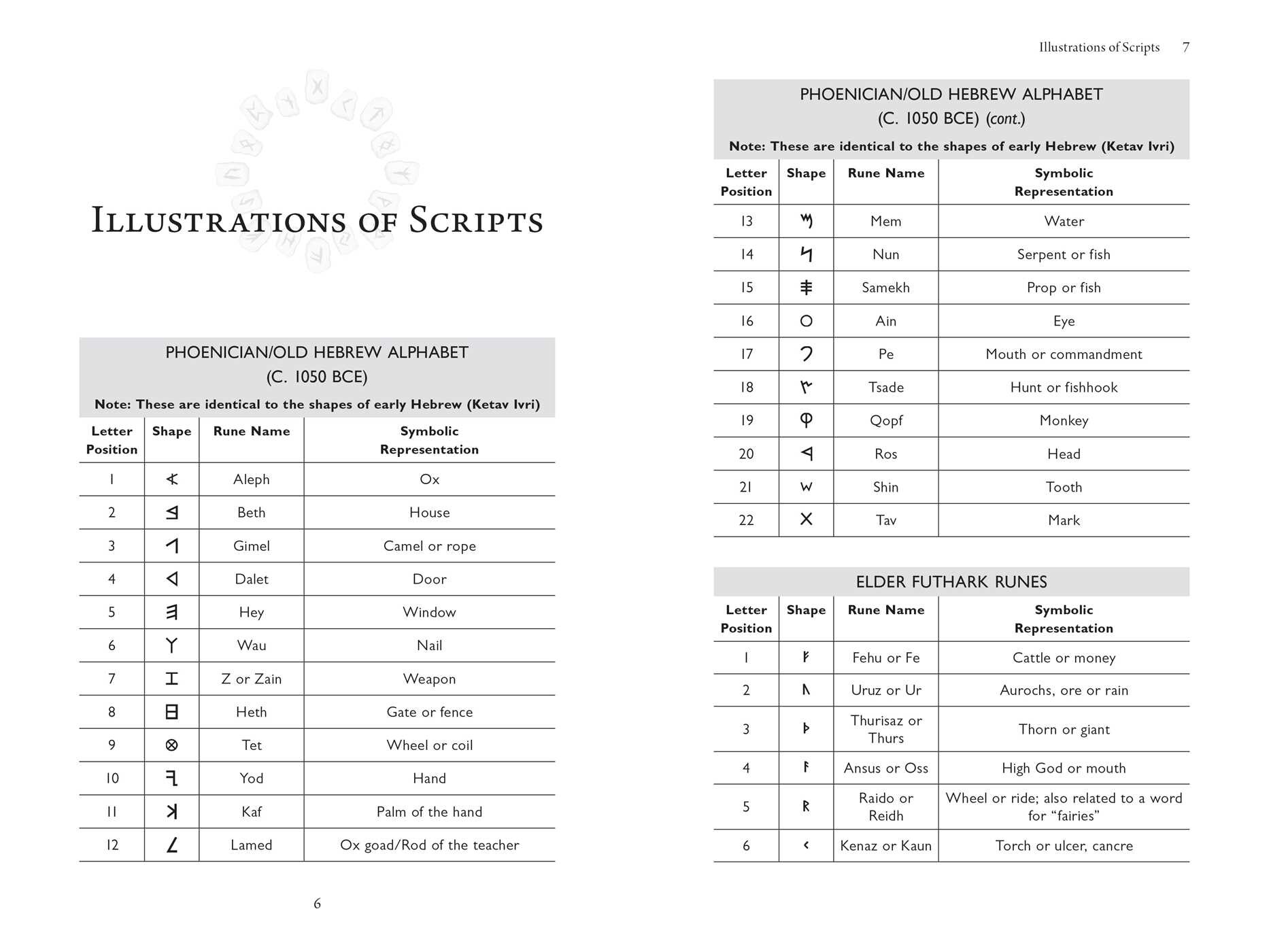
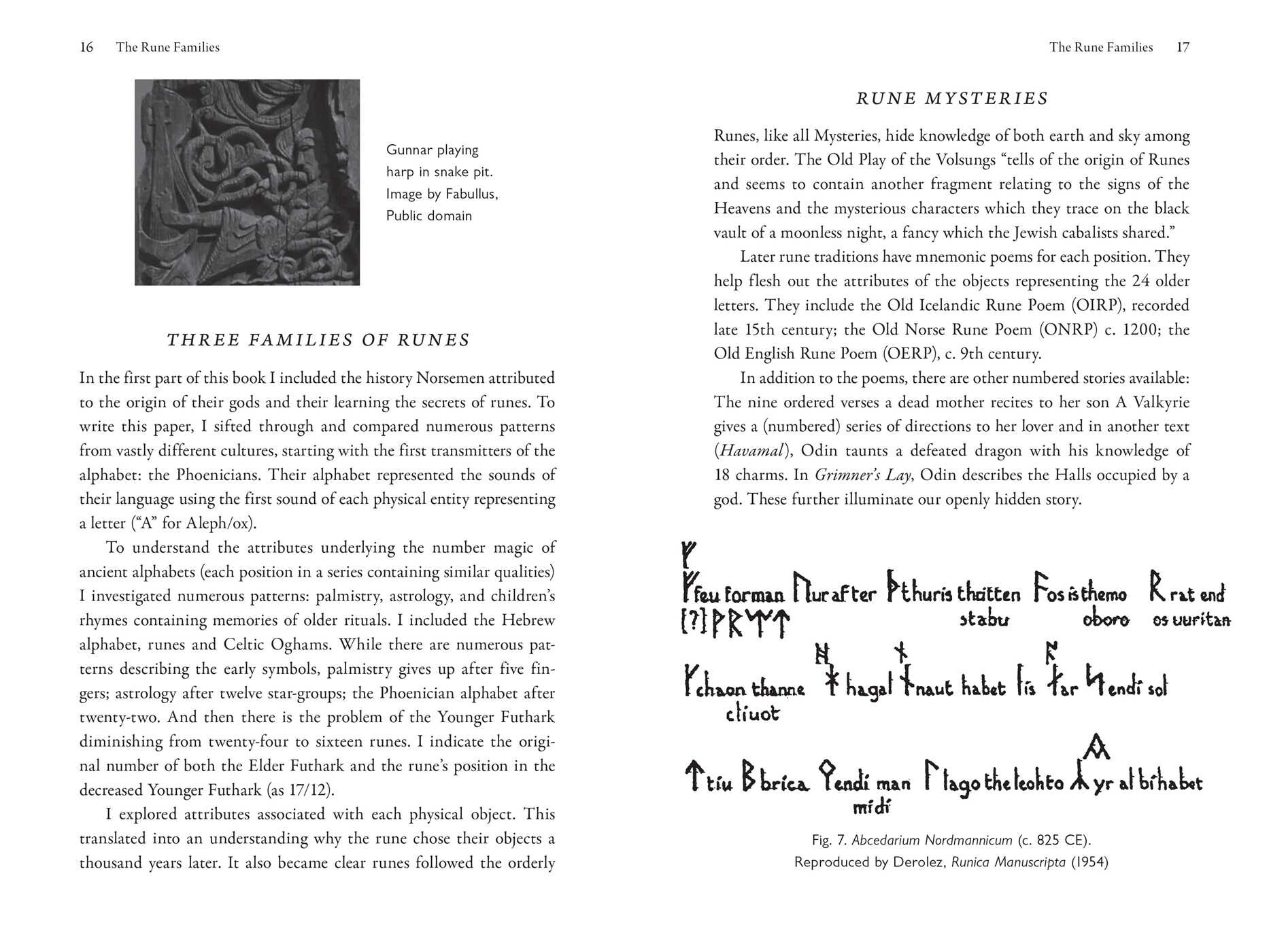
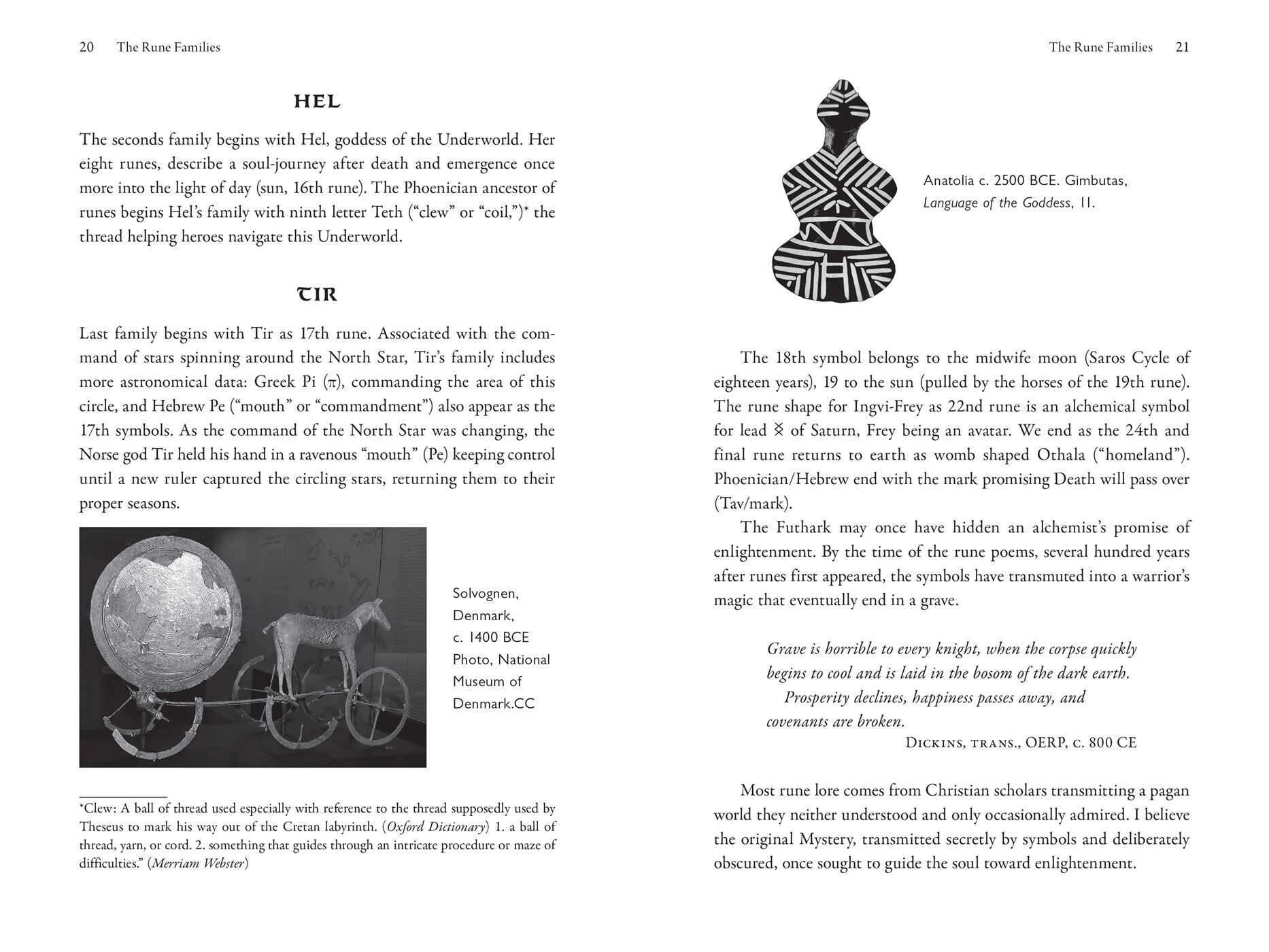
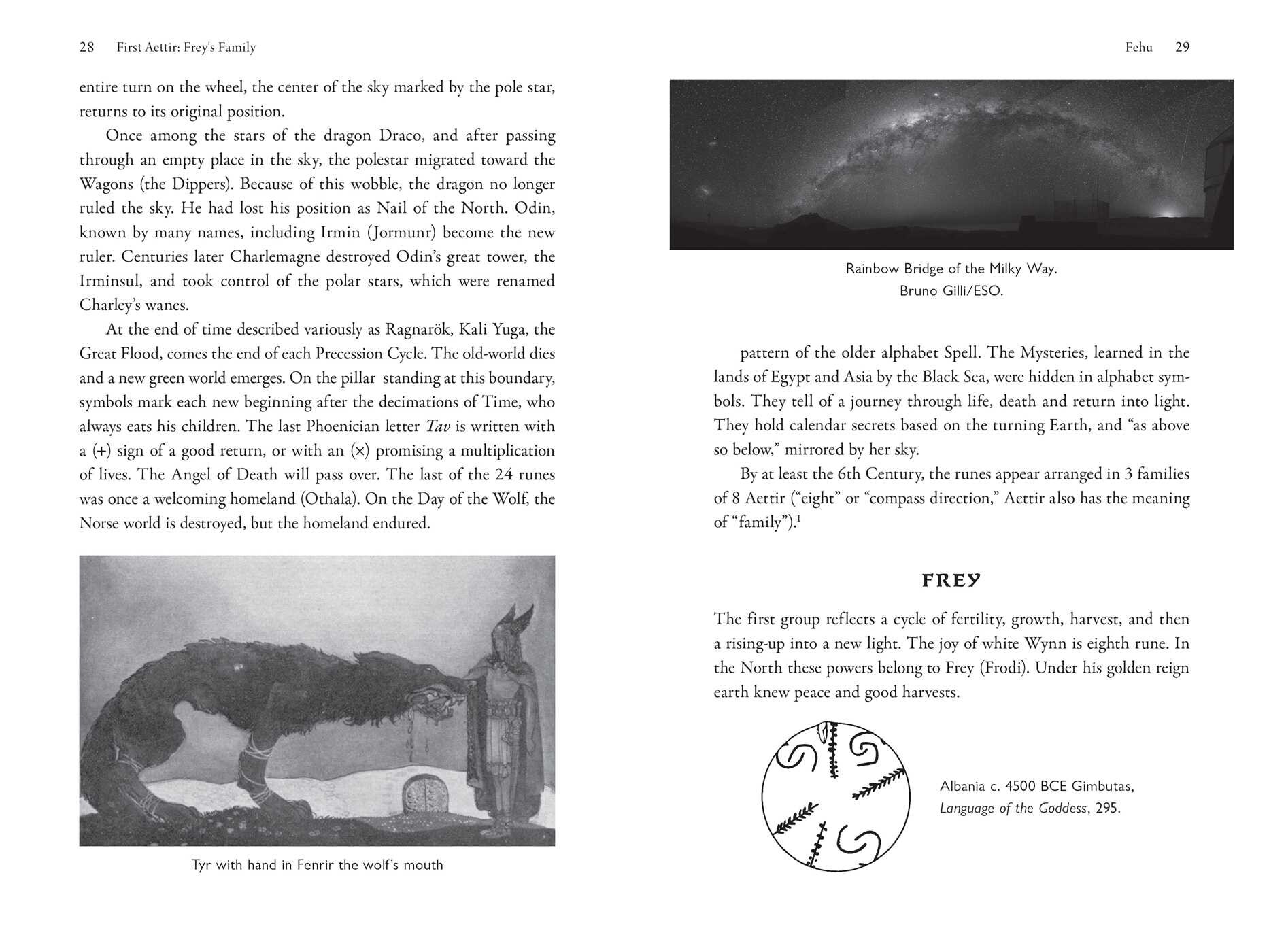
A thousand years after the Canaanites, now known as the Phoenicians, spread their alphabet, Germanic runes appeared. I am not implying here that runes evolved directly from the Phoenician alphabet, as there were undoubtedly intermediaries along the twisting path that the alphabets and alchemy traditions traveled. But understanding the pattern of our alphabet allows us to interpret the magic empowering runes. Like the Phoenician/Hebrew alphabet, runes use the first sounds of the letter-object to write their language. While rune symbols were chosen from their own culture, I hope to show they faithfully followed the path hiding within the alphabet’s Mystery order.
BLACK SEA AREA: CELTS, GERMANS, EGYPTIANS, AND GREEKS
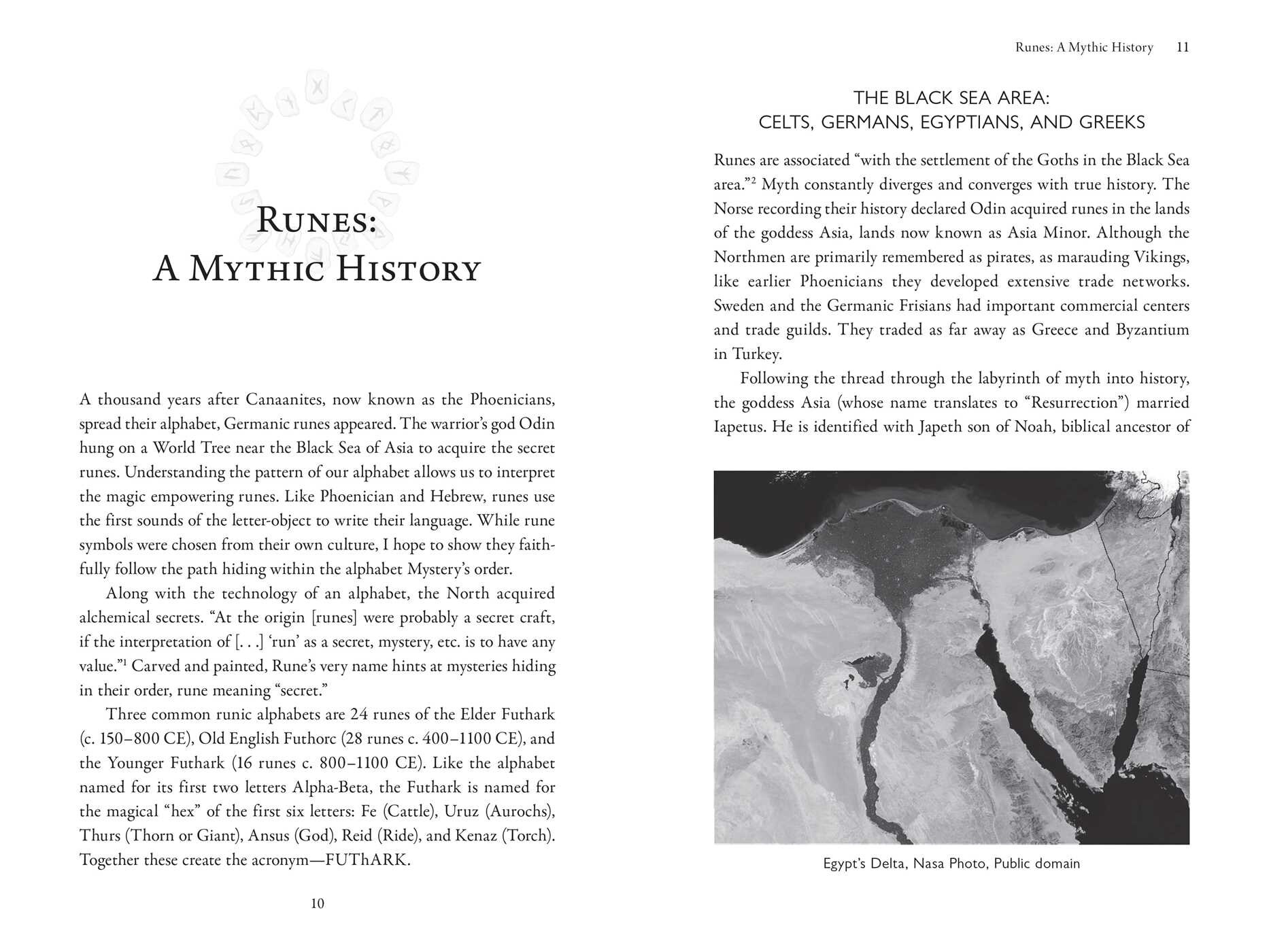
According to Rene Derolez in Runica Manuscripta, many scholars believe that runes are associated “with the settlement of the Goths [a Germanic people] in the Black Sea area.”1 Myth constantly diverges and converges with true history, and the Norse, recording their history, declared that the warrior god Odin acquired the runes in the lands of the goddess Asia, now known as Asia Minor. In this land Odin hung from the World Tree Yggdrasil for nine days to acquire the secrets of the runes.
“The country east of the Tanaquisl [the river Don] in Asia was called Asaland [. . .] and the chief city in that land was called Asgaard. In that city was a chief called Odin.”2 The river Don, flowing into the Sea of Asov, the northern extension of the Black Sea, was viewed as the border between Europe and Asia by ancient Greek geographers. A melting pot of cultures since before the early Bronze Age, this area attracted a parade of invaders and traders, including Scythians, Egyptians, Greeks, Romans, Tatars, Italians, Turks, Russians, and eventually the Norsemen. It was the center of a major trading route where mysteries and technologies, as well as trade goods, were exchanged.
Although the Norsemen are primarily remembered as pirates, the marauding Vikings developed extensive trade networks much like the earlier Phoenicians. Sweden and the Germanic Frisians had important commercial centers and trade guilds. They traded as far away as Britain, Greece and Byzantium in Turkey, and even along the Silk Road to China.
Following the thread through the labyrinth of myth into history, the goddess Asia (whose name translates as “resurrection”) married Iapetus. Iapetus is identified with Japheth, son of Noah,* the biblical ancestor of the Greeks, Celts, and the Germanic peoples of Odin.
Before leaving Asia, Odin’s people, the Aesir, fought a war with the Vanir, a family of fertile earth gods and goddesses. Described below, the Vanir taught Odin the art of travel through the Underworld.
The power of the Vanir over the realm of the dead is associated with
rebirth rather than with a journey to another world, as was the cult
of Odin. Freyr [Vanir son of Earth, brother of Freya] was reborn in
the person of each king, while at the same time the king who died
was identified with the god in the earth [. . .] Here again there is an
interesting parallel with the ritual of kingship [of] Ancient Egypt.3
After making peace, they exchanged hostages. The Aesir sent the all-knowing Mimir along with a silent Hoenir in exchange. The Vanir sent Njord and his son Freyr along with Kvasir, their wisest, from whose the blood and the outcome was that mead by the virtue of which he who drinks becomes a skald or scholar.”4
Believing they received a poor exchange in return for Kvasir, the Vanir cut off Mimir’s head. Odin took the head, smeared it with herbs so that it would not rot, and sang charms over it. These gave the head the power to speak to him and tell him many secrets.5 Thereafter, Odin expanded his powers by drinking from the mead of poetry. After drinking, he budded and became wise. “One word chased another word flowing from my mouth, one deed chased another deed flowing from my hands.”6
Eventually, Odin built his great northern city of Valhalla which is supported by the great tree Yggdrasil holding nine realms above its three roots. Each root contains a well. Odin placed Mimir’s head in the well of fate (Urd) in the land of the frost giants (Jotunheim). Before Mimir allowed Odin to drink knowledge from Urd’s waters, he demanded the sacrifice of an eye, so Odin became the one-eyed god.
TROY SAGAS AND THE GOLDEN FLEECE STORIES
We tend to vastly underuse mythic stories in our modern search for historic truth, yet “true” historical connections can often be found in a culture’s mythology. For instance, an early name for the Greeks, the Danaans, comes from an Egyptian colony run by Danaus. He had a twin brother named Aigyptos (Egypt) who had colonies around the Black Sea area of the goddess Asia. Danaus was another descendent of the cow goddess Isis/Hathor/Io/Balaat and the Nile. His cousin was the alphabet-bearing, Mystery-transmitting Phoenician Cadmus mentioned in the introduction.
The historian Herodotus claimed the people of Colchis, a kingdom near the Black Sea, were black-skinned Egyptians. Although outside the topics of this book, it’s interesting to note that the land of Colchis hosted the adventures of the Argonauts and their search for a Golden Fleece. Their homeland was Thessaly, which was near Thrace. Thracians derive their name from the sorceress Thrace. Like Cadmus, her sister was Europa.7 Allies of the Trojans, another famous Thracian is Orpheus. And like other initiates, Orpheus entered and returned from the Underworld (Orphic Mysteries). Astronomical knowledge hides in the Mysteries, Orpheus was son of Earth and Starry Heaven.
Some Thracians joined their adventure of the Golden Fleece and, on their way home, fought at the battle of Troy. In Norse tales recorded a thousand years later, Thor is identified as a prince of Troy from Thrace, and stories of Troy wander in and out of the sagas and histories. Stories about Troy and the Golden Fleece circulated throughout Europe early in the Common Era. The Trojumanna saga appeared in the North, circa 1250, about the time the Prose Edda, a collection of Norse mythological stories, was written.
Just south of Troy is the once important trade city of Miletus. It is situated along the trade route linking the Black Sea to Egypt and the islands of the Mediterranean. Around 1900 BCE, Minoans from Crete arrived. According to the Greek geographer Strabo (circa 64 BCE–20 CE): “Ephorus says: Miletus was first founded and fortified above the sea by Cretans, where the Miletus of olden times is now situated [. . . and colonists] from the Cretan Miletus [. . .] named the city after that Miletus.”8 Milesians, allies of the Trojans during their war against the Mycenaean Greeks, were the first to use the alphabet’s number magic that became known as Gematria.
Some of the Greek sagas affecting many of the histories recounted by early northern scholars claimed that Odin himself came from Troy, which is in today’s Turkey:
From the north and over the eastern areas all to the south, this is
called Asia. In the middle of the world. Here Odin constructed that
building and residence which was called Troy. Having the gift of
prophecy, Odin knew his name would be exalted in the northern
part of the world and glorified above all kings. Because of this he
was keen to set off from Turkey.9
The ritual center of Troy, hiding a stolen maiden, fell to attacking Greeks circa 1200 BCE. Virgil believes people from Crete first established Troy. After its destruction, “The Walls of Troy were rebuilt by [. . .] architects of Crete after the model of the Cretan Labyrinth which was an exact representation of the stellar universe.”10
By the time the Prose Edda was compiled (circa 1201–1300 CE), not only Odin, but multiple peoples claimed descent from Troy. Possibly influenced by Greek works entering Europe by way of Arab translators, stories of the Trojan war had circulated widely in Europe since early in the Common Era. The Merovingian Franks claimed Trojan ancestors. Virgil’s Aeneid described a Trojan prince founding Rome, and turf mazes called Troy Town mazes began appearing throughout Europe, which resembled the maze-like structure of Troy’s walls.
Greece, Crete, Phoenicia, the Black Sea area, and Egypt have a long history together, including shared mathematics, masonry, astronomy, medicine, divination, and writing, to be explored in the upcoming chapters.
A thousand years after the Canaanites, now known as the Phoenicians, spread their alphabet, Germanic runes appeared. I am not implying here that runes evolved directly from the Phoenician alphabet, as there were undoubtedly intermediaries along the twisting path that the alphabets and alchemy traditions traveled. But understanding the pattern of our alphabet allows us to interpret the magic empowering runes. Like the Phoenician/Hebrew alphabet, runes use the first sounds of the letter-object to write their language. While rune symbols were chosen from their own culture, I hope to show they faithfully followed the path hiding within the alphabet’s Mystery order.
BLACK SEA AREA: CELTS, GERMANS, EGYPTIANS, AND GREEKS
According to Rene Derolez in Runica Manuscripta, many scholars believe that runes are associated “with the settlement of the Goths [a Germanic people] in the Black Sea area.”1 Myth constantly diverges and converges with true history, and the Norse, recording their history, declared that the warrior god Odin acquired the runes in the lands of the goddess Asia, now known as Asia Minor. In this land Odin hung from the World Tree Yggdrasil for nine days to acquire the secrets of the runes.
“The country east of the Tanaquisl [the river Don] in Asia was called Asaland [. . .] and the chief city in that land was called Asgaard. In that city was a chief called Odin.”2 The river Don, flowing into the Sea of Asov, the northern extension of the Black Sea, was viewed as the border between Europe and Asia by ancient Greek geographers. A melting pot of cultures since before the early Bronze Age, this area attracted a parade of invaders and traders, including Scythians, Egyptians, Greeks, Romans, Tatars, Italians, Turks, Russians, and eventually the Norsemen. It was the center of a major trading route where mysteries and technologies, as well as trade goods, were exchanged.
Although the Norsemen are primarily remembered as pirates, the marauding Vikings developed extensive trade networks much like the earlier Phoenicians. Sweden and the Germanic Frisians had important commercial centers and trade guilds. They traded as far away as Britain, Greece and Byzantium in Turkey, and even along the Silk Road to China.
Following the thread through the labyrinth of myth into history, the goddess Asia (whose name translates as “resurrection”) married Iapetus. Iapetus is identified with Japheth, son of Noah,* the biblical ancestor of the Greeks, Celts, and the Germanic peoples of Odin.
Before leaving Asia, Odin’s people, the Aesir, fought a war with the Vanir, a family of fertile earth gods and goddesses. Described below, the Vanir taught Odin the art of travel through the Underworld.
The power of the Vanir over the realm of the dead is associated with
rebirth rather than with a journey to another world, as was the cult
of Odin. Freyr [Vanir son of Earth, brother of Freya] was reborn in
the person of each king, while at the same time the king who died
was identified with the god in the earth [. . .] Here again there is an
interesting parallel with the ritual of kingship [of] Ancient Egypt.3
After making peace, they exchanged hostages. The Aesir sent the all-knowing Mimir along with a silent Hoenir in exchange. The Vanir sent Njord and his son Freyr along with Kvasir, their wisest, from whose the blood and the outcome was that mead by the virtue of which he who drinks becomes a skald or scholar.”4
Believing they received a poor exchange in return for Kvasir, the Vanir cut off Mimir’s head. Odin took the head, smeared it with herbs so that it would not rot, and sang charms over it. These gave the head the power to speak to him and tell him many secrets.5 Thereafter, Odin expanded his powers by drinking from the mead of poetry. After drinking, he budded and became wise. “One word chased another word flowing from my mouth, one deed chased another deed flowing from my hands.”6
Eventually, Odin built his great northern city of Valhalla which is supported by the great tree Yggdrasil holding nine realms above its three roots. Each root contains a well. Odin placed Mimir’s head in the well of fate (Urd) in the land of the frost giants (Jotunheim). Before Mimir allowed Odin to drink knowledge from Urd’s waters, he demanded the sacrifice of an eye, so Odin became the one-eyed god.
TROY SAGAS AND THE GOLDEN FLEECE STORIES
We tend to vastly underuse mythic stories in our modern search for historic truth, yet “true” historical connections can often be found in a culture’s mythology. For instance, an early name for the Greeks, the Danaans, comes from an Egyptian colony run by Danaus. He had a twin brother named Aigyptos (Egypt) who had colonies around the Black Sea area of the goddess Asia. Danaus was another descendent of the cow goddess Isis/Hathor/Io/Balaat and the Nile. His cousin was the alphabet-bearing, Mystery-transmitting Phoenician Cadmus mentioned in the introduction.
The historian Herodotus claimed the people of Colchis, a kingdom near the Black Sea, were black-skinned Egyptians. Although outside the topics of this book, it’s interesting to note that the land of Colchis hosted the adventures of the Argonauts and their search for a Golden Fleece. Their homeland was Thessaly, which was near Thrace. Thracians derive their name from the sorceress Thrace. Like Cadmus, her sister was Europa.7 Allies of the Trojans, another famous Thracian is Orpheus. And like other initiates, Orpheus entered and returned from the Underworld (Orphic Mysteries). Astronomical knowledge hides in the Mysteries, Orpheus was son of Earth and Starry Heaven.
Some Thracians joined their adventure of the Golden Fleece and, on their way home, fought at the battle of Troy. In Norse tales recorded a thousand years later, Thor is identified as a prince of Troy from Thrace, and stories of Troy wander in and out of the sagas and histories. Stories about Troy and the Golden Fleece circulated throughout Europe early in the Common Era. The Trojumanna saga appeared in the North, circa 1250, about the time the Prose Edda, a collection of Norse mythological stories, was written.
Just south of Troy is the once important trade city of Miletus. It is situated along the trade route linking the Black Sea to Egypt and the islands of the Mediterranean. Around 1900 BCE, Minoans from Crete arrived. According to the Greek geographer Strabo (circa 64 BCE–20 CE): “Ephorus says: Miletus was first founded and fortified above the sea by Cretans, where the Miletus of olden times is now situated [. . . and colonists] from the Cretan Miletus [. . .] named the city after that Miletus.”8 Milesians, allies of the Trojans during their war against the Mycenaean Greeks, were the first to use the alphabet’s number magic that became known as Gematria.
Some of the Greek sagas affecting many of the histories recounted by early northern scholars claimed that Odin himself came from Troy, which is in today’s Turkey:
From the north and over the eastern areas all to the south, this is
called Asia. In the middle of the world. Here Odin constructed that
building and residence which was called Troy. Having the gift of
prophecy, Odin knew his name would be exalted in the northern
part of the world and glorified above all kings. Because of this he
was keen to set off from Turkey.9
The ritual center of Troy, hiding a stolen maiden, fell to attacking Greeks circa 1200 BCE. Virgil believes people from Crete first established Troy. After its destruction, “The Walls of Troy were rebuilt by [. . .] architects of Crete after the model of the Cretan Labyrinth which was an exact representation of the stellar universe.”10
By the time the Prose Edda was compiled (circa 1201–1300 CE), not only Odin, but multiple peoples claimed descent from Troy. Possibly influenced by Greek works entering Europe by way of Arab translators, stories of the Trojan war had circulated widely in Europe since early in the Common Era. The Merovingian Franks claimed Trojan ancestors. Virgil’s Aeneid described a Trojan prince founding Rome, and turf mazes called Troy Town mazes began appearing throughout Europe, which resembled the maze-like structure of Troy’s walls.
Greece, Crete, Phoenicia, the Black Sea area, and Egypt have a long history together, including shared mathematics, masonry, astronomy, medicine, divination, and writing, to be explored in the upcoming chapters.
Product Details
- Publisher: Destiny Books (February 3, 2026)
- Length: 192 pages
- ISBN13: 9798888502631
Browse Related Books
Raves and Reviews
“Futhark Rune Mysteries is a fascinating exploration of the origins and evolution of written language and the emergence of the runes, blending history, myth, and mystery into an engaging read. It illuminates both the practical and mystical dimensions of runic history, making it valuable for anyone interested in linguistics, Norse heritage, or esoteric studies.”
– Nicolette Miele, author of Runes for the Green Witch and The Runes and Roots Oracle
“With this work, Judith Dillon brings us on a fascinating journey through the history of the Norse runes. The mystery and sacredness of this ancient written language are combined with linguistic and ethnographic science to render a fascinating account of the symbols’ origins, evolution, and uses. Treating runic marks as paradigmatic examples of what Descartes called ‘signs,’ Dillon establishes the runes as the bones of a primal alphabet and symbolic system, locating the signs and their meanings securely within the Cartesian context of ‘magically’ productive, generative language—symbol systems that generate other varieties of thoughts, such as music and mathematics, art, and mystical divination.”
– Yvonne Owens, Ph.D., past research fellow at the University College of London, professor emerita of
Resources and Downloads
High Resolution Images
-
Book Cover Image (jpg): Futhark Rune Mysteries
Trade Paperback 9798888502631
Published by Destiny Books
Distributed by Simon & Schuster
Join our mailing list!
By clicking 'Sign me up' I acknowledge that I have read and agree to the privacy policy and terms of use.