Get our latest staff recommendations, award news and digital catalog links right to your inbox.
Published by Destiny Books
Distributed by Simon & Schuster
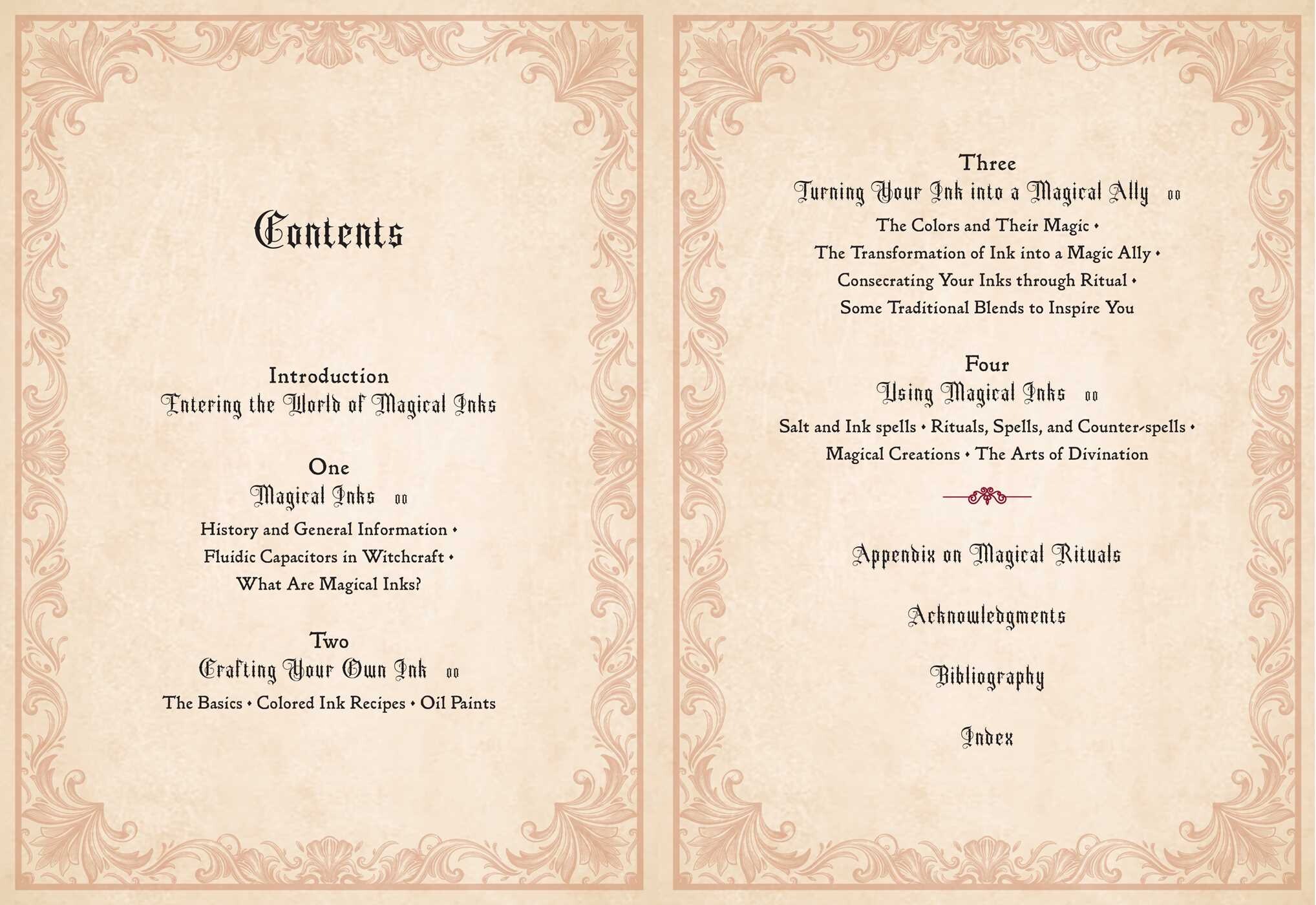
Table of Contents
About The Book
• Shares simple recipes for creating your own magical inks in 5 important colors—black, red, brown, purple, and blue
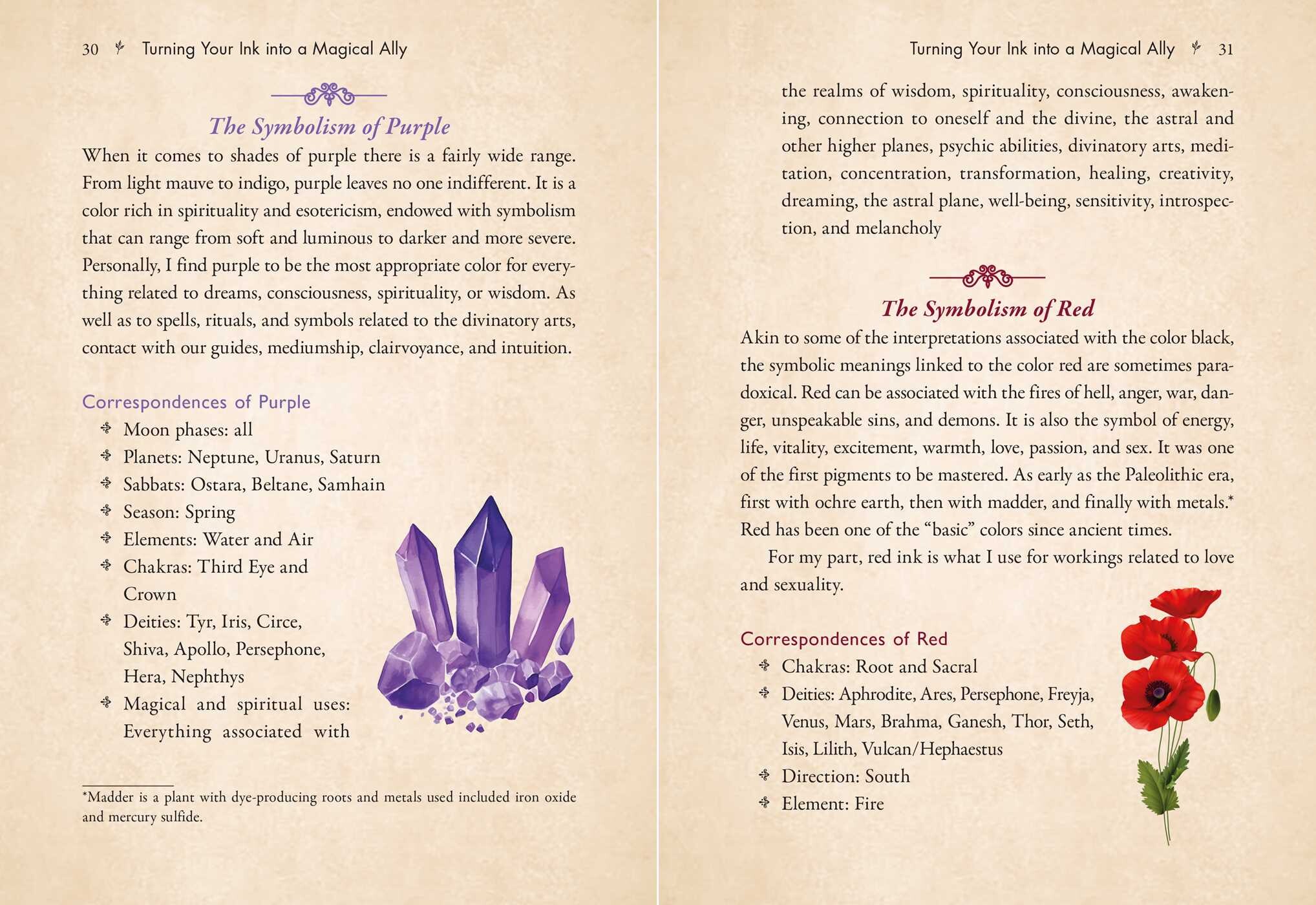
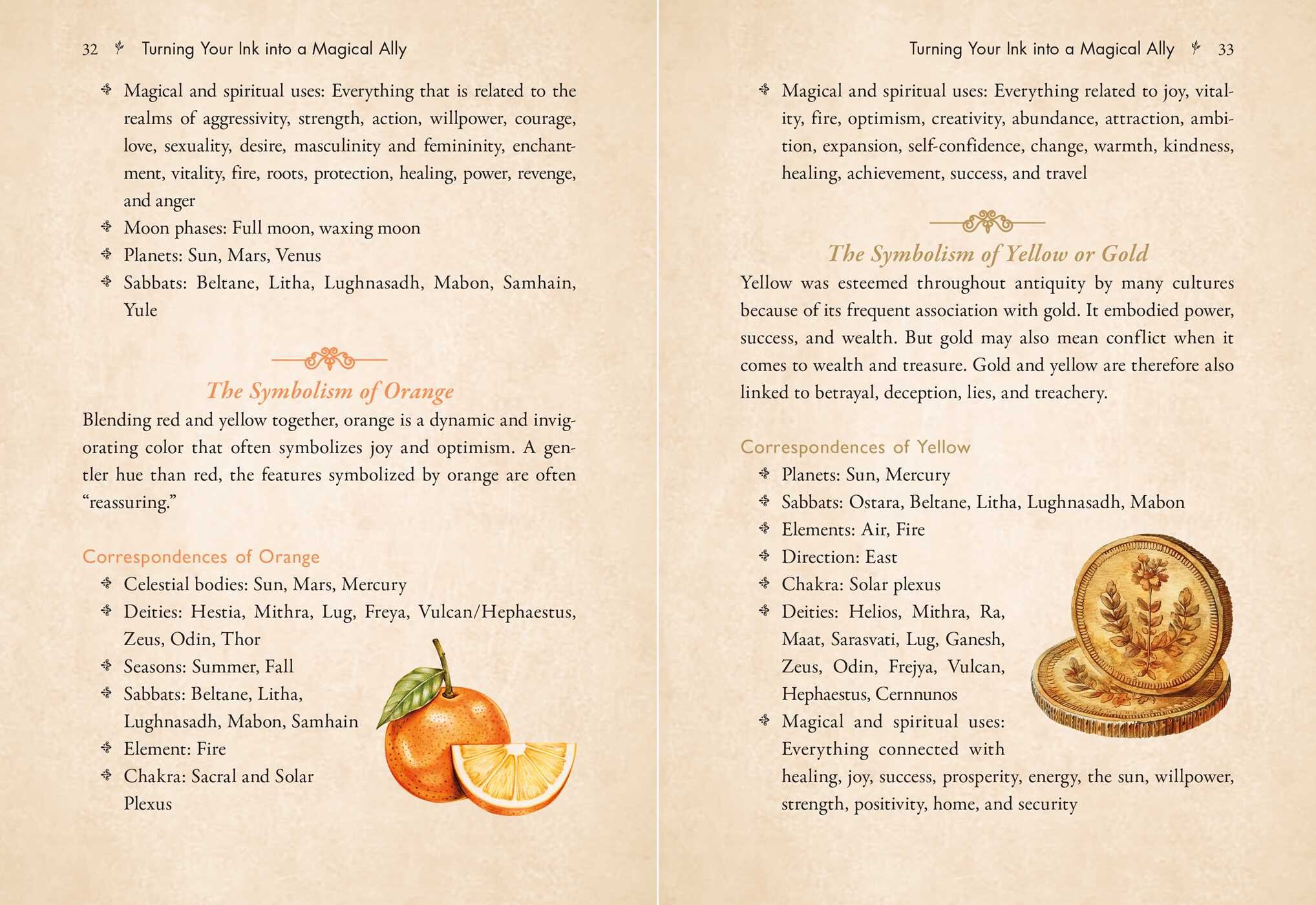
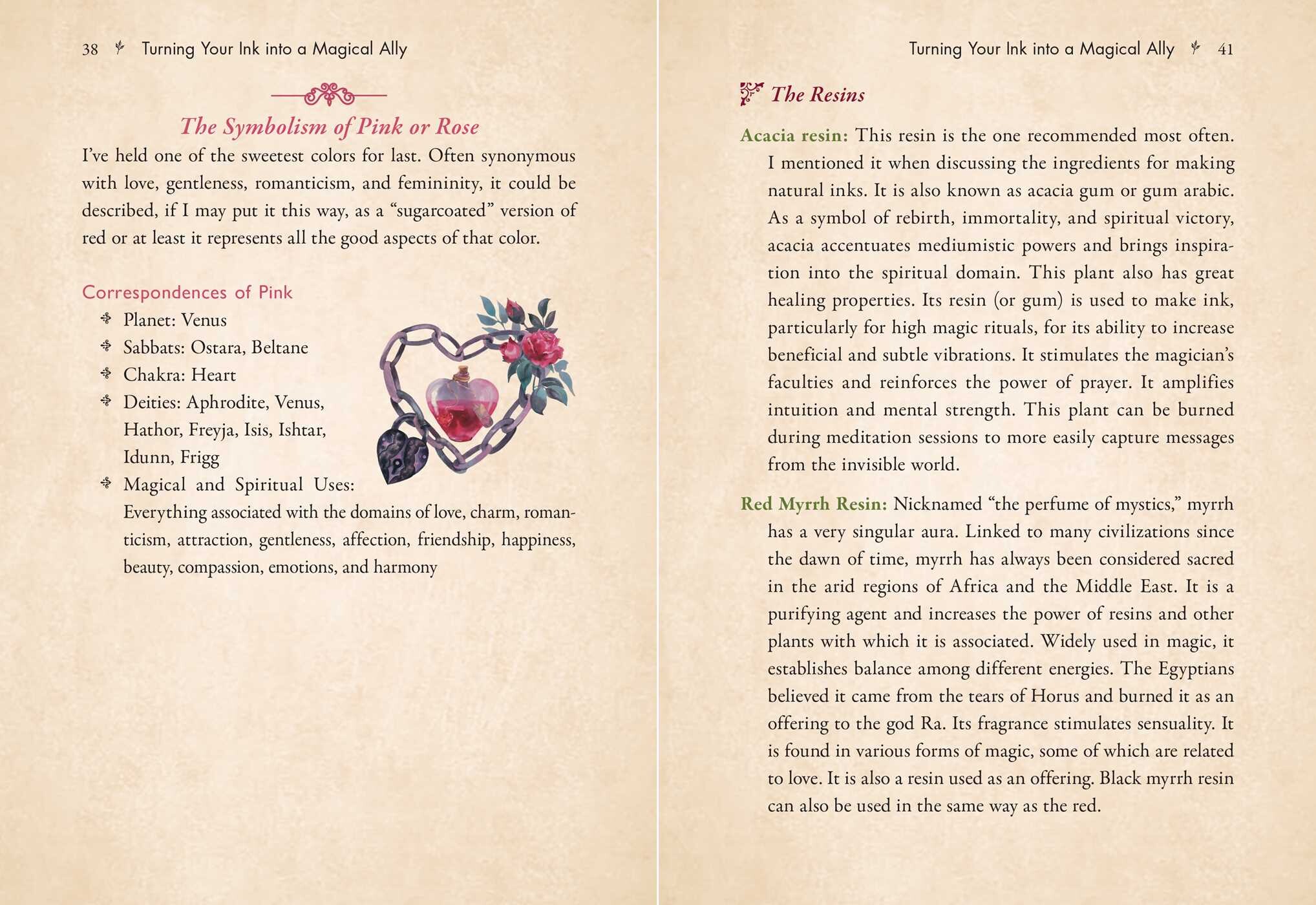
• Explores the magical symbolism of different colors of ink and what kind of spells and rituals each is most suited for
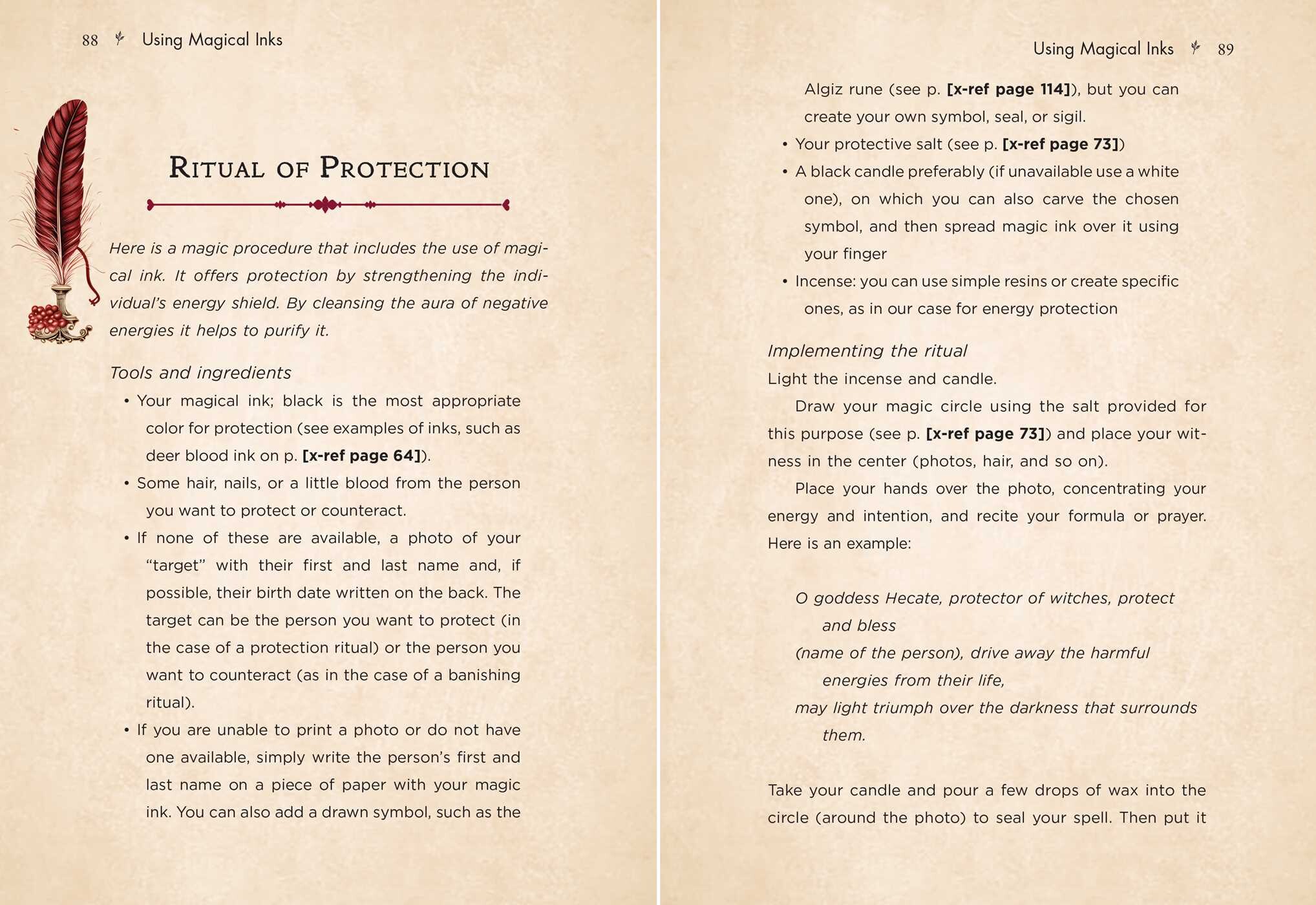
• Explains how to charge ink for spellwork, including sharing spells, and how to use magical ink for divination, banishing, protection, summoning, and curse breaking
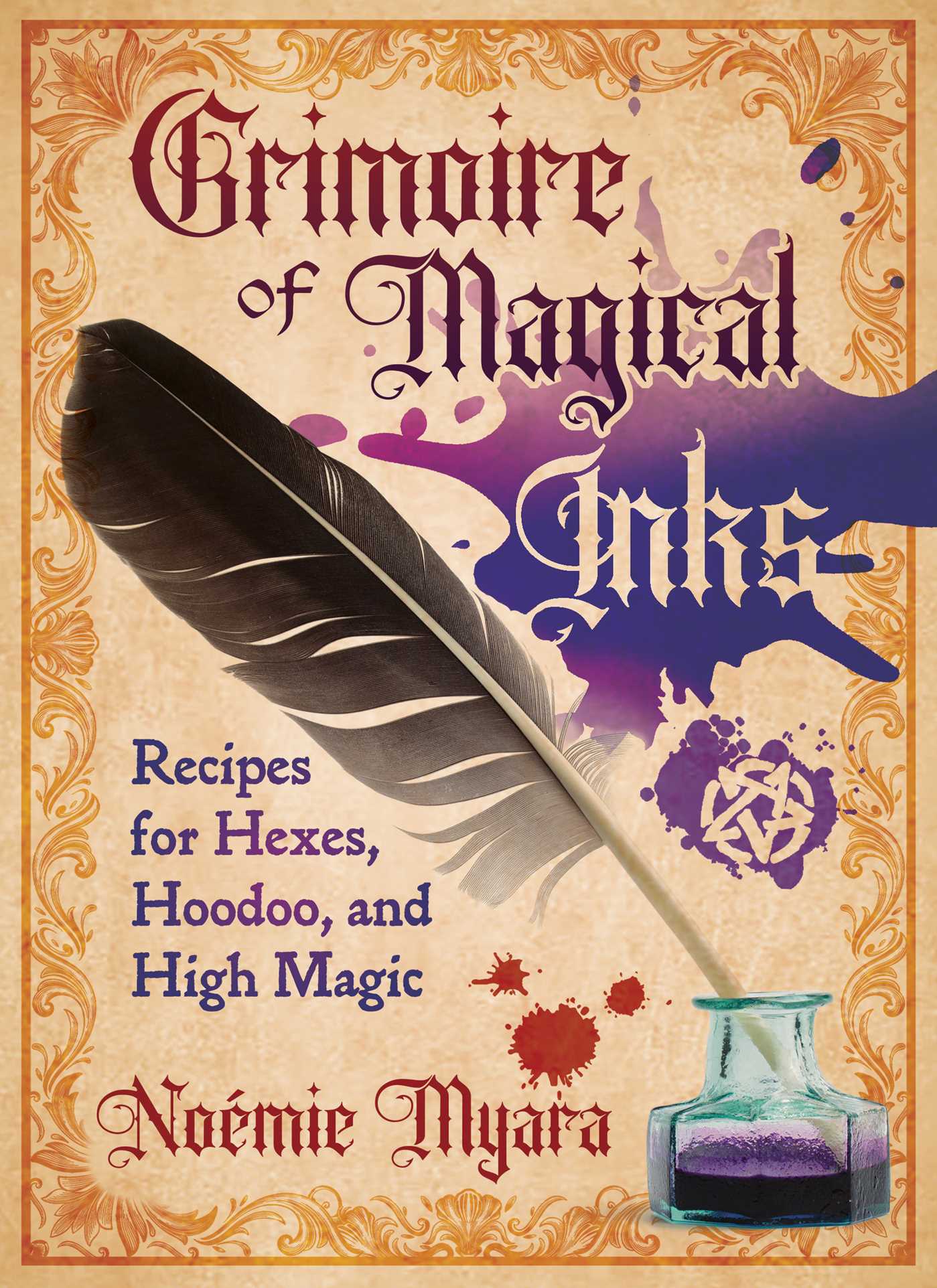
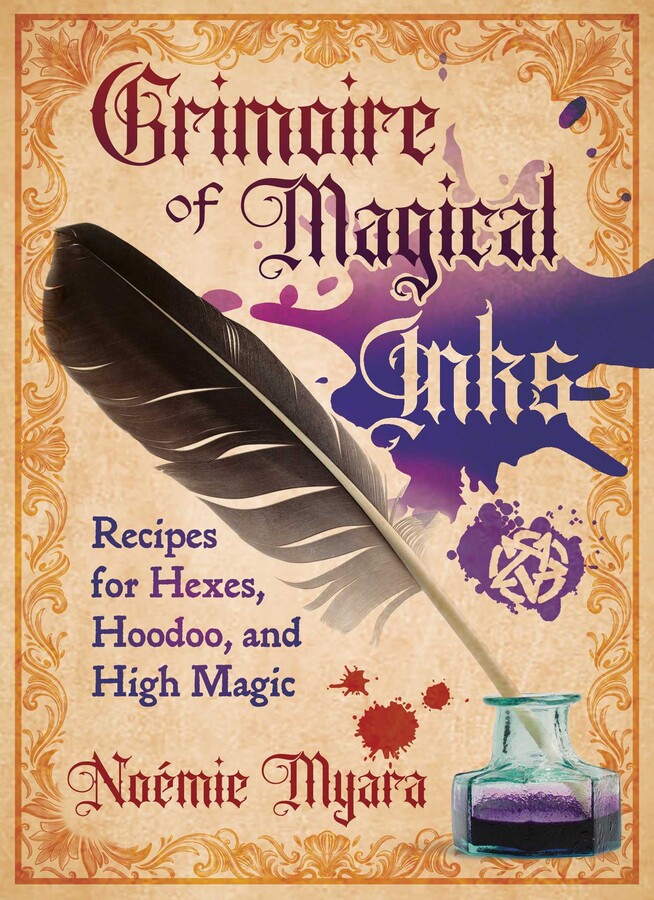
Ink is a potent energy conductor that can capture, store, charge, transport, and amplify energy. It has exceptional symbolic and magical power. In this concise yet comprehensive guide to the magical use of ink, Noémie Myara explores ink as a valuable ally for witches and other magical practitioners.
Myara explains how ink was first used as an alternative for blood in spells and rituals and was quickly recognized as a powerful and versatile magical component in its own right. She looks at the properties of the herbs and resins that go into its composition and shares simple recipes for creating your own magical inks in 5 important colors—black, red, brown, purple, and blue. She then explores the magical symbolism of these 5 colors as well as 5 additional colors and what kind of magical and spiritual uses each is most suited for.
Revealing the steps necessary to transform ink into a magical ally—through rituals influenced by elements, spirits, and deities—Myara explains how to store intentions in ink, how to charge it for spellwork, and how to use magical ink for divination. She also explains how to create a magic circle for use in divination as well as shares spells for banishing rituals, protection, and curse breaking.
• Explores the magical symbolism of different colors of ink and what kind of spells and rituals each is most suited for
• Explains how to charge ink for spellwork, including sharing spells, and how to use magical ink for divination, banishing, protection, summoning, and curse breaking
Ink is a potent energy conductor that can capture, store, charge, transport, and amplify energy. It has exceptional symbolic and magical power. In this concise yet comprehensive guide to the magical use of ink, Noémie Myara explores ink as a valuable ally for witches and other magical practitioners.
Myara explains how ink was first used as an alternative for blood in spells and rituals and was quickly recognized as a powerful and versatile magical component in its own right. She looks at the properties of the herbs and resins that go into its composition and shares simple recipes for creating your own magical inks in 5 important colors—black, red, brown, purple, and blue. She then explores the magical symbolism of these 5 colors as well as 5 additional colors and what kind of magical and spiritual uses each is most suited for.
Revealing the steps necessary to transform ink into a magical ally—through rituals influenced by elements, spirits, and deities—Myara explains how to store intentions in ink, how to charge it for spellwork, and how to use magical ink for divination. She also explains how to create a magic circle for use in divination as well as shares spells for banishing rituals, protection, and curse breaking.
Excerpt
One
Magical Inks
HISTORY AND GENERAL INFORMATION
Ink’s history goes very far back in time. The earliest traces of works made with ink or a substance quite similar to it have been found in caves. Some of these vestiges of the remote past go back to the Neanderthal era, in other words 50,000 years ago. Even if they cannot be considered “inks” as we understand them today, the black and ochre colors of cave art can be considered to be their foundations and origins.
Several different uses of ink have been discovered throughout the course of history in many ancient cultures that developed it from plants, minerals, and animal products. We can see how ink was used in ancient Egypt thanks to the papyri written by the scribes. The Egyptians mastered several pigmentation techniques: Their inks contained charcoal and pigments of plant and mineral origin. The same was true in India and China. In the Tian Mountains of the latter during the reign of Huangdi (2697 BC), ink was a kind of lacquer that was applied to silk with a piece of bamboo before being replaced by a black stone (an ink stick) that had to be dipped into water beforehand and rubbed. The well-known Chinese or Indian ink, whose original base was a black carbon pigment, was made from a fluid binding agent (such as protein, skin, or fish glue). This was followed by the use of plant based glues, which were useful because of their tanning effect and for creating ink that was indelible.
While it is most often liquid, ink can also come in the form of a paste. As a general rule, its current composition includes a base of water, resin, pigments or dyes, and solvents. But it is also possible to manufacture your own natural inks thanks to recipes that you can find further on in this book. Ink has the distinctive feature of being colored for the purpose of leaving a mark on the surface to which it is applied. Depending on their intended use (drawing, printing, and so forth), and the surface on which they are to be used (paper, ceramics, skin, and so forth), there are different kinds of ink. There are also different methods and tools for using ink: pens, brushes, needles, fingers, and so on.
FLUIDIC CAPACITORS IN WITCHCRAFT
Magical inks are considered to be fluidic capacitors or condensers, similar to other allies in witchcraft rituals. First you may ask, just what is a fluidic capacitor in witchcraft? This is a term found in occult practices for describing an energy conductor that has a strong ability to capture, store, charge, amplify, and transmit magical energies. Several ancient, magical works mention them, but many contemporary authors and occultists also lay claim to their use. The term fluidic does not necessarily mean that the capacitor is liquid; it refers to vital energy, a charge of energy, or the flow of magical energy.
Simply by virtue of its function a fluidic capacitor is already a powerful ally. For this reason, a sorcerer or a witch will create a fluid condenser like this to store the properties, qualities, and magic of the natural elements that go into its composition as well as their own intentions and outside influences (such as those of stars, spirits, deities, and so on). He or she will then charge it with a ritual and use it during specific circumstances for casting spells. As you can see, a fluidic capacitor is a decisive ally that gives you the power to master different kinds of energy. It is a proven and major tool for working magic.
The substances used to create these energy condensers can be solid, liquid, or gaseous. We find among the standard traditional elements that can be crafted and charged ritually to become fluidic capacitors. These include incense made from natural resins and plants, plant or beeswax, metals, oils, essential oils, perfumes, sprays, and of course inks.
Magical inks are attributed a distinctive (and not at all negligible) character in several esoteric practices in comparison to other fluidic capacitors. They in fact symbolize blood and vital fluids in magic analogies. One of the most powerful condensers of the flow of vital energy is blood, so it may often be added to magical inks to make them much more effective. Don’t let this creep you out. We will revisit it in greater detail on page 49 when we touch on an equally important subject: witnesses.
WHAT ARE MAGICAL INKS?
A magical ink is an ink that has been consecrated for use in the practice of magic, a purpose for which it has been ritualized. This ink can be made by hand or bought in a store that sells occult items. It is also possible to use traditional ink, such as India ink, by customizing it before ritually consecrating it. But we will also look at how to make your own inks from scratch.
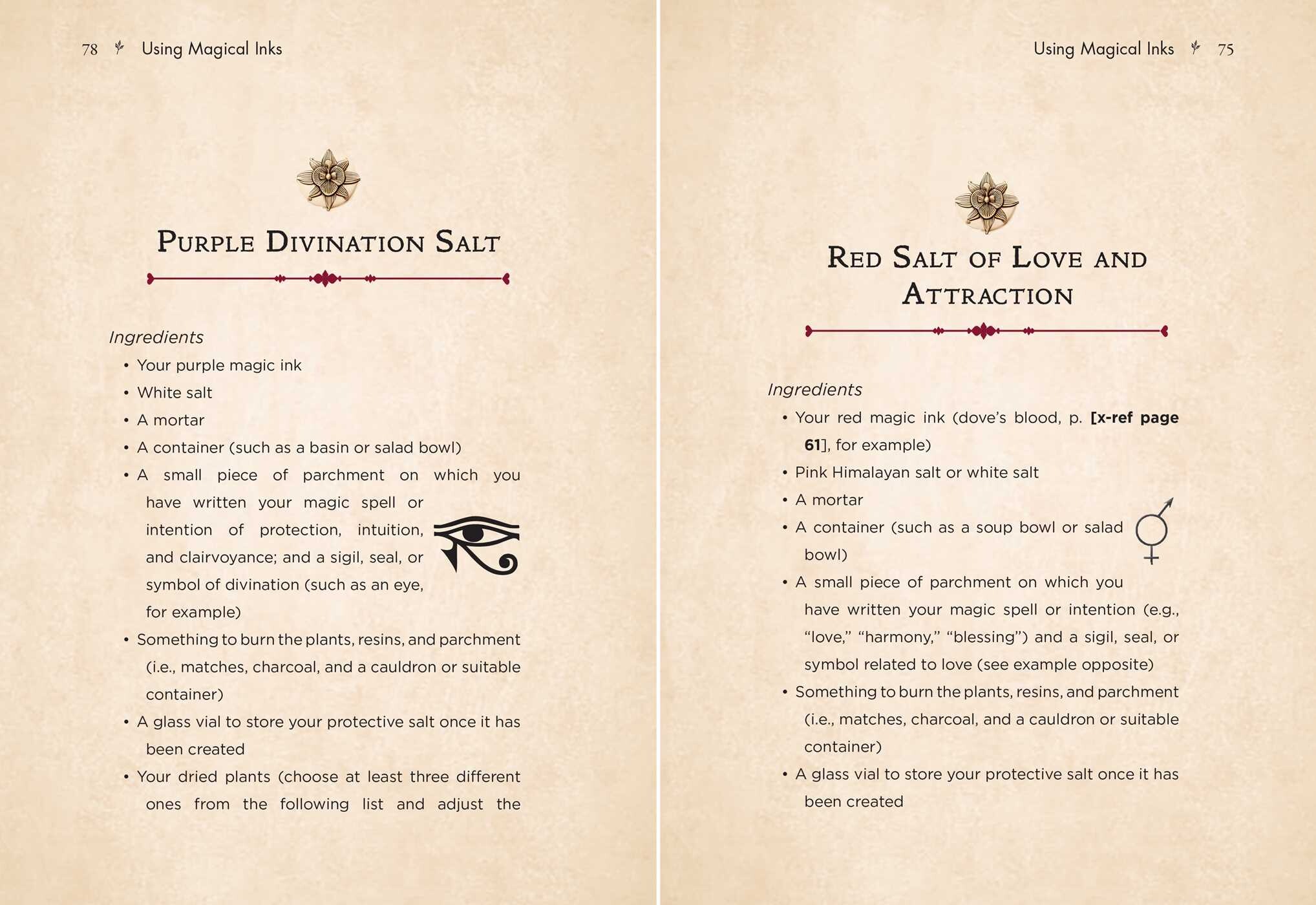
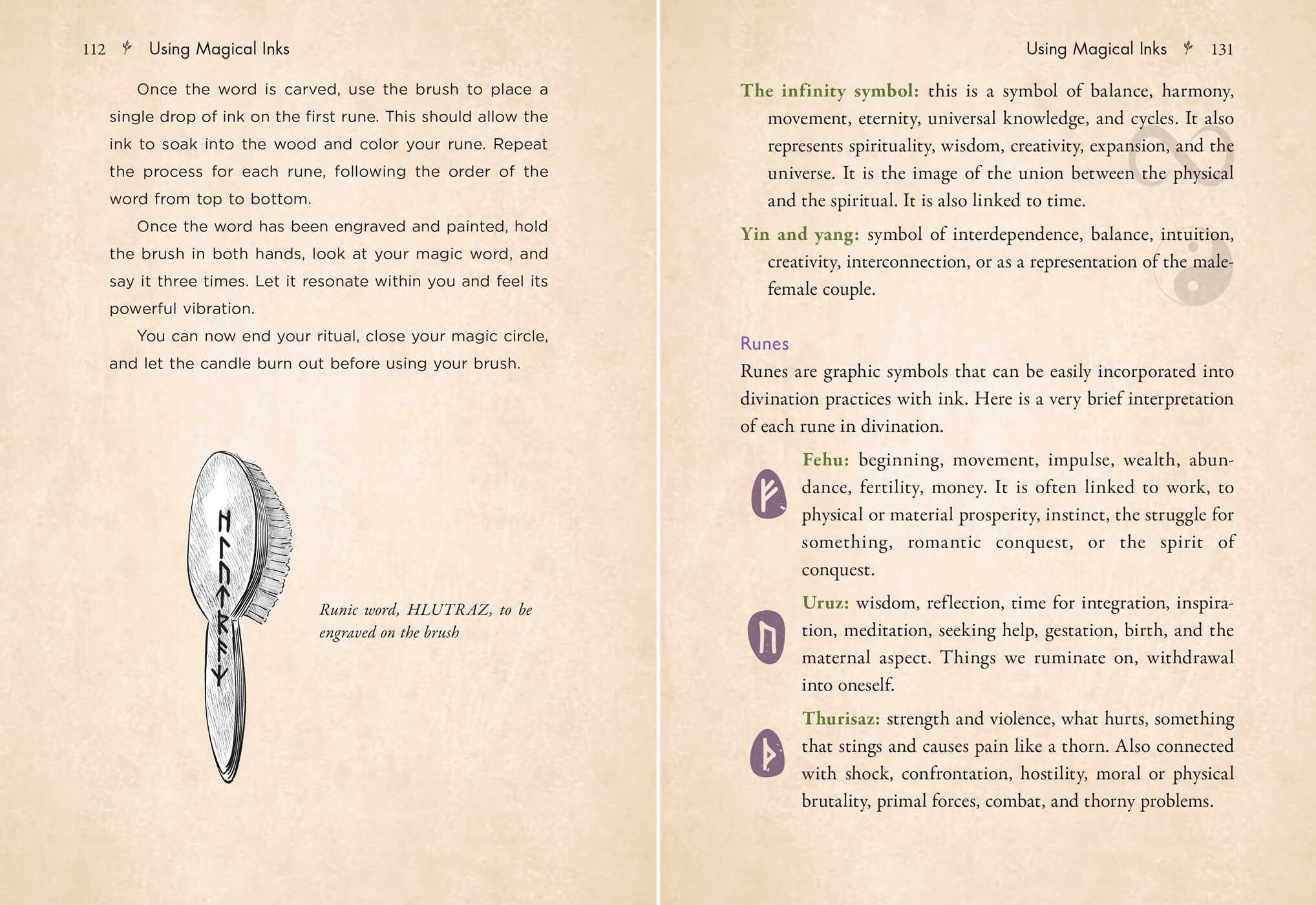
Inks that have been consecrated for magic use are generally used to draw symbols, sigils, seals, and runes; to write magic words; or to spell out the intentions that shape the incantation or charm to be cast. They can also play a role in the crafting of various creations such as magic salts, spell jars, amulets, and talismans.
These magical inks can be used in a wide variety of spells, rituals, and practices, and there are numerous ways to use them. They are helpful for completing your grimoire (or book of shadows), to spread over sacred symbols that have been carved on candles, to mark fabric, to draw on the body, to practice automatic or intuitive writing, to block a mirror or a spell, to write and sign occult pacts, among other things. To sum it up, inks have a choice place in all magical acts.
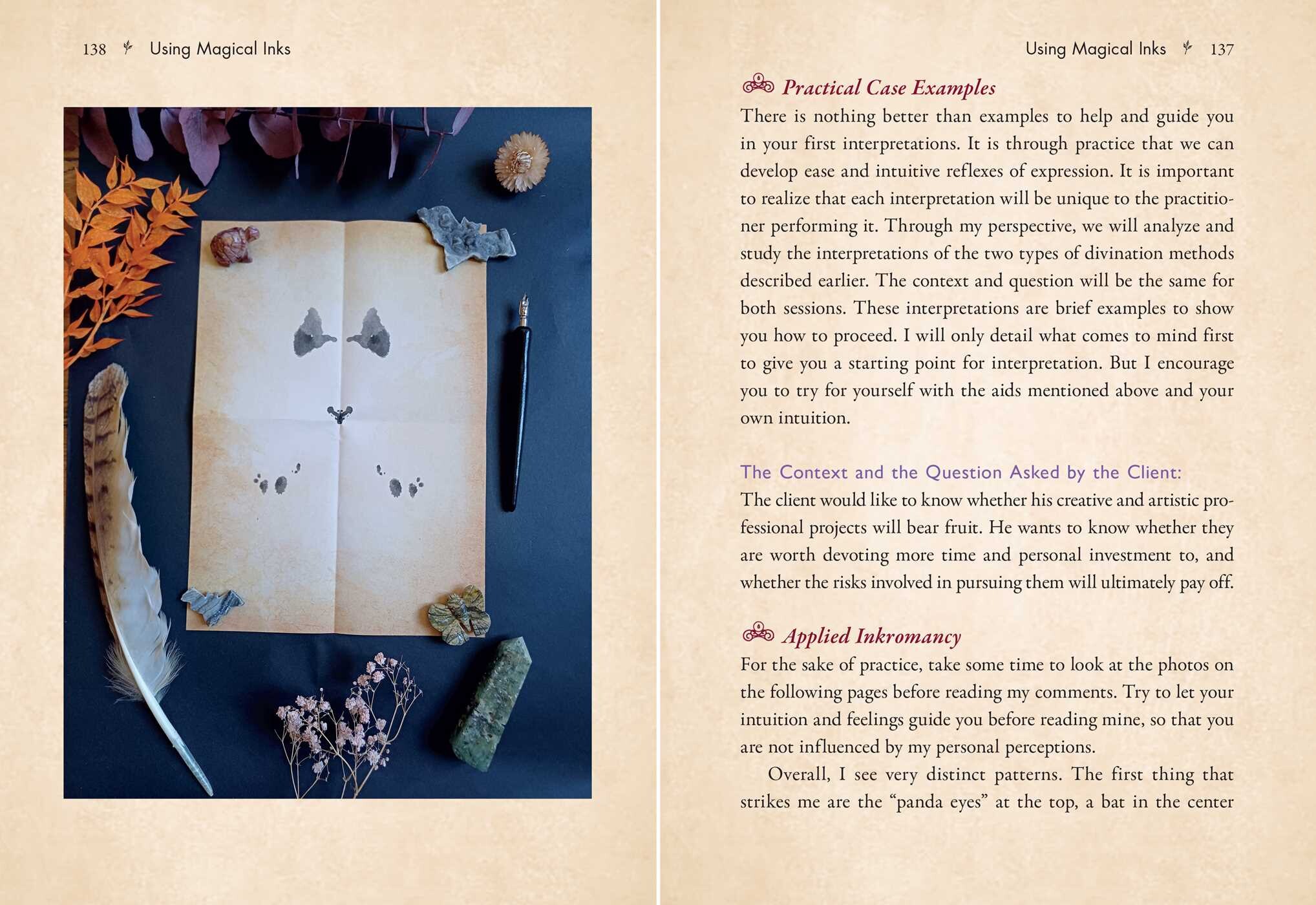
They do stand out from the standard tools intended for witchcraft rituals. However, they are essential elements in certain divination practices such as those that involve interpreting the shapes made by ink on different mediums like on papers (inkromancy) or in water. This latter method is not so well known, and we will revisit it in greater detail later in the book. Personally, what I love about inks is their versatility in many different uses and functions.
I like to save inks for specific magical operations. As I view them as a magical tool, this is a way for amplifying their power. By saving an ink for a very specific task, I accentuate its unique qualities in my practice and the power it brings to the role it has to play. I like to ritualize them and create them with a definite purpose in mind as this enhances their efficacy in the magic they bring to the purpose for which they have been crafted. This is one of the reasons why I am offering you so many recipes, not only does this give you a larger array to choose from but you will be more likely to find the one that speaks to you most deeply and will best serve your needs. And if, like me, you want several inks for specific purposes in your rituals or divination practices, you will be able to do so with no problem.
Two
Crafting Your Own Ink
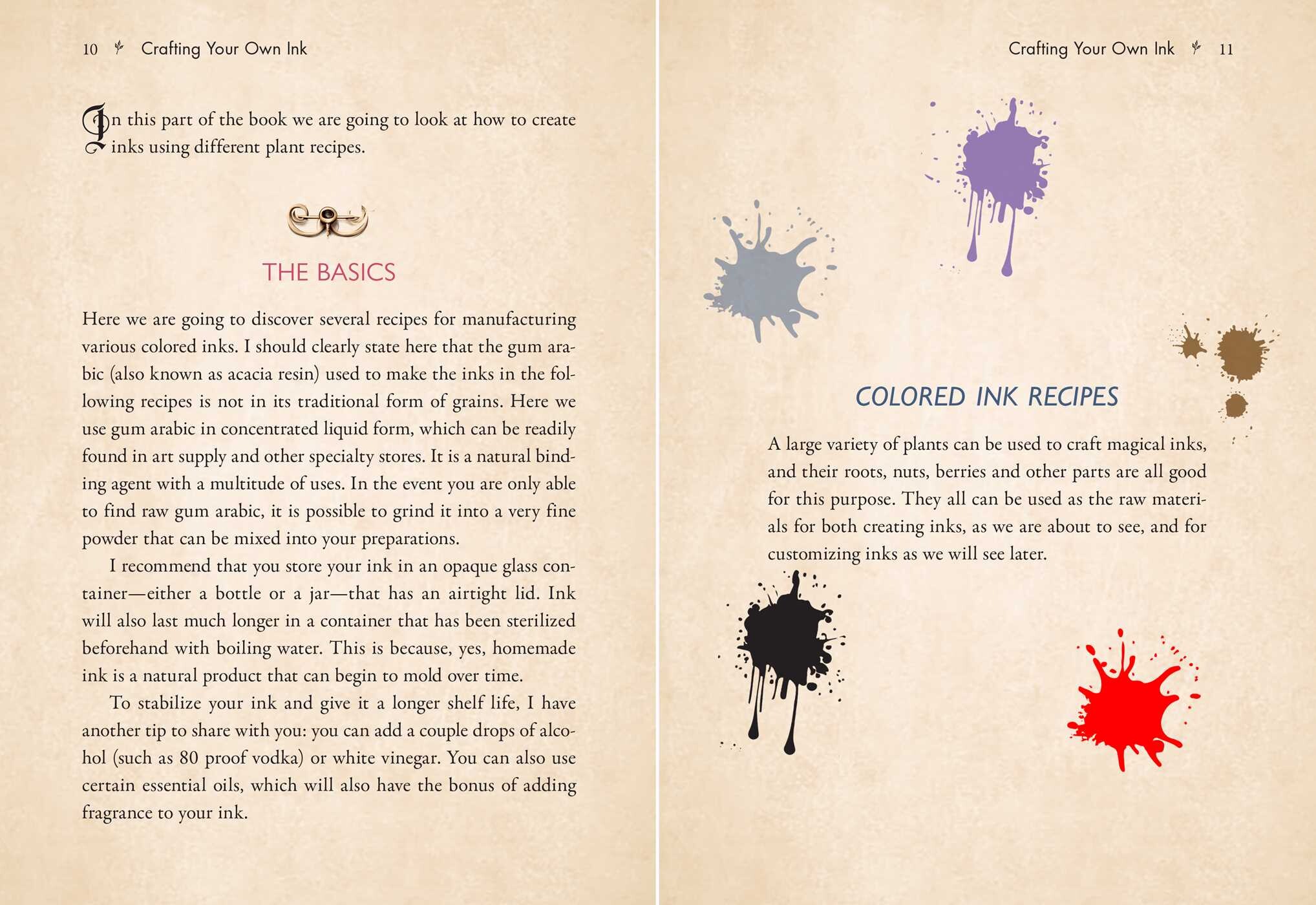
In this part of the book we are going to look at how to create inks using different plant recipes.
THE BASICS
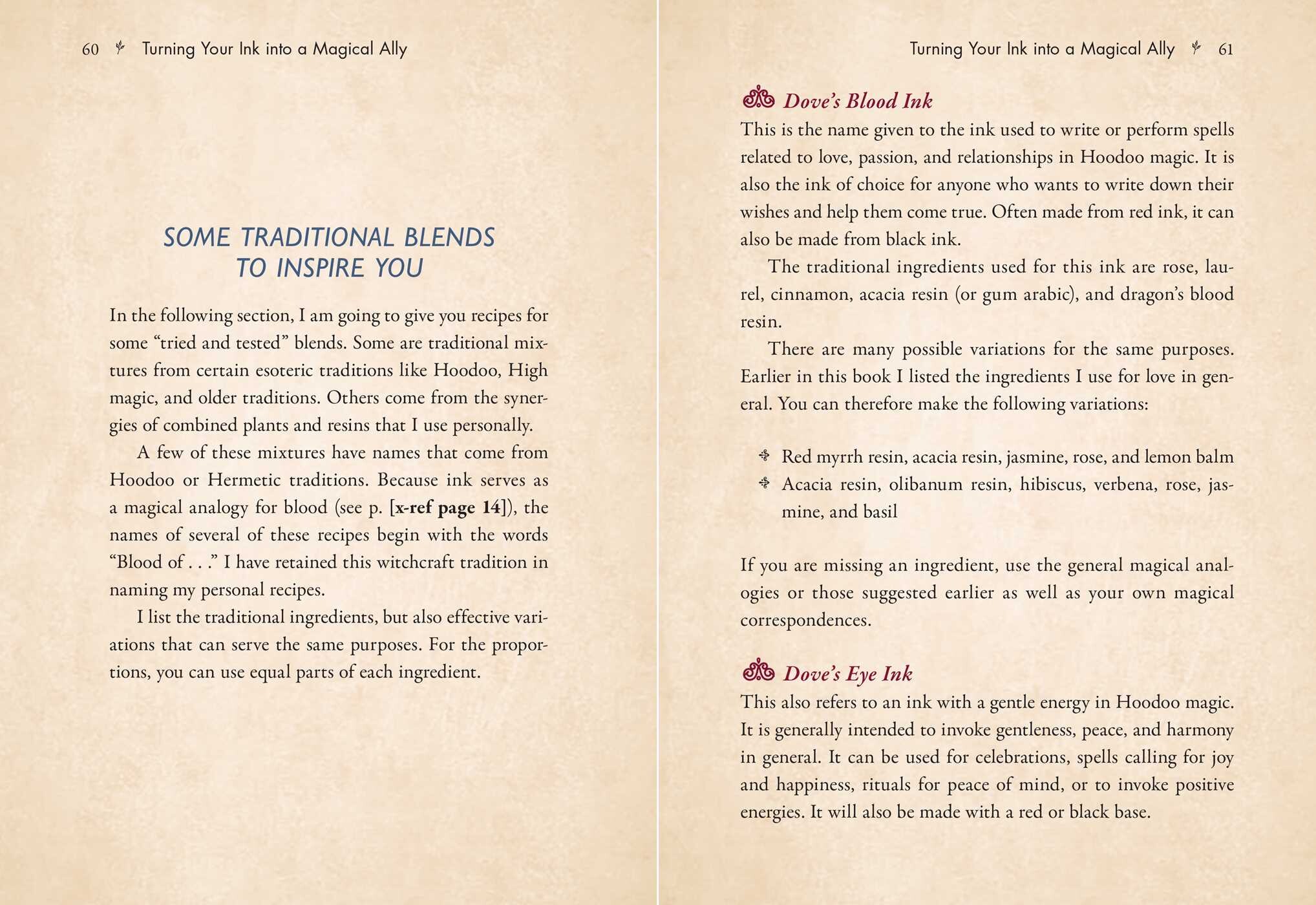
Here we are going to discover several recipes for manufacturing various colored inks. I should clearly state here that the gum Arabic (also known as acacia resin) used to make the inks in the following recipes is not in its traditional form of grains. Here we use gum arabic in concentrated liquid form, which can be readily found in art supply and other specialty stores. It is a natural binding agent with a multitude of uses. In the event you are only able to find raw gum arabic, it is possible to grind it into a very fine powder that can be mixed into your preparations.
I recommend that you store your ink in an opaque glass container—either a bottle or a jar—that has an airtight lid. Ink will also last much longer in a container that has been sterilized beforehand with boiling water. This is because, yes, homemade ink is a natural product that can begin to mold over time.
To stabilize your ink and give it a longer shelf life, I have another tip to share with you: You can add a couple drops of alcohol (such as 80 proof vodka) or white vinegar. You can also use certain essential oils, which will also have the bonus of adding fragrance to your ink.
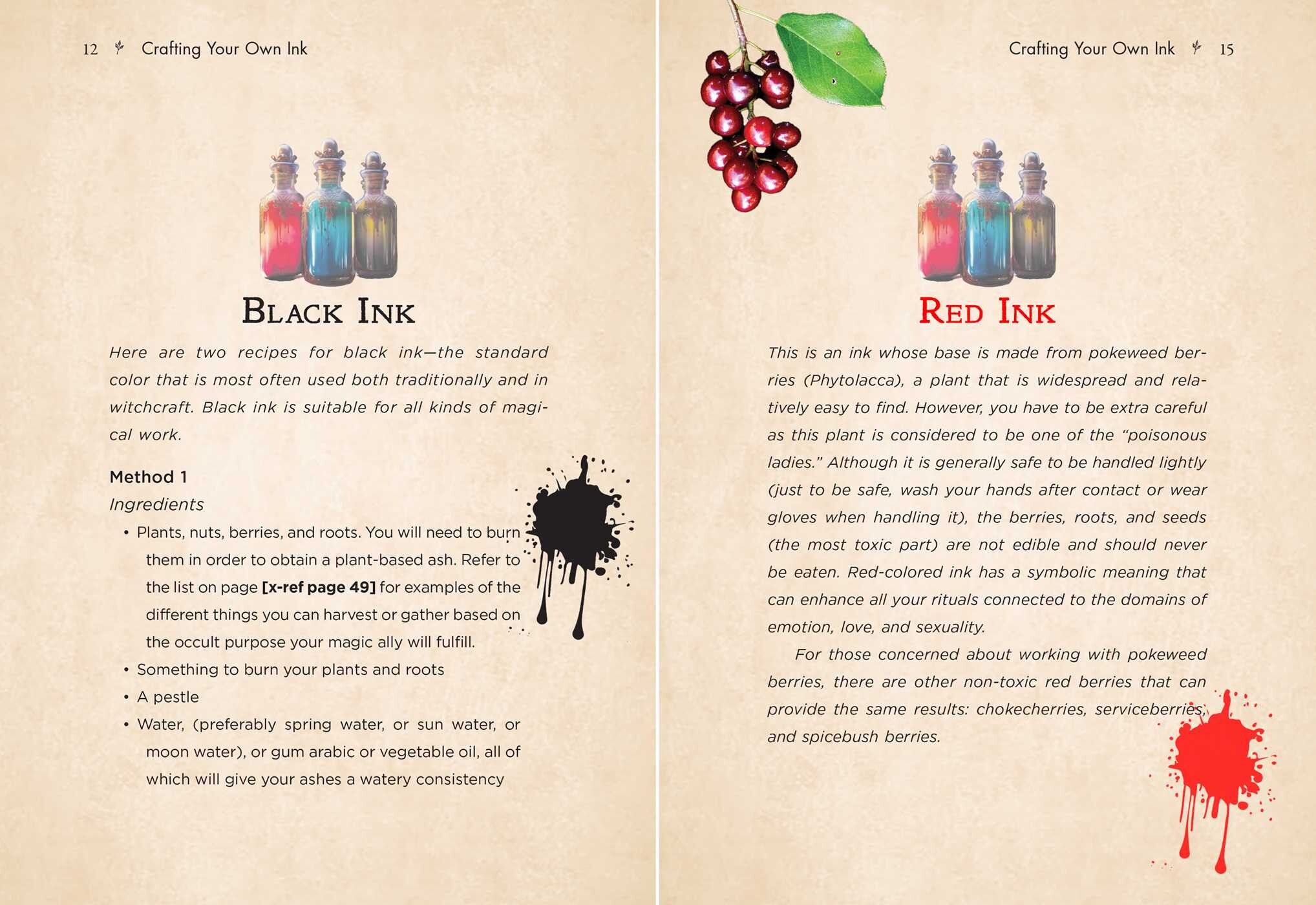
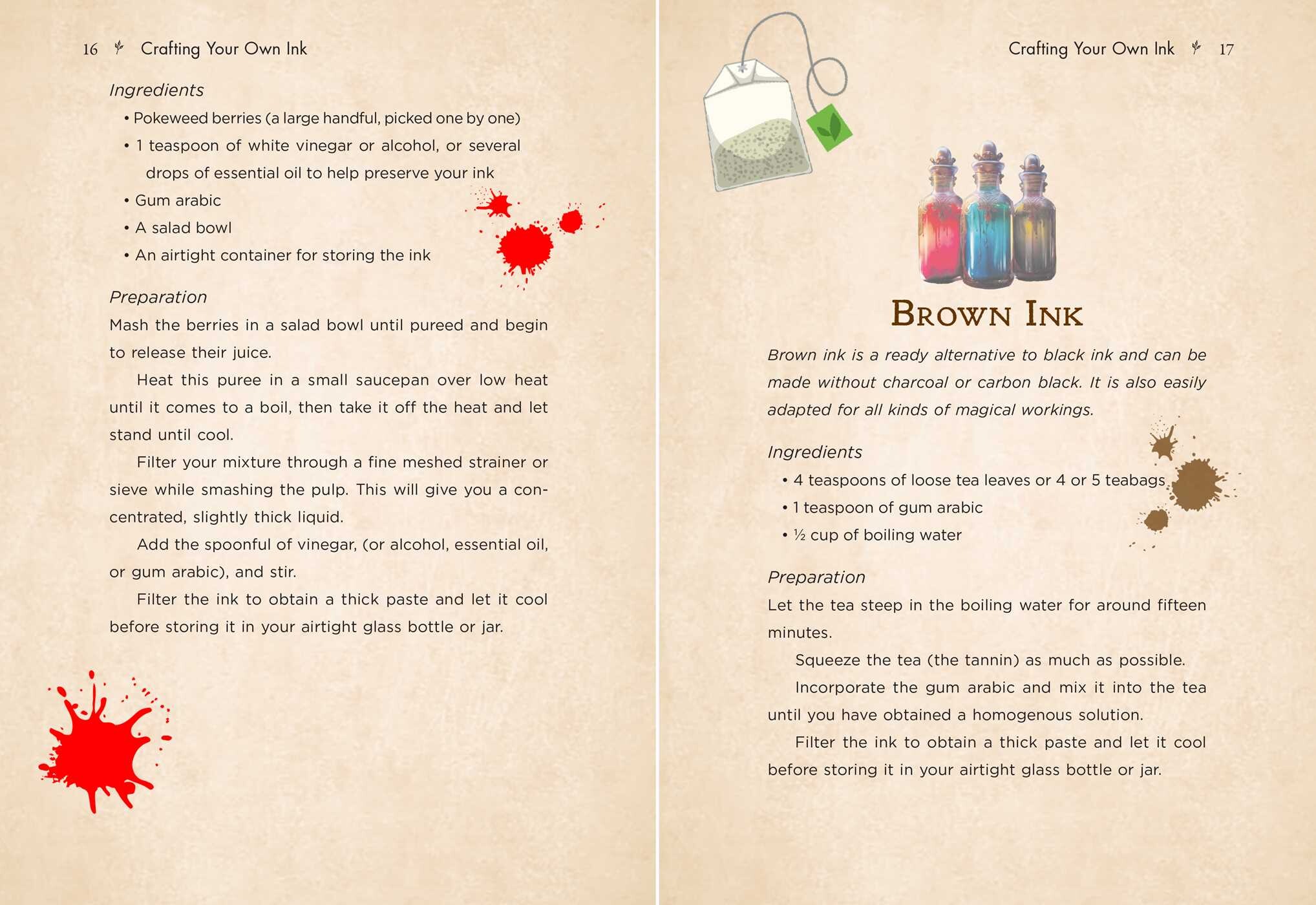
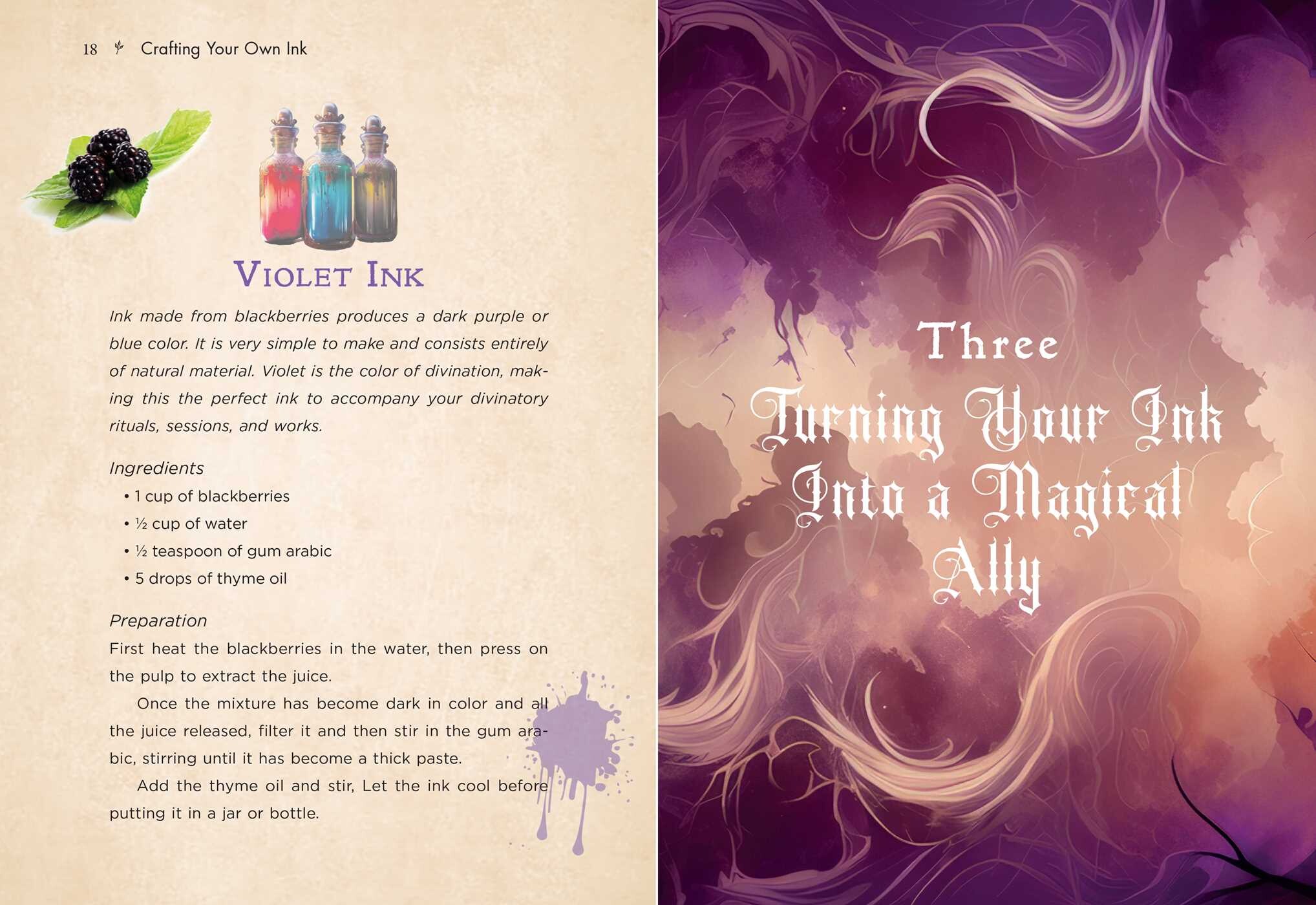
COLORED INK RECIPES
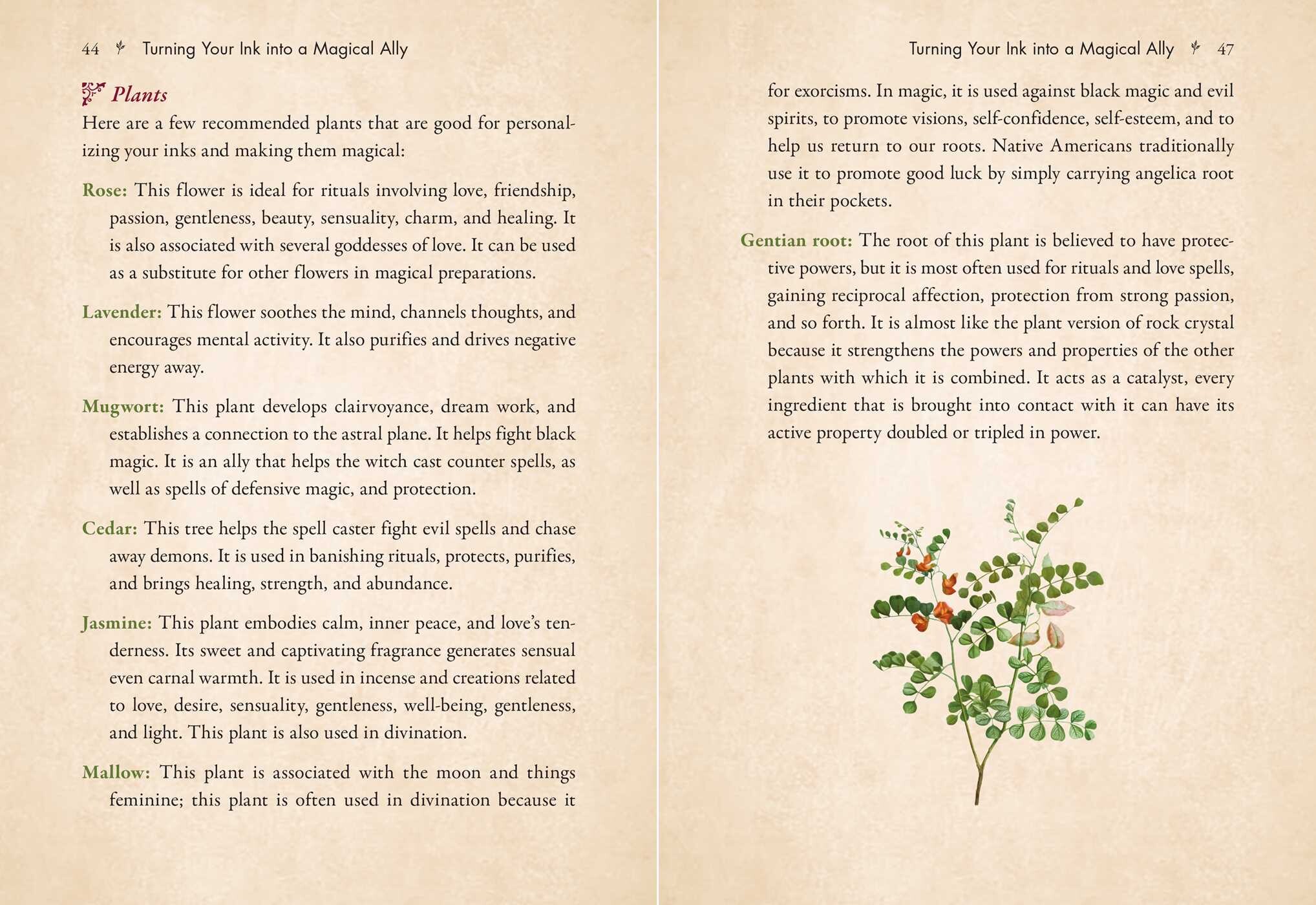
A large variety of plants can be used to craft magical inks, and their roots, nuts, berries, and other parts are all good for this purpose. They all can be used as the raw materials for both creating inks, as we are about to see, and for customizing inks, as we will see later.
Magical Inks
HISTORY AND GENERAL INFORMATION
Ink’s history goes very far back in time. The earliest traces of works made with ink or a substance quite similar to it have been found in caves. Some of these vestiges of the remote past go back to the Neanderthal era, in other words 50,000 years ago. Even if they cannot be considered “inks” as we understand them today, the black and ochre colors of cave art can be considered to be their foundations and origins.
Several different uses of ink have been discovered throughout the course of history in many ancient cultures that developed it from plants, minerals, and animal products. We can see how ink was used in ancient Egypt thanks to the papyri written by the scribes. The Egyptians mastered several pigmentation techniques: Their inks contained charcoal and pigments of plant and mineral origin. The same was true in India and China. In the Tian Mountains of the latter during the reign of Huangdi (2697 BC), ink was a kind of lacquer that was applied to silk with a piece of bamboo before being replaced by a black stone (an ink stick) that had to be dipped into water beforehand and rubbed. The well-known Chinese or Indian ink, whose original base was a black carbon pigment, was made from a fluid binding agent (such as protein, skin, or fish glue). This was followed by the use of plant based glues, which were useful because of their tanning effect and for creating ink that was indelible.
While it is most often liquid, ink can also come in the form of a paste. As a general rule, its current composition includes a base of water, resin, pigments or dyes, and solvents. But it is also possible to manufacture your own natural inks thanks to recipes that you can find further on in this book. Ink has the distinctive feature of being colored for the purpose of leaving a mark on the surface to which it is applied. Depending on their intended use (drawing, printing, and so forth), and the surface on which they are to be used (paper, ceramics, skin, and so forth), there are different kinds of ink. There are also different methods and tools for using ink: pens, brushes, needles, fingers, and so on.
FLUIDIC CAPACITORS IN WITCHCRAFT
Magical inks are considered to be fluidic capacitors or condensers, similar to other allies in witchcraft rituals. First you may ask, just what is a fluidic capacitor in witchcraft? This is a term found in occult practices for describing an energy conductor that has a strong ability to capture, store, charge, amplify, and transmit magical energies. Several ancient, magical works mention them, but many contemporary authors and occultists also lay claim to their use. The term fluidic does not necessarily mean that the capacitor is liquid; it refers to vital energy, a charge of energy, or the flow of magical energy.
Simply by virtue of its function a fluidic capacitor is already a powerful ally. For this reason, a sorcerer or a witch will create a fluid condenser like this to store the properties, qualities, and magic of the natural elements that go into its composition as well as their own intentions and outside influences (such as those of stars, spirits, deities, and so on). He or she will then charge it with a ritual and use it during specific circumstances for casting spells. As you can see, a fluidic capacitor is a decisive ally that gives you the power to master different kinds of energy. It is a proven and major tool for working magic.
The substances used to create these energy condensers can be solid, liquid, or gaseous. We find among the standard traditional elements that can be crafted and charged ritually to become fluidic capacitors. These include incense made from natural resins and plants, plant or beeswax, metals, oils, essential oils, perfumes, sprays, and of course inks.
Magical inks are attributed a distinctive (and not at all negligible) character in several esoteric practices in comparison to other fluidic capacitors. They in fact symbolize blood and vital fluids in magic analogies. One of the most powerful condensers of the flow of vital energy is blood, so it may often be added to magical inks to make them much more effective. Don’t let this creep you out. We will revisit it in greater detail on page 49 when we touch on an equally important subject: witnesses.
WHAT ARE MAGICAL INKS?
A magical ink is an ink that has been consecrated for use in the practice of magic, a purpose for which it has been ritualized. This ink can be made by hand or bought in a store that sells occult items. It is also possible to use traditional ink, such as India ink, by customizing it before ritually consecrating it. But we will also look at how to make your own inks from scratch.
Inks that have been consecrated for magic use are generally used to draw symbols, sigils, seals, and runes; to write magic words; or to spell out the intentions that shape the incantation or charm to be cast. They can also play a role in the crafting of various creations such as magic salts, spell jars, amulets, and talismans.
These magical inks can be used in a wide variety of spells, rituals, and practices, and there are numerous ways to use them. They are helpful for completing your grimoire (or book of shadows), to spread over sacred symbols that have been carved on candles, to mark fabric, to draw on the body, to practice automatic or intuitive writing, to block a mirror or a spell, to write and sign occult pacts, among other things. To sum it up, inks have a choice place in all magical acts.
They do stand out from the standard tools intended for witchcraft rituals. However, they are essential elements in certain divination practices such as those that involve interpreting the shapes made by ink on different mediums like on papers (inkromancy) or in water. This latter method is not so well known, and we will revisit it in greater detail later in the book. Personally, what I love about inks is their versatility in many different uses and functions.
I like to save inks for specific magical operations. As I view them as a magical tool, this is a way for amplifying their power. By saving an ink for a very specific task, I accentuate its unique qualities in my practice and the power it brings to the role it has to play. I like to ritualize them and create them with a definite purpose in mind as this enhances their efficacy in the magic they bring to the purpose for which they have been crafted. This is one of the reasons why I am offering you so many recipes, not only does this give you a larger array to choose from but you will be more likely to find the one that speaks to you most deeply and will best serve your needs. And if, like me, you want several inks for specific purposes in your rituals or divination practices, you will be able to do so with no problem.
Two
Crafting Your Own Ink
In this part of the book we are going to look at how to create inks using different plant recipes.
THE BASICS
Here we are going to discover several recipes for manufacturing various colored inks. I should clearly state here that the gum Arabic (also known as acacia resin) used to make the inks in the following recipes is not in its traditional form of grains. Here we use gum arabic in concentrated liquid form, which can be readily found in art supply and other specialty stores. It is a natural binding agent with a multitude of uses. In the event you are only able to find raw gum arabic, it is possible to grind it into a very fine powder that can be mixed into your preparations.
I recommend that you store your ink in an opaque glass container—either a bottle or a jar—that has an airtight lid. Ink will also last much longer in a container that has been sterilized beforehand with boiling water. This is because, yes, homemade ink is a natural product that can begin to mold over time.
To stabilize your ink and give it a longer shelf life, I have another tip to share with you: You can add a couple drops of alcohol (such as 80 proof vodka) or white vinegar. You can also use certain essential oils, which will also have the bonus of adding fragrance to your ink.
COLORED INK RECIPES
A large variety of plants can be used to craft magical inks, and their roots, nuts, berries, and other parts are all good for this purpose. They all can be used as the raw materials for both creating inks, as we are about to see, and for customizing inks, as we will see later.
Product Details
- Publisher: Destiny Books (September 15, 2026)
- Length: 160 pages
- ISBN13: 9798888505243
Browse Related Books
Raves and Reviews
“As a lover of inks, I appreciate Noémie’s thorough survey of how they work to enhance, add, or modify energy in spellwork. This book is a trove of recipes, discussions of symbol and name magic, and an excellent exploration of how specific ingredients further support a magical goal. Also recommended for artists and writers who want to enrich their practice.”
– Arin Murphy-Hiscock, author of The Green Witch
“The next time you do spell work, draw talismans or sigils, inscribe ritual tools, sign oaths or certificates, or record entries in your magical journal, personal grimoire, or book of shadows, consult Noémie Myara’s Grimoire of Magical Inks first for inspiration on how to elevate one of the most easily overlooked items in your toolkit.”
– Richard Kaczynski, author of Mind over Magick
“Noémie Myara has a rare gift for making a specialized craft feel inviting, and Grimoire of Magical Inks is proof—the definitive guide that meets you exactly where you are in your practice. Never overwhelming, never oversimplifying, it’s a book any practitioner can learn from.”
– Madison Lillian, co-owner of Spellcrafter, a metaphysical and witchcraft store
“If, like me, you have never thought of making magical inks before, this expert author will inspire you to grab a few simple ingredients and make some immediately. Powerful spells, powerful recipes, powerful magic! Highly recommended.”
– Cait Johnson, author of Witch Wisdom for Magical Aging and Witch in the Kitchen
Resources and Downloads
High Resolution Images
-
Book Cover Image (jpg): Grimoire of Magical Inks
Fixed Layout eBook 9798888505243
Published by Destiny Books
Distributed by Simon & Schuster
Join our mailing list!
By clicking 'Sign me up' I acknowledge that I have read and agree to the privacy policy and terms of use.