
Get our latest staff recommendations, award news and digital catalog links right to your inbox.
Table of Contents
About The Book
A Los Angeles Times Book Prize for Young Adult Literature Finalist
Two starred reviews!
A Golden Kite Award Finalist for Young Adult Fiction
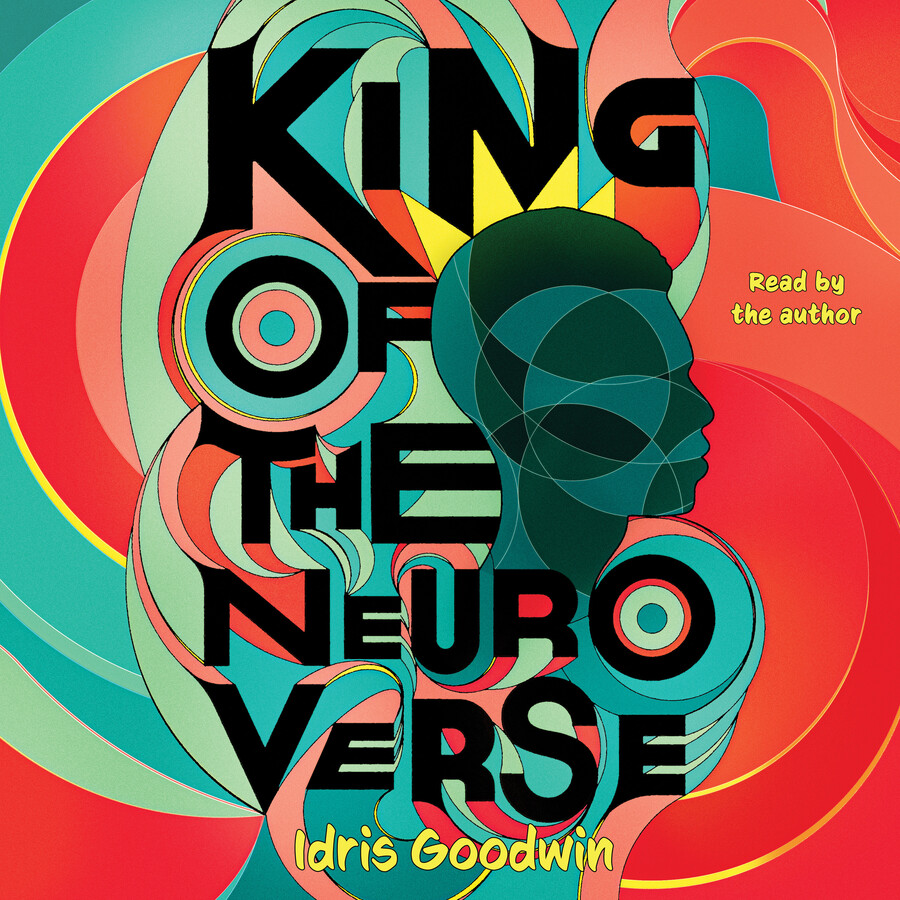
An “artful and introspective” (BCCB, starred review) novel in verse “celebration of neurodiversity wrapped in bars so tight they could stop traffic” (Shelf Awareness) about a Black teen with ADHD who finds self-expression and first love during one epic summer school season.
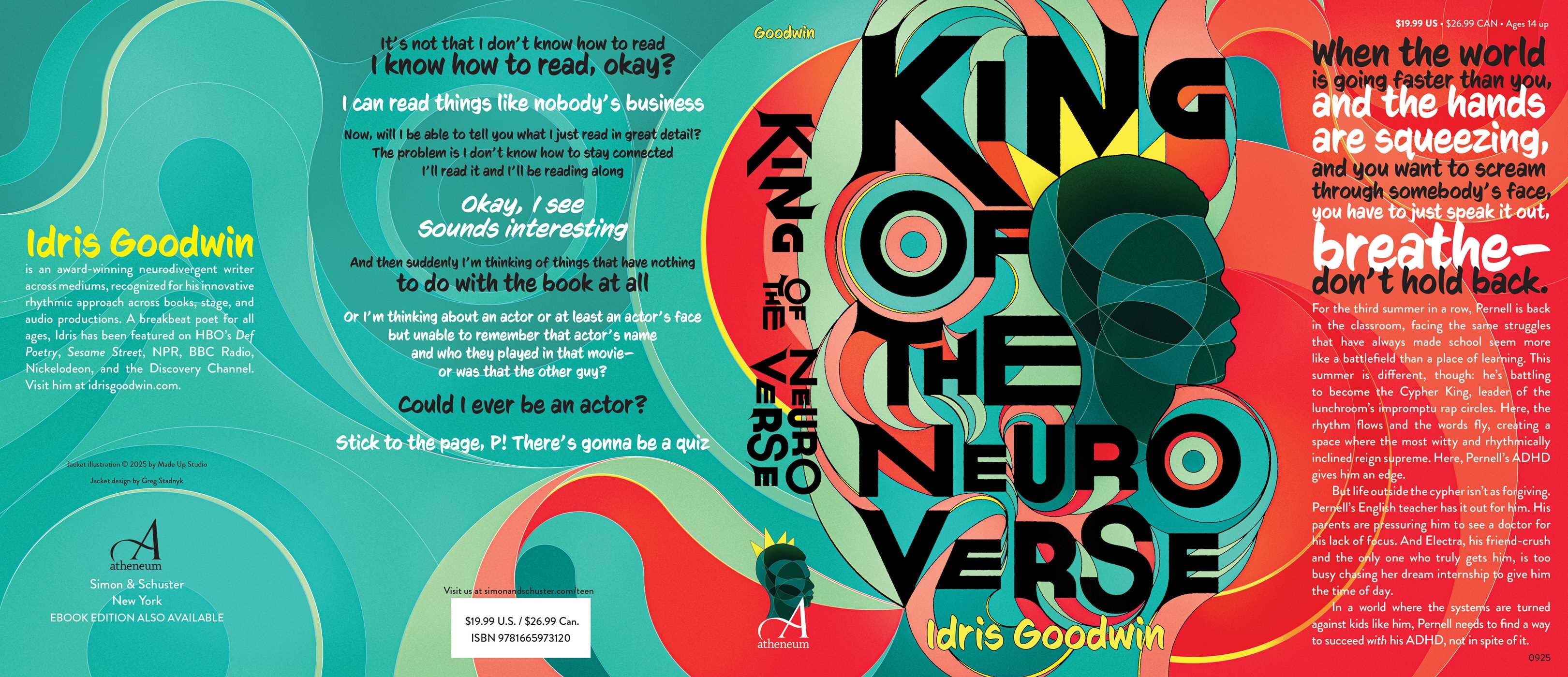
For the third summer in a row, Pernell is back in the classroom, facing the same struggles that have always made school seem more like a battlefield than a place of learning. This summer is different, though: he’s battling to become the Cypher King, leader of the lunchroom’s impromptu rap circles. Here, the rhythm flows and the words fly, creating a space where the wittiest and most rhythmically inclined reign supreme. Here, Pernell’s ADHD gives him an edge.
But life outside the cypher isn’t as forgiving. Pernell’s English teacher has it out for him. His parents are pressuring him to see a doctor for his lack of focus. And Electra, his friend-slash-crush and the only one who truly gets him, is too busy chasing her dream internship to give him the time of day.
If Pernell doesn’t pull himself together, he won’t just lose the title of Cypher King—he’ll lose his chance to graduate high school. In a world where the systems are turned against kids like him, Pernell needs to find a way to succeed with his ADHD, rather than in spite of it.
Two starred reviews!
A Golden Kite Award Finalist for Young Adult Fiction
An “artful and introspective” (BCCB, starred review) novel in verse “celebration of neurodiversity wrapped in bars so tight they could stop traffic” (Shelf Awareness) about a Black teen with ADHD who finds self-expression and first love during one epic summer school season.
For the third summer in a row, Pernell is back in the classroom, facing the same struggles that have always made school seem more like a battlefield than a place of learning. This summer is different, though: he’s battling to become the Cypher King, leader of the lunchroom’s impromptu rap circles. Here, the rhythm flows and the words fly, creating a space where the wittiest and most rhythmically inclined reign supreme. Here, Pernell’s ADHD gives him an edge.
But life outside the cypher isn’t as forgiving. Pernell’s English teacher has it out for him. His parents are pressuring him to see a doctor for his lack of focus. And Electra, his friend-slash-crush and the only one who truly gets him, is too busy chasing her dream internship to give him the time of day.
If Pernell doesn’t pull himself together, he won’t just lose the title of Cypher King—he’ll lose his chance to graduate high school. In a world where the systems are turned against kids like him, Pernell needs to find a way to succeed with his ADHD, rather than in spite of it.
Reading Group Guide
Join our mailing list! Get our latest staff recommendations, award news and digital catalog links right to your inbox.
By clicking 'Sign me up' I acknowledge that I have read and agree to the privacy policy and terms of use.
A Reading Group Guide to
King of the Neuro Verse
By Idris Goodwin
About the Book
When faced with his third year of summer school in 1999, Pernell is determined to do three things—pass English, document his seventeen-year-old wisdom for the survivors of Y2K, and claim his school’s title of Cypher King. But despite his best efforts, Pernell’s swirling thoughts and his archnemesis teacher, Ms. Harding, make passing seem insurmountable. With the support of his parents, his best friend Elektra, and new ally Dr. Yesler, Pernell learns there’s a reason behind his challenges with school: ADHD. As he begins to understand that his cypher abilities—sharp wordplay, quick connections, and deep observations—hold value far beyond the rap circle, he is cast into a whirlwind of self-discovery, performance, and persistence. By summer’s end, Pernell claims both his crown and his diagnosis, knowing his ADHD demands its own path—one that is uniquely his own.
Discussion Questions
1. Pernell documents his lived experience of ADHD while speaking to the future, showing both his strengths—like remembering fine details—and his challenges. How would you describe his experience of ADHD as it was perceived socially in 1999 compared to today? What’s different now, what’s the same, and what’s the impact?
2. Technology is a recurring theme, from Elektra’s love of “yester-tech” to Pernell’s constant use of his voice recorder. How does technology support Pernell’s ADHD management, and why is the voice recorder so emotionally important to him? How do you think technology shapes mental wellness today? (Chapter one)
3. Pernell describes his racing thoughts as moving as fast as zeros and ones in binary code. Have you ever experienced thoughts moving faster than you could manage? How did it affect your ability to complete tasks, communicate, or function?
4. Much of Pernell’s story is told through his voice recorder entries, which he addresses to the future—to a world he believes will exist after an apocalyptic Y2K. This framing gives his words urgency, almost like a historical record. How does his speaking to an imagined future audience shape the way you understand his voice, his priorities, and his worldview? What kind of message would you leave for someone in the future to find? What would you want a person to know about you and the present?
5. Pernell’s “invisible black curtain” moments happen when he’s uninterested, making him appear disengaged or absent. Have you experienced something similar? How was it perceived by others, and how did you return to the present? (Chapter one)
6. Throughout the story, Pernell’s parents are observant, present, and supportive of his needs. How might his journey have been different without this support? How do parents shape a child’s self-understanding and outcomes, especially in neurodivergence?
7. Pernell learns best when he can hear words out loud and blend ideas in his own way. What’s your learning style, and has it been supported in your school experiences?
8. Ms. Harding often challenges Pernell in ways that frustrate, and at times embarrass, him. Are her actions justified? What do you think about her after hearing her side during the parent meeting? (Chapter thirteen)
9. Cyphering helps Pernell bring words and ideas together, supporting both learning and self-discovery. Beyond passing summer school, how might this talent help him grow as an individual with ADHD? What activities in your life support your own mental health?
10. Pernell’s father compares Pernell’s dysregulation to figure skater Surya Bonaly’s spins, twirls, and flips. What other metaphors drive this story and which do you find most impactful? How do metaphors shape our understanding of ourselves and others? (Chapter one)
11. In cyphers, Pernell notices words, body language, crowd response, and other sensory details. How did this attention help him rise to Cypher King?
12. Pernell shifts his final project to explore the relationship between hip-hop/rap and Shakespeare. Why is this such a good fit for him? What can educators learn from using student interests to spark learning?
13. While working toward becoming Cypher King, Pernell also meets his summer school requirements. Have you ever had a side goal that helped you accomplish something else?
14. Big Huey Galvin is a mystery figure at Pernell’s school whose story resonates with Pernell’s own experiences. What do you think is the hidden meaning behind Big Huey Galvin’s character? What do Pernell and Big Huey have in common, and what’s different about their experiences?
15. Elektra plays a key part in Pernell’s journey, as a friend who understands him deeply. How does she help him understand himself in relation to others?
16. Throughout the story, Pernell persists through social, academic, and personal challenges. Describe a time when you had to persist in a challenging situation. What motivated you, and how did it feel to reach your goal?
17. During a lesson on iambic pentameter, Pernell connects it to popular rappers, but Ms. Harding underestimates him, leading him to explode. Why do you think this moment triggers such a strong reaction from him? What would you have done in his place? (Chapter nine)
18. After being sent to the principal’s office, Pernell leaves school in anger and heads to the radio station where Elektra works. Why do you think he chose that destination, and what does this say about his relationship with Elektra? (Chapter nine)
19. After meeting with Dr. Yesler and receiving an ADHD diagnosis, Pernell reflects on his identity and how he experiences the world. How do you think this diagnosis changes his outlook, if at all?
20. Dr. Yesler suggests medication to support Pernell’s ADHD treatment, but he hesitates. She reassures him that medication isn’t about changing who he is, but it could give him a “fair shot.” Why might Pernell have been hesitant at first, and how does this reassurance shift the conversation? How do you see medication discussed in mental health conversations today? (Chapter twelve)
21. Friendship plays an important role in Pernell’s life. What do you believe makes someone a real friend, and how do you know when you’ve found one?
22. Elektra reveals that her mother has suspected Pernell’s struggles for some time and that she herself has taken medication since her father’s death. Why is this moment important for Pernell to hear? What does Elektra’s confession say about their friendship? (Chapter twelve)
23. During the parent-teacher conference with Ms. Harding, Pernell’s mother and the teacher disagree about how to interpret and support his struggles. Who do you agree with in this conversation, and why? (Chapter thirteen)
24. In their sessions, Dr. Yesler gives Pernell strategies and explanations that help him make sense of his experiences. How do these conversations shift his mindset, and how do they improve his outlook on the future?
25. After a panic attack, Pernell meets with Elektra late at night. He notices that when she asks how he is doing, it feels different from how most people ask. What do you think is different about her approach, and what does this say about what Pernell needs from relationships? (Chapter twelve)
26. On a trip to the Library of Congress, Pernell’s father reframes his way of thinking by calling him a “griot.” How can strength-based reframing like this shape how people with different ways of thinking understand themselves and their place in the world? (Chapter fourteen)
27. Through Pernell’s narration, metaphors, and relationships, the story offers a vivid window into his experience of ADHD. How did reading this story help you better understand what it might feel like to live with ADHD? Did it challenge or change any assumptions you had?
Extension Activities
1. Post-Y2K Audio Diaries: Pernell records messages to the future he imagines will exist after Y2K. Imagine that you are a young person living in a fictional 2005—five years after Y2K has happened exactly as Pernell feared. Using a voice memo feature on a device of your choice, create a two-to-three-minute audio diary entry to the future, describing what life is like, what has changed, and what you want people decades later to know.
Alternative: Record a message to your near future—think five-to-ten years into the future. What do you want to know? What do you want people of the future to know about you? What should we, in the present day, be mindful of?
2. Cypher as Commentary: In the story, cyphering is not only creative expression but also a way for Pernell to process his experiences and claim social standing. Write your own twelve-to-sixteen-line cypher verse that addresses a personal experience, social issue, or school/community observation. If comfortable, perform it live to an audience or record it. Reflect on your experience—how did it feel to express yourself this way? Is this a practice you would keep?
3. ADHD Awareness Campaign: After reading about Pernell’s experiences, create a one-page informational flyer, infographic, or short video aimed at helping peers better understand ADHD—its challenges and its strengths, and how to support classmates with it. Include at least one myth versus fact, and one real-world strategy Pernell or Dr. Yesler uses.
Choose one of two format options:
Option 1—Social Media Campaign
· With an adult’s permission, design a three-to-five-image Instagram carousel, TikTok series, or thread for a platform of your choice.
· Include at least one myth versus fact, one strength-focused message, and one practical strategy inspired by Pernell or Dr. Yesler’s advice.
· Consider using current trends, captions, hashtags, or visual styles to grab attention.
Option 2—1990s-Inspired Zine or Poster
· Imagine you’re designing in Pernell’s 1999 world. Create a one-page zine or poster in a ’90s aesthetic (bold fonts, collage style, hand lettering, cut-and-paste graphics).
· Include ADHD information relevant to teens in the late 1990s. What would have been known, misunderstood, or ignored at the time?
· Draw inspiration from actual ’90s flyers, magazines, or protest posters for your layout and style.
4. Mapping the Metaphors: Pernell uses metaphors like the “invisible black curtain” to explain his experiences. Using a medium of your choice, create a visual metaphor map that illustrates three to five of these metaphors from the text, pairing each with a short explanation of its meaning and emotional impact. Include one original metaphor you create to represent a personal experience.
5. Letter to Ms. Harding—Reflections from the Future: Imagine Pernell is now five years older—he has graduated high school and is stepping into life as a young adult. Whether he goes to college, starts working, or pursues another path, he has learned more about himself, his strengths, and his journey with ADHD. Write a letter from this older Pernell to Ms. Harding, reflecting on their time together.
In your letter, include:
· What he has learned about himself since summer school.
· How his experiences with cyphering, friendships, and challenges shaped him.
· Any advice, gratitude, or unresolved feelings he wants to share with her.
You may choose to make the tone heartfelt, apologetic, humorous, or a mix, but it should reflect Pernell’s voice and show his growth.
Alternative: Create a spoken word or cypher version of the letter and perform it, blending reflection with rhythm, rhyme, and performance elements.
Suggested Reading:
All the Noise at Once by DeAndra Davis
Let Me Hear a Rhyme by Tiffany D. Jackson
New Millennium Boyz by Alex Kazemi
Punching the Air by Ibi Zoboi and Yusef Salaam
On the Come Up by Angie Thomas
Long Way Down by Jason Reynolds
Melanie Kirkwood Marshall holds a BA in Secondary English Education from the University of Wisconsin-Madison and an MEd in reading education from the University of Illinois Urbana-Champaign. She has taught in many learning contexts from high school ELA teacher to primary literacy interventionist. Currently, Melanie is completing her doctoral studies in multicultural children’s literature at the University of Illinois Urbana-Champaign.
This guide has been provided by Simon & Schuster for classroom, library, and reading group use. It may be reproduced in its entirety or excerpted for these purposes. For more Simon & Schuster guides and classroom materials, please visit simonandschuster.net/m/prek12-teachers-librarians/teaching-resources.
King of the Neuro Verse
By Idris Goodwin
About the Book
When faced with his third year of summer school in 1999, Pernell is determined to do three things—pass English, document his seventeen-year-old wisdom for the survivors of Y2K, and claim his school’s title of Cypher King. But despite his best efforts, Pernell’s swirling thoughts and his archnemesis teacher, Ms. Harding, make passing seem insurmountable. With the support of his parents, his best friend Elektra, and new ally Dr. Yesler, Pernell learns there’s a reason behind his challenges with school: ADHD. As he begins to understand that his cypher abilities—sharp wordplay, quick connections, and deep observations—hold value far beyond the rap circle, he is cast into a whirlwind of self-discovery, performance, and persistence. By summer’s end, Pernell claims both his crown and his diagnosis, knowing his ADHD demands its own path—one that is uniquely his own.
Discussion Questions
1. Pernell documents his lived experience of ADHD while speaking to the future, showing both his strengths—like remembering fine details—and his challenges. How would you describe his experience of ADHD as it was perceived socially in 1999 compared to today? What’s different now, what’s the same, and what’s the impact?
2. Technology is a recurring theme, from Elektra’s love of “yester-tech” to Pernell’s constant use of his voice recorder. How does technology support Pernell’s ADHD management, and why is the voice recorder so emotionally important to him? How do you think technology shapes mental wellness today? (Chapter one)
3. Pernell describes his racing thoughts as moving as fast as zeros and ones in binary code. Have you ever experienced thoughts moving faster than you could manage? How did it affect your ability to complete tasks, communicate, or function?
4. Much of Pernell’s story is told through his voice recorder entries, which he addresses to the future—to a world he believes will exist after an apocalyptic Y2K. This framing gives his words urgency, almost like a historical record. How does his speaking to an imagined future audience shape the way you understand his voice, his priorities, and his worldview? What kind of message would you leave for someone in the future to find? What would you want a person to know about you and the present?
5. Pernell’s “invisible black curtain” moments happen when he’s uninterested, making him appear disengaged or absent. Have you experienced something similar? How was it perceived by others, and how did you return to the present? (Chapter one)
6. Throughout the story, Pernell’s parents are observant, present, and supportive of his needs. How might his journey have been different without this support? How do parents shape a child’s self-understanding and outcomes, especially in neurodivergence?
7. Pernell learns best when he can hear words out loud and blend ideas in his own way. What’s your learning style, and has it been supported in your school experiences?
8. Ms. Harding often challenges Pernell in ways that frustrate, and at times embarrass, him. Are her actions justified? What do you think about her after hearing her side during the parent meeting? (Chapter thirteen)
9. Cyphering helps Pernell bring words and ideas together, supporting both learning and self-discovery. Beyond passing summer school, how might this talent help him grow as an individual with ADHD? What activities in your life support your own mental health?
10. Pernell’s father compares Pernell’s dysregulation to figure skater Surya Bonaly’s spins, twirls, and flips. What other metaphors drive this story and which do you find most impactful? How do metaphors shape our understanding of ourselves and others? (Chapter one)
11. In cyphers, Pernell notices words, body language, crowd response, and other sensory details. How did this attention help him rise to Cypher King?
12. Pernell shifts his final project to explore the relationship between hip-hop/rap and Shakespeare. Why is this such a good fit for him? What can educators learn from using student interests to spark learning?
13. While working toward becoming Cypher King, Pernell also meets his summer school requirements. Have you ever had a side goal that helped you accomplish something else?
14. Big Huey Galvin is a mystery figure at Pernell’s school whose story resonates with Pernell’s own experiences. What do you think is the hidden meaning behind Big Huey Galvin’s character? What do Pernell and Big Huey have in common, and what’s different about their experiences?
15. Elektra plays a key part in Pernell’s journey, as a friend who understands him deeply. How does she help him understand himself in relation to others?
16. Throughout the story, Pernell persists through social, academic, and personal challenges. Describe a time when you had to persist in a challenging situation. What motivated you, and how did it feel to reach your goal?
17. During a lesson on iambic pentameter, Pernell connects it to popular rappers, but Ms. Harding underestimates him, leading him to explode. Why do you think this moment triggers such a strong reaction from him? What would you have done in his place? (Chapter nine)
18. After being sent to the principal’s office, Pernell leaves school in anger and heads to the radio station where Elektra works. Why do you think he chose that destination, and what does this say about his relationship with Elektra? (Chapter nine)
19. After meeting with Dr. Yesler and receiving an ADHD diagnosis, Pernell reflects on his identity and how he experiences the world. How do you think this diagnosis changes his outlook, if at all?
20. Dr. Yesler suggests medication to support Pernell’s ADHD treatment, but he hesitates. She reassures him that medication isn’t about changing who he is, but it could give him a “fair shot.” Why might Pernell have been hesitant at first, and how does this reassurance shift the conversation? How do you see medication discussed in mental health conversations today? (Chapter twelve)
21. Friendship plays an important role in Pernell’s life. What do you believe makes someone a real friend, and how do you know when you’ve found one?
22. Elektra reveals that her mother has suspected Pernell’s struggles for some time and that she herself has taken medication since her father’s death. Why is this moment important for Pernell to hear? What does Elektra’s confession say about their friendship? (Chapter twelve)
23. During the parent-teacher conference with Ms. Harding, Pernell’s mother and the teacher disagree about how to interpret and support his struggles. Who do you agree with in this conversation, and why? (Chapter thirteen)
24. In their sessions, Dr. Yesler gives Pernell strategies and explanations that help him make sense of his experiences. How do these conversations shift his mindset, and how do they improve his outlook on the future?
25. After a panic attack, Pernell meets with Elektra late at night. He notices that when she asks how he is doing, it feels different from how most people ask. What do you think is different about her approach, and what does this say about what Pernell needs from relationships? (Chapter twelve)
26. On a trip to the Library of Congress, Pernell’s father reframes his way of thinking by calling him a “griot.” How can strength-based reframing like this shape how people with different ways of thinking understand themselves and their place in the world? (Chapter fourteen)
27. Through Pernell’s narration, metaphors, and relationships, the story offers a vivid window into his experience of ADHD. How did reading this story help you better understand what it might feel like to live with ADHD? Did it challenge or change any assumptions you had?
Extension Activities
1. Post-Y2K Audio Diaries: Pernell records messages to the future he imagines will exist after Y2K. Imagine that you are a young person living in a fictional 2005—five years after Y2K has happened exactly as Pernell feared. Using a voice memo feature on a device of your choice, create a two-to-three-minute audio diary entry to the future, describing what life is like, what has changed, and what you want people decades later to know.
Alternative: Record a message to your near future—think five-to-ten years into the future. What do you want to know? What do you want people of the future to know about you? What should we, in the present day, be mindful of?
2. Cypher as Commentary: In the story, cyphering is not only creative expression but also a way for Pernell to process his experiences and claim social standing. Write your own twelve-to-sixteen-line cypher verse that addresses a personal experience, social issue, or school/community observation. If comfortable, perform it live to an audience or record it. Reflect on your experience—how did it feel to express yourself this way? Is this a practice you would keep?
3. ADHD Awareness Campaign: After reading about Pernell’s experiences, create a one-page informational flyer, infographic, or short video aimed at helping peers better understand ADHD—its challenges and its strengths, and how to support classmates with it. Include at least one myth versus fact, and one real-world strategy Pernell or Dr. Yesler uses.
Choose one of two format options:
Option 1—Social Media Campaign
· With an adult’s permission, design a three-to-five-image Instagram carousel, TikTok series, or thread for a platform of your choice.
· Include at least one myth versus fact, one strength-focused message, and one practical strategy inspired by Pernell or Dr. Yesler’s advice.
· Consider using current trends, captions, hashtags, or visual styles to grab attention.
Option 2—1990s-Inspired Zine or Poster
· Imagine you’re designing in Pernell’s 1999 world. Create a one-page zine or poster in a ’90s aesthetic (bold fonts, collage style, hand lettering, cut-and-paste graphics).
· Include ADHD information relevant to teens in the late 1990s. What would have been known, misunderstood, or ignored at the time?
· Draw inspiration from actual ’90s flyers, magazines, or protest posters for your layout and style.
4. Mapping the Metaphors: Pernell uses metaphors like the “invisible black curtain” to explain his experiences. Using a medium of your choice, create a visual metaphor map that illustrates three to five of these metaphors from the text, pairing each with a short explanation of its meaning and emotional impact. Include one original metaphor you create to represent a personal experience.
5. Letter to Ms. Harding—Reflections from the Future: Imagine Pernell is now five years older—he has graduated high school and is stepping into life as a young adult. Whether he goes to college, starts working, or pursues another path, he has learned more about himself, his strengths, and his journey with ADHD. Write a letter from this older Pernell to Ms. Harding, reflecting on their time together.
In your letter, include:
· What he has learned about himself since summer school.
· How his experiences with cyphering, friendships, and challenges shaped him.
· Any advice, gratitude, or unresolved feelings he wants to share with her.
You may choose to make the tone heartfelt, apologetic, humorous, or a mix, but it should reflect Pernell’s voice and show his growth.
Alternative: Create a spoken word or cypher version of the letter and perform it, blending reflection with rhythm, rhyme, and performance elements.
Suggested Reading:
All the Noise at Once by DeAndra Davis
Let Me Hear a Rhyme by Tiffany D. Jackson
New Millennium Boyz by Alex Kazemi
Punching the Air by Ibi Zoboi and Yusef Salaam
On the Come Up by Angie Thomas
Long Way Down by Jason Reynolds
Melanie Kirkwood Marshall holds a BA in Secondary English Education from the University of Wisconsin-Madison and an MEd in reading education from the University of Illinois Urbana-Champaign. She has taught in many learning contexts from high school ELA teacher to primary literacy interventionist. Currently, Melanie is completing her doctoral studies in multicultural children’s literature at the University of Illinois Urbana-Champaign.
This guide has been provided by Simon & Schuster for classroom, library, and reading group use. It may be reproduced in its entirety or excerpted for these purposes. For more Simon & Schuster guides and classroom materials, please visit simonandschuster.net/m/prek12-teachers-librarians/teaching-resources.
About The Author
Photograph by Jenny Buchanan, The Seattle Times
Idris Goodwin is an award-winning neurodivergent storyteller for multiple generations and the author of the picture book Your House Is Not Just a House and young adult novel King of the Neuro Verse. An accomplished playwright, breakbeat poet, content creator, and arts champion, Goodwin is recognized as a culture bearer who celebrates community values and cultivates histories with care. Idris is the author of over sixty original plays, ranging from his hip-hop–inspired breakbeat series to historical dramas to works for young audiences. A dedicated mentor to emerging writers, Goodwin serves as associate professor of dramatic writing at Arizona State University. Find him at IdrisGoodwin.com.
About The Reader
Photograph by Jenny Buchanan, The Seattle Times
Idris Goodwin is an award-winning neurodivergent storyteller for multiple generations and the author of the picture book Your House Is Not Just a House and young adult novel King of the Neuro Verse. An accomplished playwright, breakbeat poet, content creator, and arts champion, Goodwin is recognized as a culture bearer who celebrates community values and cultivates histories with care. Idris is the author of over sixty original plays, ranging from his hip-hop–inspired breakbeat series to historical dramas to works for young audiences. A dedicated mentor to emerging writers, Goodwin serves as associate professor of dramatic writing at Arizona State University. Find him at IdrisGoodwin.com.
Product Details
- Publisher: Simon & Schuster Audio (October 14, 2025)
- Runtime: 3 hours and 2 minutes
- ISBN13: 9781668147696
- Grades: 7 and up
- Ages: 12 - 99
Browse Related Books
Raves and Reviews
"Tune your ear to a rap beat and prepare for a great listen. It’s 1999, and Pernell, a failing high school student, uses a pen recorder to capture his thoughts for posterity in case the Y2K hysteria is true and civilization collapses. Author and narrator Idris Goodwin showcases the personalities of Pernell’s caring parents and friends, as well as an antagonistic teacher, through tone. Sometimes it takes a few seconds to determine who’s speaking, but Goodwin’s approach definitely works. Pernell is thoroughly likable. He’s smart but often derailed by ADHD. Rapping is his thing. He records his triumphs and struggles, including his attempts to be the Cypher King of summer school. Listeners will find that his sincerity and occasional self-doubts ring true."
– AudioFile Magazine
Awards and Honors
- ILA Notable Books for a Global Society
- Golden Kite Award Honor
- Walter Dean Myers Honor Book
- Junior Library Guild Gold Standard Selection
Resources and Downloads
High Resolution Images
-
Book Cover Image (jpg): King of the Neuro Verse
Unabridged Audio Download 9781668147696
-
Author Photo (jpg): Idris Goodwin Photograph by Jenny Buchanan, The Seattle Times(0.1 MB)
Any use of an author photo must include its respective photo credit
Join our mailing list!
By clicking 'Sign me up' I acknowledge that I have read and agree to the privacy policy and terms of use.