

Get our latest staff recommendations, award news and digital catalog links right to your inbox.
Table of Contents
About The Book
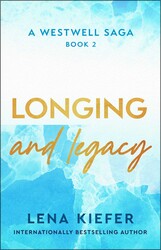
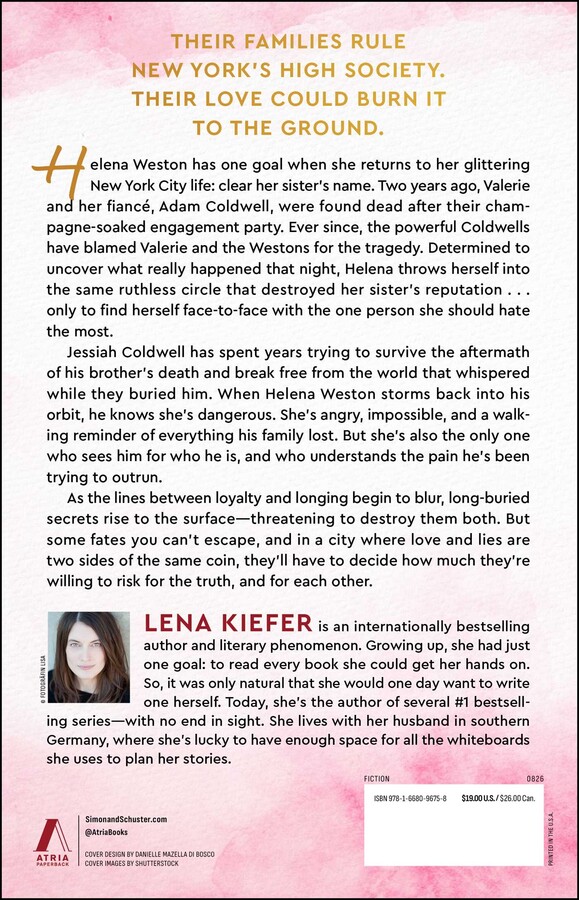
Their families rule New York’s high society. Their love could burn it to the ground.
Gossip Girl meets Romeo and Juliet in the first book in the internationally bestselling Westwell series.
Helena Weston has one goal when she returns to her glittering New York City life: clear her sister’s name. Two years ago, Valerie and her fiancé, Adam Coldwell, were found dead after their champagne-soaked engagement party. Ever since, the powerful Coldwells have blamed Valerie and the Westons for the tragedy. Determined to uncover what really happened that night, Helena throws herself into the same ruthless circle that destroyed her sister’s reputation, only to find herself face-to-face with the one person she should hate the most.
Jessiah Coldwell has spent years trying to survive his brother’s death and break free from the world that whispered while they buried him. When Helena Weston storms back into his orbit, he knows she’s dangerous. She’s angry, impossible, and a walking reminder of everything his family lost. But she’s also the only one who sees him for who he is, and who understands the pain he’s been trying to outrun.
As the lines between loyalty and longing begin to blur, long-buried secrets rise to the surface—threatening to destroy them both. But some fates you can’t escape, and in a city where love and lies are two sides of the same coin, they’ll have to decide how much they’re willing to risk for the truth and for each other.
Gossip Girl meets Romeo and Juliet in the first book in the internationally bestselling Westwell series.
Helena Weston has one goal when she returns to her glittering New York City life: clear her sister’s name. Two years ago, Valerie and her fiancé, Adam Coldwell, were found dead after their champagne-soaked engagement party. Ever since, the powerful Coldwells have blamed Valerie and the Westons for the tragedy. Determined to uncover what really happened that night, Helena throws herself into the same ruthless circle that destroyed her sister’s reputation, only to find herself face-to-face with the one person she should hate the most.
Jessiah Coldwell has spent years trying to survive his brother’s death and break free from the world that whispered while they buried him. When Helena Weston storms back into his orbit, he knows she’s dangerous. She’s angry, impossible, and a walking reminder of everything his family lost. But she’s also the only one who sees him for who he is, and who understands the pain he’s been trying to outrun.
As the lines between loyalty and longing begin to blur, long-buried secrets rise to the surface—threatening to destroy them both. But some fates you can’t escape, and in a city where love and lies are two sides of the same coin, they’ll have to decide how much they’re willing to risk for the truth and for each other.
Excerpt
Chapter 1: Helena 1 Helena
Home is where the heart is.
I’d always found that saying childish—empty words inked as tattoos or printed on corny Valentine’s Day cards because people thought they sounded good, when in reality they were totally meaningless. But after they sent me away, I realized that those words contained a multitude of truths. And now, two and a half years later, as I caught a glimpse of the New York City skyline from the cab window, I felt them speaking to me in some way. I wasn’t about to rush to the nearest tattoo parlor, but it was enough to bring a lump to my throat.
“First time here?” asked the cabdriver, jolting me out of my thoughts.
“No,” I replied. “I was born and raised in New York City. But I’ve been gone awhile.” Half my life—at least that’s what it felt like.
I’d learned the meaning of home in that time. Or what it meant to have to leave, anyway. Along with that strange, tugging sensation in the gut telling you that you weren’t where you were supposed to be. You can’t be happy here—you don’t belong.
His eyes met mine in the rearview mirror. “So are you happy to be back?”
“Yeah. And then some.” I’d been longing for this day with every fiber of my being—the day I would be allowed to return to New York at last. But I was scared, too. As much as I loved this city, I’d only known it with her in it. Valerie.
What would it be like without her?
The question lingered in my mind as we crossed the Robert F. Kennedy Bridge and drove into Manhattan. I gazed out the window in awe, just like the tourist the cabdriver had taken me for. It was a concrete jungle, and I took in every single building we passed; the people in outfits ranging from sleek to shabby; the hot-dog carts and newsstands. And with every yard, I felt like I was being ripped apart and put back together again at the same time. The wound was unfathomably deep, and would never fully heal. A part of my heart was missing and always would be. But at least the rest of it was back where it belonged.
Two junctions and three sets of lights later, we turned onto Park Avenue. There was less congestion than usual for this time on a Sunday morning, so it was only a couple of minutes before the driver was pulling into a space a few doors down from my destination. I paid with my credit card, then he unloaded my bags, and I thanked him.
“Welcome back to New York City.” He gave me a nod and got back in the car, vanishing a few moments later into the endless stream of yellow cabs.
A glance at my watch told me it was just after ten—perfect timing. Just how I’d planned it. I breathed in the cold February air, grabbed the handle of my suitcase, and headed toward the familiar entrance, its lettered sign above the dark canopy reading 740 PARK AVENUE. As I approached, a young man in a gray blazer and black tie held the door open for me, and a cozy warmth greeted me in the foyer.
“Good morning, miss.” The concierge behind the front desk addressed me with a polite but distant smile.
“Good morning,” I replied. I’d never met him and had no idea what his name was. I used to know everyone who worked in our building. But two and a half years was a long time in a city like New York.
“Who are you here for, please?” He lifted the front desk’s phone handset.
It was an effort not to look surprised. But evidently the concierge was new, and I was a day early—I couldn’t blame him for not being in the loop. Especially as I probably looked very different than expected right now.
“The Westons,” I said pleasantly.
“The Westons? Do you have an appointment?” Distinctly skeptical now, he put the handset down, taking in my scruffy leather jacket and jeans as if he thought I might be concealing a weapon with which to threaten, kidnap, or maybe even whack the venerable Weston family. I was about to suggest this to him, but it wasn’t the place for that kind of humor—there was a police call button behind the desk, the kind they had in banks. And I definitely didn’t want to kick off my fresh start in New York by getting arrested.
So I stuck to the truth. “I’m Helena Weston,” I said. “The daughter.”
“The daughter?” He was still dubious.
“That’s right.” With a sigh, I looked in my bag and pulled out my wallet to show him my New York State driver’s license, complete with its three-year-old photo. I cringed every time I saw it; those bangs really hadn’t been a great idea.
I put the license down on the counter and pointed at my name. “Do I still need an appointment?”
The concierge’s expression changed instantly. “Oh, I beg your pardon, Miss Weston, I had no idea… I was told you weren’t arriving until tomorrow.” And that you’d look different, his startled expression seemed to say. After all, in New York I was known exclusively for designer clothes and five-hundred-dollar haircuts rather than the simple ponytail I wore now.
“Don’t worry about it. Can I go up?”
“Of course,” he said eagerly. “Shall I let them know you’re here?”
“No.” I shook my head. “I want it to be a surprise.”
Concern that I might, in fact, be a professional hit woman and he’d end up on the front page of the tabloids by tomorrow morning at the latest seemed to flash briefly through the concierge’s eyes again. But then he gestured to my suitcase.
“Shall I take care of your luggage?”
“No need. I’ll take it up myself.”
He nodded. “Have a nice day, Miss Weston. Welcome back.”
“Thanks… What’s your name, by the way?”
“Lionel, miss.”
“Okay—thanks, Lionel.” I smiled, took hold of my suitcase, and wheeled it toward one of the two elevators.
As I stepped into the elevator carriage—marble-floored, mahogany-paneled, and still smelling exactly as it had before, of perfume, polish, and the faint aroma of cigars—I was ambushed by a horde of memories. As a kid on my first day of school, riding down to the ground floor hand in hand with my father, proud as anything. At sixteen, making out with Parker Harrison until we were interrupted by the Gregorys from the fourth floor. Me and Valerie, changing in secret so we could ditch a high-society dinner for some party in Brooklyn. And Valerie, confiding to me, between these four narrow walls, that she’d met the love of her life.
A wave of grief threatened to engulf me and drag me down into its depths, but I took a deep breath in, then out, fighting it with all my strength. Happy, that was how I wanted to feel now. Happy that I was about to surprise my family at their usual brunch. No—our brunch. I was back where I belonged; I would soon be sitting at the dining table on Sundays again, enjoying delicious coffee and arguing with my brother, Lincoln, about who would get the last croissant from the French bakery on Madison. My mouth was already watering just thinking about it.
The elevator stopped at our floor and I got out, strode toward the only door on that level, and rang the bell. Our butler, Vincent, was adamant that visitors should never wait longer than ten seconds at the door, so I counted down slowly, like a clock ticking toward my new, old life.
Ten. Nine. Eight. Seven. Six. Five. Four. Three. Two. One.
A moment passed. Then another. Nothing happened.
Maybe I hadn’t pressed the button hard enough. Or maybe Dad and Lincoln were debating some political issue so voraciously that Vincent hadn’t heard the doorbell. I tried again. But no luck.
With a sinking feeling, I dug my key out of the bag on my shoulder and slid it into the lock. But as I stepped into the opulent hallway of our two-story apartment, there was nothing to be heard—no voices, no clatter of cutlery upon plates. It was totally silent.
“Hello?” I called up the sweeping curved staircase, feeling a little ridiculous. “Are you guys there?”
Finally, there was movement above on the second floor, and a few moments later, someone came down. Someone in high heels that clacked softly on the stairs.
“Helena?” My mother gazed down at me, baffled. “What on earth are you doing here? We weren’t expecting you until tomorrow.” The British accent sounded familiar to my ears, which was no wonder, since I’d been hearing little else for the last few years.
“Hi, Mom.” I smiled. “Surprise! I thought I’d come back early so I wouldn’t miss out on brunch.”
A brunch that clearly wasn’t happening: the dining table, which I could see through the open double doors, was completely empty. No croissants, no lattes, no piping-hot scrambled eggs. Even my mother’s outfit—dark blue shift dress, neat updo, and pumps—wasn’t in keeping with our Sunday ritual, when we all sat around the table wearing pajamas, sweatpants, and bathrobes for a change.
My spirits sank even further. Pretty soon they’d be down in the basement.
My mother gave me a stern look. “How did you get here?”
“I took a cab,” I replied honestly, and immediately realized it was a mistake.
“A cab?” My mother’s voice grew a shade shriller, making her sound almost hysterical. “Have you taken leave of your senses? What will people think, your getting out of a cab in front of this house in broad daylight?”
I took a breath. “Everyone in this city takes cabs, Mom.”
“Yes, but you are not everyone, Helena. We can’t afford for anyone to think you don’t know how to behave.”
“But nobody saw me,” I mumbled sheepishly. I almost replied: I don’t give a damn what people think of me. And Valerie wouldn’t have cared either. But picking a fight with my mother on day one wasn’t a good idea—it was only thanks to her that I was here, and I’d have to keep on her good side if I didn’t want her to regret it. “I’m sorry. I didn’t think it’d be a big deal. I took cabs in Cambridge all the time.”
“New York isn’t Cambridge, darling. You should know that by now.” She exhaled, and five seconds later she was Blake Weston again, unflappable co-ruler of the empire my father’s predecessors had built. My mother wasn’t your typical society wife—hanging off a wealthy man’s arm, raising his kids, and running interference—as some people assumed when they first met her. Half an hour with her and her sharp intellect, though, and they were cured of that notion.
“So where is everybody?” I asked. “We always have brunch together on Sundays.” Even if my older brother didn’t live at home anymore, he was always there for brunch, all the same.
“I’m sorry you came home early for it.” My mom finally came over to me and gave me a hug, albeit a brief one. “But I have an appointment at the memorial society, and your father is on business in Washington until Tuesday. There’s no brunch today.”
Only today? Judging by the look on her face, there was more to it than that. But perhaps I’d just gotten too used to focusing on nonverbal cues, facial expressions, and body language over the last few months. It was part of the preparation for my plan—a plan that would begin first thing tomorrow.
“Okay—next week, then,” I said, trying to read her reaction, but she was inscrutable. Or she was when it came to brunch, anyway; the look she leveled at my long, dark ponytail was pretty unequivocal.
“You need a haircut, sharpish. I’ll make an appointment with Cara tomorrow. And what is this you’re wearing?” With a frown, she fingered the leather jacket I’d bought a few months ago at a little store in Cambridge. If I told her it was secondhand, she’d probably jump straight into a bath full of disinfectant, memorial society be damned.
“It’s vintage. It’s what they’re wearing across the pond.”
“Not over here, though,” she stressed. “I don’t want anyone in this city to see you in that getup. Get rid of it as soon as possible, please.”
Over my dead body, I thought.
“Sure,” I said, with a smile for good measure. “Where’s Vincent, by the way? I’d like to say hi.”
“He’s in Chicago for a while—his sister is ill. We don’t know when he’s coming back yet. Or even if he will.”
I’d had no idea. Why hadn’t they mentioned it? The butler was part of our family, after all.
“And the rest of the staff?”
“We didn’t think anybody would be home, so they have the day off.” My mother reached for her coat and handbag. “I have to go. Why don’t you get yourself unpacked first, okay? It’s good to have you back.” She stroked my cheek, her words sounding more like Please don’t make me regret going against your father on this. He would much rather I’d stayed in England for the rest of college. Or even the rest of my life.
I nodded, still smiling. But no sooner had the door closed shut behind her, leaving me completely alone in the entrance hall, than I felt the full weight of disappointment in my empty stomach. I’d imagined my homecoming very differently. Ever since I’d been sent to boarding school in England against my will, I’d looked forward to this day with all my heart. The day I’d be allowed back, no longer the good little girl who’d been forced to sit idly by after she lost her sister, but a determined young woman who would restore Valerie’s reputation. That time had come… so why did it feel so awful?
I crossed to the staircase and started to climb, but I didn’t even manage the first step. My and Valerie’s rooms were at the top, and I was so scared of what it would do to me to go in there and be hit by the full force of all the memories. A part of me wanted to be surrounded by my sister’s things, to feel her presence again—everything that had made her special, everything she’d been to me. But fear won out. I swerved the stairs and went into the living room instead.
Not much had changed since I’d been here last. There were the same antiques, the brocade wallpaper, the leather Chesterfields and heavy rugs—and, of course, fresh-cut flowers everywhere. The huge painting in the dining room was new, a gloomy battle scene by some old master. I hadn’t missed my parents’ preference for Baroque artwork. I had totally different taste—there was a reason a trip to MoMA was top of my list of things to do in the city. I’d written that list two years ago, when I realized I wouldn’t be coming back to the States as soon as I’d thought.
My parents hadn’t even let me come home for Christmas; instead the whole family had flown to England. They’d been so afraid I’d end up like Valerie, they’d done everything in their power to keep me away from New York City.
Whatever that even meant, end up like her. Happy? Fulfilled? In love? She’d been all of those things when she died, after all.
The lump in my throat was back, and I swallowed it down again. There was no one home anyway, so I decided to get out of there.
Home is where the heart is? It didn’t feel like that right now. Maybe my heart just needed a jump start and getting out of the house would help. After all, home wasn’t just in here—it was out there. More than anything, my home was New York City.
I steeled myself and went back into the hallway, grabbed my bag, and headed for the door.
Time to get some fresh air.
Home is where the heart is.
I’d always found that saying childish—empty words inked as tattoos or printed on corny Valentine’s Day cards because people thought they sounded good, when in reality they were totally meaningless. But after they sent me away, I realized that those words contained a multitude of truths. And now, two and a half years later, as I caught a glimpse of the New York City skyline from the cab window, I felt them speaking to me in some way. I wasn’t about to rush to the nearest tattoo parlor, but it was enough to bring a lump to my throat.
“First time here?” asked the cabdriver, jolting me out of my thoughts.
“No,” I replied. “I was born and raised in New York City. But I’ve been gone awhile.” Half my life—at least that’s what it felt like.
I’d learned the meaning of home in that time. Or what it meant to have to leave, anyway. Along with that strange, tugging sensation in the gut telling you that you weren’t where you were supposed to be. You can’t be happy here—you don’t belong.
His eyes met mine in the rearview mirror. “So are you happy to be back?”
“Yeah. And then some.” I’d been longing for this day with every fiber of my being—the day I would be allowed to return to New York at last. But I was scared, too. As much as I loved this city, I’d only known it with her in it. Valerie.
What would it be like without her?
The question lingered in my mind as we crossed the Robert F. Kennedy Bridge and drove into Manhattan. I gazed out the window in awe, just like the tourist the cabdriver had taken me for. It was a concrete jungle, and I took in every single building we passed; the people in outfits ranging from sleek to shabby; the hot-dog carts and newsstands. And with every yard, I felt like I was being ripped apart and put back together again at the same time. The wound was unfathomably deep, and would never fully heal. A part of my heart was missing and always would be. But at least the rest of it was back where it belonged.
Two junctions and three sets of lights later, we turned onto Park Avenue. There was less congestion than usual for this time on a Sunday morning, so it was only a couple of minutes before the driver was pulling into a space a few doors down from my destination. I paid with my credit card, then he unloaded my bags, and I thanked him.
“Welcome back to New York City.” He gave me a nod and got back in the car, vanishing a few moments later into the endless stream of yellow cabs.
A glance at my watch told me it was just after ten—perfect timing. Just how I’d planned it. I breathed in the cold February air, grabbed the handle of my suitcase, and headed toward the familiar entrance, its lettered sign above the dark canopy reading 740 PARK AVENUE. As I approached, a young man in a gray blazer and black tie held the door open for me, and a cozy warmth greeted me in the foyer.
“Good morning, miss.” The concierge behind the front desk addressed me with a polite but distant smile.
“Good morning,” I replied. I’d never met him and had no idea what his name was. I used to know everyone who worked in our building. But two and a half years was a long time in a city like New York.
“Who are you here for, please?” He lifted the front desk’s phone handset.
It was an effort not to look surprised. But evidently the concierge was new, and I was a day early—I couldn’t blame him for not being in the loop. Especially as I probably looked very different than expected right now.
“The Westons,” I said pleasantly.
“The Westons? Do you have an appointment?” Distinctly skeptical now, he put the handset down, taking in my scruffy leather jacket and jeans as if he thought I might be concealing a weapon with which to threaten, kidnap, or maybe even whack the venerable Weston family. I was about to suggest this to him, but it wasn’t the place for that kind of humor—there was a police call button behind the desk, the kind they had in banks. And I definitely didn’t want to kick off my fresh start in New York by getting arrested.
So I stuck to the truth. “I’m Helena Weston,” I said. “The daughter.”
“The daughter?” He was still dubious.
“That’s right.” With a sigh, I looked in my bag and pulled out my wallet to show him my New York State driver’s license, complete with its three-year-old photo. I cringed every time I saw it; those bangs really hadn’t been a great idea.
I put the license down on the counter and pointed at my name. “Do I still need an appointment?”
The concierge’s expression changed instantly. “Oh, I beg your pardon, Miss Weston, I had no idea… I was told you weren’t arriving until tomorrow.” And that you’d look different, his startled expression seemed to say. After all, in New York I was known exclusively for designer clothes and five-hundred-dollar haircuts rather than the simple ponytail I wore now.
“Don’t worry about it. Can I go up?”
“Of course,” he said eagerly. “Shall I let them know you’re here?”
“No.” I shook my head. “I want it to be a surprise.”
Concern that I might, in fact, be a professional hit woman and he’d end up on the front page of the tabloids by tomorrow morning at the latest seemed to flash briefly through the concierge’s eyes again. But then he gestured to my suitcase.
“Shall I take care of your luggage?”
“No need. I’ll take it up myself.”
He nodded. “Have a nice day, Miss Weston. Welcome back.”
“Thanks… What’s your name, by the way?”
“Lionel, miss.”
“Okay—thanks, Lionel.” I smiled, took hold of my suitcase, and wheeled it toward one of the two elevators.
As I stepped into the elevator carriage—marble-floored, mahogany-paneled, and still smelling exactly as it had before, of perfume, polish, and the faint aroma of cigars—I was ambushed by a horde of memories. As a kid on my first day of school, riding down to the ground floor hand in hand with my father, proud as anything. At sixteen, making out with Parker Harrison until we were interrupted by the Gregorys from the fourth floor. Me and Valerie, changing in secret so we could ditch a high-society dinner for some party in Brooklyn. And Valerie, confiding to me, between these four narrow walls, that she’d met the love of her life.
A wave of grief threatened to engulf me and drag me down into its depths, but I took a deep breath in, then out, fighting it with all my strength. Happy, that was how I wanted to feel now. Happy that I was about to surprise my family at their usual brunch. No—our brunch. I was back where I belonged; I would soon be sitting at the dining table on Sundays again, enjoying delicious coffee and arguing with my brother, Lincoln, about who would get the last croissant from the French bakery on Madison. My mouth was already watering just thinking about it.
The elevator stopped at our floor and I got out, strode toward the only door on that level, and rang the bell. Our butler, Vincent, was adamant that visitors should never wait longer than ten seconds at the door, so I counted down slowly, like a clock ticking toward my new, old life.
Ten. Nine. Eight. Seven. Six. Five. Four. Three. Two. One.
A moment passed. Then another. Nothing happened.
Maybe I hadn’t pressed the button hard enough. Or maybe Dad and Lincoln were debating some political issue so voraciously that Vincent hadn’t heard the doorbell. I tried again. But no luck.
With a sinking feeling, I dug my key out of the bag on my shoulder and slid it into the lock. But as I stepped into the opulent hallway of our two-story apartment, there was nothing to be heard—no voices, no clatter of cutlery upon plates. It was totally silent.
“Hello?” I called up the sweeping curved staircase, feeling a little ridiculous. “Are you guys there?”
Finally, there was movement above on the second floor, and a few moments later, someone came down. Someone in high heels that clacked softly on the stairs.
“Helena?” My mother gazed down at me, baffled. “What on earth are you doing here? We weren’t expecting you until tomorrow.” The British accent sounded familiar to my ears, which was no wonder, since I’d been hearing little else for the last few years.
“Hi, Mom.” I smiled. “Surprise! I thought I’d come back early so I wouldn’t miss out on brunch.”
A brunch that clearly wasn’t happening: the dining table, which I could see through the open double doors, was completely empty. No croissants, no lattes, no piping-hot scrambled eggs. Even my mother’s outfit—dark blue shift dress, neat updo, and pumps—wasn’t in keeping with our Sunday ritual, when we all sat around the table wearing pajamas, sweatpants, and bathrobes for a change.
My spirits sank even further. Pretty soon they’d be down in the basement.
My mother gave me a stern look. “How did you get here?”
“I took a cab,” I replied honestly, and immediately realized it was a mistake.
“A cab?” My mother’s voice grew a shade shriller, making her sound almost hysterical. “Have you taken leave of your senses? What will people think, your getting out of a cab in front of this house in broad daylight?”
I took a breath. “Everyone in this city takes cabs, Mom.”
“Yes, but you are not everyone, Helena. We can’t afford for anyone to think you don’t know how to behave.”
“But nobody saw me,” I mumbled sheepishly. I almost replied: I don’t give a damn what people think of me. And Valerie wouldn’t have cared either. But picking a fight with my mother on day one wasn’t a good idea—it was only thanks to her that I was here, and I’d have to keep on her good side if I didn’t want her to regret it. “I’m sorry. I didn’t think it’d be a big deal. I took cabs in Cambridge all the time.”
“New York isn’t Cambridge, darling. You should know that by now.” She exhaled, and five seconds later she was Blake Weston again, unflappable co-ruler of the empire my father’s predecessors had built. My mother wasn’t your typical society wife—hanging off a wealthy man’s arm, raising his kids, and running interference—as some people assumed when they first met her. Half an hour with her and her sharp intellect, though, and they were cured of that notion.
“So where is everybody?” I asked. “We always have brunch together on Sundays.” Even if my older brother didn’t live at home anymore, he was always there for brunch, all the same.
“I’m sorry you came home early for it.” My mom finally came over to me and gave me a hug, albeit a brief one. “But I have an appointment at the memorial society, and your father is on business in Washington until Tuesday. There’s no brunch today.”
Only today? Judging by the look on her face, there was more to it than that. But perhaps I’d just gotten too used to focusing on nonverbal cues, facial expressions, and body language over the last few months. It was part of the preparation for my plan—a plan that would begin first thing tomorrow.
“Okay—next week, then,” I said, trying to read her reaction, but she was inscrutable. Or she was when it came to brunch, anyway; the look she leveled at my long, dark ponytail was pretty unequivocal.
“You need a haircut, sharpish. I’ll make an appointment with Cara tomorrow. And what is this you’re wearing?” With a frown, she fingered the leather jacket I’d bought a few months ago at a little store in Cambridge. If I told her it was secondhand, she’d probably jump straight into a bath full of disinfectant, memorial society be damned.
“It’s vintage. It’s what they’re wearing across the pond.”
“Not over here, though,” she stressed. “I don’t want anyone in this city to see you in that getup. Get rid of it as soon as possible, please.”
Over my dead body, I thought.
“Sure,” I said, with a smile for good measure. “Where’s Vincent, by the way? I’d like to say hi.”
“He’s in Chicago for a while—his sister is ill. We don’t know when he’s coming back yet. Or even if he will.”
I’d had no idea. Why hadn’t they mentioned it? The butler was part of our family, after all.
“And the rest of the staff?”
“We didn’t think anybody would be home, so they have the day off.” My mother reached for her coat and handbag. “I have to go. Why don’t you get yourself unpacked first, okay? It’s good to have you back.” She stroked my cheek, her words sounding more like Please don’t make me regret going against your father on this. He would much rather I’d stayed in England for the rest of college. Or even the rest of my life.
I nodded, still smiling. But no sooner had the door closed shut behind her, leaving me completely alone in the entrance hall, than I felt the full weight of disappointment in my empty stomach. I’d imagined my homecoming very differently. Ever since I’d been sent to boarding school in England against my will, I’d looked forward to this day with all my heart. The day I’d be allowed back, no longer the good little girl who’d been forced to sit idly by after she lost her sister, but a determined young woman who would restore Valerie’s reputation. That time had come… so why did it feel so awful?
I crossed to the staircase and started to climb, but I didn’t even manage the first step. My and Valerie’s rooms were at the top, and I was so scared of what it would do to me to go in there and be hit by the full force of all the memories. A part of me wanted to be surrounded by my sister’s things, to feel her presence again—everything that had made her special, everything she’d been to me. But fear won out. I swerved the stairs and went into the living room instead.
Not much had changed since I’d been here last. There were the same antiques, the brocade wallpaper, the leather Chesterfields and heavy rugs—and, of course, fresh-cut flowers everywhere. The huge painting in the dining room was new, a gloomy battle scene by some old master. I hadn’t missed my parents’ preference for Baroque artwork. I had totally different taste—there was a reason a trip to MoMA was top of my list of things to do in the city. I’d written that list two years ago, when I realized I wouldn’t be coming back to the States as soon as I’d thought.
My parents hadn’t even let me come home for Christmas; instead the whole family had flown to England. They’d been so afraid I’d end up like Valerie, they’d done everything in their power to keep me away from New York City.
Whatever that even meant, end up like her. Happy? Fulfilled? In love? She’d been all of those things when she died, after all.
The lump in my throat was back, and I swallowed it down again. There was no one home anyway, so I decided to get out of there.
Home is where the heart is? It didn’t feel like that right now. Maybe my heart just needed a jump start and getting out of the house would help. After all, home wasn’t just in here—it was out there. More than anything, my home was New York City.
I steeled myself and went back into the hallway, grabbed my bag, and headed for the door.
Time to get some fresh air.
About The Author
Fotogräfin Lisa
Lena Kiefer is an international bestselling author and literary phenomenon. Growing up, she had just one goal: to read every book she could get her hands on. So, it was only natural that she would one day want to write one herself. Today, she’s the author of several #1 bestselling series—with no end in sight. She lives with her husband in southern Germany, where she’s lucky to have enough space for all the whiteboards she uses to plan her stories.
Product Details
- Publisher: Atria Books (August 11, 2026)
- Length: 368 pages
- ISBN13: 9781668096758
Browse Related Books
Resources and Downloads
High Resolution Images
-
Book Cover Image (jpg): Love and Lies
Trade Paperback 9781668096758
-
Author Photo (jpg): Lena Kiefer Fotogräfin Lisa(0.1 MB)
Any use of an author photo must include its respective photo credit
Join our mailing list!
By clicking 'Sign me up' I acknowledge that I have read and agree to the privacy policy and terms of use.