Get our latest staff recommendations, award news and digital catalog links right to your inbox.
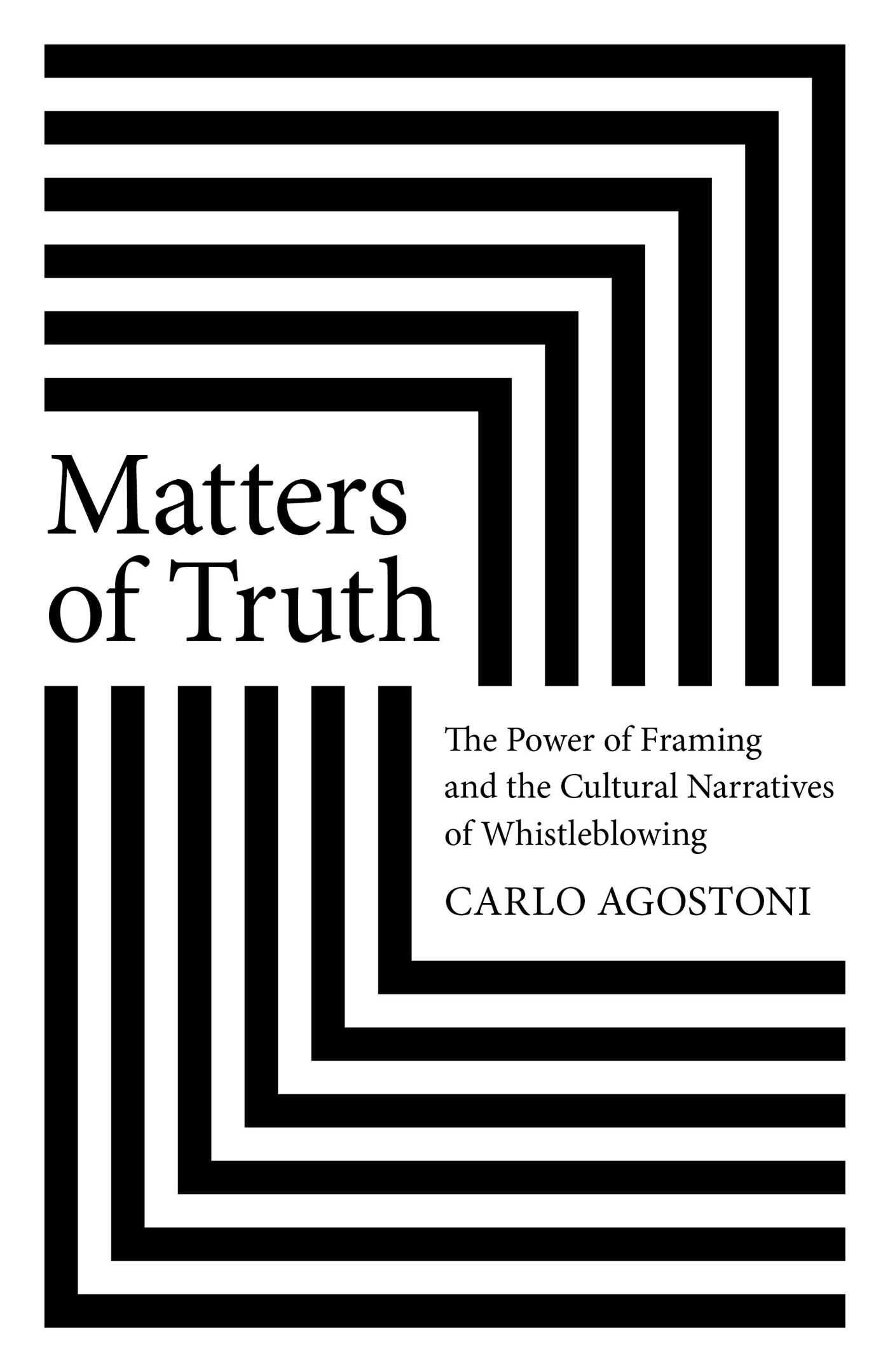
Matters of Truth
The Power of Framing and the Cultural Narratives of Whistleblowing
Published by Iff Books
Distributed by Simon & Schuster
Table of Contents
About The Book
Explore the cultural narratives about whistleblowers that ignite explosions of truth and justice, and the frames we use to defame them — both knowingly and unknowingly.
In Matters of Truth, Carlo Agostoni explores the frames and narratives shaping our understanding of whistleblowing, truth-telling, and their cultural histories. Narratives of whistleblowing are stories of truth-telling, first and foremost, but they are also stories of complication and conflicts of interest. The whistleblower is remedy and cure for some and poison and treason for others. But the anchor of the whistleblower is the immensity of factuality - an anchor that pulls him down and turns him into a tragic hero. But truth-telling is not the dominant frame surrounding whistleblowing in media, scholarship, nor politics. One of the dominant frames used to describe whistleblowing is leaking. Frames are not just words; they constitute the cognitive structures we think with. Framing a social phenomenon as 'leaking' taps into our neural circuitry and a hidden realm of deep narratives. It is therefore imperative to study these narratives and frames that rule our unconscious and yield moral narratives we are commonly unaware of - especially with a sociocultural phenomenon such as whistleblowing. Drawing on a wealth of examples and a wide range of philosophers, sociologists, cognitive linguists, literary critics, historians, and social psychologists, Carlo Agostoni analyzes the cultural narratives about whistleblowers that ignite explosions of truth and justice and the frames we use to defame them - both knowingly and unknowingly. Words matter. Narratives matter. Especially in matters of truth.
In Matters of Truth, Carlo Agostoni explores the frames and narratives shaping our understanding of whistleblowing, truth-telling, and their cultural histories. Narratives of whistleblowing are stories of truth-telling, first and foremost, but they are also stories of complication and conflicts of interest. The whistleblower is remedy and cure for some and poison and treason for others. But the anchor of the whistleblower is the immensity of factuality - an anchor that pulls him down and turns him into a tragic hero. But truth-telling is not the dominant frame surrounding whistleblowing in media, scholarship, nor politics. One of the dominant frames used to describe whistleblowing is leaking. Frames are not just words; they constitute the cognitive structures we think with. Framing a social phenomenon as 'leaking' taps into our neural circuitry and a hidden realm of deep narratives. It is therefore imperative to study these narratives and frames that rule our unconscious and yield moral narratives we are commonly unaware of - especially with a sociocultural phenomenon such as whistleblowing. Drawing on a wealth of examples and a wide range of philosophers, sociologists, cognitive linguists, literary critics, historians, and social psychologists, Carlo Agostoni analyzes the cultural narratives about whistleblowers that ignite explosions of truth and justice and the frames we use to defame them - both knowingly and unknowingly. Words matter. Narratives matter. Especially in matters of truth.
Product Details
- Publisher: Iff Books (March 31, 2026)
- Length: 480 pages
- ISBN13: 9781782794721
Browse Related Books
Resources and Downloads
High Resolution Images
-
Book Cover Image (jpg): Matters of Truth
eBook 9781782794721
Matters of Truth
The Power of Framing and the Cultural Narratives of Whistleblowing
Published by Iff Books
Distributed by Simon & Schuster
Join our mailing list!
By clicking 'Sign me up' I acknowledge that I have read and agree to the privacy policy and terms of use.