Get our latest staff recommendations, award news and digital catalog links right to your inbox.
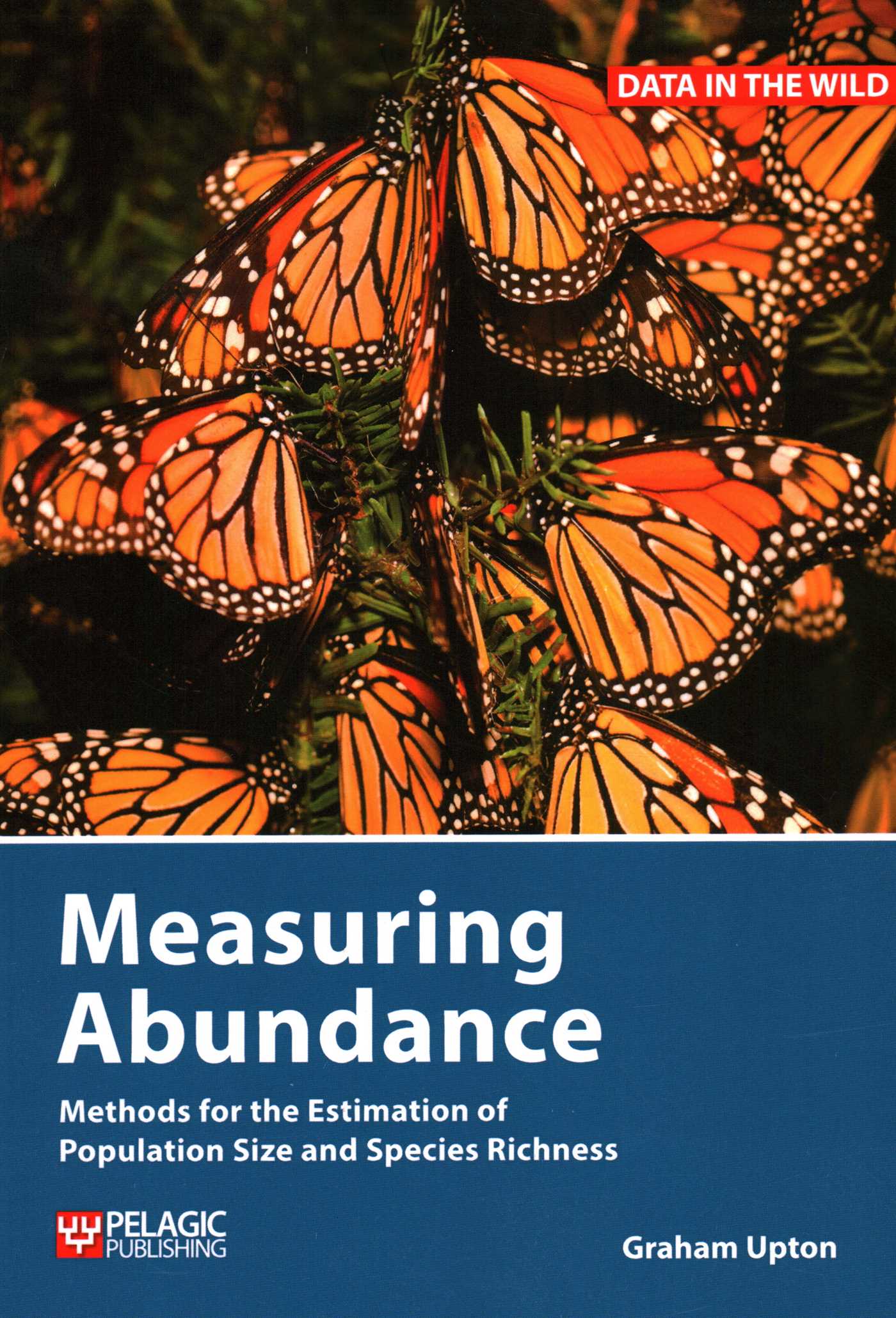
Measuring Abundance
Methods for the Estimation of Population Size and Species Richness
By Graham Upton
Published by Pelagic
Distributed by Simon & Schuster
Table of Contents
About The Book
'Wonderful and timely' --Gregory Gilbert, Professor of Environmental Studies, University of California Santa Cruz
Measuring the abundance of individuals and the diversity of species are core components of most ecological research projects and conservation monitoring. This book brings together in one place, for the first time, the methods used to estimate the abundance of individuals in nature.
The statistical basis of each method is detailed along with practical considerations for survey design and data collection. Methods are illustrated using data ranging from Alaskan shrubs to Yellowstone grizzly bears, not forgetting Costa Rican ants and Prince Edward Island lobsters. Where necessary, example code for use with the open source software R is supplied. When appropriate, reference is made to other widely used programs.
After opening with a brief synopsis of relevant statistical methods, the first section deals with the abundance of stationary items such as trees, shrubs, coral, etc. Following a discussion of the use of quadrats and transects in the contexts of forestry sampling and the assessment of plant cover, there are chapters addressing line-intercept sampling, the use of nearest-neighbour distances, and variable sized plots.
The second section deals with individuals that move, such as birds, mammals, reptiles, fish, etc. Approaches discussed include double-observer sampling, removal sampling, capture-recapture methods and distance sampling.
The final section deals with the measurement of species richness; species diversity; species-abundance distributions; and other aspects of diversity such as evenness, similarity, turnover and rarity.
Measuring the abundance of individuals and the diversity of species are core components of most ecological research projects and conservation monitoring. This book brings together in one place, for the first time, the methods used to estimate the abundance of individuals in nature.
The statistical basis of each method is detailed along with practical considerations for survey design and data collection. Methods are illustrated using data ranging from Alaskan shrubs to Yellowstone grizzly bears, not forgetting Costa Rican ants and Prince Edward Island lobsters. Where necessary, example code for use with the open source software R is supplied. When appropriate, reference is made to other widely used programs.
After opening with a brief synopsis of relevant statistical methods, the first section deals with the abundance of stationary items such as trees, shrubs, coral, etc. Following a discussion of the use of quadrats and transects in the contexts of forestry sampling and the assessment of plant cover, there are chapters addressing line-intercept sampling, the use of nearest-neighbour distances, and variable sized plots.
The second section deals with individuals that move, such as birds, mammals, reptiles, fish, etc. Approaches discussed include double-observer sampling, removal sampling, capture-recapture methods and distance sampling.
The final section deals with the measurement of species richness; species diversity; species-abundance distributions; and other aspects of diversity such as evenness, similarity, turnover and rarity.
Product Details
- Publisher: Pelagic (December 15, 2020)
- Length: 229 pages
- ISBN13: 9781784272319
Browse Related Books
Resources and Downloads
High Resolution Images
-
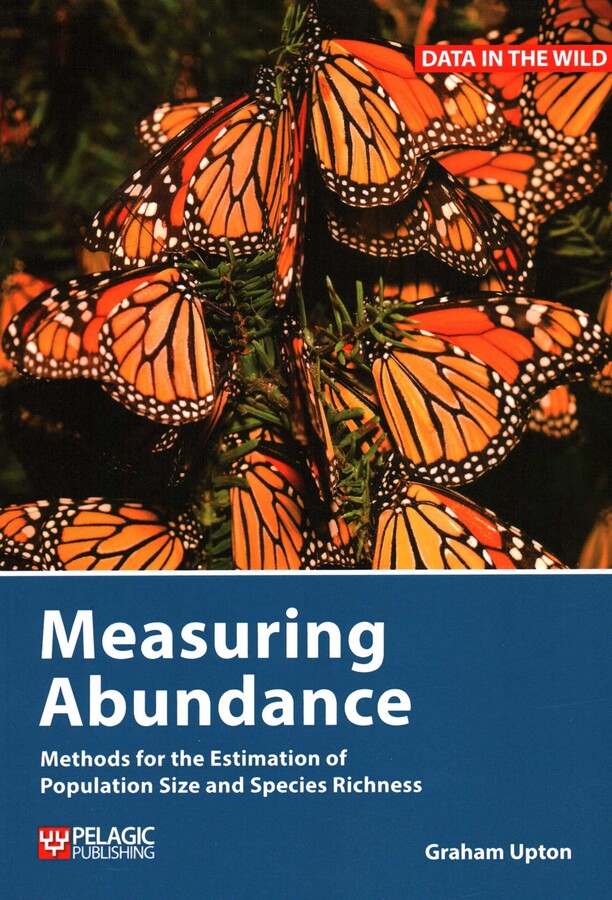
Book Cover Image (jpg): Measuring Abundance
Trade Paperback 9781784272319
Measuring Abundance
Methods for the Estimation of Population Size and Species Richness
By Graham Upton
Published by Pelagic
Distributed by Simon & Schuster
Join our mailing list!
By clicking 'Sign me up' I acknowledge that I have read and agree to the privacy policy and terms of use.