Get our latest staff recommendations, award news and digital catalog links right to your inbox.
Published by Park Street Press
Distributed by Simon & Schuster
Table of Contents
About The Book
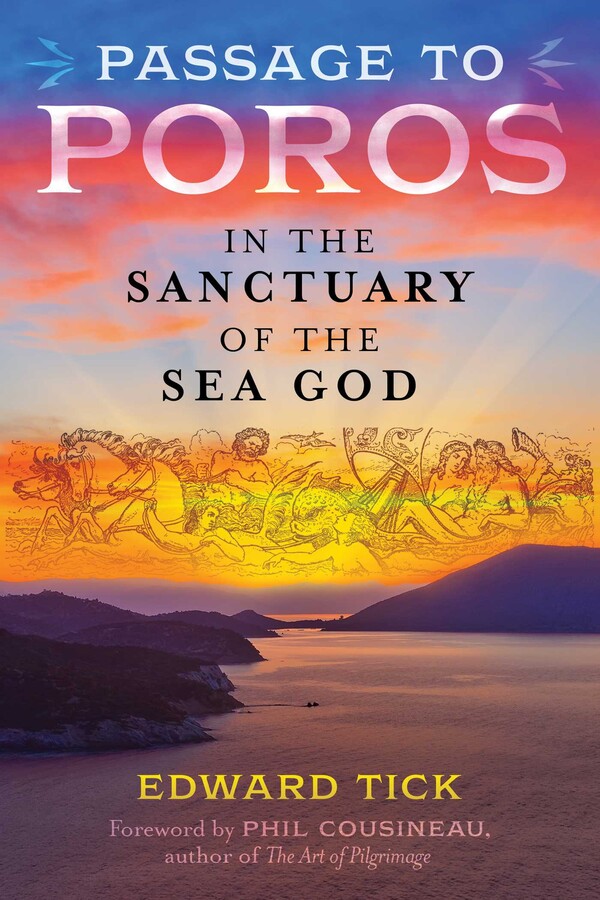
A guide to spiritual pilgrimage and the healing powers of immersion in sacred places
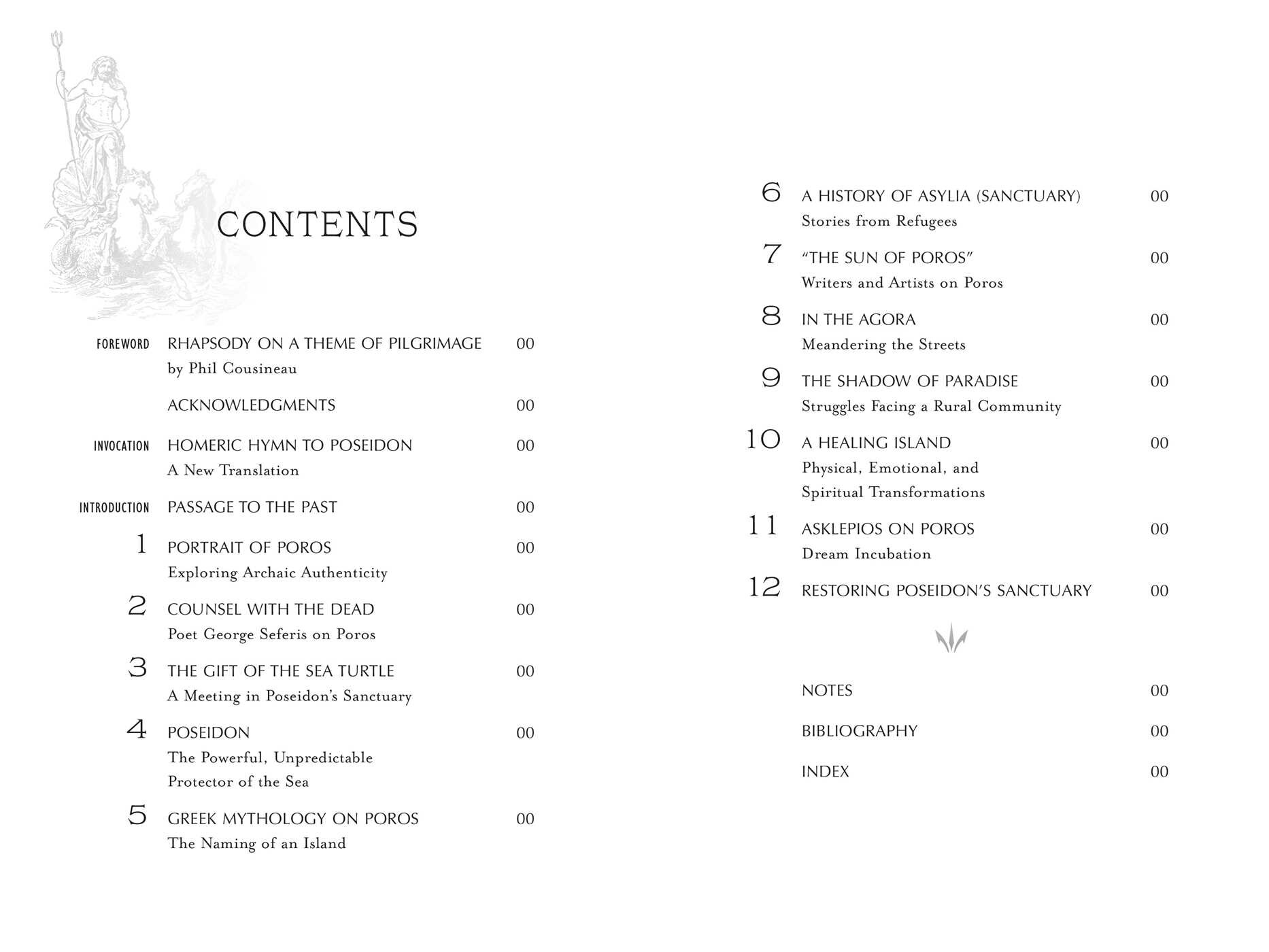
• Takes you on a mystical journey to the sacred Greek island of Poros, a site of pilgrimage and healing for more than 3,000 years, and presents its mythological, literary, historical, and cultural heritage
• Examines pilgrimage, sanctuary, and asylum under the god Poseidon, the ruling spirit of the island, and how these have been practiced through the millennia
• Explores ancient healing traditions, including dream incubation of Asklepios, and using sacred art and ritual to connect with our visions and the divine
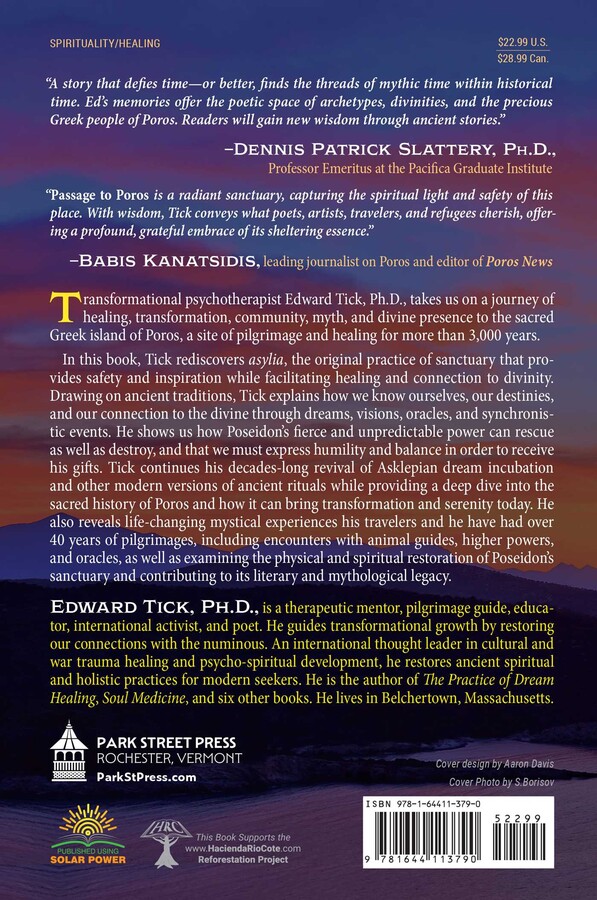
Transformational psychotherapist Edward Tick, Ph.D., takes us on a journey of healing, transformation, community, myth, and divine presence to the sacred Greek island of Poros, a site of pilgrimage and healing for more than 3,000 years.
In this book, Tick rediscovers asylia, the original practice of sanctuary that provides safety and inspiration while facilitating healing and connection to divinity. Drawing on ancient traditions, Tick explains how we know ourselves, our destinies, and our connection to the divine through dreams, visions, oracles, and synchronistic events. He shows us how Poseidon’s fierce and unpredictable power can rescue as well as destroy, and that we must express humility and balance in order to receive his gifts. Tick continues his decades-long revival of Asklepian dream incubation and other modern versions of ancient rituals while providing a deep dive into the sacred history of Poros and how it can bring transformation and serenity today. He also reveals life-changing mystical experiences his travelers and he have had over 40 years of pilgrimages, including encounters with animal guides, higher powers, and oracles, as well as examining the physical and spiritual restoration of Poseidon’s sanctuary and contributing to its literary and mythological legacy.
• Takes you on a mystical journey to the sacred Greek island of Poros, a site of pilgrimage and healing for more than 3,000 years, and presents its mythological, literary, historical, and cultural heritage
• Examines pilgrimage, sanctuary, and asylum under the god Poseidon, the ruling spirit of the island, and how these have been practiced through the millennia
• Explores ancient healing traditions, including dream incubation of Asklepios, and using sacred art and ritual to connect with our visions and the divine
Transformational psychotherapist Edward Tick, Ph.D., takes us on a journey of healing, transformation, community, myth, and divine presence to the sacred Greek island of Poros, a site of pilgrimage and healing for more than 3,000 years.
In this book, Tick rediscovers asylia, the original practice of sanctuary that provides safety and inspiration while facilitating healing and connection to divinity. Drawing on ancient traditions, Tick explains how we know ourselves, our destinies, and our connection to the divine through dreams, visions, oracles, and synchronistic events. He shows us how Poseidon’s fierce and unpredictable power can rescue as well as destroy, and that we must express humility and balance in order to receive his gifts. Tick continues his decades-long revival of Asklepian dream incubation and other modern versions of ancient rituals while providing a deep dive into the sacred history of Poros and how it can bring transformation and serenity today. He also reveals life-changing mystical experiences his travelers and he have had over 40 years of pilgrimages, including encounters with animal guides, higher powers, and oracles, as well as examining the physical and spiritual restoration of Poseidon’s sanctuary and contributing to its literary and mythological legacy.
Excerpt
INTRODUCTION
Passage to the Past
Pilgrimage—travel on long, distant, and demanding adventures to sacred sites that deepen the soul, bring wisdom, and heal wounds—has been a spiritual practice for millennia. Asylum—seeking a place of holiness and inviolable safety—has likewise been an ancient and sacred practice afforded those in distress. For three thousand years, to this day and for transformations achieved by modern pilgrims, including me, the small Greek island of Poros has been a site of pilgrimage and asylum.
Passage to Poros: In the Sanctuary of the Sea God guides you on a pilgrimage of discovery, healing, wisdom, living community, myth, and divine presence. We track a journey that stretches over millennia from mythic and ancient times to the present. This journey is to discover and restore asylia, the original meaning and practice of sanctuary that provides safety, inspiration, and belonging, and facilitates transformational healing and connections to the divine, on a small and humble island.
Poros is an island of only twelve square miles merely a one-and-a-quarter- hour hydrofoil ride from Athens’s port of Piraeus. It has a rich and ancient mythology and history largely unknown by visitors and even many residents alike. It is full of marvels, mystery, and stories historical, modern, and inclusive of this author’s thirty-eight years of visits and healing work there. Its small permanent population of less than four thousand contains some of the warmest, kindest, and most upright inhabitants of our planet. As Giorgos Dimitriadis, owner of Taverna Sti Rota on Poros’s waterfront, said, “We are still a small village maintaining real community even though surrounded by modernity and drenched in tourism.” Fay Sokaris, a Greek American woman from Boston whose family was originally from Ikaria, has traveled all over Greece for decades. She declares, “Poros people are the warmest, kindest, most welcoming I have met anywhere. Many places practice filoxenia, guest-friendship. But on Poros their hearts are big, and it is real.”
Today Poros serves primarily as a short stop on a rapid daylong cruise in the Saronic Gulf, a weekend getaway for Athenians, or a second home or vacation destination for the sun-hungry and affluent. Its true character remains largely unknown. Aside from its common mention in travel guides, only a few books in English—most out of print—mention or have been written about this little-known gem of the Saronic Gulf.
I have been traveling to Poros since 1987 and leading pilgrimage there since 1995. Passage to Poros explores the history, people, culture, mythology, literature, and sacred sites of Poros. It documents my decades of healing work guiding pilgrimage there, and my own life-transforming and soul-awakening relationship with this island over almost four decades. We immerse on Poros by exploring its three-millennia-old history and its contemporary village life and characters. We hear its impact on Nobel Prize–winning poet George Seferis whose hermitage island it was, as well as Marc Chagall, Lucien Freud, and other artists and writers who retreated here. We demonstrate cultural and mythological immersion as spiritual pilgrimage, learning how visitors are changed in body and soul, identities, values and faith, on this island. And we witness three decades of dream healing in the ancient Asklepian tradition that I have led on and near this island.
As Phil Cousineau has written, pilgrimage is “a transformative journey to a sacred center . . . a journey to a holy site . . . or a natural setting . . . or to a revered temple. . . . To people the world over, pilgrimage is a spiritual exercise, an act of devotion, . . . always a journey of risk and renewal.”1 Through this immersion in everything Poros, the reader may experience spiritual pilgrimage. This is a testament and guidebook for those who hunger for soul-stirring adventure, travel as pilgrimage, and deep immersion into the roots of our civilization and souls.
There are countless books published about ancient and modern Greece and a plethora of Greek travel guides with hotel, restaurant, shopping, and site guidance. Many guides include Poros in the cluster of Saronic Gulf islands; it is a popular stop for tourist-laden sightseeing ships and vacationers for a few hours. But there have only been a few books in English that explore the character, spirit, and offerings of this island.
The play and movie Shirley Valentine has become a modern myth. Through one woman’s story it reveals and replicates the life stories of countless modern women. Too often, marriage, family, and workplace become confinements where the authentic self, with its passions and creative gifts, becomes trapped and the love relationship meant to awaken, support, and bless us becomes a prison cell. Joan, one of my many travelers here, adopted the name Shirley to remind her of her inner longings and help her emerge from unhappy confinement.
These patterns are not new or contemporary, but archetypal. What patterns and role models are portrayed in the unhappy, conflictual marriage of Zeus and Hera or the endless philandering of gods and punishing rages of goddesses? Disloyal, dysfunctional relationships are paraded and dramatized throughout Greek mythology and the Bible, the foundational texts of Western civilization. And likewise, we are told of transformational journeys of all kinds and pilgrimages and relocations to sacred and safe sites. During these journeys, we identify our personal life stories with the myths. This is one psycho-spiritual practice in which we recognize the archetypal, eternal dynamics in the story we are living. When we identify the archetypes, the god-powers that are active in us, we can give them new positive shape and direction. We take more charge of the myth that is living through us.
Anne Ibbotson, from the United Kingdom, published Coming Slowly: A Kaleidoscope of Life on, and Around, the Greek Island of Poros in 2006. Her book is a Shirley Valentine–type memoir of encounters with Poros’s people and places when, as a young woman, she found refuge from the stresses of modern life and identity crises of adulthood. Spending most of her adult life on Poros, she concludes, “I hope you will . . . see the charm and understand something of the magic of this tiny island. . . . I came, fell in love with it and made a life here, and it has been, and still is, one of the best decisions of my life.”2
Peter S. Gray was an American journalist, novelist, and philosopher. He lived on Poros from 1930 to 1932, and 1937 to 1939. In 1942, he published People of Poros: A Portrait of a Greek Island Village, a memoir of his encounters and relationships with the residents of the island, and its customs, culture, and way of life during the 1930s. He presented everyday people, their daily lives, working to eat and survive from one challenge to the next, the fears, stresses, and drastic changes visiting them with the approach of World War II, and the philosophy and humanity of simple islanders.
It is well-recorded in World War II history that early in the conflict Greece repulsed the nearly overpowering Italian invasion. This miraculous success helped delay the German advances elsewhere so the Allied powers could regroup and prepare their defenses and strategies. It was instrumental in contributing to the eventual Allied victory. Yannis Maniatis is a retired high-ranking naval officer and now the devoted director of Poros’s Hatzopouleios Public Library.
Yannis explains that because Gray’s book was published in English in 1942 during the war, though about a humble island, “it helped people the world over to understand the importance of Greece and its soul. It helped maintain a positive world image of Greece during these darkest of times.” Yannis found the book when he was stationed as an officer at the United State naval base at Quantico Bay, Virginia, in 1984 for advanced training. The book was so rare that the Library of Congress let him examine but not photocopy it. His base librarian located and borrowed a copy, and he photocopied the entire book. He translated it into Greek as Oi Poriotes Sto Nisi Tous (The Poriotes of our island).3 It was published in 2002 and Yannis went to great lengths to identify the actual people presented in the text.
The poet George Seferis won the Nobel Prize for Literature in 1963. He used Poros as his writing refuge and retreat immediately after World War II. Many of his poems originate from or comment on this island where he found “a fisherman’s chat” to be more authentic than the modern chatter of urban or intellectual environments. The American writer Henry Miller was a friend of Seferis and spent time on this and other regional islands. He mentioned his impressions of Poros in The Colossus of Maroussi, an account of his long pilgrimage through Greece with Seferis, Lawrence Durrell, the writer, editor, and intellectual George Katsambalis who was Miller’s “Colossus,” and other writers of the era. Seferis and Miller both affirmed, and I attest to the same in chats with fisherfolk, the laundryman, a retired postman, artists and refugees, and countless others who find asylum here. There is a serene belonging and presence on Poros like no other. We will hear of galini.
Passage to the Past
Pilgrimage—travel on long, distant, and demanding adventures to sacred sites that deepen the soul, bring wisdom, and heal wounds—has been a spiritual practice for millennia. Asylum—seeking a place of holiness and inviolable safety—has likewise been an ancient and sacred practice afforded those in distress. For three thousand years, to this day and for transformations achieved by modern pilgrims, including me, the small Greek island of Poros has been a site of pilgrimage and asylum.
Passage to Poros: In the Sanctuary of the Sea God guides you on a pilgrimage of discovery, healing, wisdom, living community, myth, and divine presence. We track a journey that stretches over millennia from mythic and ancient times to the present. This journey is to discover and restore asylia, the original meaning and practice of sanctuary that provides safety, inspiration, and belonging, and facilitates transformational healing and connections to the divine, on a small and humble island.
Poros is an island of only twelve square miles merely a one-and-a-quarter- hour hydrofoil ride from Athens’s port of Piraeus. It has a rich and ancient mythology and history largely unknown by visitors and even many residents alike. It is full of marvels, mystery, and stories historical, modern, and inclusive of this author’s thirty-eight years of visits and healing work there. Its small permanent population of less than four thousand contains some of the warmest, kindest, and most upright inhabitants of our planet. As Giorgos Dimitriadis, owner of Taverna Sti Rota on Poros’s waterfront, said, “We are still a small village maintaining real community even though surrounded by modernity and drenched in tourism.” Fay Sokaris, a Greek American woman from Boston whose family was originally from Ikaria, has traveled all over Greece for decades. She declares, “Poros people are the warmest, kindest, most welcoming I have met anywhere. Many places practice filoxenia, guest-friendship. But on Poros their hearts are big, and it is real.”
Today Poros serves primarily as a short stop on a rapid daylong cruise in the Saronic Gulf, a weekend getaway for Athenians, or a second home or vacation destination for the sun-hungry and affluent. Its true character remains largely unknown. Aside from its common mention in travel guides, only a few books in English—most out of print—mention or have been written about this little-known gem of the Saronic Gulf.
I have been traveling to Poros since 1987 and leading pilgrimage there since 1995. Passage to Poros explores the history, people, culture, mythology, literature, and sacred sites of Poros. It documents my decades of healing work guiding pilgrimage there, and my own life-transforming and soul-awakening relationship with this island over almost four decades. We immerse on Poros by exploring its three-millennia-old history and its contemporary village life and characters. We hear its impact on Nobel Prize–winning poet George Seferis whose hermitage island it was, as well as Marc Chagall, Lucien Freud, and other artists and writers who retreated here. We demonstrate cultural and mythological immersion as spiritual pilgrimage, learning how visitors are changed in body and soul, identities, values and faith, on this island. And we witness three decades of dream healing in the ancient Asklepian tradition that I have led on and near this island.
As Phil Cousineau has written, pilgrimage is “a transformative journey to a sacred center . . . a journey to a holy site . . . or a natural setting . . . or to a revered temple. . . . To people the world over, pilgrimage is a spiritual exercise, an act of devotion, . . . always a journey of risk and renewal.”1 Through this immersion in everything Poros, the reader may experience spiritual pilgrimage. This is a testament and guidebook for those who hunger for soul-stirring adventure, travel as pilgrimage, and deep immersion into the roots of our civilization and souls.
There are countless books published about ancient and modern Greece and a plethora of Greek travel guides with hotel, restaurant, shopping, and site guidance. Many guides include Poros in the cluster of Saronic Gulf islands; it is a popular stop for tourist-laden sightseeing ships and vacationers for a few hours. But there have only been a few books in English that explore the character, spirit, and offerings of this island.
The play and movie Shirley Valentine has become a modern myth. Through one woman’s story it reveals and replicates the life stories of countless modern women. Too often, marriage, family, and workplace become confinements where the authentic self, with its passions and creative gifts, becomes trapped and the love relationship meant to awaken, support, and bless us becomes a prison cell. Joan, one of my many travelers here, adopted the name Shirley to remind her of her inner longings and help her emerge from unhappy confinement.
These patterns are not new or contemporary, but archetypal. What patterns and role models are portrayed in the unhappy, conflictual marriage of Zeus and Hera or the endless philandering of gods and punishing rages of goddesses? Disloyal, dysfunctional relationships are paraded and dramatized throughout Greek mythology and the Bible, the foundational texts of Western civilization. And likewise, we are told of transformational journeys of all kinds and pilgrimages and relocations to sacred and safe sites. During these journeys, we identify our personal life stories with the myths. This is one psycho-spiritual practice in which we recognize the archetypal, eternal dynamics in the story we are living. When we identify the archetypes, the god-powers that are active in us, we can give them new positive shape and direction. We take more charge of the myth that is living through us.
Anne Ibbotson, from the United Kingdom, published Coming Slowly: A Kaleidoscope of Life on, and Around, the Greek Island of Poros in 2006. Her book is a Shirley Valentine–type memoir of encounters with Poros’s people and places when, as a young woman, she found refuge from the stresses of modern life and identity crises of adulthood. Spending most of her adult life on Poros, she concludes, “I hope you will . . . see the charm and understand something of the magic of this tiny island. . . . I came, fell in love with it and made a life here, and it has been, and still is, one of the best decisions of my life.”2
Peter S. Gray was an American journalist, novelist, and philosopher. He lived on Poros from 1930 to 1932, and 1937 to 1939. In 1942, he published People of Poros: A Portrait of a Greek Island Village, a memoir of his encounters and relationships with the residents of the island, and its customs, culture, and way of life during the 1930s. He presented everyday people, their daily lives, working to eat and survive from one challenge to the next, the fears, stresses, and drastic changes visiting them with the approach of World War II, and the philosophy and humanity of simple islanders.
It is well-recorded in World War II history that early in the conflict Greece repulsed the nearly overpowering Italian invasion. This miraculous success helped delay the German advances elsewhere so the Allied powers could regroup and prepare their defenses and strategies. It was instrumental in contributing to the eventual Allied victory. Yannis Maniatis is a retired high-ranking naval officer and now the devoted director of Poros’s Hatzopouleios Public Library.
Yannis explains that because Gray’s book was published in English in 1942 during the war, though about a humble island, “it helped people the world over to understand the importance of Greece and its soul. It helped maintain a positive world image of Greece during these darkest of times.” Yannis found the book when he was stationed as an officer at the United State naval base at Quantico Bay, Virginia, in 1984 for advanced training. The book was so rare that the Library of Congress let him examine but not photocopy it. His base librarian located and borrowed a copy, and he photocopied the entire book. He translated it into Greek as Oi Poriotes Sto Nisi Tous (The Poriotes of our island).3 It was published in 2002 and Yannis went to great lengths to identify the actual people presented in the text.
The poet George Seferis won the Nobel Prize for Literature in 1963. He used Poros as his writing refuge and retreat immediately after World War II. Many of his poems originate from or comment on this island where he found “a fisherman’s chat” to be more authentic than the modern chatter of urban or intellectual environments. The American writer Henry Miller was a friend of Seferis and spent time on this and other regional islands. He mentioned his impressions of Poros in The Colossus of Maroussi, an account of his long pilgrimage through Greece with Seferis, Lawrence Durrell, the writer, editor, and intellectual George Katsambalis who was Miller’s “Colossus,” and other writers of the era. Seferis and Miller both affirmed, and I attest to the same in chats with fisherfolk, the laundryman, a retired postman, artists and refugees, and countless others who find asylum here. There is a serene belonging and presence on Poros like no other. We will hear of galini.
Product Details
- Publisher: Park Street Press (October 7, 2025)
- Length: 264 pages
- ISBN13: 9781644113790
Browse Related Books
Raves and Reviews
“A story that defies time—or better, finds the threads of mythic time within historical time. Ed’s memories offer the poetic space of archetypes, divinities, and the precious Greek people of Poros. Readers will gain new wisdom through ancient stories.”
– Dennis Patrick Slattery, Ph.D., Professor Emeritus at the Pacifica Graduate Institute
“Passage to Poros is a radiant sanctuary, capturing the spiritual light and safety of this place. With wisdom, Tick conveys what poets, artists, travelers, and refugees cherish, offering a profound, grateful embrace of its sheltering essence.”
– Babis Kanatsidis, leading journalist on Poros and editor of Poros News
“On the beguiling island of Poros, Ed Tick combines his love for the people and culture of modern Greece with the wisdom, mythology, and healing practices of the ancients. On Poseidon’s island, we encounter mythical heroes, renowned artists, local personalities, refugees, an array of expats, and American veterans, all of whom have come to appreciate the value of philoxenia (hospitality) found in this magical place. As I read this book, I was transported to Poros, with its kali aura (beautiful air), serene waters, and magnificent sleeping goddess. This is a book that feeds the soul.”
– Peter Meineck, Ph.D., associate professor of Classics in the Modern World, New York University
“Ed Tick rebirths an ancient fountain of healing and life in this book. Having spent every summer on this island since 1974, it is wholesome to experience Poros through his eyes. He brings healing not only to the reader but also to the land itself.”
– Lindy McMullin, Ph.D., director of psychology programs at the Hellenic American University
“This book is like the psychological tales of the travels of the winds from classical mythology as they surf over the tiny island of Poros, sift through particular pines, strike the ancient rocks of time, and finally gather at the mouth of the cave of Poseidon, who continues to speak—in this case, personally to Tick, and through him, to all of us. We should listen.”
– Steven B. Katz, Ph.D., Pearce Professor Emeritus of Professional Communication and English at Clemso
“Healers and storytellers, Homer assures us, are always welcome. There is no better or more urgent time to welcome Ed Tick, compassionate healer and inspired storyteller, into your life. In Passage to Poros, Tick takes us on a transformative journey, offering us asylum from a crazed world and entry into inner healing and peace. Part travel guide, part memoir, part poetic commentary, and part spiritual meditation—every chapter is a pilgrimage, a journey of soul. This book is a paean to sanctuary.”
– Robert Emmet Meagher, author of Herakles Gone Mad, Killing from the Inside Out, and War and Moral In
“This is the story of love for the island of Poros, love for the people, and love for the past, present, and future. Ed Tick invites us into the world of myths and archetypes that bring new light to our modern hardships, giving them roots and the wisdom of the eternal. With modesty and generosity, the author shares his insights and feelings with the reader, opening a door to a new dimension of the invisible world of symbols and imagination that heals our souls.”
– Natalia Pavlikova, Jungian analyst and previous president of the Russian Society for Analytical Psyc
“In Poros, Ed Tick found a home, and in Greece, he summoned Psykhe from her ancient Olympian home into our modern lives through Western medicine, psychiatry, and psychology.”
– Ikhlas Grace Akra, M.D., holistic naturopathic psychiatrist in the ancient Hippocratic tradition and
“Ed Tick writes with a breadth of scholarship, depth of soul, and love. Reading Passage to Poros is like reading a love poem to Poros and to the archetypal ground of our human imagination.”
– Roger Brooke, Ph.D., ABPP, Professor Emeritus of Psychology at Duquesne University
“A spiritual book that revives myth in the heart of the present, reminding us that we need a safe place to seek refuge and reconnect with the universal soul.”
– Gianluca Cinelli, editor of Close Encounters in War Journal
“Edward Tick constructs a sublime, colorful mosaic. A precious reminder of the authentic wisdom of the ancients: how we can draw it into the present, restore it in our own lives, and preserve and protect it.”
– Susan Raby-Dunne, military historian, veterans’ advocate, and author
Resources and Downloads
High Resolution Images
-
Book Cover Image (jpg): Passage to Poros
Trade Paperback 9781644113790
Published by Park Street Press
Distributed by Simon & Schuster
Join our mailing list!
By clicking 'Sign me up' I acknowledge that I have read and agree to the privacy policy and terms of use.