
Get our latest staff recommendations, award news and digital catalog links right to your inbox.
Table of Contents
About The Book
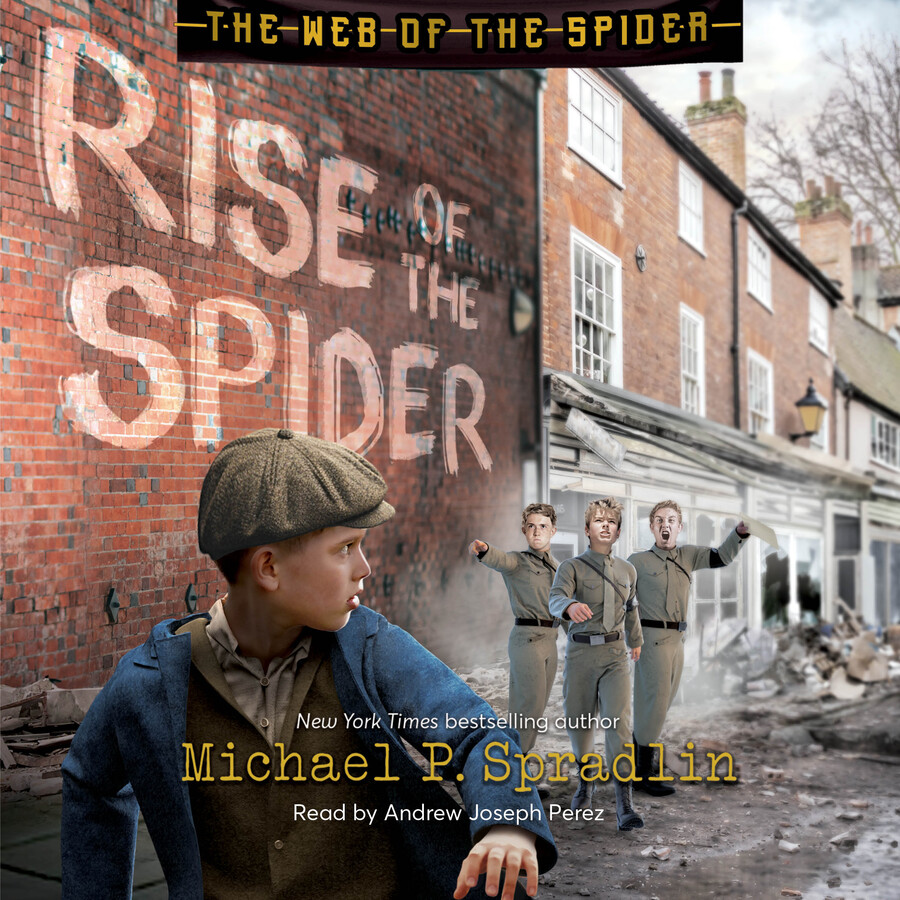
Witness the chilling rise of Hitler’s Germany through the eyes of a twelve-year-old boy in this first book in the action-packed middle grade series Web of the Spider for fans of I Survived and A Night Divided.
1929, Heroldsberg, Germany. Rolf might only be twelve years old, but he’s old enough to know that things have not been good in his country since the end of the Great War. Half of Germany is out of work, and a new political movement is taking hold that scares him. Every night, Rolf’s father and older brother, Romer, have increasingly heated arguments about politics at the dinner table. And when two members of the new Nazi Party, Hans and Nils, move to town as part of the Hitler Youth, Rolf is uneasy to see how enamored Romer is by their promises of bringing Germany to glory.
Rolf doesn’t trust Hans and Nils for a moment. For all their talk of greatness, they act more like bullies, antagonizing shop owners who are Rolf’s friends and neighbors. Yet Romer becomes increasingly obsessed with their message of division, and Rolf watches in horror as his family fractures even further.
When there is an act of vandalism against a Jewish-owned business in town, Rolf fears Romer might have had something to do with it. Can Rolf find a way to intervene before things get any worse?
1929, Heroldsberg, Germany. Rolf might only be twelve years old, but he’s old enough to know that things have not been good in his country since the end of the Great War. Half of Germany is out of work, and a new political movement is taking hold that scares him. Every night, Rolf’s father and older brother, Romer, have increasingly heated arguments about politics at the dinner table. And when two members of the new Nazi Party, Hans and Nils, move to town as part of the Hitler Youth, Rolf is uneasy to see how enamored Romer is by their promises of bringing Germany to glory.
Rolf doesn’t trust Hans and Nils for a moment. For all their talk of greatness, they act more like bullies, antagonizing shop owners who are Rolf’s friends and neighbors. Yet Romer becomes increasingly obsessed with their message of division, and Rolf watches in horror as his family fractures even further.
When there is an act of vandalism against a Jewish-owned business in town, Rolf fears Romer might have had something to do with it. Can Rolf find a way to intervene before things get any worse?
Reading Group Guide
Join our mailing list! Get our latest staff recommendations, award news and digital catalog links right to your inbox.
By clicking 'Sign me up' I acknowledge that I have read and agree to the privacy policy and terms of use.
Discussion Guide
The Web of the Spider
Book 1: Rise of the Spider
By Michael P. Spradlin
About the Book
“GERMANY SURRENDERS! At 11:00 a.m. on November 11 [1918], an armistice was signed between Germany and the Allied powers.” Ten years later, Germany is still feeling the effects of the end of the Great War. In Heroldsberg, twelve-year-old Rolf enjoys the simple life of going to school, playing football with his friends, and having family dinners with his papa and older brother, Romer. However, the political climate of the country is changing as the new Nazi Party is indoctrinating their ideas into the minds of many. When Hans and Nils, two members of the Hitler Youth, move to Heroldsberg, Romer becomes increasingly argumentative and spends more time with them. Rolf, on the other hand, thinks there is something suspicious about these boys. Along with his friends, Rolf keeps a close eye on them. When the family relationships between Romer, Papa, and Rolf become fractured, and tumultuous acts of violence against the Jewish community are undeniable, Rolf wonders if Romer and the Hitler Youth are behind it. Rise of the Spider explores a time in history when everyone, young and old, Germans and Jews, are affected by the ideas of one powerful person, and each must decide how to respond.
Discussion Questions
1. The title of the book, Rise of the Spider, immediately sets up a metaphor. What do you think the spider is metaphorically representing? Provide evidence of when it is used in the story and why.
2. The setting of a book provides insight into where the story takes place, as well as the time period. How does living in Heroldsberg, Germany, after the Great War impact the characters? How is summer in Heroldsberg different from the other seasons?
3. Rolf, the story’s protagonist, is a compassionate boy who often thinks of others and wants the best for everyone. However, he soon realizes that the people and situations surrounding him are not quite what they seem. Explain who and what surprise him. How does Rolf stay true to himself and continue to be a stand-up person during these tumultuous times?
4. Romer, Rolf’s older brother, is a complicated character. We learn of his positive attributes, but then also uncover his negative ones. Discuss Romer’s character traits, and note when you see Romer’s character change. What causes the change? How does it affect Rolf and others around him? Does Rolf and Romer’s relationship change? Explain.
5. Secondary characters help us to understand the relationships between themselves and the protagonist, as well as share a different perspective on the time period. Who are the significant secondary characters in Rise of the Spider? Discuss how they interact with Rolf, and how he is affected by their actions on a daily basis. Does Rolf feel the need to change who he is because of his connection to them? Use evidence to explain.
6. Papa is the sole caregiver of Rolf and Romer since their mother died when Rolf was born. He has different relationships with each son. Find evidence that shows how he connects to each of them. How is it the same? How is it different? Explain why.
7. Juxtaposition is when an author places two contrasting ideas, characters, or images side by side to highlight their differences. For example, despite the financial turmoil the country is going through, Mrs. Hufnagel gives away apple fritters to Rolf and Ansel. Find other examples of juxtaposition and discuss why the author includes them.
8. Someone who has power is often in charge socially, politically, or personally. Rolf states, “When things are bad, someone must be blamed. And if you had power, you could blame anyone you wanted.” (Chapter eleven) As you read, make note of who makes the rules. Does the power ever shift, and what causes it to shift? Is power being used positively or negatively? Notice not only who has power, but who wishes they did.
9. A book’s perspective shows us who is telling the story and informs the reader about the backgrounds, beliefs, and experiences that have shaped the narrator’s point of view. Think about who is telling this story and about his perspective on various ideals. Keep the secondary and minor characters in mind as you discuss the story’s perspective. Whose thoughts do we hear, and who doesn’t have a voice? How would parts of the story be different if the perspective changed? Use evidence to support your ideas.
10. Throughout the story, Rolf struggles with internal questions. After the fire, he asks himself, “What should I do about Romer? Should I tell Papa? Should I find Mrs. Hufnagel and tell her?” (Chapter eight) What other tough questions are affecting Rolf, and how is this internal conflict distressing his life? Who else is disturbed by internal conflict? Would you feel the same? Explain.
11. A memory moment is when the author interrupts an action to tell the reader about an important memory. In chapter five, Papa shares a moment with Rolf when he states,
“‘I’ve never spoken to you about the war. There is a reason for that, son.’” What is the reason, and what does this tell us about Papa? Discuss how both Papa and Rolf are affected by this heavy conversation. Do others feel the same as Papa?
12. Adolf Hitler is introduced at the beginning of the book when we meet Hans and Nils, members of the Hitler Youth. Discuss what we learn about Hitler and how he tries to increase the members of his political party. What happens at the Nuremberg Rally that affects Rolf and his family? How would you have handled the situation?
13. The last line of the book is, “The die was cast.” In history, who used that line when speaking to his generals and in what context? What does it mean to Rolf when he leaves us with this last line?
Extension Activities
1. In the author’s note, Michael P. Spradlin shares a picturesque description of Heroldsberg, Nuremberg, and the Bavarian countryside. However, he then states, “How could so beautiful a place become the breeding ground for so much vile hatred and evil?” Study images of both the Bavarian countryside and Germany in 1929. Look at the differences between them. Discuss why you think the author included this observation. Can you think of other real-life examples where a place looked perfect on the outside but was hiding something harmful underneath?
2. As we learn more about the effects of the Great War and the Treaty of Versailles, we are also introduced to Adolf Hitler, the leader of the Nazi Party. In 1923, he was arrested in the Beer Hall Putsch and only served nine months of his five-year sentence. Research the Beer Hall Putsch to discover what Hitler’s motives were and how this incident affected his life and the lives of others. Break up into groups and create a newspaper article citing the incident from the point of view of the Germans and then also from the perspective of the Nazi Party. What are the similarities and differences between both articles?
Discussion Questions for Rise of the Spider and Threat of the Spider
1. The theme of a story is the message the author wants us to learn. In Rise of the Spider, the idea of standing up for what’s right is shown through characters who take risks to protect others and speak the truth, even when it’s dangerous. These moments show that doing what’s right often requires courage and sacrifice. Provide details from the book that support this thinking. How do you think this theme will continue into the other Web of the Spider installments?
2. In Threat of the Spider, the representation of good and evil continues. The life Ansel’s father chooses to live inspires us. He vows to always tell the truth. How do Herr Becker’s motives and actions reveal the theme of the book? Provide specific instances when the theme is represented ,and discuss how his choices reflect the struggle to protect the truth in a time when speaking out could be dangerous.
Guide written by Angela Benevento who is a literacy specialist and elementary school teacher. She teaches and lives with her family in New York.
This guide has been provided by Simon & Schuster for classroom, library, and reading group use. It may be reproduced in its entirety or excerpted for these purposes. For more Simon & Schuster guides and classroom materials, please visit simonandschuster.net/m/prek12-teachers-librarians/teaching-resources.
The Web of the Spider
Book 1: Rise of the Spider
By Michael P. Spradlin
About the Book
“GERMANY SURRENDERS! At 11:00 a.m. on November 11 [1918], an armistice was signed between Germany and the Allied powers.” Ten years later, Germany is still feeling the effects of the end of the Great War. In Heroldsberg, twelve-year-old Rolf enjoys the simple life of going to school, playing football with his friends, and having family dinners with his papa and older brother, Romer. However, the political climate of the country is changing as the new Nazi Party is indoctrinating their ideas into the minds of many. When Hans and Nils, two members of the Hitler Youth, move to Heroldsberg, Romer becomes increasingly argumentative and spends more time with them. Rolf, on the other hand, thinks there is something suspicious about these boys. Along with his friends, Rolf keeps a close eye on them. When the family relationships between Romer, Papa, and Rolf become fractured, and tumultuous acts of violence against the Jewish community are undeniable, Rolf wonders if Romer and the Hitler Youth are behind it. Rise of the Spider explores a time in history when everyone, young and old, Germans and Jews, are affected by the ideas of one powerful person, and each must decide how to respond.
Discussion Questions
1. The title of the book, Rise of the Spider, immediately sets up a metaphor. What do you think the spider is metaphorically representing? Provide evidence of when it is used in the story and why.
2. The setting of a book provides insight into where the story takes place, as well as the time period. How does living in Heroldsberg, Germany, after the Great War impact the characters? How is summer in Heroldsberg different from the other seasons?
3. Rolf, the story’s protagonist, is a compassionate boy who often thinks of others and wants the best for everyone. However, he soon realizes that the people and situations surrounding him are not quite what they seem. Explain who and what surprise him. How does Rolf stay true to himself and continue to be a stand-up person during these tumultuous times?
4. Romer, Rolf’s older brother, is a complicated character. We learn of his positive attributes, but then also uncover his negative ones. Discuss Romer’s character traits, and note when you see Romer’s character change. What causes the change? How does it affect Rolf and others around him? Does Rolf and Romer’s relationship change? Explain.
5. Secondary characters help us to understand the relationships between themselves and the protagonist, as well as share a different perspective on the time period. Who are the significant secondary characters in Rise of the Spider? Discuss how they interact with Rolf, and how he is affected by their actions on a daily basis. Does Rolf feel the need to change who he is because of his connection to them? Use evidence to explain.
6. Papa is the sole caregiver of Rolf and Romer since their mother died when Rolf was born. He has different relationships with each son. Find evidence that shows how he connects to each of them. How is it the same? How is it different? Explain why.
7. Juxtaposition is when an author places two contrasting ideas, characters, or images side by side to highlight their differences. For example, despite the financial turmoil the country is going through, Mrs. Hufnagel gives away apple fritters to Rolf and Ansel. Find other examples of juxtaposition and discuss why the author includes them.
8. Someone who has power is often in charge socially, politically, or personally. Rolf states, “When things are bad, someone must be blamed. And if you had power, you could blame anyone you wanted.” (Chapter eleven) As you read, make note of who makes the rules. Does the power ever shift, and what causes it to shift? Is power being used positively or negatively? Notice not only who has power, but who wishes they did.
9. A book’s perspective shows us who is telling the story and informs the reader about the backgrounds, beliefs, and experiences that have shaped the narrator’s point of view. Think about who is telling this story and about his perspective on various ideals. Keep the secondary and minor characters in mind as you discuss the story’s perspective. Whose thoughts do we hear, and who doesn’t have a voice? How would parts of the story be different if the perspective changed? Use evidence to support your ideas.
10. Throughout the story, Rolf struggles with internal questions. After the fire, he asks himself, “What should I do about Romer? Should I tell Papa? Should I find Mrs. Hufnagel and tell her?” (Chapter eight) What other tough questions are affecting Rolf, and how is this internal conflict distressing his life? Who else is disturbed by internal conflict? Would you feel the same? Explain.
11. A memory moment is when the author interrupts an action to tell the reader about an important memory. In chapter five, Papa shares a moment with Rolf when he states,
“‘I’ve never spoken to you about the war. There is a reason for that, son.’” What is the reason, and what does this tell us about Papa? Discuss how both Papa and Rolf are affected by this heavy conversation. Do others feel the same as Papa?
12. Adolf Hitler is introduced at the beginning of the book when we meet Hans and Nils, members of the Hitler Youth. Discuss what we learn about Hitler and how he tries to increase the members of his political party. What happens at the Nuremberg Rally that affects Rolf and his family? How would you have handled the situation?
13. The last line of the book is, “The die was cast.” In history, who used that line when speaking to his generals and in what context? What does it mean to Rolf when he leaves us with this last line?
Extension Activities
1. In the author’s note, Michael P. Spradlin shares a picturesque description of Heroldsberg, Nuremberg, and the Bavarian countryside. However, he then states, “How could so beautiful a place become the breeding ground for so much vile hatred and evil?” Study images of both the Bavarian countryside and Germany in 1929. Look at the differences between them. Discuss why you think the author included this observation. Can you think of other real-life examples where a place looked perfect on the outside but was hiding something harmful underneath?
2. As we learn more about the effects of the Great War and the Treaty of Versailles, we are also introduced to Adolf Hitler, the leader of the Nazi Party. In 1923, he was arrested in the Beer Hall Putsch and only served nine months of his five-year sentence. Research the Beer Hall Putsch to discover what Hitler’s motives were and how this incident affected his life and the lives of others. Break up into groups and create a newspaper article citing the incident from the point of view of the Germans and then also from the perspective of the Nazi Party. What are the similarities and differences between both articles?
Discussion Questions for Rise of the Spider and Threat of the Spider
1. The theme of a story is the message the author wants us to learn. In Rise of the Spider, the idea of standing up for what’s right is shown through characters who take risks to protect others and speak the truth, even when it’s dangerous. These moments show that doing what’s right often requires courage and sacrifice. Provide details from the book that support this thinking. How do you think this theme will continue into the other Web of the Spider installments?
2. In Threat of the Spider, the representation of good and evil continues. The life Ansel’s father chooses to live inspires us. He vows to always tell the truth. How do Herr Becker’s motives and actions reveal the theme of the book? Provide specific instances when the theme is represented ,and discuss how his choices reflect the struggle to protect the truth in a time when speaking out could be dangerous.
Guide written by Angela Benevento who is a literacy specialist and elementary school teacher. She teaches and lives with her family in New York.
This guide has been provided by Simon & Schuster for classroom, library, and reading group use. It may be reproduced in its entirety or excerpted for these purposes. For more Simon & Schuster guides and classroom materials, please visit simonandschuster.net/m/prek12-teachers-librarians/teaching-resources.
About The Author
Photograph courtesy of the author
Michael P. Spradlin (1960–2026) was the New York Times bestselling and Edgar Award–nominated author of the Spy Goddess series, The Youngest Templar series, and the Web of the Spider series, as well as several works of historical fiction, including the Western Heritage Award–winning Off Like the Wind: The Story of the Pony Express. He lived in Lapeer, Michigan.
About The Reader
Product Details
- Publisher: Simon & Schuster Audio (September 24, 2024)
- Runtime: 2 hours and 34 minutes
- ISBN13: 9781668125779
- Grades: 3 - 7
- Ages: 8 - 12
Browse Related Books
Resources and Downloads
High Resolution Images
-
Book Cover Image (jpg): Rise of the Spider
Unabridged Audio Download 9781668125779
-
Author Photo (jpg): Michael P. Spradlin Photograph courtesy of the author(0.1 MB)
Any use of an author photo must include its respective photo credit
Join our mailing list!
By clicking 'Sign me up' I acknowledge that I have read and agree to the privacy policy and terms of use.