
Get our latest staff recommendations, award news and digital catalog links right to your inbox.
Table of Contents
About The Book
An instant New York Times bestseller!
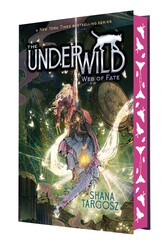
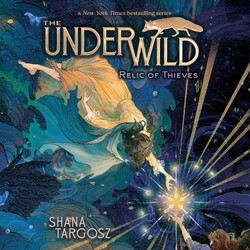
A “dazzling debut” (Booklist, starred review) middle grade fantasy about a girl caught between the realms of the living and the dead who gets lost in the Underworld—perfect for fans of Greenwild and Rick Riordan.
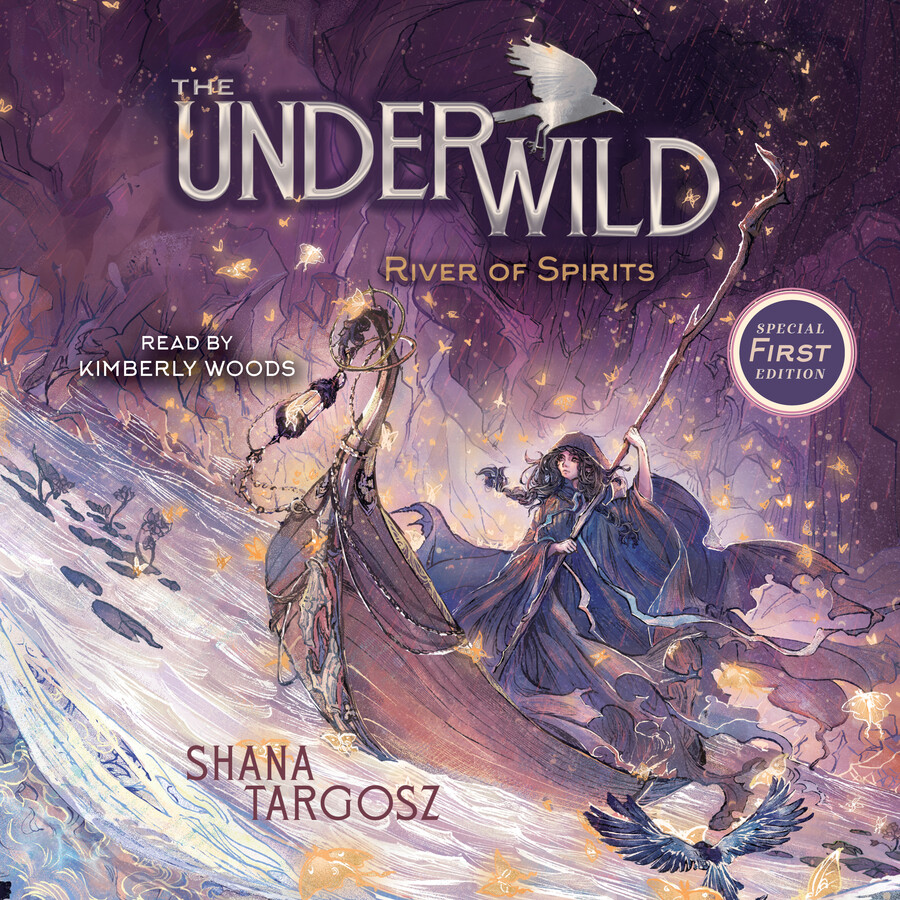
Senka lives between the realm of the Living and the realm of the Dead. As ward to Charon, the Ferryer of the Underworld, Senka assists in ferrying recently departed souls across the river and into their afterlife. Although Charon has taught her many Rules about life in the Underworld, there is much he avoids telling her. Though she doesn’t understand why the Rules are so important, she listens—she must heed them in order to become an official Ferryer, just like Charon.
Then a Living girl, Poppy, enters the Underworld to plead for help in finding the ghost of her brother. Poppy’s grief tugs at Senka’s heart—but helping Poppy goes against the very Rules Senka is so desperate to follow. When Poppy is yanked away by the river’s current, Senka leaps to save her, and she and Poppy are swept downriver, far from everything Senka has ever known.
Lost in the Underwild, Senka and Poppy encounter malevolent spirits of lore and eccentric ghosts—and not all are willing to let souls slip through their grasp. Senka knows the Living can’t stay in the realm of the Dead for long, and if Poppy isn’t returned home soon, she will risk becoming lost to the Underworld forever. But as Senka travels deeper into the Underwild, she discovers there are secrets her guardian has kept from her, including the mystery surrounding her own existence. As Poppy and Senka dodge angry demigods, hungry wraiths, and terrifying dragon chimera, Senka gets closer to learning the truth of her own past. Soon, Senka won’t just need to save Poppy’s life—she’ll also need to save her own.
A “dazzling debut” (Booklist, starred review) middle grade fantasy about a girl caught between the realms of the living and the dead who gets lost in the Underworld—perfect for fans of Greenwild and Rick Riordan.
Senka lives between the realm of the Living and the realm of the Dead. As ward to Charon, the Ferryer of the Underworld, Senka assists in ferrying recently departed souls across the river and into their afterlife. Although Charon has taught her many Rules about life in the Underworld, there is much he avoids telling her. Though she doesn’t understand why the Rules are so important, she listens—she must heed them in order to become an official Ferryer, just like Charon.
Then a Living girl, Poppy, enters the Underworld to plead for help in finding the ghost of her brother. Poppy’s grief tugs at Senka’s heart—but helping Poppy goes against the very Rules Senka is so desperate to follow. When Poppy is yanked away by the river’s current, Senka leaps to save her, and she and Poppy are swept downriver, far from everything Senka has ever known.
Lost in the Underwild, Senka and Poppy encounter malevolent spirits of lore and eccentric ghosts—and not all are willing to let souls slip through their grasp. Senka knows the Living can’t stay in the realm of the Dead for long, and if Poppy isn’t returned home soon, she will risk becoming lost to the Underworld forever. But as Senka travels deeper into the Underwild, she discovers there are secrets her guardian has kept from her, including the mystery surrounding her own existence. As Poppy and Senka dodge angry demigods, hungry wraiths, and terrifying dragon chimera, Senka gets closer to learning the truth of her own past. Soon, Senka won’t just need to save Poppy’s life—she’ll also need to save her own.
Reading Group Guide
Join our mailing list! Get our latest staff recommendations, award news and digital catalog links right to your inbox.
By clicking 'Sign me up' I acknowledge that I have read and agree to the privacy policy and terms of use.
Reading Group Guide
River of Spirits
By Shana Targosz
About the Book
As the ward of Charon, the immortal Ferryer of souls, Senka has never known a life outside of the Underworld. Training with Charon as his assistant Ferryer, Senka knows that one day she will become an official Ferryer just like him. But when Charon unexpectedly leaves her alone, she goes in search of him and instead comes across a grief-stricken girl in search of her recently deceased brother.
Begrudgingly, Senka agrees to help this mortal girl, Poppy, but they accidentally get pulled into the Underwild, a part of the Underworld that Senka has been forbidden to enter. Together, Senka and Poppy confront the most dangerous immortals of the Underworld in their quest to find Poppy’s younger brother, Joey; what’s more, they must find him before Poppy loses her memories and mortality forever. As Senka and Poppy’s friendship grows, Senka begins to uncover clues that cause her to doubt everything Charon has told her about her life and how she came to be his ward. Can Senka help her new friend, and at the same time discover who she really is?
Discussion Questions
1. Senka notices a “weird stillness” to the river Acheron, and thinks, “It feels like a bad omen, like ‘something wicked this way comes.’” (Chapter one) What is an omen? How is what Senka believes to be an omen possibly her own intuition?
2. Nightmares plague Senka. In chapter two, after Senka falls into the river, the creatures that only live in her nightmares surround her. When Senka blurts out to Charon that these creatures are from her nightmares, she fears that he will feel betrayed. What is betrayal? Do you think Senka was betraying Charon by not telling him she was still visited by nightmares? Why or why not?
3. Hecate asks Senka if she’d like her to look into the future to gain “‘foresight of what’s to come.’” (Chapter four) What is foresight? If given the chance to see your future, would you want to look? Why or why not? What would be the possible positives, negatives, and consequences of knowing your future?
4. Shortly after Senka discovers the living girl Poppy, Senka experiences the girl’s intense grief: “Her grief pours out thick as fog, and I struggle for breath.” (Chapter eight) How can grief, or any extreme sadness, be like fog? Senka’s reaction to the girl’s sorrow makes something inside of her “crack.” Why do you think an immortal girl would have such a strong reaction to human grief? Why do you think Senka tries to avoid being around the grieving?
5. In chapter nine when Senka experiences a panic attack, Poppy helps her to regain calm by coaching her through a breathing exercise. How is this interaction an example of Poppy’s empathy? How does this act of care and kindness affect Senka?
6. Many of the characters in the story struggle with loneliness. What is the difference between being lonely and being alone? Thinking about Charon being alone for thousands of years before she arrived, and how Poppy has friends her age makes Senka realize how lonely she is. Discuss how having Poppy as a companion, even though she knows she should bring her back to the Shore of the Living, makes Senka feel less lonely.
7. Although she believes herself to be immortal, Senka responds in very human ways throughout the story. For example, when she and Poppy are trying to escape the carnival daimons, Poppy reaches out for Senka’s hand, and Senka experiences a “jolt, her skin a shock of warmth” and “a tingling feeling.” (Chapter thirteen) Discuss other ways in which Senka acts, thinks, and feels human.
8. A quest is defined as a “search or pursuit in order to find something.” (Oxford English Dictionary online resource). Poppy is on a quest to find her brother, Joey. After Senka begrudgingly helps Poppy, how does her journey through the Underwild also become a quest? What is she searching for? What does she discover along the way?
9. After Poppy asks Senka if she wants to talk about her feelings, Senka realizes “the thought of having a conversation with someone other than Charon and opening myself up makes me nervous, but also warm in my middle, like when I gulp down a mug of hot cocoa.” (Chapter twenty-one) Discuss this statement. What do you think she means by “warm in the middle”? How can she feel both feelings at the same time? Why is it important to talk about your feelings with people who care?
10. Senka is convinced that Charon is keeping secrets from her, lying to her about the Amulet of Cleaving and other important aspects of her life. How can secrets be threats to relationships? Do you think that Senka is making assumptions about Charon’s intentions? Why do you think that Senka felt “like maybe there’s a tiny bit of truth to Lionel’s words”? (Chapter twenty)
11. Charon is the only parental figure that Senka has ever known. Although she’s angry with him and doubts his sincerity, she thinks, “Maybe Charon is like a dad to me, after all.” (Chapter twenty-one) What are the qualities of a good parent? How does Charon exhibit these qualities? Do you think Senka would feel so betrayed if she didn’t consider herself part of Charon’s family? How do Charon’s words to Erebus in chapter twenty-three, “‘She is mine, as I am hers,’” contradict Senka’s doubt?
12. Poppy asks Senka a question she had never considered: “‘Do you want to be a Ferryer?’” Senka loves to paint, but the expectation for her eternal life is to be a Ferryer of the dead. She thinks, “Not once did I allow myself to dream about becoming something else.” (Chapter twenty-five) Why is it important to imagine what you could become? What do you want to become when you’re older?
13. Discuss how memory is woven throughout the story. How do Senka’s fragments of memories piece together to reveal the truth of who she is? How does fear keep her from her memories of how she came to the Underworld? When Senka hears the song “Stand by Me,” she has another nightmare. She considers that instead of a nightmare, it’s possibly a memory. How can music and memory be connected? Why do you think this song triggers such powerful images and emotions in Senka?
14. How is Poppy’s confession to Senka in chapter thirty-four a turning point in their relationship? How can honesty deepen a friendship?
15. While learning the story of Psyche and Eros, Senka realizes that Poppy based her quest for Joey on their story, but “instead of questioning what could go wrong if she attempted the same thing, Poppy had latched on to the things she wanted to believe.” (Chapter thirty-four) Explain what Senka means by wanting to believe. How did Poppy’s unwillingness to consider the danger cloud her judgment? How can wanting something so badly lead to poor decision-making?
16. Water is an important aspect of the story. Discuss the ways the author utilizes water for action, suspense, and symbolic meaning.
17. When Poppy and Joey are saying goodbye, Senka promises herself “to never let a day slip by unnoticed.” (Chapter forty-nine) What do you think she means by “unnoticed”? How can you be like Senka and make a point to experience or create something new every day?
Extension Activities
1. The Immortals. After reading River of Spirits, students will have been introduced to a variety of mythical immortals of the Underworld: Charon, Cyclops, Prometheus, and others. Have students choose one immortal from the story to research. As a culminating activity, students can create slide presentations to share with the class, or create an artwork that showcases aspects of their research.
2. C Is for Corvid. Mortimer the messenger raven and Mags the magpie are both corvids, birds that are part of the crow family, scientifically known as Corvidae. Corvids are known for their keen intelligence and social behavior. Work with the school’s science teacher to learn about this fascinating family of clever birds. Visit PBS online to learn more about corvids and to view a selection of short videos: https://www.pbs.org/wnet/nature/group/birds/crow/.
3. “Stand by Me.” The song “Stand by Me” helps Senka unlock her memories of her father and her life before entering the Underworld. Print copies of the song lyrics for each student to read. Discuss how the lyrics relate to the story. After the discussion, play the recording by Ben E. King to the class.
4. Memory Lane. Senka paints pictures of boats over and over again and comes to realize that the image is connected to an experience she had with her father. Have students think about a favorite family memory. Spend time working with students as they write a one-page reflection of the memory. After the writing process is complete, students can make an illustration of a key detail of their memory.
5. Chimera Cha-Cha. Poppy describes chimera as “creatures that have all different animal parts.” (Chapter seventeen) What Poppy is describing is a hybrid creature, one that is composed of many animals. Give students an opportunity to conjure up a chimera of their very own, composing the creature with at least three distinct aspects of at least three animals. Provide drawing paper, crayons, markers, and colored pencils so students bring their chimera to life.
Guide created by Colleen Carroll, literacy educator, content creator, children’s book author, and director of curriculum & instruction at an independent school in the New York Metropolitan area. Learn more about Colleen at www.colleencarroll.us.
The websites referenced above are provided for informational purposes only and are not intended as an endorsement or promotion of any website. Simon & Schuster is not responsible for the functionality or content of any external website and expressly disclaims all responsibility and liability in connection therewith.
This guide has been provided by Simon & Schuster for classroom, library, and reading group use. It may be reproduced in its entirety or excerpted for these purposes. For more Simon & Schuster guides and classroom materials, please visit https://www.simonandschuster.net/m/prek12-teachers-librarians/teaching-resources
River of Spirits
By Shana Targosz
About the Book
As the ward of Charon, the immortal Ferryer of souls, Senka has never known a life outside of the Underworld. Training with Charon as his assistant Ferryer, Senka knows that one day she will become an official Ferryer just like him. But when Charon unexpectedly leaves her alone, she goes in search of him and instead comes across a grief-stricken girl in search of her recently deceased brother.
Begrudgingly, Senka agrees to help this mortal girl, Poppy, but they accidentally get pulled into the Underwild, a part of the Underworld that Senka has been forbidden to enter. Together, Senka and Poppy confront the most dangerous immortals of the Underworld in their quest to find Poppy’s younger brother, Joey; what’s more, they must find him before Poppy loses her memories and mortality forever. As Senka and Poppy’s friendship grows, Senka begins to uncover clues that cause her to doubt everything Charon has told her about her life and how she came to be his ward. Can Senka help her new friend, and at the same time discover who she really is?
Discussion Questions
1. Senka notices a “weird stillness” to the river Acheron, and thinks, “It feels like a bad omen, like ‘something wicked this way comes.’” (Chapter one) What is an omen? How is what Senka believes to be an omen possibly her own intuition?
2. Nightmares plague Senka. In chapter two, after Senka falls into the river, the creatures that only live in her nightmares surround her. When Senka blurts out to Charon that these creatures are from her nightmares, she fears that he will feel betrayed. What is betrayal? Do you think Senka was betraying Charon by not telling him she was still visited by nightmares? Why or why not?
3. Hecate asks Senka if she’d like her to look into the future to gain “‘foresight of what’s to come.’” (Chapter four) What is foresight? If given the chance to see your future, would you want to look? Why or why not? What would be the possible positives, negatives, and consequences of knowing your future?
4. Shortly after Senka discovers the living girl Poppy, Senka experiences the girl’s intense grief: “Her grief pours out thick as fog, and I struggle for breath.” (Chapter eight) How can grief, or any extreme sadness, be like fog? Senka’s reaction to the girl’s sorrow makes something inside of her “crack.” Why do you think an immortal girl would have such a strong reaction to human grief? Why do you think Senka tries to avoid being around the grieving?
5. In chapter nine when Senka experiences a panic attack, Poppy helps her to regain calm by coaching her through a breathing exercise. How is this interaction an example of Poppy’s empathy? How does this act of care and kindness affect Senka?
6. Many of the characters in the story struggle with loneliness. What is the difference between being lonely and being alone? Thinking about Charon being alone for thousands of years before she arrived, and how Poppy has friends her age makes Senka realize how lonely she is. Discuss how having Poppy as a companion, even though she knows she should bring her back to the Shore of the Living, makes Senka feel less lonely.
7. Although she believes herself to be immortal, Senka responds in very human ways throughout the story. For example, when she and Poppy are trying to escape the carnival daimons, Poppy reaches out for Senka’s hand, and Senka experiences a “jolt, her skin a shock of warmth” and “a tingling feeling.” (Chapter thirteen) Discuss other ways in which Senka acts, thinks, and feels human.
8. A quest is defined as a “search or pursuit in order to find something.” (Oxford English Dictionary online resource). Poppy is on a quest to find her brother, Joey. After Senka begrudgingly helps Poppy, how does her journey through the Underwild also become a quest? What is she searching for? What does she discover along the way?
9. After Poppy asks Senka if she wants to talk about her feelings, Senka realizes “the thought of having a conversation with someone other than Charon and opening myself up makes me nervous, but also warm in my middle, like when I gulp down a mug of hot cocoa.” (Chapter twenty-one) Discuss this statement. What do you think she means by “warm in the middle”? How can she feel both feelings at the same time? Why is it important to talk about your feelings with people who care?
10. Senka is convinced that Charon is keeping secrets from her, lying to her about the Amulet of Cleaving and other important aspects of her life. How can secrets be threats to relationships? Do you think that Senka is making assumptions about Charon’s intentions? Why do you think that Senka felt “like maybe there’s a tiny bit of truth to Lionel’s words”? (Chapter twenty)
11. Charon is the only parental figure that Senka has ever known. Although she’s angry with him and doubts his sincerity, she thinks, “Maybe Charon is like a dad to me, after all.” (Chapter twenty-one) What are the qualities of a good parent? How does Charon exhibit these qualities? Do you think Senka would feel so betrayed if she didn’t consider herself part of Charon’s family? How do Charon’s words to Erebus in chapter twenty-three, “‘She is mine, as I am hers,’” contradict Senka’s doubt?
12. Poppy asks Senka a question she had never considered: “‘Do you want to be a Ferryer?’” Senka loves to paint, but the expectation for her eternal life is to be a Ferryer of the dead. She thinks, “Not once did I allow myself to dream about becoming something else.” (Chapter twenty-five) Why is it important to imagine what you could become? What do you want to become when you’re older?
13. Discuss how memory is woven throughout the story. How do Senka’s fragments of memories piece together to reveal the truth of who she is? How does fear keep her from her memories of how she came to the Underworld? When Senka hears the song “Stand by Me,” she has another nightmare. She considers that instead of a nightmare, it’s possibly a memory. How can music and memory be connected? Why do you think this song triggers such powerful images and emotions in Senka?
14. How is Poppy’s confession to Senka in chapter thirty-four a turning point in their relationship? How can honesty deepen a friendship?
15. While learning the story of Psyche and Eros, Senka realizes that Poppy based her quest for Joey on their story, but “instead of questioning what could go wrong if she attempted the same thing, Poppy had latched on to the things she wanted to believe.” (Chapter thirty-four) Explain what Senka means by wanting to believe. How did Poppy’s unwillingness to consider the danger cloud her judgment? How can wanting something so badly lead to poor decision-making?
16. Water is an important aspect of the story. Discuss the ways the author utilizes water for action, suspense, and symbolic meaning.
17. When Poppy and Joey are saying goodbye, Senka promises herself “to never let a day slip by unnoticed.” (Chapter forty-nine) What do you think she means by “unnoticed”? How can you be like Senka and make a point to experience or create something new every day?
Extension Activities
1. The Immortals. After reading River of Spirits, students will have been introduced to a variety of mythical immortals of the Underworld: Charon, Cyclops, Prometheus, and others. Have students choose one immortal from the story to research. As a culminating activity, students can create slide presentations to share with the class, or create an artwork that showcases aspects of their research.
2. C Is for Corvid. Mortimer the messenger raven and Mags the magpie are both corvids, birds that are part of the crow family, scientifically known as Corvidae. Corvids are known for their keen intelligence and social behavior. Work with the school’s science teacher to learn about this fascinating family of clever birds. Visit PBS online to learn more about corvids and to view a selection of short videos: https://www.pbs.org/wnet/nature/group/birds/crow/.
3. “Stand by Me.” The song “Stand by Me” helps Senka unlock her memories of her father and her life before entering the Underworld. Print copies of the song lyrics for each student to read. Discuss how the lyrics relate to the story. After the discussion, play the recording by Ben E. King to the class.
4. Memory Lane. Senka paints pictures of boats over and over again and comes to realize that the image is connected to an experience she had with her father. Have students think about a favorite family memory. Spend time working with students as they write a one-page reflection of the memory. After the writing process is complete, students can make an illustration of a key detail of their memory.
5. Chimera Cha-Cha. Poppy describes chimera as “creatures that have all different animal parts.” (Chapter seventeen) What Poppy is describing is a hybrid creature, one that is composed of many animals. Give students an opportunity to conjure up a chimera of their very own, composing the creature with at least three distinct aspects of at least three animals. Provide drawing paper, crayons, markers, and colored pencils so students bring their chimera to life.
Guide created by Colleen Carroll, literacy educator, content creator, children’s book author, and director of curriculum & instruction at an independent school in the New York Metropolitan area. Learn more about Colleen at www.colleencarroll.us.
The websites referenced above are provided for informational purposes only and are not intended as an endorsement or promotion of any website. Simon & Schuster is not responsible for the functionality or content of any external website and expressly disclaims all responsibility and liability in connection therewith.
This guide has been provided by Simon & Schuster for classroom, library, and reading group use. It may be reproduced in its entirety or excerpted for these purposes. For more Simon & Schuster guides and classroom materials, please visit https://www.simonandschuster.net/m/prek12-teachers-librarians/teaching-resources
About The Author
Charlie Chu
Shana Targosz writes about magical girls, budding friendships, ghosts who may or may not be friendly, and fiercely held hope. She is an Oregon Literary Fellow and the 2021 recipient of the Edna L. Holmes Fellowship in Young Readers Literature. Shana is the author of The Underwild series, the first book of which was an instant New York Times bestseller. When not writing or reading through a stack of books, she spends her time playing Zelda with her son, designing solo journaling games, walking her domesticated monster disguised as a Labradoodle, and dreaming up different worlds.
About The Reader
Product Details
- Publisher: Simon & Schuster Audio (March 25, 2025)
- Runtime: 10 hours and 35 minutes
- ISBN13: 9781668130032
- Grades: 3 - 7
- Ages: 8 - 12
Browse Related Books
- 3rd Grade
- 4th Grade
- 5th Grade
- 6th Grade
- 7th Grade
- Age 4 - 8
- Age 9 - 11
- Age 12 and Up
- Children's Fiction > Social Themes > Death, Grief, Bereavement
- Children's Fiction > Science Fiction, Fantasy, Magic
- Children's Fiction > Social Situations > Death & Dying
- Children's Fiction > Legends, Myths, Fables > Other
- Children's Fiction > Legends, Myths, Fables > General
Raves and Reviews
"...this is a title that will be appreciated by fans of Rick Riordan and those looking for a discussion of loss."
– AudioFile magazine
Awards and Honors
- Kansas NEA Reading Circle List Junior Title
Resources and Downloads
High Resolution Images
-
Book Cover Image (jpg): River of Spirits
Unabridged Audio Download 9781668130032
-
Author Photo (jpg): Shana Targosz Charlie Chu(0.1 MB)
Any use of an author photo must include its respective photo credit
Join our mailing list!
By clicking 'Sign me up' I acknowledge that I have read and agree to the privacy policy and terms of use.