Get our latest staff recommendations, award news and digital catalog links right to your inbox.
Published by Interlink Books
Distributed by Simon & Schuster
Table of Contents
About The Book
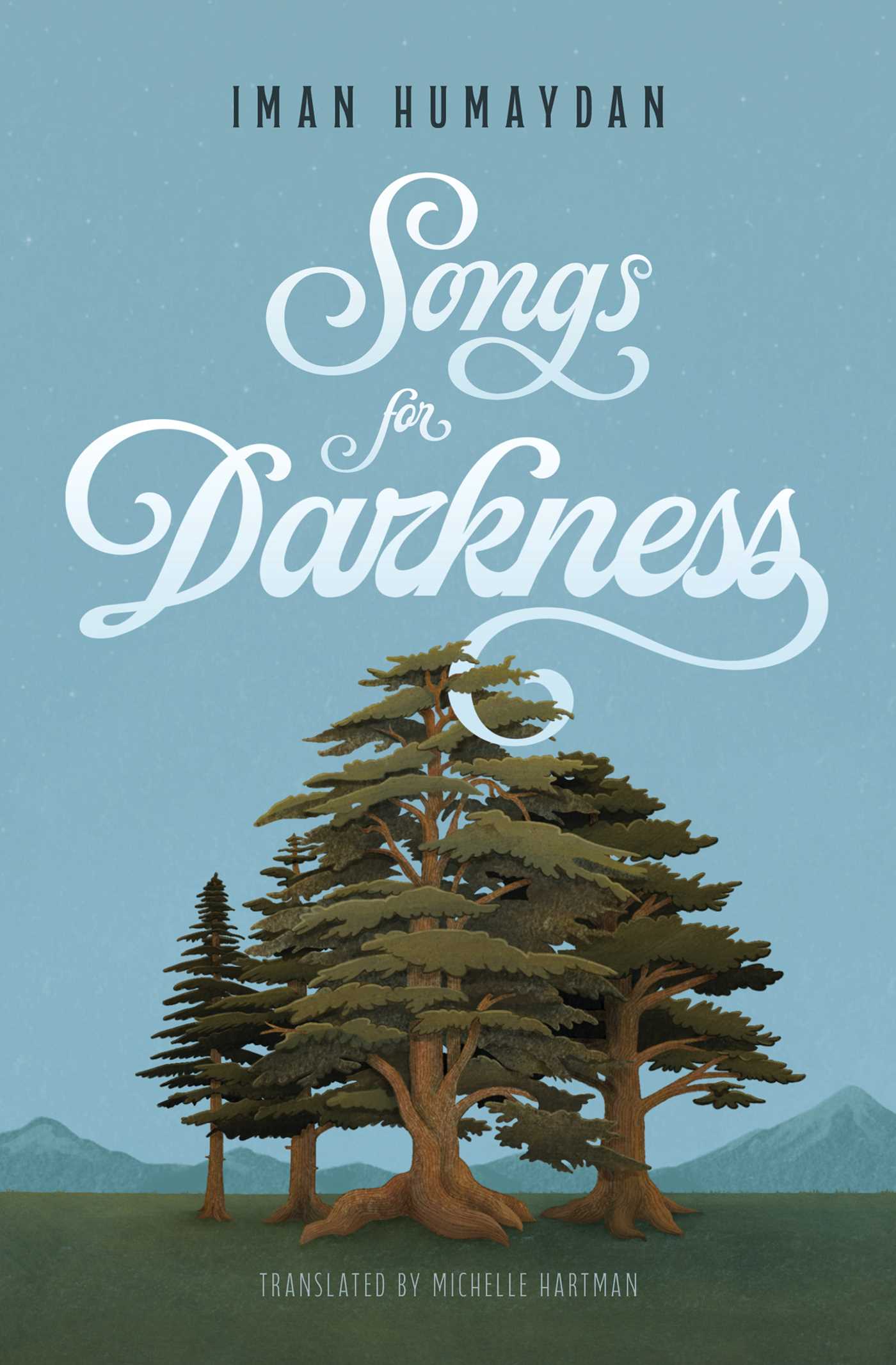
A novel that captures the collective pain of a nation through the stories of four Lebanese women.
Only songs are able to comfort the soul in its darkness—but can anyone hear them?
Iman Humaydan’s saga recalls the voices of four generations of women from one family in the imaginary village of Kasura, in Mount Lebanon. Its narrator, Asmahan, named after the beloved Syrian singer, has devoted her adult life to recovering the stories of her ancestors, who persisted in the shadows of male supremacy, war, military occupation, and impoverishment.
Her mother, Layla, disappeared when Asmahan was still a teenager. Her grandmother, Yasmine, died giving birth. And her great-grandmother, Shahira, struggled through two world wars, famine, and suffocating gender norms to win an education for her children and eke out a better life for her family. Asmahan is determined to protect her daughter and break out of the cycle of intergenerational violence and wounds that the women who came before her suffered. She packs up her daughter to emigrate after a divorce, when her husband takes their son away from her on his seventh birthday, during the darkest days of the 1982 Israeli invasion.
These women’s legacies span and echo the scarred history of an abused homeland, from the eve of the first World War to the 1982 Lebanon War. In honoring their unfulfilled lives, Iman Humaydan insistently preserves intimate stories of abundant tenacity, generosity, sacrifice—and songs, provisions sorely needed for dark times.
Only songs are able to comfort the soul in its darkness—but can anyone hear them?
Iman Humaydan’s saga recalls the voices of four generations of women from one family in the imaginary village of Kasura, in Mount Lebanon. Its narrator, Asmahan, named after the beloved Syrian singer, has devoted her adult life to recovering the stories of her ancestors, who persisted in the shadows of male supremacy, war, military occupation, and impoverishment.
Her mother, Layla, disappeared when Asmahan was still a teenager. Her grandmother, Yasmine, died giving birth. And her great-grandmother, Shahira, struggled through two world wars, famine, and suffocating gender norms to win an education for her children and eke out a better life for her family. Asmahan is determined to protect her daughter and break out of the cycle of intergenerational violence and wounds that the women who came before her suffered. She packs up her daughter to emigrate after a divorce, when her husband takes their son away from her on his seventh birthday, during the darkest days of the 1982 Israeli invasion.
These women’s legacies span and echo the scarred history of an abused homeland, from the eve of the first World War to the 1982 Lebanon War. In honoring their unfulfilled lives, Iman Humaydan insistently preserves intimate stories of abundant tenacity, generosity, sacrifice—and songs, provisions sorely needed for dark times.
Product Details
- Publisher: Interlink Books (March 10, 2026)
- Length: 230 pages
- ISBN13: 9781623715625
Browse Related Books
Raves and Reviews
This novel is a vibrant, historical echo of both Lebanon and women’s narratives, spanning the 20th century up until the year 1982. It is written in a style that is simultaneously psychological, critical, and poetic, and it touches us directly.
– Diffah Thalitha
[The novel has] an epic quality, tracing the fates of its characters both within their individual lives and the collective history to which they belong.
– Al-Quds Al-Araby
Humaydan scripts an authentic narrative that transcends fixed gender binaries and delves deeply into the repression, exclusions, and marginalization in societal and cultural consciousness. The novel embraces feminine origins, the unconditional giving of Mother Nature that plays a symbolic role as a source of generosity, creation, renewal, and continuity in the face of annihilation and oblivion.
– The Independent (Arabic)
Iman Humaydan tells the stories of the women in one family as a way of narrating the story of a nation. Her narrative is built on paradoxes that begin
with the title itself: how can one sing to darkness, oppression, loss, and defeat? The title Songs for the Darkness is a mirror of contradictions within society, especially in Beirut, a city that sings in the depths of its own collapse and dances even as it is being bombed.
– Al-Majalla
Songs for Darkness is a testament to Humayda's ability to breathe such vivid life into characters that readers feel as if they personally know them.
– Literatur
“Four generations of Lebanese women, their lives spanning the 20th century, show a different side of that war-torn nation’s story … An affecting portrait of women’s lives both in cosmopolitan Beirut and in rustic mountain towns.”
– Kirkus Reviews
Resources and Downloads
High Resolution Images
-
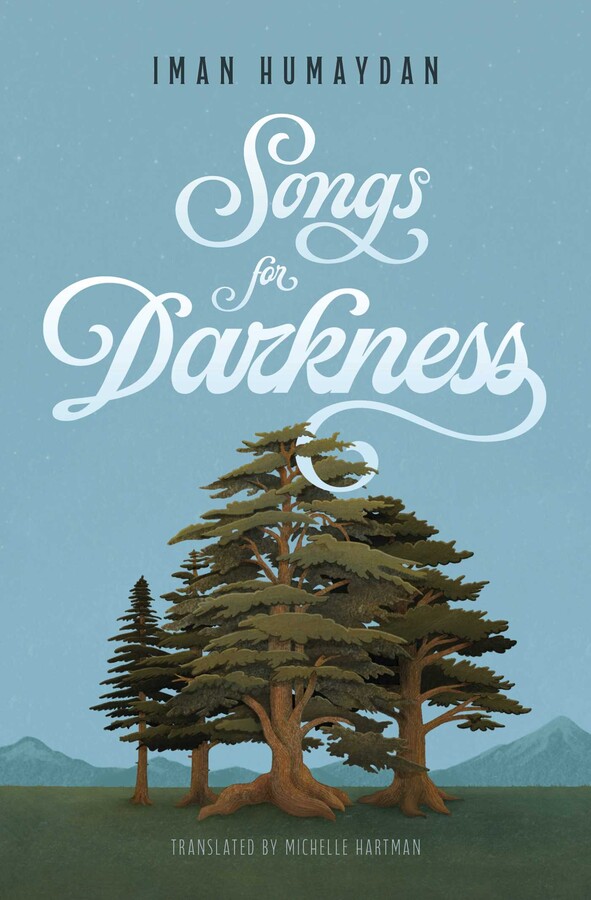
Book Cover Image (jpg): Songs for Darkness
Trade Paperback 9781623715625
Published by Interlink Books
Distributed by Simon & Schuster
Join our mailing list!
By clicking 'Sign me up' I acknowledge that I have read and agree to the privacy policy and terms of use.