
Get our latest staff recommendations, award news and digital catalog links right to your inbox.
Table of Contents
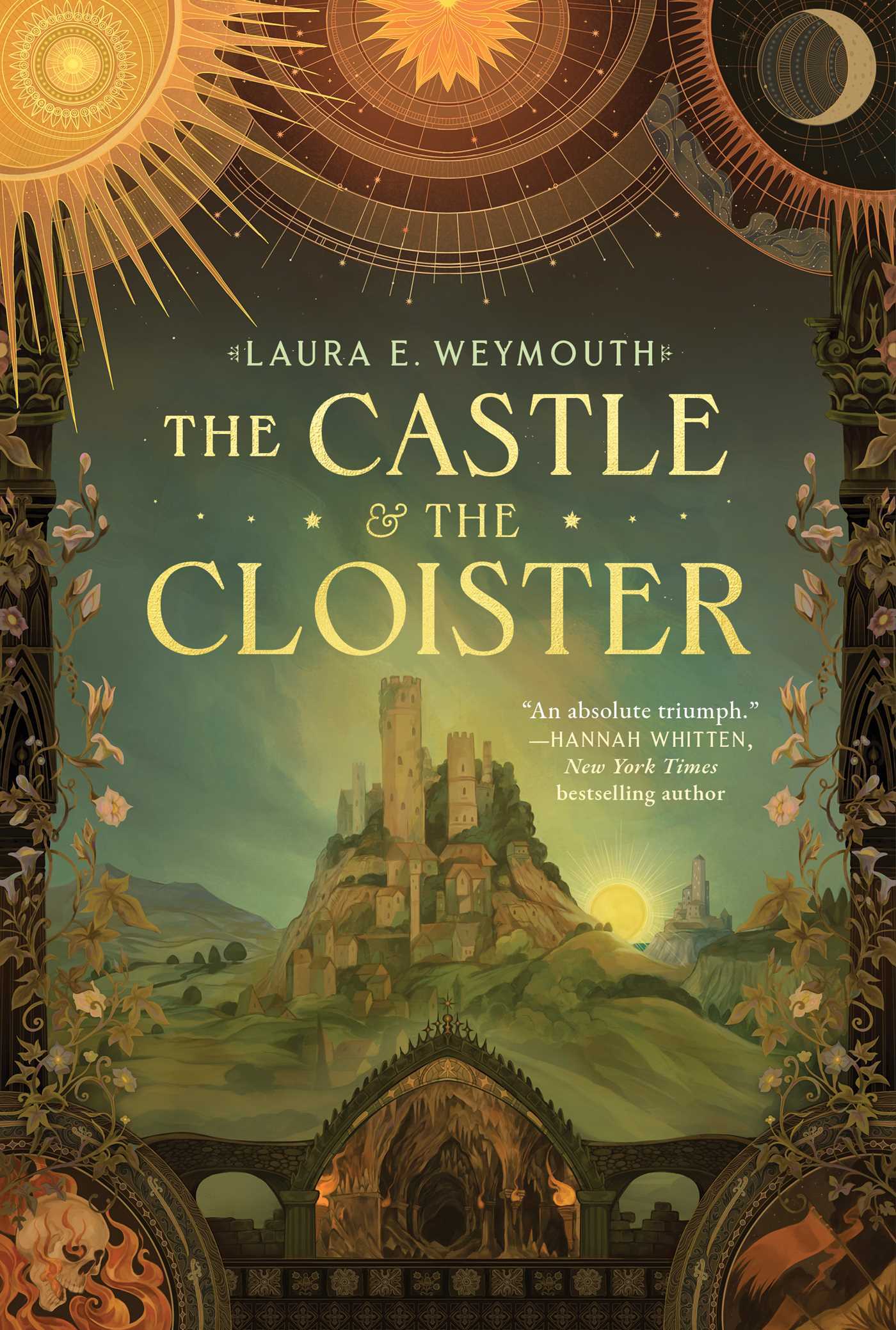
About The Book
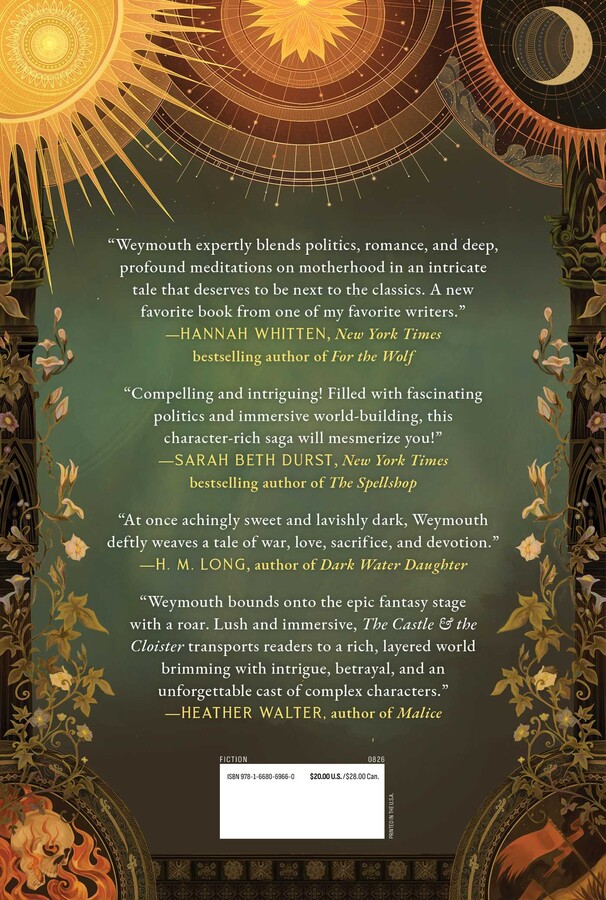
"An absolute triumph—Weymouth expertly blends politics, romance, and deep, profound meditations on motherhood into an intricate tale." —Hannah Whitten, New York Times bestselling author
The Priory of the Orange Tree meets Black Sun in the thrilling launch of a political fantasy duology following three people—a refugee, a heretic queen, and a priest—as they attempt to shape the fortunes of a continent shattered by war.
Two centuries ago, the Inver clan conquered the nation of Honoria, ushering in an era of blood. Now, after a period of fragile peace, a king’s whims may reignite the engines of war.
At the last stronghold of Honoria’s sun goddess, Fia, a young postulant, seeks safety for her child, but the price of the cloister’s protection will tear her from what she loves most and thrust her into a deadly game of deception.
Within the Inver’s mountain fortress, Ariana is known as the apostate queen after abandoning her faith for a king. But old loyalties aren’t easily severed. Ariana treads a dangerous path, striving for peace in a court made for conquest.
And deep in the heart of the mountain, the Inver Priest bides his time with small acts of rebellion. Blinded in the fight for the throne, he harbors a bitter grudge—one that could lead to Honoria’s ruin or renewal.
Amid a landscape of enemies, allies, and intrigue, three lives intertwine. Each will have to risk the wrath of gods and kings to alter the course of nations.
"At once achingly sweet and lavishly dark, Weymouth deftly weaves a tale of war, love, sacrifice and devotion." —H. M. Long
The Daughters of Light
The Castle & the Cloister
The Priory of the Orange Tree meets Black Sun in the thrilling launch of a political fantasy duology following three people—a refugee, a heretic queen, and a priest—as they attempt to shape the fortunes of a continent shattered by war.
Two centuries ago, the Inver clan conquered the nation of Honoria, ushering in an era of blood. Now, after a period of fragile peace, a king’s whims may reignite the engines of war.
At the last stronghold of Honoria’s sun goddess, Fia, a young postulant, seeks safety for her child, but the price of the cloister’s protection will tear her from what she loves most and thrust her into a deadly game of deception.
Within the Inver’s mountain fortress, Ariana is known as the apostate queen after abandoning her faith for a king. But old loyalties aren’t easily severed. Ariana treads a dangerous path, striving for peace in a court made for conquest.
And deep in the heart of the mountain, the Inver Priest bides his time with small acts of rebellion. Blinded in the fight for the throne, he harbors a bitter grudge—one that could lead to Honoria’s ruin or renewal.
Amid a landscape of enemies, allies, and intrigue, three lives intertwine. Each will have to risk the wrath of gods and kings to alter the course of nations.
"At once achingly sweet and lavishly dark, Weymouth deftly weaves a tale of war, love, sacrifice and devotion." —H. M. Long
The Daughters of Light
The Castle & the Cloister
Excerpt
Chapter I I
One for the Sun
Two for the Moon
Three for the Stars, Beloved.
Raea in power to grow the trees
Silith in strength to draw the seas
And Lyria in light to guide us.
—AN HONORIAN LULLABY
Fiametta Raeana, postulant of the Order of Blessed Raea the Sun, paced her cloister’s southern breezeway with the feral energy of a mountain cat. She’d been pacing for fully half an hour, ever since a soria came to fetch her from where she sat by the sea, nursing her small daughter Miriel. Matria Dolenza wants a word, the soria had said, and nerves blazed to life in Fia, for she knew exactly what the Matria wanted.
Fia had brought Miriel along, though she ought to have handed the baby off to any one of the sorias who doted on her. She hoped that sweet, helpless Miriel might serve as an inducement to the Matria to look on her more favorably. Bright Raea knew Fia needed all the help she could get in that regard. More than that, though, she wanted the reassurance of Miriel’s presence—the child grounded and comforted her when nothing else could. Miriel served as a reminder of everything Fia had left behind, and of why she’d chosen to walk out of her old life one winter night, without so much as shoes for her feet or a brass penny for her pocket.
The mountains haunted Fia still—the lack she had lived with there, not just privations of the body but of the heart and mind and soul. Her child would never know such things. So Fia swore to herself the day she felt the baby quicken in her belly, and she had striven toward that end every day since.
Resting on her mother’s hip, Miriel let out a soft, querulous sound. Fia sighed and ceased her pacing for the sake of the child. Shifting her daughter a little, she drew in a long, slow breath of the cloister’s air and shut her eyes in an attempt to settle herself.
The smell of brine and lye soap and green things growing.
The heat of a plains afternoon in high summer, only made bearable by occasional breezes that gusted in from the sea.
Sorias laughing and chattering at their work, their constant murmuring a counterpoint to the high, clear voices of the cloister’s small fosters, who played in the shady corners of the many courtyards.
Fia would have thought it all felt like home, but home had been a misery and a torment, a place to hang white-knuckled onto life, even when death sometimes seemed preferable. To her, the cloister felt like everything home had not been. It felt like security. Like potential. Like safety. But for now, at least, the cloister and life led within its walls were not hers to keep. Until she’d made her fidelity oath and become a soria, all this serenity and safety could be torn from her grasp at any time—in the next few moments, perhaps. So none of the ripe, reassuring atmosphere served to quiet Fia’s jangling nerves, because it did not belong to her yet.
At last, she bowed her head and nuzzled her face against Miriel’s, drawing in the one scent that calmed her when all others failed. Milk. Clean water. A hint of lavender. The impossible soft velvet of infant skin. The scent of her own heart made manifest.
The scent of hope.
Opening her eyes, Fia looked down at Miriel and found a toothless smile on her daughter’s achingly familiar face.
“It tempts fate to be so happy, love,” Fia murmured, brushing a kiss onto the baby’s forehead. “And we don’t need fate tempted, not today of all days.”
Miriel made a pleased sound in reply, and grasped Fia’s thick braid with one dimpled fist. Something electric ran through Fia. A shock of love, of the reckless passion that had risen in her heart the day she first felt Miriel stir inside her. It still took Fia by surprise sometimes, that she should be able to sustain such breadth of feeling. But here she stood, and since the moment it had first ignited, her love for Miriel had never ceased to burn like fire in her bones. Fia did not fully understand the strength of it or why it often felt like fury. All she knew was that loving Miriel had given her the courage to remake her life.
And Miriel, with her fuzz of golden curls and her beaming, six-month smile, comprehended none of that. Her life, by comparison to what Fia’s had been, was steady, secure, and measured, hedged in by the impenetrable bulwark of her mother’s intemperate love.
A discordant sound rose from across the courtyard that spread out before Fia like a verdant jewel, rich with garden beds and olive trees. Loud voices lifted in blustering anger cut across the laughter of sorias and the playful shrieks of cloister children. Fia watched as Aurelia, the Matria’s right hand, gathered up her kirtle and hurried to where a small group of well-dressed plains farmers stood arguing with a far lower-ranked soria. Though Miriel consumed most of Fia’s time and energy, it hadn’t escaped her notice that there was tension between Raea’s cloister and the people of the Solis Plains, most of whom worked as tenants of the goddess, farming Raea’s land and gathering Raea’s harvests. The sun goddess was surpassingly generous, but of late, Matria Dolenza had been less munificent than the plains folk were accustomed to. Some were unhappy with her governance and did not realize their great good fortune in serving a mistress who permitted such voluble grievances and often heard them personally.
Soria Aurelia approached the tenant farmers with a disarming smile, her hands spread wide in welcome. Doubtless they’d be mollified within a quarter hour at most, sent off with bottles of the cloister’s coveted summer wine, presents of honey cakes, and assurances of Raea’s pleasure in their obedience. The sorias were masters of restoring goodwill without ever actually granting concessions. Raea’s daughters might be placid and bright and diligent, extending easy camaraderie to anyone they encountered, but beneath their sunny exteriors, every one possessed a spine of iron and the stubbornness of a wild mountain jenny.
“Fia?” Matria Dolenza’s voice called out from within the recesses of her study. “I’m ready for you now.”
Fia pressed another kiss to Miriel’s cheek. “All right, my heart. One oath and all our wandering is finished. Just a few words and we’ll be bound to this cloister and to a life of peace.”
But even as she spoke, Fia’s worry flared up. She swallowed around an anxious tightening in her throat, for she’d learned long ago that certainty was an indulgence best left to fools. Still, the very air in Raea’s cloister was saturated with it. Calm and purpose and certainty were as pervasive here as the smell of the sea. The question was, would Fia be allowed a part of it? Would she be permitted to stay?
With a backward glance at the sun-soaked courtyard onto which the breezeway led out, Fia pushed her way into the study. The crescentcloth tapestry that served Matria Dolenza for a door settled into place behind her, the near-transparent weave of its back side allowing a view of the courtyard. The outward-facing image, by contrast, showed a deftly woven scene of the Solis Plains at harvest time, and afforded no glimpse of the Matria’s sanctum.
Matria Dolenza was behind her desk, the only sound in the room the scratching of her quill pen. Fia stole a look around herself—in seven months at the cloister, she’d never seen the interior of Dolenza’s study before. It was a cool, sparsely furnished stone room, as spare and duty-bound as the Matria herself.
“Why not sit?” Matria Dolenza said without looking up, and reluctantly, Fia took the unornamented wooden chair across from her.
This wasn’t what Fia had expected. She’d anticipated smiles and embraces from a few of the higher-ranking sorias waiting to hear her fidelity oath, as they’d done for Soria Beatrice two months back. She sat in silence, suspicion growing in her like a shadow as Matria Dolenza finished writing and scattered sand across the page.
At last, Dolenza looked up and fixed Fia with a searching stare. The Matria wore a soria’s headscarf much of the time, bound with the woven band that marked her station as head of the order, but Fia had seen her without the scarf once before. Though Matria Dolenza’s ebony-skinned face was smooth and hardly lined, her hair had been an exuberance of curling iron gray. There was something unknowable and canny about her eyes, too, and Fia was no closer to guessing the Matria’s age now than she had been upon first arriving at the cloister.
“Fiametta Raeana,” Matria Dolenza said by way of greeting, and Fia bowed her head. “Is there something you need?”
For a moment, Fia said nothing. The Matria had sent for her, after all. And it was, to the very day, the end of her four-month term as a postulant. Nothing stood between her and the protection of the cloister now, save for a single oath. But when Dolenza let the silence go uninterrupted, the question she’d asked hanging on the air, Fia fixed her gaze on Miriel’s sweet face. She needed the courage her daughter afforded, and wanted, too, to draw Dolenza’s attention to the baby. If she could not be moved for Fia’s sake, perhaps she might be for Miriel’s.
“My postulant’s term finished this morning, Matria,” Fia said.
Dolenza looked past Fia, to the lively courtyard beyond. Aurelia was leading the tenant farmers away, their voices already better humored, their postures speaking of anticipation now rather than irritation. One of the cloister’s fosters wandered quite close to the breezeway, a little black-haired and ivory-skinned girl with a birdlike way about her. She wove back and forth between the vegetable beds while a dutiful soria followed in her wake, holding up a crepe sunshade and occasionally smiling down at the child.
There were dozens of fosters like this at Raea’s great house by the sea—Corrinian children, whose parents had fled the tiny, beleaguered nation to the north and found no safe harbor elsewhere. Across much of the continent of the Hand, it was forbidden to offer shelter to those who’d left Corrin in the vain hope of building a new life. But in Fia’s homeland of Honoria, parentless cloister children were considered citizens by default. Corrinian families occasionally left their precious young ones behind in the dead of night, entrusting them indefinitely to Matria Dolenza’s care as they traveled on, searching for a haven they were unlikely to find. And Dolenza welcomed every foundling as an unlooked-for gift, making space for each new arrival in a cloister that was already full to bursting.
Let it be so with Miriel and I, Fia thought briefly, before cutting her eyes back to the Matria.
It wasn’t only Corrin’s children Dolenza concerned herself with—the troubled country to the north consumed the bulk of the goods and alms Raea’s cloister formerly returned to their tenants. Dolenza insisted on propping up the people of Corrin as best she could, either by open-handedness to the refugees who passed through her halls, or by covert shipments of foodstuffs, cloth, and coin to those still doggedly clinging to life on Corrin’s barren hills. Tools would do the Corrinians no good—their soil was stripped of virtue, their people wracked by plagues. Only the kindness of patrons like Dolenza kept anyone alive there. A remnant of Corrin’s citizens doggedly refused to leave, knowing the laws that governed the continent of the Hand would render their land open to claims by neighboring nations if it lay empty for long.
“You still wish to become a soria of this cloister?” Dolenza asked Fia sternly, showing none of her prodigious kindness now.
Fia fought to hide a growing sense of panic. “Yes, Matria.”
“That’s what you want, more than anything else?”
“Of course.”
Dolenza’s eyes caught Fia’s and held them, and Fia nearly flinched, the Matria’s gaze was so sharp.
“There’s no certainty about these things. Is this life—a cloistered life, a soria’s life, dedicated to work and our community and Blessed Raea the Sun—what you want above all else?”
Fia chose her words carefully. “What I want is peace and security for myself and for my daughter, Matria. I know a soria’s life can grant us that.”
“Just yourself and your daughter?” Matria Dolenza asked, shaking the sand from her letter onto the study’s flagstone floor. With deft hands, she folded the page, not bothering to seal it. “Is there no one else you care for? No one else for whom you want—what is it you said? Peace and security?”
“You’ll think me very hard-hearted, I’m sure,” Fia answered, not fool enough to lie. She’d seen Dolenza divine the truth behind deception in merchants and nobles and sorias alike. Even if it hurt Fia’s cause, she would be honest. “But no. To me there is no one else I strive for, beyond myself and my daughter.”
Once more, the Matria fixed her eyes on Fia, but her gaze had softened. “I don’t think you hard-hearted. Shortsighted, perhaps. Ignorant of the world. But those things can be remedied. A loveless heart cannot.”
Fia gathered her courage and her wits one final time. If this was to be the end of her respite at the cloister, she’d speak in her own defense. She’d come too far and lived through too much to do anything less.
“What is it you want from me, Matria? You’re the one who summoned me. Is it to tell me you won’t hear my oath? That I’m no longer welcome at Raea’s house and must take my daughter and go back out into the world? You know how I came to you—with nothing and no one but the child in my belly. If you cast us out, we’ll be destitute again.”
Dolenza got to her feet. She crossed the study’s shady interior and pushed back the crescentcloth tapestry by the door, so that more sun filtered in, and a fresh sea breeze blew through the room. “Come here to me.”
Reluctantly, Fia obeyed, moving to the Matria’s side.
“Do you see that child?” Dolenza asked, gesturing to the little black-haired girl. “Do you know her name?”
“Celina, I think. Forgive me, Matria, I’m still learning all the fosters’ names.”
“No, you’re right,” Dolenza said. “Has anyone told you who her parents are?”
Fia frowned, glancing down at Miriel. The baby had one fat, dimpled hand stuffed into her mouth and sucked on it happily, dribbling frothy saliva down the front of her tiny linen kirtle. Instinct moved Fia as she wiped Miriel’s chin with one of her own sleeves.
“I assumed Celina is an orphan,” Fia said. “Or that her parents are Corrinians who entrusted their daughter to us. There are so many of their children here, after all.”
“Celina’s father is Orden Inver,” Dolenza said, her voice even.
Fia’s head snapped up. “The king of all Honoria is that child’s father? What’s wrong with her? Is she a bastard?”
Dolenza gave Fia a long-suffering look. “Honestly, Fia, you may be the only person in Honoria who hasn’t heard the story. Did you keep yourself intentionally ignorant before coming to us?”
Fia tried not to glower, and failed. “If I had anything to wager, I’d bet no one else from my village has heard of Celina Inver, either. We didn’t get a lot of news, Matria, at the end of civilization. We knew there was a king somewhere—couldn’t escape knowing it when his pressers ransacked the village every year searching for able-bodied folk to conscript into his army. But not one in two of us could have told you his name, or where our people were sent. All we knew was that they left and never came back.”
Outside, Celina fell and scrambled back up, her small face scrunched in determination. Her hands were coated with dust, which she wiped onto the unbleached linen of her apron. Then she carried on until the contents of a particular garden bed drew her attention and she stopped, distracted by the opportunity to uproot a melon vine.
“Celina is goddess-marked,” Dolenza explained. “The day after the Invers held her naming ceremony, Wise Silith the Moon set her emblem on the child. Which makes her one of us, Fia. Someone marked out for fidelity to the goddesses, whether she chooses to follow that path or not. Orden Inver was furious and wouldn’t have her in his sight. So she was sent here.”
Fia’s free hand went to her own goddess mark—the sunburst at the nape of her neck, which had appeared there in her tenth year. The Invers, with their younger gods, did not tolerate worship of any of the Beloved Three save Raea. If Silith the Moon or Lyria the Stars chose you for their service, you were expected to cleave to Raea, if you wished, in substitution for your intended goddess, or to renounce the Three altogether and live faithless, or as a devotee of the Inver gods. The last was certainly the choice the Invers would prefer, but few goddess-marked made it.
“Why would the king send his child to Raea?” Fia asked in confusion.
She shivered in spite of the late morning heat. Just the idea of being parted from Miriel wrenched at her, leaving her breathless and filled with helpless anger.
“It was the strategic choice,” Matria Dolenza said from where she stood, studying the small girl in the courtyard, just as Fia was doing. “The Invers have been skirmishing again with Caervallion in the north, these last few years, and Caervallion remains faithful to Silith’s worship in name, even if their practice has grown corrupt. If they were to gain control of Celina, with her mark—”
“They’d bring her up in their ways and seek to place her on the throne,” Fia finished for the Matria. Though Dolenza often chided Fia for her ignorance, since coming to the cloister she’d learned a great deal, helped along by a ready mind and a knack for discerning the temperaments and motives of others. “A child both Inver enough for Honoria’s nobles to accept, and Silithien enough to offer fealty to Caervallion.”
Dolenza nodded. “So here Celina Inver stays. She is safe. She is well looked after. And Bright Raea is powerful enough, even in her latter days, that no one will risk insult to her by spiriting away one of her fosters.”
Fia moved Miriel from one hip to the other. It had not escaped her notice that the cloister was a power to be reckoned with. She’d known before that it was famous and prosperous, and that all of inland Honoria ate through winter thanks to the wheat and saltfish that came from the Solis Plains—and by extension, from Raea’s halls. What she had not known was the degree to which the cloister seemed to rest at the heart of every significant trade agreement made in Honoria, or how Dolenza served as a confidante and advisor to most of the country’s merchants, and a good half of those who came from elsewhere.
“Is it Raea people fear risking insult to, or is it you?” Fia asked mildly. She had not learned true deference yet, or when to hold her tongue. Neither skill had been needed to survive life in the mountains, and so she had not bothered cultivating them. She’d tried, since coming to the cloister, but it was slow going.
Dolenza went back to her desk, frustration finally evident in the set of her shoulders.
“I will not hear your fidelity oath this morning. In fact, I’m sending you away,” she said abruptly. “But not for long. And not with your daughter—Miriel will stay here with us.”
Hot, unreasoning fury pooled in Fia’s belly, breathtaking in its intensity.
“Never. I go nowhere without my child,” she snapped. She fought the urge to tighten her hold on Miriel, instead shifting her grip so that the baby rested with her chest against Fia’s own, her head up, wide bright eyes taking in the world that served as a constant source of wonder. Fia could not help herself—she pressed her cheek to Miriel’s first, then her lips, drinking in the child. Her sweet smell, her softness, her innocence, the way she looked first to Fia regardless of who else was present. Miriel saw only good in her mother, as no one else had ever done. It broke Fia’s heart and mended it all at once, setting a great, wild desire in her to be worthy of that perfect regard.
“If you wish to join this cloister, you will do as I say.” There was stone in Matria Dolenza’s voice, but at Fia’s stricken look, she relented. “You’ll be back before you’re even missed. A three-day errand, with Miriel safe among my sorias, doted on and as well cared for as if you were here yourself. Then when you return, I’ll hear your fidelity oath with a glad heart.”
“Miriel’s a nursling yet,” Fia protested. “How will you feed her, Matria?”
Dolenza smiled, the expression a calculated one. “What’s good for the goats is good for the goddess. She won’t go hungry with plenty of fresh goat’s milk on hand, and I won’t be swayed. If you wish to remain here, you’ll do as I ask.”
“A three-day errand?” There was bitterness in Fia’s grudging tone. She should have known things had been too simple since she left the mountains and crossed the expanse of the Solis Plains. Now her ill luck reared its head once more.
“A three-day errand,” Matria Dolenza assured her. She took up the letter she’d been writing when Fia came in and held it out. With considerable reluctance, Fia accepted it. “A mule is already waiting for you. Soria Beatrice will take charge of Miriel. You’re to travel to Inverlyn and deliver this note into the hands of our little foster Celina’s mother, mistress of all Honoria.”
Fia’s bitterness turned to disbelief. “I’m to deliver a letter to the queen?”
“Yes, Fia,” Matria Dolenza said firmly. “You are. And you’re to be swift about it. While I keep the souls in my care safe from dire news as often as I may, trouble is brewing in Honoria, and no one will remain ignorant of it much longer. Orden Inver has tired of toying with Caervallion and has declared his intention to overthrow their king and claim their capital come harvest time. If he has his way, every last soul in Honoria will serve his lust for conquest before the end.”
Once more, Fia pressed her face to Miriel’s, this time searching for some sense of reassurance. Misgivings rose strongly in her—she’d fled the mountain village she was born to because it was a place of deprivation and cruelty. The Inver capital might be known for its excess, but cruelty was the same anywhere, regardless of its trappings. Even Fia’s backwater upbringing had not kept her ignorant of the viciousness of the Invers and their court.
And she knew all too well the ravages of war.
Before her, the cloister’s Corrinian fosters played. They served as a living testament to the Invers’ brutality, for it was Honoria’s king who’d razed Corrin’s green fields seven years back, while clashing with Caervallion on land that belonged to neither of them. Corrin had never recovered, and perhaps that was the source of Dolenza’s determination to aid the small country in every way possible: Whatever blame could be placed for Corrin’s agonizing decline, a great part of it lay at Honoria’s doorstep. Or rather, at that of her Inver rulers, to whose capital Fia was now being sent.
“Three days,” Fia agreed. She could manage the errand, if it meant a soria’s appointment waited at the end. “And not a moment longer.”
One for the Sun
Two for the Moon
Three for the Stars, Beloved.
Raea in power to grow the trees
Silith in strength to draw the seas
And Lyria in light to guide us.
—AN HONORIAN LULLABY
Fiametta Raeana, postulant of the Order of Blessed Raea the Sun, paced her cloister’s southern breezeway with the feral energy of a mountain cat. She’d been pacing for fully half an hour, ever since a soria came to fetch her from where she sat by the sea, nursing her small daughter Miriel. Matria Dolenza wants a word, the soria had said, and nerves blazed to life in Fia, for she knew exactly what the Matria wanted.
Fia had brought Miriel along, though she ought to have handed the baby off to any one of the sorias who doted on her. She hoped that sweet, helpless Miriel might serve as an inducement to the Matria to look on her more favorably. Bright Raea knew Fia needed all the help she could get in that regard. More than that, though, she wanted the reassurance of Miriel’s presence—the child grounded and comforted her when nothing else could. Miriel served as a reminder of everything Fia had left behind, and of why she’d chosen to walk out of her old life one winter night, without so much as shoes for her feet or a brass penny for her pocket.
The mountains haunted Fia still—the lack she had lived with there, not just privations of the body but of the heart and mind and soul. Her child would never know such things. So Fia swore to herself the day she felt the baby quicken in her belly, and she had striven toward that end every day since.
Resting on her mother’s hip, Miriel let out a soft, querulous sound. Fia sighed and ceased her pacing for the sake of the child. Shifting her daughter a little, she drew in a long, slow breath of the cloister’s air and shut her eyes in an attempt to settle herself.
The smell of brine and lye soap and green things growing.
The heat of a plains afternoon in high summer, only made bearable by occasional breezes that gusted in from the sea.
Sorias laughing and chattering at their work, their constant murmuring a counterpoint to the high, clear voices of the cloister’s small fosters, who played in the shady corners of the many courtyards.
Fia would have thought it all felt like home, but home had been a misery and a torment, a place to hang white-knuckled onto life, even when death sometimes seemed preferable. To her, the cloister felt like everything home had not been. It felt like security. Like potential. Like safety. But for now, at least, the cloister and life led within its walls were not hers to keep. Until she’d made her fidelity oath and become a soria, all this serenity and safety could be torn from her grasp at any time—in the next few moments, perhaps. So none of the ripe, reassuring atmosphere served to quiet Fia’s jangling nerves, because it did not belong to her yet.
At last, she bowed her head and nuzzled her face against Miriel’s, drawing in the one scent that calmed her when all others failed. Milk. Clean water. A hint of lavender. The impossible soft velvet of infant skin. The scent of her own heart made manifest.
The scent of hope.
Opening her eyes, Fia looked down at Miriel and found a toothless smile on her daughter’s achingly familiar face.
“It tempts fate to be so happy, love,” Fia murmured, brushing a kiss onto the baby’s forehead. “And we don’t need fate tempted, not today of all days.”
Miriel made a pleased sound in reply, and grasped Fia’s thick braid with one dimpled fist. Something electric ran through Fia. A shock of love, of the reckless passion that had risen in her heart the day she first felt Miriel stir inside her. It still took Fia by surprise sometimes, that she should be able to sustain such breadth of feeling. But here she stood, and since the moment it had first ignited, her love for Miriel had never ceased to burn like fire in her bones. Fia did not fully understand the strength of it or why it often felt like fury. All she knew was that loving Miriel had given her the courage to remake her life.
And Miriel, with her fuzz of golden curls and her beaming, six-month smile, comprehended none of that. Her life, by comparison to what Fia’s had been, was steady, secure, and measured, hedged in by the impenetrable bulwark of her mother’s intemperate love.
A discordant sound rose from across the courtyard that spread out before Fia like a verdant jewel, rich with garden beds and olive trees. Loud voices lifted in blustering anger cut across the laughter of sorias and the playful shrieks of cloister children. Fia watched as Aurelia, the Matria’s right hand, gathered up her kirtle and hurried to where a small group of well-dressed plains farmers stood arguing with a far lower-ranked soria. Though Miriel consumed most of Fia’s time and energy, it hadn’t escaped her notice that there was tension between Raea’s cloister and the people of the Solis Plains, most of whom worked as tenants of the goddess, farming Raea’s land and gathering Raea’s harvests. The sun goddess was surpassingly generous, but of late, Matria Dolenza had been less munificent than the plains folk were accustomed to. Some were unhappy with her governance and did not realize their great good fortune in serving a mistress who permitted such voluble grievances and often heard them personally.
Soria Aurelia approached the tenant farmers with a disarming smile, her hands spread wide in welcome. Doubtless they’d be mollified within a quarter hour at most, sent off with bottles of the cloister’s coveted summer wine, presents of honey cakes, and assurances of Raea’s pleasure in their obedience. The sorias were masters of restoring goodwill without ever actually granting concessions. Raea’s daughters might be placid and bright and diligent, extending easy camaraderie to anyone they encountered, but beneath their sunny exteriors, every one possessed a spine of iron and the stubbornness of a wild mountain jenny.
“Fia?” Matria Dolenza’s voice called out from within the recesses of her study. “I’m ready for you now.”
Fia pressed another kiss to Miriel’s cheek. “All right, my heart. One oath and all our wandering is finished. Just a few words and we’ll be bound to this cloister and to a life of peace.”
But even as she spoke, Fia’s worry flared up. She swallowed around an anxious tightening in her throat, for she’d learned long ago that certainty was an indulgence best left to fools. Still, the very air in Raea’s cloister was saturated with it. Calm and purpose and certainty were as pervasive here as the smell of the sea. The question was, would Fia be allowed a part of it? Would she be permitted to stay?
With a backward glance at the sun-soaked courtyard onto which the breezeway led out, Fia pushed her way into the study. The crescentcloth tapestry that served Matria Dolenza for a door settled into place behind her, the near-transparent weave of its back side allowing a view of the courtyard. The outward-facing image, by contrast, showed a deftly woven scene of the Solis Plains at harvest time, and afforded no glimpse of the Matria’s sanctum.
Matria Dolenza was behind her desk, the only sound in the room the scratching of her quill pen. Fia stole a look around herself—in seven months at the cloister, she’d never seen the interior of Dolenza’s study before. It was a cool, sparsely furnished stone room, as spare and duty-bound as the Matria herself.
“Why not sit?” Matria Dolenza said without looking up, and reluctantly, Fia took the unornamented wooden chair across from her.
This wasn’t what Fia had expected. She’d anticipated smiles and embraces from a few of the higher-ranking sorias waiting to hear her fidelity oath, as they’d done for Soria Beatrice two months back. She sat in silence, suspicion growing in her like a shadow as Matria Dolenza finished writing and scattered sand across the page.
At last, Dolenza looked up and fixed Fia with a searching stare. The Matria wore a soria’s headscarf much of the time, bound with the woven band that marked her station as head of the order, but Fia had seen her without the scarf once before. Though Matria Dolenza’s ebony-skinned face was smooth and hardly lined, her hair had been an exuberance of curling iron gray. There was something unknowable and canny about her eyes, too, and Fia was no closer to guessing the Matria’s age now than she had been upon first arriving at the cloister.
“Fiametta Raeana,” Matria Dolenza said by way of greeting, and Fia bowed her head. “Is there something you need?”
For a moment, Fia said nothing. The Matria had sent for her, after all. And it was, to the very day, the end of her four-month term as a postulant. Nothing stood between her and the protection of the cloister now, save for a single oath. But when Dolenza let the silence go uninterrupted, the question she’d asked hanging on the air, Fia fixed her gaze on Miriel’s sweet face. She needed the courage her daughter afforded, and wanted, too, to draw Dolenza’s attention to the baby. If she could not be moved for Fia’s sake, perhaps she might be for Miriel’s.
“My postulant’s term finished this morning, Matria,” Fia said.
Dolenza looked past Fia, to the lively courtyard beyond. Aurelia was leading the tenant farmers away, their voices already better humored, their postures speaking of anticipation now rather than irritation. One of the cloister’s fosters wandered quite close to the breezeway, a little black-haired and ivory-skinned girl with a birdlike way about her. She wove back and forth between the vegetable beds while a dutiful soria followed in her wake, holding up a crepe sunshade and occasionally smiling down at the child.
There were dozens of fosters like this at Raea’s great house by the sea—Corrinian children, whose parents had fled the tiny, beleaguered nation to the north and found no safe harbor elsewhere. Across much of the continent of the Hand, it was forbidden to offer shelter to those who’d left Corrin in the vain hope of building a new life. But in Fia’s homeland of Honoria, parentless cloister children were considered citizens by default. Corrinian families occasionally left their precious young ones behind in the dead of night, entrusting them indefinitely to Matria Dolenza’s care as they traveled on, searching for a haven they were unlikely to find. And Dolenza welcomed every foundling as an unlooked-for gift, making space for each new arrival in a cloister that was already full to bursting.
Let it be so with Miriel and I, Fia thought briefly, before cutting her eyes back to the Matria.
It wasn’t only Corrin’s children Dolenza concerned herself with—the troubled country to the north consumed the bulk of the goods and alms Raea’s cloister formerly returned to their tenants. Dolenza insisted on propping up the people of Corrin as best she could, either by open-handedness to the refugees who passed through her halls, or by covert shipments of foodstuffs, cloth, and coin to those still doggedly clinging to life on Corrin’s barren hills. Tools would do the Corrinians no good—their soil was stripped of virtue, their people wracked by plagues. Only the kindness of patrons like Dolenza kept anyone alive there. A remnant of Corrin’s citizens doggedly refused to leave, knowing the laws that governed the continent of the Hand would render their land open to claims by neighboring nations if it lay empty for long.
“You still wish to become a soria of this cloister?” Dolenza asked Fia sternly, showing none of her prodigious kindness now.
Fia fought to hide a growing sense of panic. “Yes, Matria.”
“That’s what you want, more than anything else?”
“Of course.”
Dolenza’s eyes caught Fia’s and held them, and Fia nearly flinched, the Matria’s gaze was so sharp.
“There’s no certainty about these things. Is this life—a cloistered life, a soria’s life, dedicated to work and our community and Blessed Raea the Sun—what you want above all else?”
Fia chose her words carefully. “What I want is peace and security for myself and for my daughter, Matria. I know a soria’s life can grant us that.”
“Just yourself and your daughter?” Matria Dolenza asked, shaking the sand from her letter onto the study’s flagstone floor. With deft hands, she folded the page, not bothering to seal it. “Is there no one else you care for? No one else for whom you want—what is it you said? Peace and security?”
“You’ll think me very hard-hearted, I’m sure,” Fia answered, not fool enough to lie. She’d seen Dolenza divine the truth behind deception in merchants and nobles and sorias alike. Even if it hurt Fia’s cause, she would be honest. “But no. To me there is no one else I strive for, beyond myself and my daughter.”
Once more, the Matria fixed her eyes on Fia, but her gaze had softened. “I don’t think you hard-hearted. Shortsighted, perhaps. Ignorant of the world. But those things can be remedied. A loveless heart cannot.”
Fia gathered her courage and her wits one final time. If this was to be the end of her respite at the cloister, she’d speak in her own defense. She’d come too far and lived through too much to do anything less.
“What is it you want from me, Matria? You’re the one who summoned me. Is it to tell me you won’t hear my oath? That I’m no longer welcome at Raea’s house and must take my daughter and go back out into the world? You know how I came to you—with nothing and no one but the child in my belly. If you cast us out, we’ll be destitute again.”
Dolenza got to her feet. She crossed the study’s shady interior and pushed back the crescentcloth tapestry by the door, so that more sun filtered in, and a fresh sea breeze blew through the room. “Come here to me.”
Reluctantly, Fia obeyed, moving to the Matria’s side.
“Do you see that child?” Dolenza asked, gesturing to the little black-haired girl. “Do you know her name?”
“Celina, I think. Forgive me, Matria, I’m still learning all the fosters’ names.”
“No, you’re right,” Dolenza said. “Has anyone told you who her parents are?”
Fia frowned, glancing down at Miriel. The baby had one fat, dimpled hand stuffed into her mouth and sucked on it happily, dribbling frothy saliva down the front of her tiny linen kirtle. Instinct moved Fia as she wiped Miriel’s chin with one of her own sleeves.
“I assumed Celina is an orphan,” Fia said. “Or that her parents are Corrinians who entrusted their daughter to us. There are so many of their children here, after all.”
“Celina’s father is Orden Inver,” Dolenza said, her voice even.
Fia’s head snapped up. “The king of all Honoria is that child’s father? What’s wrong with her? Is she a bastard?”
Dolenza gave Fia a long-suffering look. “Honestly, Fia, you may be the only person in Honoria who hasn’t heard the story. Did you keep yourself intentionally ignorant before coming to us?”
Fia tried not to glower, and failed. “If I had anything to wager, I’d bet no one else from my village has heard of Celina Inver, either. We didn’t get a lot of news, Matria, at the end of civilization. We knew there was a king somewhere—couldn’t escape knowing it when his pressers ransacked the village every year searching for able-bodied folk to conscript into his army. But not one in two of us could have told you his name, or where our people were sent. All we knew was that they left and never came back.”
Outside, Celina fell and scrambled back up, her small face scrunched in determination. Her hands were coated with dust, which she wiped onto the unbleached linen of her apron. Then she carried on until the contents of a particular garden bed drew her attention and she stopped, distracted by the opportunity to uproot a melon vine.
“Celina is goddess-marked,” Dolenza explained. “The day after the Invers held her naming ceremony, Wise Silith the Moon set her emblem on the child. Which makes her one of us, Fia. Someone marked out for fidelity to the goddesses, whether she chooses to follow that path or not. Orden Inver was furious and wouldn’t have her in his sight. So she was sent here.”
Fia’s free hand went to her own goddess mark—the sunburst at the nape of her neck, which had appeared there in her tenth year. The Invers, with their younger gods, did not tolerate worship of any of the Beloved Three save Raea. If Silith the Moon or Lyria the Stars chose you for their service, you were expected to cleave to Raea, if you wished, in substitution for your intended goddess, or to renounce the Three altogether and live faithless, or as a devotee of the Inver gods. The last was certainly the choice the Invers would prefer, but few goddess-marked made it.
“Why would the king send his child to Raea?” Fia asked in confusion.
She shivered in spite of the late morning heat. Just the idea of being parted from Miriel wrenched at her, leaving her breathless and filled with helpless anger.
“It was the strategic choice,” Matria Dolenza said from where she stood, studying the small girl in the courtyard, just as Fia was doing. “The Invers have been skirmishing again with Caervallion in the north, these last few years, and Caervallion remains faithful to Silith’s worship in name, even if their practice has grown corrupt. If they were to gain control of Celina, with her mark—”
“They’d bring her up in their ways and seek to place her on the throne,” Fia finished for the Matria. Though Dolenza often chided Fia for her ignorance, since coming to the cloister she’d learned a great deal, helped along by a ready mind and a knack for discerning the temperaments and motives of others. “A child both Inver enough for Honoria’s nobles to accept, and Silithien enough to offer fealty to Caervallion.”
Dolenza nodded. “So here Celina Inver stays. She is safe. She is well looked after. And Bright Raea is powerful enough, even in her latter days, that no one will risk insult to her by spiriting away one of her fosters.”
Fia moved Miriel from one hip to the other. It had not escaped her notice that the cloister was a power to be reckoned with. She’d known before that it was famous and prosperous, and that all of inland Honoria ate through winter thanks to the wheat and saltfish that came from the Solis Plains—and by extension, from Raea’s halls. What she had not known was the degree to which the cloister seemed to rest at the heart of every significant trade agreement made in Honoria, or how Dolenza served as a confidante and advisor to most of the country’s merchants, and a good half of those who came from elsewhere.
“Is it Raea people fear risking insult to, or is it you?” Fia asked mildly. She had not learned true deference yet, or when to hold her tongue. Neither skill had been needed to survive life in the mountains, and so she had not bothered cultivating them. She’d tried, since coming to the cloister, but it was slow going.
Dolenza went back to her desk, frustration finally evident in the set of her shoulders.
“I will not hear your fidelity oath this morning. In fact, I’m sending you away,” she said abruptly. “But not for long. And not with your daughter—Miriel will stay here with us.”
Hot, unreasoning fury pooled in Fia’s belly, breathtaking in its intensity.
“Never. I go nowhere without my child,” she snapped. She fought the urge to tighten her hold on Miriel, instead shifting her grip so that the baby rested with her chest against Fia’s own, her head up, wide bright eyes taking in the world that served as a constant source of wonder. Fia could not help herself—she pressed her cheek to Miriel’s first, then her lips, drinking in the child. Her sweet smell, her softness, her innocence, the way she looked first to Fia regardless of who else was present. Miriel saw only good in her mother, as no one else had ever done. It broke Fia’s heart and mended it all at once, setting a great, wild desire in her to be worthy of that perfect regard.
“If you wish to join this cloister, you will do as I say.” There was stone in Matria Dolenza’s voice, but at Fia’s stricken look, she relented. “You’ll be back before you’re even missed. A three-day errand, with Miriel safe among my sorias, doted on and as well cared for as if you were here yourself. Then when you return, I’ll hear your fidelity oath with a glad heart.”
“Miriel’s a nursling yet,” Fia protested. “How will you feed her, Matria?”
Dolenza smiled, the expression a calculated one. “What’s good for the goats is good for the goddess. She won’t go hungry with plenty of fresh goat’s milk on hand, and I won’t be swayed. If you wish to remain here, you’ll do as I ask.”
“A three-day errand?” There was bitterness in Fia’s grudging tone. She should have known things had been too simple since she left the mountains and crossed the expanse of the Solis Plains. Now her ill luck reared its head once more.
“A three-day errand,” Matria Dolenza assured her. She took up the letter she’d been writing when Fia came in and held it out. With considerable reluctance, Fia accepted it. “A mule is already waiting for you. Soria Beatrice will take charge of Miriel. You’re to travel to Inverlyn and deliver this note into the hands of our little foster Celina’s mother, mistress of all Honoria.”
Fia’s bitterness turned to disbelief. “I’m to deliver a letter to the queen?”
“Yes, Fia,” Matria Dolenza said firmly. “You are. And you’re to be swift about it. While I keep the souls in my care safe from dire news as often as I may, trouble is brewing in Honoria, and no one will remain ignorant of it much longer. Orden Inver has tired of toying with Caervallion and has declared his intention to overthrow their king and claim their capital come harvest time. If he has his way, every last soul in Honoria will serve his lust for conquest before the end.”
Once more, Fia pressed her face to Miriel’s, this time searching for some sense of reassurance. Misgivings rose strongly in her—she’d fled the mountain village she was born to because it was a place of deprivation and cruelty. The Inver capital might be known for its excess, but cruelty was the same anywhere, regardless of its trappings. Even Fia’s backwater upbringing had not kept her ignorant of the viciousness of the Invers and their court.
And she knew all too well the ravages of war.
Before her, the cloister’s Corrinian fosters played. They served as a living testament to the Invers’ brutality, for it was Honoria’s king who’d razed Corrin’s green fields seven years back, while clashing with Caervallion on land that belonged to neither of them. Corrin had never recovered, and perhaps that was the source of Dolenza’s determination to aid the small country in every way possible: Whatever blame could be placed for Corrin’s agonizing decline, a great part of it lay at Honoria’s doorstep. Or rather, at that of her Inver rulers, to whose capital Fia was now being sent.
“Three days,” Fia agreed. She could manage the errand, if it meant a soria’s appointment waited at the end. “And not a moment longer.”
About The Author
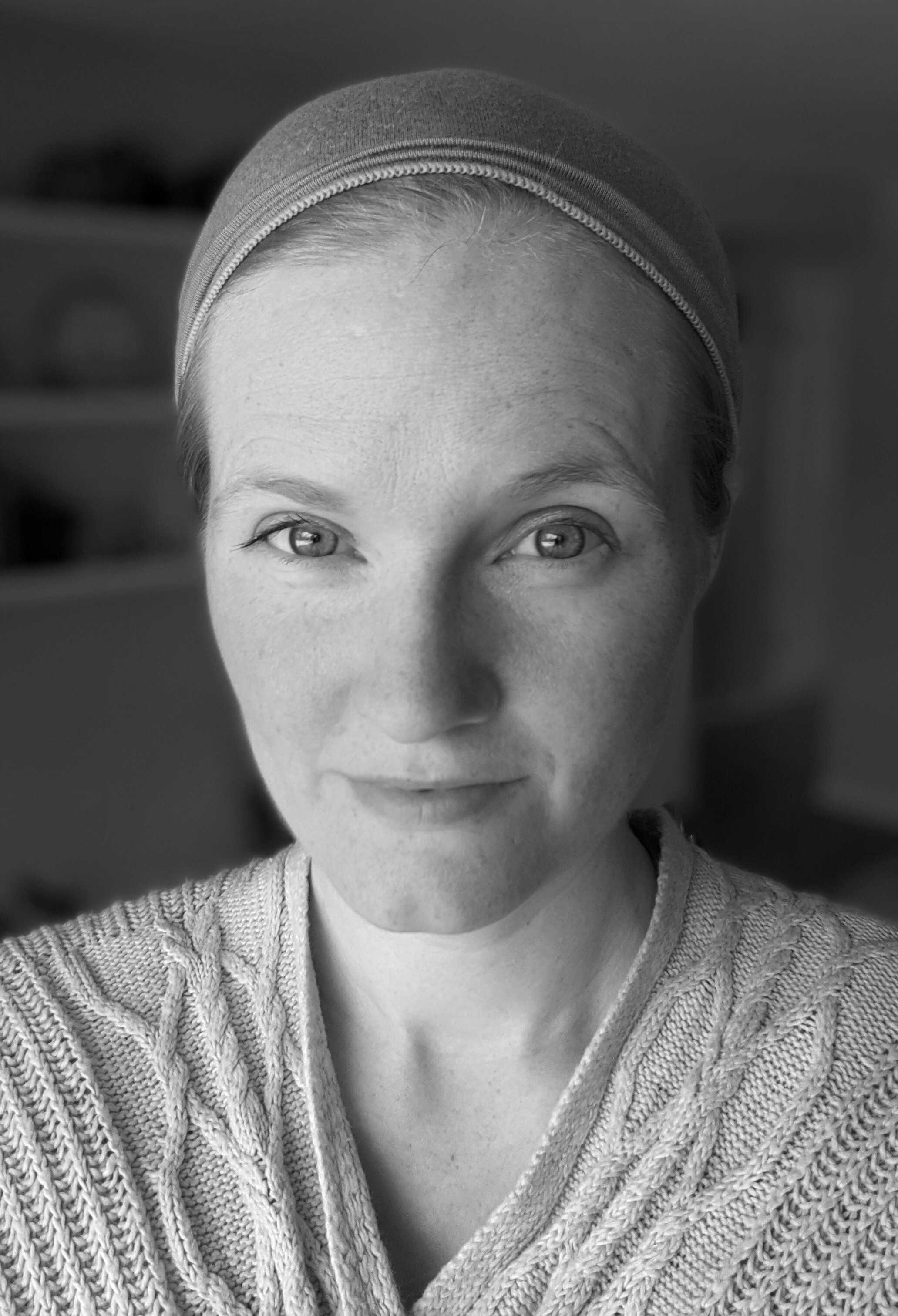
Laura E. Weymouth
Laura E. Weymouth is the author of several novels, including the critically acclaimed The Light Between Worlds, A Treason of Thorns, A Rush of Wings, A Consuming Fire, and The Voice Upstairs. Born and raised in the Niagara region of Ontario, Laura now lives at the edge of the woods in western New York with her husband, three wild-hearted daughters, and an ever-expanding menagerie of animal friends. Learn more at LauraEWeymouth.com.
Product Details
- Publisher: S&S/Saga Press (August 4, 2026)
- Length: 448 pages
- ISBN13: 9781668069660
Browse Related Books
Raves and Reviews
"An absolute triumph of a book—Weymouth expertly blends politics, romance, and deep, profound meditations on motherhood in an intricate tale that deserves to be next to the classics. A new favorite book from one of my favorite writers."
– Hannah Whitten, New York Times bestselling author of The Foxglove King
"Compelling and intriguing! Filled with fascinating politics and immersive worldbuilding, this character-rich saga will mesmerize you!"
– Sarah Beth Durst, New York Times bestselling author of The Spellshop
"An absolute masterpiece. Lush and immersive, The Castle & the Cloister transports readers to a rich, layered world brimming with intrigue, betrayal, and an unforgettable cast of complex characters--especially its women. At its heart, The Castle & the Cloister is a fierce examination of the price of power and the lengths we're willing to go to wield it. Weymouth bounds onto the epic fantasy stage with a roar."
– Heather Walter, author of Malice and The Crimson Crown
“At once achingly sweet and lavishly dark, Weymouth deftly weaves a tale of war, love, sacrifice and devotion. The Castle and the Cloister brings something truly human and honest to the adult fantasy landscape.”
– H. M. Long, author of Dark Water Daughter
Previous praise for Laura Weymouth:
“Weymouth’s prose is lush and evocative, filled with palpable descriptions and compelling mystery… Spellbinding.” —Kirkus on A Treason of Thorns
"Moody and atmospheric, with beautifully descriptive images, this is fantasy and magic at its best.” —Shelf Awareness on A Treason of Thorns
"With lush prose and an eye for atmospheric detail, Weymouth adeptly spins a tale in which the heroine is torn between passion and purpose, destruction and duty." —Publishers Weekly (starred review) on A Treason of Thorns
"Laura Weymouth’s storytelling is unmatched." —Aleksandra Ross, author of Don't Call the Wolf on A Rush of Wings
"Weymouth spins magic and whimsy like she was born of it." —Lauren Blackwood, author of Within These Wicked Walls on A Rush of Wings
Resources and Downloads
High Resolution Images
-
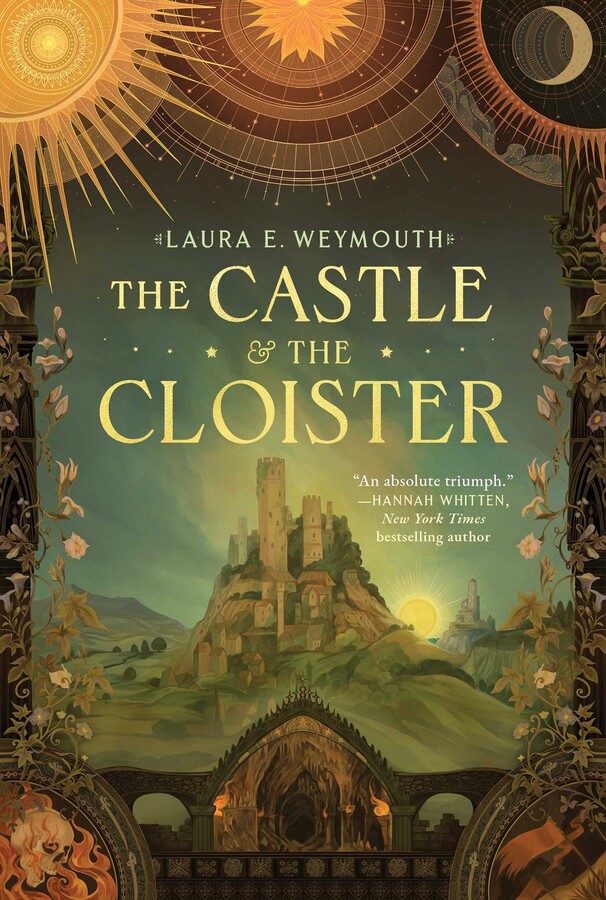
Book Cover Image (jpg): The Castle & the Cloister
Trade Paperback 9781668069660
-
Author Photo (jpg): Laura E. Weymouth Laura E. Weymouth(0.1 MB)
Any use of an author photo must include its respective photo credit
Join our mailing list!
By clicking 'Sign me up' I acknowledge that I have read and agree to the privacy policy and terms of use.