Get our latest staff recommendations, award news and digital catalog links right to your inbox.
Published by Weldon Owen
Distributed by Simon & Schuster
Table of Contents
About The Book
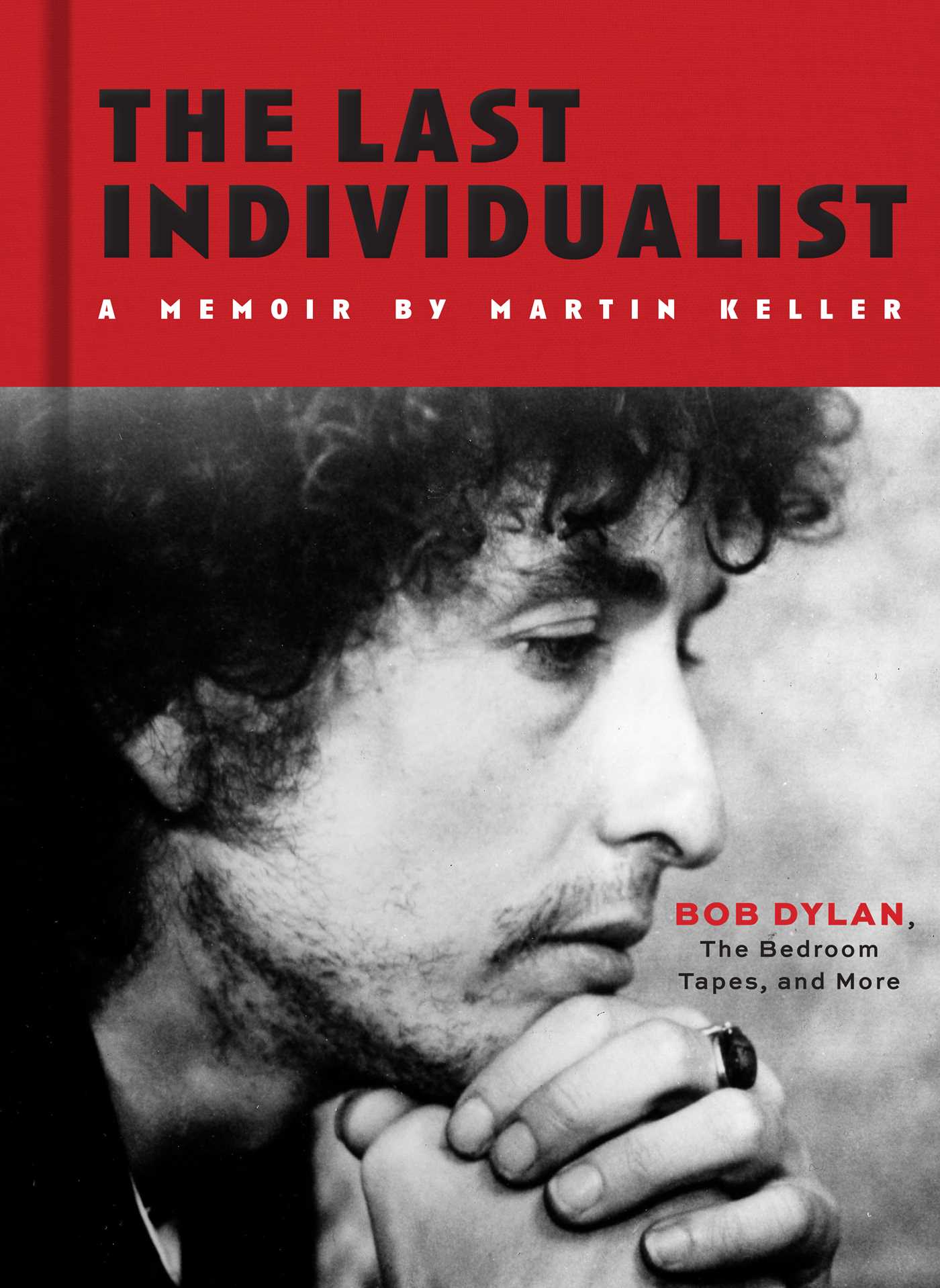
An illuminating memoir and portrait of Bob Dylan’s return to Minnesota after the making of Infidels, featuring a long-lost 1983 interview, rare photographs, and intimate insights into the personal friendships and the Twin Cities scenes that shaped his time in the land of 10,000 lakes and guitars in the early '80s – and beyond.
Bob Dylan: The Last Individualist offers a vivid, behind-the-scenes look at a pivotal moment in Dylan’s career. With rare access and insight, music journalist Martin Keller chronicles Dylan’s retreat to his native Minnesota, where he would often recharge. Drawing on a recently recovered interview from 1983, previously unpublished photographs, and firsthand reporting, Keller reveals how a more downhome tempo of life and the strength of enduring friendships sparked an invigorating new phase following Dylan’s polarizing religious period.
This intimate profile also illuminates Dylan’s fiercely independent spirit. Renowned for defying labels and reinventing himself on his own terms, he consistently rejected expectations—musical, cultural, or political—in favor of authenticity. His unwavering commitment to creative freedom and refusal to be defined by others underscore the legacy of one of music’s most original and enduring voices.
Bob Dylan: The Last Individualist offers a vivid, behind-the-scenes look at a pivotal moment in Dylan’s career. With rare access and insight, music journalist Martin Keller chronicles Dylan’s retreat to his native Minnesota, where he would often recharge. Drawing on a recently recovered interview from 1983, previously unpublished photographs, and firsthand reporting, Keller reveals how a more downhome tempo of life and the strength of enduring friendships sparked an invigorating new phase following Dylan’s polarizing religious period.
This intimate profile also illuminates Dylan’s fiercely independent spirit. Renowned for defying labels and reinventing himself on his own terms, he consistently rejected expectations—musical, cultural, or political—in favor of authenticity. His unwavering commitment to creative freedom and refusal to be defined by others underscore the legacy of one of music’s most original and enduring voices.
Excerpt
Prologue: Tree of Knowledge
You probably don’t want to fuck up a rare interview with Bob Dylan right away by throwing a stray suggestion about his work at him, and then, a few minutes later go swerving out of your lane to ask a question he asked in advance not to ask. But that’s how it began.
It was 1983, a warm, sticky night in July, just a few weeks before the cicadas begin their warning choruses of summertime’s end in Minnesota and cornfields even around the Twin Cities are sweating and already tall as a buffalo’s eye. Dylan’s 22nd studio album that would be released in late October of that year, Infidels, lay tightly spooled inside the plastic cassette tape inside the hip pocket of his black sports jacket over a pair of dark jeans and a soft white shirt with decorative embroidery dancing along the placket.
It was a perfect night, magical and a bit bewildering still.
Bob was reaching for the tape and standing near a stereo system as we were about to begin what would be an unusually long, roughly four-hour interview – just one of three or so interviews since his so-called conversion to Christianity in the late’ 70’s, early 80’s. Or “the Gospel years” as they are often called now. It was the one subject area he asked not to pursue during our pre-planned talk. In my mind, a lot could be riding on it: A long sit down with a man who let his work and the gaping silences between official conversations do his talking for him. In his mind though, I believe he thought he was merely returning a favor. Or two, including one that involved Prince, another blinding light from the North Star state.
I made the first comment just after he had come into the St. Paul house of his lifelong friend Larry Kegan and small talk was brewing. As he waited to drop Infidels into the cassette player for a taste of the goods and we got comfortable before I flipped my lousy little microcassette to “record,” I absently mused aloud, “I wonder how a future artist or artists would build on your powerful and poetic work that you’ve done to date. Do you think they will ever be able to do what you've done?” But I think he heard it differently.
He halfway smiled and scowled. He looked at the others in the room--Larry, Larry’s friend Paul White and Mary whose last name I didn’t know then, or now, who Bob may have or may not have been seeing at that time. And shaking his beautiful head of hair, he said, “No Marty. Nobody’s done what I’ve done before.” There was an unmistakable sense of pride in his voice. It surprised me. But it shouldn’t have, really. There was no boast or bravado in it, no rock star ego or celebrity guile (celebrity I am certain being one of the dirtier words in his vocabulary). There was pride, but there was also humility. But he didn’t address what might happen in the future, for I believe he didn’t believe it really existed. But he did believe in destiny: “I believe that things are handed to you when you’re ready to make use of them,” he told Rolling Stone’s Douglas Brinkley in 2009. “You wouldn’t recognize them unless you’d come through certain experiences. I’m a strong believer that each man has a destiny.”
Bob and I were not strangers to each other as you’ll read shortly. But I wouldn’t say our history was deep, although it was friendly and apparently, at least from my corner at that time, trustworthy. As trustworthy as could be, given that I was a journalist…Remember this is the guy who has the music journalist (played by Jeff Bridges) killed off in his dark, messy and occasionally comedic dystopian film Masked and Anonymous. But maybe that was just comedy too.
Over the years, I tried to describe his immeasurable aesthetic in several previous pieces I’d done about him. I’ve written plenty over the years on this subject of Bob Dylan. And later I started casually referring to this arena as “Bobism”– the critical thoughts, analytical ideas and general ramblings expressed in album reviews, gossip accounts and concert reviews that could never finally sum him up. Some of these are resurrected here in this book for nuance and insight, the cobbler tools some writers and journalists carry around in their heads before they try to make a story. That included a small profile/chapter I penned in 2007, for a softcover book called Music Legends: A Rewind on Minnesota Music Scene that was part of The Minnesota Series:
“Unlike Americans, the Irish have never given up on their music roots, Dylan once noted to U2’s Bono in a Rolling Stone interview. If nothing else, Dylan has been a soul keeper of America’s musical traditions, its rhythm and blues, folk, gospel, country western and early rock ‘n’ roll, each genre with its own regal bloodlines. Dylan borrowed, bootlegged, mixed, honored and rewrote them all in a singular voice and magical manner of phrasing that many have emulated, or mocked, but that that few have ever mastered.”
Looking back, that was what I was going for with my loose comment about other artists building on his work. It wasn’t really even a question or a critical opinion, not even a journalistic observation or pronouncement, just an absently wondered thought I let slip out, never even considering the consequences. And in this case, the consequences might have been Dylan bagging the interview before it even began.
At the time, I worked for a Twin Cities alternative weekly newspaper called City Pages, not one of the Big Dog rags like Rolling Stone, Creem, or even The New York Times, all of which I aspired to write for in my impressionable youth.And him, this was…well, you know who he is. Or do you … “I don't think I'm tangible to myself. I mean, I think one thing today and I think another thing tomorrow,” Dylan told Newsweek in 1997 as his Time Out of Mine LP was coming out, a fascinating vinyl slab full of future hits for artists like Adele, Garth Brooks and Billy Joel, all of whom would later record “Feel My Love.” Bob added, “I change during the course of a day. I wake and I'm one person, and when I go to sleep I know for certain I'm somebody else. I don't know who I am most of the time. It doesn't even matter to me." If that was his blurry personal assessment, poet and friend Allen Ginsberg’s comment (from a Peter Barry Chowka’s interview in New Age Journal in 1976) was equally obscure if not intriguing:
“I don’t know him because I don’t think there is any him. I don’t think Bob Dylan’s got a self.”
Time Out of Mind’s musically roots-rich disc came complete with a haunting rumination on mortality in “Not Dark Yet” and “Highlands,” a mesmerizing 16-minute talking folk tune, its lyrical bones set on Robert Burns’ 235-year-old poem “My Heart is in the Highlands.” In lighter moments, it shouts out to Neil Young and contains amusing conversational sparring with a tough, Boston waitress who’s sublimely indifferent to her famous customer. The song poem’s 20 stanzas (allegedly cut down from even more) are framed by a repeating, hypnotic guitar figure that transcends the prosaic and the pitiful lines etched in many of the verses. Those soothing licks transport us to another time in the distant Scottish highlands, wrapped in abundant natural beauty and filling the august songwriter and his listeners with longing and nostalgia, “Way up in the border country far from the towns.” The album earned three Grammy’s. “Highlands” deserved one of its own.
That’s the kind of wondering spirit and artistic prowess I was standing a few feet away from that night. Maybe it was my concealed nervousness that drove me to muse about his effect on other artists. I immediately worried that “Bobby” might think I was blithely taking him off his pedestal or removing one or two of the garlands that world culture had rightfully bestowed upon him.
But it was okay: He heard it, shut it down, and thankfully, we moved on.
We’d met previously several times in different social settings around Minneapolis-St. Paul before 1983, so there was no real ice to break, nor formalities to unravel, as you’ll read in later chapters. But this time in July ’83 it was “on the record,” my shitty Sony microcassette running to capture the fleeting and forever moments that followed.
Bob tentatively slipped the Infidels cassette into the player for a first taste of the new disc. Soon after, I crossed the line with another comment, this one off limits. In my defense, there hadn’t been much time to prepare for the interview. “The call” from Larry came just a few hours before we got together at his house in St. Paul on LaFond Avenue, nestled inside a sleepy working-class neighborhood in the Midway area. It was a couple of miles removed from downtown St. Paul to the East where on Christmas Eve 1956, teenagers Bob, Larry and their friend Howard Rutman cut a not really remarkable quick-press plastic record of doo wop and early rock ‘n’ roll songs, Bob’s first recording session, which makes it highly remarkable in some circles.
Just to the west of the modest Kegan house was the institution Robert Allen Zimmerman dropped out of, the University Of Minnesota, and the storied West Bank and Dinkytown streets where he lived, wrote pretty good beat poetry, and played coffeehouses before cutting out to New York City and reinventing Western popular culture by putting literary themes, folk music innovations and his own rich poetic vernacular on the jukebox.
Bob met Larry years ago at Herzl summer camp in Wisconsin when they were teens. The ties between them were pretty much unbreakable as I had discovered early on -- and later on during the years ahead, including a six-day ride along on what’s often called the Never Ending Tour in 1990, wedged into Larry’s van with four others. We must have looked like sorry groupies. Or members of his entourage, although that word is usually reserved for puffed up movie stars and pining sycophants. But for that week, a road-beaten white van filled with five -- including the big dude Larry in an accessorized wheelchair who had to be lifted in and out it of many times a day and night – constituted his rolling inner circle. And that included Dylan’s band, regular road crew and his road manager Jeff Kramer, traveling in another bus behind Bob’s bus.
“Would you like to interview Bob tonight?” Larry asked over the phone as his longtime hired companion, driver, dresser and all-around aide-de-camp, Alfonso, held the phone to his head. Larry’s hands and all the rest of his body from the neck down were paralyzed and broken, unplugged. All but for the cerebral cortex, the eyes, the ears and the mouth. And his spirit, that indominable Larry spirit.
With little prep time, I went into a mild tailspin, as you’ll see in chapter seven. All through the run up to the interview -- and throughout it as well -- I tried to put some distance between the ardent -- some might say obsessive -- Dylan fan I had become since I was a teenager: For years, maybe decades, I’ve had Dylan dreams set in different, obscure subconscious places, with murky dialog and varied activity, most of it though lost upon waking except for the simple memory of having yet another Zimmie dream. In 1963, one of his last lyrics in “Talkin’ World War III Blues,” goes like this: “I'll let you be in my dreams if I can be in yours.” Okay, fine. But after so many slumbering and jagged nighttime voyages, it starts getting ridiculous. I thought once I interviewed him, they’d stop. But four decades later, those big archetypal wheels still keep on churning.
The night of the formal interview, I tried to put some space between banal and exuberant fandom and the duty of the pop culture journalist to somehow try and place Bob Dylan in 1983 within an understandable framework on his wavering and exhaustive timeline that readers could track. Infidels is often seen as a demarcation point following the fundamentalist, fire and brimstone brand of evangelical Christianity he embraced through three previous albums, Slow Train Coming, Saved and Shot of Love, plus through several sin ‘n’ salvation tours. On those fervent travels, he adamantly refused to perform any work not in his evangelical canon. Jesus was on the mainline and he wasn’t gatherin’ no moss.
Larry made it pretty clear that to make this thing happen, three things needed to be understood: One, the dateline would have to be New York, not the Twin Cities for various reasons as you’ll see further on up the road. Two, he could review the copy before publication, something that almost never happens in journalism. But it does happen. And three, questions about that period in Bob’s life would be off limits.
But in a somewhat defiant but journalistic moment, or was it a personal Tourette-like blurt, one of the first things I did that night was to say, “I know you don’t want to talk about the last few years. But I think people would like to know about them, to see where you’re at today.”
Dylan quickly retorted, “People want to know where I’m at ‘cuz they don’t know where they’re at!”
We left it at that.
Except we didn’t really leave it at that.
He especially didn’t really leave it at that because before that City Pages cover story went to print on July 13, 1983, there was a surprising 11th hour Dylan intervention that also is covered in chapter seven that still giddily trips me up to this day, 40-plus years later.
Soon the first strains of “Jokerman” filled the bedroom, which served alternately as Larry’s parlor, kitchen table and primary living quarters no matter the time of day or night, or who might be in the house.
Focus on the words, I told myself as the lyrics came fast over the undulating bassline of Jamaica’s Robbie Shakespeare and a soulful melody so sparse and yet so pronounced, it seemed to still hang in the air through the rest of the cuts. Was that a couple of throwaway lines I just heard?! “You're going to Sodom and Gomorrah / But what do you care?/ Ain't nobody there who'd want to marry your sister.” It was funny. Or was it? I went home four-plus hours later still trying to hum it, not sure at all what or who “Jokerman” was about either.
When the whole disc ended and the cassette clicked off, we settled in and sat a few feet apart from each other. But not before he explained that the track we had just heard, “Julius and Ethel,” would not be on Infidels. A new wave-ish styled rocker with a vamping keyboard riff, it was about the alleged Soviet spies, the Rosenberg’s, who were executed by the U.S. government in 1953 for sharing atomic bomb details. But his sympathies clearly rested with the couple whom he calls “sacrificial lambs,” and who appear in his song to be compromised victims of the broader reality and genesis of the atom bomb world of post-WWII. Bob didn’t say why it wouldn’t be included, or if the record company, Columbia, nixed it, or if there were other extenuating issues surrounding it. Controversies still swirl around the Rosenberg’s even today, especially whether Ethel played any significant role in secret sharing with the country’s avowed super enemy. Eventually in the fall of 2021, the song appeared deep in The Bootleg Series Vol. 16: Springtime in New York 1980–1985.
As we finally got rollin,’ some hastily prepared questions landed well, some didn’t. The spontaneous questions -- the ones springing organically from the dialog when sudden pockets of interest made him perk up or lean in -- those seemed to work best. Before the night was out, among other topics, we would cover gun control; a funny reminisce about the Minneapolis folk scene and Tony Glover’s sentinel-like presence outside of its clubs. Glover was
part of the highly influential Koerner, Ray and Glover trio whose early ‘60s folk and blues records on Elektra would be found in the collections of John Lennon, Keith Richards, Jim Morrison, Bonnie Raitt and others. Later I became Tony’s editor at the alt weekly newspaper City Pages and its monthly music rag precursor, Sweet Potato. Soft spoken, if at all, on some occasions he carried a stiletto inside the boot of his leg. But underneath, as we became friendlier, he’d be amicable if not a bit dour behind his cool hipster exterior. He was also a friend of Bob’s early on but never brought him up in conversation.
During the interview, Dylan and I touched on The Clash; Elvis’s role in the world; David Letterman; Bob Marley who Bob wished he had met; the summer storm that blew through the night before; The Beatles (simply, “They had something”). I wish I had better understood then his pronounced relationship with George Harrison, who Tom Petty said would quote Dylan as if it were scripture. I would have pushed him more on that one. His brief eulogy of George when he died November 29, 2001, didn’t pull any punches: “He was a giant, a great, great soul, with all the humanity, all the wit and humor, all the wisdom, the spirituality, the common sense of a man and compassion for people. He inspired love and had the strength of a hundred men. He was like the sun, the flowers and the moon and we shall miss him enormously. The world is a profoundly emptier place without him.”
In the course of the three-plus hours, we also made small talk about small towns. But even in the small talk, I found meaningful self-revelations, or at least one in particular, that might have gone overlooked. In fact, it did go overlooked until I started writing this book and messing with the puzzle, at least the way I understood it. Or tried to. If he hadn’t re-enforced it over time – years removed from that good night in St. Paul – I might not have given it a second thought. But it stayed with me until I found a context for it where it seemed to fit, like the revealing character virtues he seemed to embrace and exhibit during the experiences shared around trusted friends -- and naturally in his songs. But it also showed up in the questions he would ask during that period.
Artists toil in the orchards where the trees of knowledge grow, nurturing and harvesting their many fruits, some bitter, some sweet. Their many varied flavors manifest in the many varied mediums each artist brings to the world. Dylan’s work there often seems to go deeper and often lasts longer than others, he’s worked hard on the land and shared in kind its bounties and its busts.
That night, relaxed and in the company of friends, I wasn’t sure how deep he’d venture in any direction. But at one seemingly random point, Bob offered up a casual nugget as we discussed change in general and how people resist it. His example was instructive: “Like Streetlights, when the first streetlights came up, red, green and yellow. I think the first ones were like red, green, yellow, blue and orange. And people would come driving down the street. There wouldn't be no streetlights…They didn't even have to drive on a road and then all of a sudden they're driving down, and they see some kind of streetlight: ‘What's that?!’..They offended you. Yeah, offended your individualism.”
At the time, it seemed somewhat off the proverbial cuff. But I think about that simple line today as a bright dangling thread, one that I’m weaving into this book with the other threads I found along the way or gathered from other corners, hoping it proves to be a genuine cloth, however coarse or finely stitched together. That night produced an ample share of his closely held ideas and passing notions, even some trustworthy glimpses of his character and the shadow play projections from his personality. Should we still take him at his word so many years later?
Before it was over, we also touched on technology (“in some parts of the world, technology is a dirty word”); the part that Dire Straits’ Mark Knopfler played in the making of Infidels (who had produced and played guitar on it, along with guitarist Mick Taylor, Robbie Shakespeare’s partner in riddum, reggae drummer Sly Dunbar, and keyboardist Alan Clark); God and art; journalists (“it seems like they always just want to get inside your head”). And even “the End Times.”
The complete interview – published in its entirety for the first time here -- contains the whole exchange to experience, although this memoir as a whole is meant for readers to experience the troubadour poet, painter and sculptor as both spirit and flesh. The experience is also supported with things I’d written about him before, plus other observations and insinuations from elsewhere, other interviews and a few outré views, interpretations and allegations, and something far greater. By the end of it all, I’d hope you would concur: In the arts, letters and rock ‘n’ roll, he is invariably the last of his kind, a true, self-made individualist the likes of which we won’t see again.
At one point during that mercurial night, the night of sitting with the gypsy king, Dylan opined in a so matter-of-fact manner but also obliquely like an Anishinaabe shaman from Minnesota’s great north woods, “You'll get up some morning and put your clothes on backwards.”
Sometimes, four decades removed from his causally caustic observations as we doom scroll through our phones, anxieties and memories, the growing chasm, callousness and cancers in the country, from the highest courts to the common ground, and the perils across the globe, are exponentially increasing. Or as he says more profoundly in his lyrics from one of his greatest masterpieces, recorded for the Infidels album but stunningly left off it, “Blind Willie McTell”:
“Power and greed and corruptible seed seem to be all that there is.”
Today, this weary and wonderful old world is literally burning up from the excesses and vainglorious enterprises of its primary species, while there is the steady churn of “wars and rumors of wars” (Bob Marley via Matthew 24:6-13). Sometimes…sometimes it feels like that downtrodden day he presciently mentioned has finally dawned.
You probably don’t want to fuck up a rare interview with Bob Dylan right away by throwing a stray suggestion about his work at him, and then, a few minutes later go swerving out of your lane to ask a question he asked in advance not to ask. But that’s how it began.
It was 1983, a warm, sticky night in July, just a few weeks before the cicadas begin their warning choruses of summertime’s end in Minnesota and cornfields even around the Twin Cities are sweating and already tall as a buffalo’s eye. Dylan’s 22nd studio album that would be released in late October of that year, Infidels, lay tightly spooled inside the plastic cassette tape inside the hip pocket of his black sports jacket over a pair of dark jeans and a soft white shirt with decorative embroidery dancing along the placket.
It was a perfect night, magical and a bit bewildering still.
Bob was reaching for the tape and standing near a stereo system as we were about to begin what would be an unusually long, roughly four-hour interview – just one of three or so interviews since his so-called conversion to Christianity in the late’ 70’s, early 80’s. Or “the Gospel years” as they are often called now. It was the one subject area he asked not to pursue during our pre-planned talk. In my mind, a lot could be riding on it: A long sit down with a man who let his work and the gaping silences between official conversations do his talking for him. In his mind though, I believe he thought he was merely returning a favor. Or two, including one that involved Prince, another blinding light from the North Star state.
I made the first comment just after he had come into the St. Paul house of his lifelong friend Larry Kegan and small talk was brewing. As he waited to drop Infidels into the cassette player for a taste of the goods and we got comfortable before I flipped my lousy little microcassette to “record,” I absently mused aloud, “I wonder how a future artist or artists would build on your powerful and poetic work that you’ve done to date. Do you think they will ever be able to do what you've done?” But I think he heard it differently.
He halfway smiled and scowled. He looked at the others in the room--Larry, Larry’s friend Paul White and Mary whose last name I didn’t know then, or now, who Bob may have or may not have been seeing at that time. And shaking his beautiful head of hair, he said, “No Marty. Nobody’s done what I’ve done before.” There was an unmistakable sense of pride in his voice. It surprised me. But it shouldn’t have, really. There was no boast or bravado in it, no rock star ego or celebrity guile (celebrity I am certain being one of the dirtier words in his vocabulary). There was pride, but there was also humility. But he didn’t address what might happen in the future, for I believe he didn’t believe it really existed. But he did believe in destiny: “I believe that things are handed to you when you’re ready to make use of them,” he told Rolling Stone’s Douglas Brinkley in 2009. “You wouldn’t recognize them unless you’d come through certain experiences. I’m a strong believer that each man has a destiny.”
Bob and I were not strangers to each other as you’ll read shortly. But I wouldn’t say our history was deep, although it was friendly and apparently, at least from my corner at that time, trustworthy. As trustworthy as could be, given that I was a journalist…Remember this is the guy who has the music journalist (played by Jeff Bridges) killed off in his dark, messy and occasionally comedic dystopian film Masked and Anonymous. But maybe that was just comedy too.
Over the years, I tried to describe his immeasurable aesthetic in several previous pieces I’d done about him. I’ve written plenty over the years on this subject of Bob Dylan. And later I started casually referring to this arena as “Bobism”– the critical thoughts, analytical ideas and general ramblings expressed in album reviews, gossip accounts and concert reviews that could never finally sum him up. Some of these are resurrected here in this book for nuance and insight, the cobbler tools some writers and journalists carry around in their heads before they try to make a story. That included a small profile/chapter I penned in 2007, for a softcover book called Music Legends: A Rewind on Minnesota Music Scene that was part of The Minnesota Series:
“Unlike Americans, the Irish have never given up on their music roots, Dylan once noted to U2’s Bono in a Rolling Stone interview. If nothing else, Dylan has been a soul keeper of America’s musical traditions, its rhythm and blues, folk, gospel, country western and early rock ‘n’ roll, each genre with its own regal bloodlines. Dylan borrowed, bootlegged, mixed, honored and rewrote them all in a singular voice and magical manner of phrasing that many have emulated, or mocked, but that that few have ever mastered.”
Looking back, that was what I was going for with my loose comment about other artists building on his work. It wasn’t really even a question or a critical opinion, not even a journalistic observation or pronouncement, just an absently wondered thought I let slip out, never even considering the consequences. And in this case, the consequences might have been Dylan bagging the interview before it even began.
At the time, I worked for a Twin Cities alternative weekly newspaper called City Pages, not one of the Big Dog rags like Rolling Stone, Creem, or even The New York Times, all of which I aspired to write for in my impressionable youth.And him, this was…well, you know who he is. Or do you … “I don't think I'm tangible to myself. I mean, I think one thing today and I think another thing tomorrow,” Dylan told Newsweek in 1997 as his Time Out of Mine LP was coming out, a fascinating vinyl slab full of future hits for artists like Adele, Garth Brooks and Billy Joel, all of whom would later record “Feel My Love.” Bob added, “I change during the course of a day. I wake and I'm one person, and when I go to sleep I know for certain I'm somebody else. I don't know who I am most of the time. It doesn't even matter to me." If that was his blurry personal assessment, poet and friend Allen Ginsberg’s comment (from a Peter Barry Chowka’s interview in New Age Journal in 1976) was equally obscure if not intriguing:
“I don’t know him because I don’t think there is any him. I don’t think Bob Dylan’s got a self.”
Time Out of Mind’s musically roots-rich disc came complete with a haunting rumination on mortality in “Not Dark Yet” and “Highlands,” a mesmerizing 16-minute talking folk tune, its lyrical bones set on Robert Burns’ 235-year-old poem “My Heart is in the Highlands.” In lighter moments, it shouts out to Neil Young and contains amusing conversational sparring with a tough, Boston waitress who’s sublimely indifferent to her famous customer. The song poem’s 20 stanzas (allegedly cut down from even more) are framed by a repeating, hypnotic guitar figure that transcends the prosaic and the pitiful lines etched in many of the verses. Those soothing licks transport us to another time in the distant Scottish highlands, wrapped in abundant natural beauty and filling the august songwriter and his listeners with longing and nostalgia, “Way up in the border country far from the towns.” The album earned three Grammy’s. “Highlands” deserved one of its own.
That’s the kind of wondering spirit and artistic prowess I was standing a few feet away from that night. Maybe it was my concealed nervousness that drove me to muse about his effect on other artists. I immediately worried that “Bobby” might think I was blithely taking him off his pedestal or removing one or two of the garlands that world culture had rightfully bestowed upon him.
But it was okay: He heard it, shut it down, and thankfully, we moved on.
We’d met previously several times in different social settings around Minneapolis-St. Paul before 1983, so there was no real ice to break, nor formalities to unravel, as you’ll read in later chapters. But this time in July ’83 it was “on the record,” my shitty Sony microcassette running to capture the fleeting and forever moments that followed.
Bob tentatively slipped the Infidels cassette into the player for a first taste of the new disc. Soon after, I crossed the line with another comment, this one off limits. In my defense, there hadn’t been much time to prepare for the interview. “The call” from Larry came just a few hours before we got together at his house in St. Paul on LaFond Avenue, nestled inside a sleepy working-class neighborhood in the Midway area. It was a couple of miles removed from downtown St. Paul to the East where on Christmas Eve 1956, teenagers Bob, Larry and their friend Howard Rutman cut a not really remarkable quick-press plastic record of doo wop and early rock ‘n’ roll songs, Bob’s first recording session, which makes it highly remarkable in some circles.
Just to the west of the modest Kegan house was the institution Robert Allen Zimmerman dropped out of, the University Of Minnesota, and the storied West Bank and Dinkytown streets where he lived, wrote pretty good beat poetry, and played coffeehouses before cutting out to New York City and reinventing Western popular culture by putting literary themes, folk music innovations and his own rich poetic vernacular on the jukebox.
Bob met Larry years ago at Herzl summer camp in Wisconsin when they were teens. The ties between them were pretty much unbreakable as I had discovered early on -- and later on during the years ahead, including a six-day ride along on what’s often called the Never Ending Tour in 1990, wedged into Larry’s van with four others. We must have looked like sorry groupies. Or members of his entourage, although that word is usually reserved for puffed up movie stars and pining sycophants. But for that week, a road-beaten white van filled with five -- including the big dude Larry in an accessorized wheelchair who had to be lifted in and out it of many times a day and night – constituted his rolling inner circle. And that included Dylan’s band, regular road crew and his road manager Jeff Kramer, traveling in another bus behind Bob’s bus.
“Would you like to interview Bob tonight?” Larry asked over the phone as his longtime hired companion, driver, dresser and all-around aide-de-camp, Alfonso, held the phone to his head. Larry’s hands and all the rest of his body from the neck down were paralyzed and broken, unplugged. All but for the cerebral cortex, the eyes, the ears and the mouth. And his spirit, that indominable Larry spirit.
With little prep time, I went into a mild tailspin, as you’ll see in chapter seven. All through the run up to the interview -- and throughout it as well -- I tried to put some distance between the ardent -- some might say obsessive -- Dylan fan I had become since I was a teenager: For years, maybe decades, I’ve had Dylan dreams set in different, obscure subconscious places, with murky dialog and varied activity, most of it though lost upon waking except for the simple memory of having yet another Zimmie dream. In 1963, one of his last lyrics in “Talkin’ World War III Blues,” goes like this: “I'll let you be in my dreams if I can be in yours.” Okay, fine. But after so many slumbering and jagged nighttime voyages, it starts getting ridiculous. I thought once I interviewed him, they’d stop. But four decades later, those big archetypal wheels still keep on churning.
The night of the formal interview, I tried to put some space between banal and exuberant fandom and the duty of the pop culture journalist to somehow try and place Bob Dylan in 1983 within an understandable framework on his wavering and exhaustive timeline that readers could track. Infidels is often seen as a demarcation point following the fundamentalist, fire and brimstone brand of evangelical Christianity he embraced through three previous albums, Slow Train Coming, Saved and Shot of Love, plus through several sin ‘n’ salvation tours. On those fervent travels, he adamantly refused to perform any work not in his evangelical canon. Jesus was on the mainline and he wasn’t gatherin’ no moss.
Larry made it pretty clear that to make this thing happen, three things needed to be understood: One, the dateline would have to be New York, not the Twin Cities for various reasons as you’ll see further on up the road. Two, he could review the copy before publication, something that almost never happens in journalism. But it does happen. And three, questions about that period in Bob’s life would be off limits.
But in a somewhat defiant but journalistic moment, or was it a personal Tourette-like blurt, one of the first things I did that night was to say, “I know you don’t want to talk about the last few years. But I think people would like to know about them, to see where you’re at today.”
Dylan quickly retorted, “People want to know where I’m at ‘cuz they don’t know where they’re at!”
We left it at that.
Except we didn’t really leave it at that.
He especially didn’t really leave it at that because before that City Pages cover story went to print on July 13, 1983, there was a surprising 11th hour Dylan intervention that also is covered in chapter seven that still giddily trips me up to this day, 40-plus years later.
Soon the first strains of “Jokerman” filled the bedroom, which served alternately as Larry’s parlor, kitchen table and primary living quarters no matter the time of day or night, or who might be in the house.
Focus on the words, I told myself as the lyrics came fast over the undulating bassline of Jamaica’s Robbie Shakespeare and a soulful melody so sparse and yet so pronounced, it seemed to still hang in the air through the rest of the cuts. Was that a couple of throwaway lines I just heard?! “You're going to Sodom and Gomorrah / But what do you care?/ Ain't nobody there who'd want to marry your sister.” It was funny. Or was it? I went home four-plus hours later still trying to hum it, not sure at all what or who “Jokerman” was about either.
When the whole disc ended and the cassette clicked off, we settled in and sat a few feet apart from each other. But not before he explained that the track we had just heard, “Julius and Ethel,” would not be on Infidels. A new wave-ish styled rocker with a vamping keyboard riff, it was about the alleged Soviet spies, the Rosenberg’s, who were executed by the U.S. government in 1953 for sharing atomic bomb details. But his sympathies clearly rested with the couple whom he calls “sacrificial lambs,” and who appear in his song to be compromised victims of the broader reality and genesis of the atom bomb world of post-WWII. Bob didn’t say why it wouldn’t be included, or if the record company, Columbia, nixed it, or if there were other extenuating issues surrounding it. Controversies still swirl around the Rosenberg’s even today, especially whether Ethel played any significant role in secret sharing with the country’s avowed super enemy. Eventually in the fall of 2021, the song appeared deep in The Bootleg Series Vol. 16: Springtime in New York 1980–1985.
As we finally got rollin,’ some hastily prepared questions landed well, some didn’t. The spontaneous questions -- the ones springing organically from the dialog when sudden pockets of interest made him perk up or lean in -- those seemed to work best. Before the night was out, among other topics, we would cover gun control; a funny reminisce about the Minneapolis folk scene and Tony Glover’s sentinel-like presence outside of its clubs. Glover was
part of the highly influential Koerner, Ray and Glover trio whose early ‘60s folk and blues records on Elektra would be found in the collections of John Lennon, Keith Richards, Jim Morrison, Bonnie Raitt and others. Later I became Tony’s editor at the alt weekly newspaper City Pages and its monthly music rag precursor, Sweet Potato. Soft spoken, if at all, on some occasions he carried a stiletto inside the boot of his leg. But underneath, as we became friendlier, he’d be amicable if not a bit dour behind his cool hipster exterior. He was also a friend of Bob’s early on but never brought him up in conversation.
During the interview, Dylan and I touched on The Clash; Elvis’s role in the world; David Letterman; Bob Marley who Bob wished he had met; the summer storm that blew through the night before; The Beatles (simply, “They had something”). I wish I had better understood then his pronounced relationship with George Harrison, who Tom Petty said would quote Dylan as if it were scripture. I would have pushed him more on that one. His brief eulogy of George when he died November 29, 2001, didn’t pull any punches: “He was a giant, a great, great soul, with all the humanity, all the wit and humor, all the wisdom, the spirituality, the common sense of a man and compassion for people. He inspired love and had the strength of a hundred men. He was like the sun, the flowers and the moon and we shall miss him enormously. The world is a profoundly emptier place without him.”
In the course of the three-plus hours, we also made small talk about small towns. But even in the small talk, I found meaningful self-revelations, or at least one in particular, that might have gone overlooked. In fact, it did go overlooked until I started writing this book and messing with the puzzle, at least the way I understood it. Or tried to. If he hadn’t re-enforced it over time – years removed from that good night in St. Paul – I might not have given it a second thought. But it stayed with me until I found a context for it where it seemed to fit, like the revealing character virtues he seemed to embrace and exhibit during the experiences shared around trusted friends -- and naturally in his songs. But it also showed up in the questions he would ask during that period.
Artists toil in the orchards where the trees of knowledge grow, nurturing and harvesting their many fruits, some bitter, some sweet. Their many varied flavors manifest in the many varied mediums each artist brings to the world. Dylan’s work there often seems to go deeper and often lasts longer than others, he’s worked hard on the land and shared in kind its bounties and its busts.
That night, relaxed and in the company of friends, I wasn’t sure how deep he’d venture in any direction. But at one seemingly random point, Bob offered up a casual nugget as we discussed change in general and how people resist it. His example was instructive: “Like Streetlights, when the first streetlights came up, red, green and yellow. I think the first ones were like red, green, yellow, blue and orange. And people would come driving down the street. There wouldn't be no streetlights…They didn't even have to drive on a road and then all of a sudden they're driving down, and they see some kind of streetlight: ‘What's that?!’..They offended you. Yeah, offended your individualism.”
At the time, it seemed somewhat off the proverbial cuff. But I think about that simple line today as a bright dangling thread, one that I’m weaving into this book with the other threads I found along the way or gathered from other corners, hoping it proves to be a genuine cloth, however coarse or finely stitched together. That night produced an ample share of his closely held ideas and passing notions, even some trustworthy glimpses of his character and the shadow play projections from his personality. Should we still take him at his word so many years later?
Before it was over, we also touched on technology (“in some parts of the world, technology is a dirty word”); the part that Dire Straits’ Mark Knopfler played in the making of Infidels (who had produced and played guitar on it, along with guitarist Mick Taylor, Robbie Shakespeare’s partner in riddum, reggae drummer Sly Dunbar, and keyboardist Alan Clark); God and art; journalists (“it seems like they always just want to get inside your head”). And even “the End Times.”
The complete interview – published in its entirety for the first time here -- contains the whole exchange to experience, although this memoir as a whole is meant for readers to experience the troubadour poet, painter and sculptor as both spirit and flesh. The experience is also supported with things I’d written about him before, plus other observations and insinuations from elsewhere, other interviews and a few outré views, interpretations and allegations, and something far greater. By the end of it all, I’d hope you would concur: In the arts, letters and rock ‘n’ roll, he is invariably the last of his kind, a true, self-made individualist the likes of which we won’t see again.
At one point during that mercurial night, the night of sitting with the gypsy king, Dylan opined in a so matter-of-fact manner but also obliquely like an Anishinaabe shaman from Minnesota’s great north woods, “You'll get up some morning and put your clothes on backwards.”
Sometimes, four decades removed from his causally caustic observations as we doom scroll through our phones, anxieties and memories, the growing chasm, callousness and cancers in the country, from the highest courts to the common ground, and the perils across the globe, are exponentially increasing. Or as he says more profoundly in his lyrics from one of his greatest masterpieces, recorded for the Infidels album but stunningly left off it, “Blind Willie McTell”:
“Power and greed and corruptible seed seem to be all that there is.”
Today, this weary and wonderful old world is literally burning up from the excesses and vainglorious enterprises of its primary species, while there is the steady churn of “wars and rumors of wars” (Bob Marley via Matthew 24:6-13). Sometimes…sometimes it feels like that downtrodden day he presciently mentioned has finally dawned.
Product Details
- Publisher: Weldon Owen (January 19, 2027)
- Length: 336 pages
- ISBN13: 9798886744026
Browse Related Books
Resources and Downloads
High Resolution Images
-
Book Cover Image (jpg): The Last Individualist
Hardcover 9798886744026
Published by Weldon Owen
Distributed by Simon & Schuster
Join our mailing list!
By clicking 'Sign me up' I acknowledge that I have read and agree to the privacy policy and terms of use.