Get our latest staff recommendations, award news and digital catalog links right to your inbox.
Table of Contents
About The Book
NATIONAL BESTSELLER
Belletrist Book Club Pick * The Times (London) Book of the Week
“Essential reading for anyone who’s felt failed by the parental canon.” —Town & Country
“An honest and refreshing take on motherhood.” —Today
“With blistering honesty” (Oprah Daily), this nationally bestselling motherhood memoir dares to ask what happens when “what to expect when you’re expecting” turns out to be months of rage, anguish, brain fog, and a total surrender of sex, career, and identity.
Like most of us, Sarah Hoover grew up imagining a certain life for herself, and when she moved from Indiana to New York City to study art history, the life she’d imagined began falling into place. She got her degree in art history, landed a job in a gallery, made friends, and met interesting artists, one of whom became her husband. But when Hoover got pregnant, everything in her life began to unravel.
She felt like an imposter in her own body. She grew distant from her friends and husband. Anxiety, fear, guilt, and shame threatened to swallow her. She also experienced trauma at the hands of one of her doctors—a stark trigger. And when her son was born, there was no joy.
Her despair was persistent, even with help, therapy, and pills. Grieving a lost identity and angry at the world around her, she found herself despising her baby, her husband, and herself. She was afraid it might not end. With the help of a doctor’s diagnosis, Hoover began to understand the cluster of symptoms that informed her experience—she was drowning in postpartum depression—and that she wasn’t a bad mother or a failed woman.
At its core, this “page-turning look at the realities of motherhood and postpartum depression” (Candace Bushnell, New York Times bestselling author) is about learning to forgive yourself. It’s a rejection of the cultural idea of the mother as a perfect being. And it’s a propulsive and whip-smart “welcome moment of truth” (W Magazine) on the vicissitudes of marriage, life, and parenting—a motherhood memoir unlike any other.
Belletrist Book Club Pick * The Times (London) Book of the Week
“Essential reading for anyone who’s felt failed by the parental canon.” —Town & Country
“An honest and refreshing take on motherhood.” —Today
“With blistering honesty” (Oprah Daily), this nationally bestselling motherhood memoir dares to ask what happens when “what to expect when you’re expecting” turns out to be months of rage, anguish, brain fog, and a total surrender of sex, career, and identity.
Like most of us, Sarah Hoover grew up imagining a certain life for herself, and when she moved from Indiana to New York City to study art history, the life she’d imagined began falling into place. She got her degree in art history, landed a job in a gallery, made friends, and met interesting artists, one of whom became her husband. But when Hoover got pregnant, everything in her life began to unravel.
She felt like an imposter in her own body. She grew distant from her friends and husband. Anxiety, fear, guilt, and shame threatened to swallow her. She also experienced trauma at the hands of one of her doctors—a stark trigger. And when her son was born, there was no joy.
Her despair was persistent, even with help, therapy, and pills. Grieving a lost identity and angry at the world around her, she found herself despising her baby, her husband, and herself. She was afraid it might not end. With the help of a doctor’s diagnosis, Hoover began to understand the cluster of symptoms that informed her experience—she was drowning in postpartum depression—and that she wasn’t a bad mother or a failed woman.
At its core, this “page-turning look at the realities of motherhood and postpartum depression” (Candace Bushnell, New York Times bestselling author) is about learning to forgive yourself. It’s a rejection of the cultural idea of the mother as a perfect being. And it’s a propulsive and whip-smart “welcome moment of truth” (W Magazine) on the vicissitudes of marriage, life, and parenting—a motherhood memoir unlike any other.
Reading Group Guide
Join our mailing list! Get our latest staff recommendations, award news and digital catalog links right to your inbox.
By clicking 'Sign me up' I acknowledge that I have read and agree to the privacy policy and terms of use.
Readers Group Guide
The Motherload by Sarah Hoover
Book Club Discussion Questions
Sarah Hoover describes The Motherload as a “work of narrative nonfiction.” How does the autobiographical nature of the text alter your engagement with its themes and events? To what extent does the proximity of real-life experiences deepen or complicate your reading?
The memoir explores central themes such as motherhood, identity, and mental health. Which theme did you find most compelling, and how did its treatment challenge or affirm your own understanding of those experiences?
The “Birth Story” chapter provides an intimate lens into Sarah’s early days of motherhood. How does this section shape your understanding of her mental and emotional state? Were there moments from this chapter that felt surprising or familiar to your own experiences?
Sarah frequently grapples with feelings of isolation and disconnection during motherhood. How did her experiences either confront or align with societal norms and ideals surrounding motherhood?
The complexities of Sarah’s relationship with Tom emerge as a recurring thread in her narrative. What moments in their dynamic stood out to you, and how does their relationship reflect broader themes of partnership, compromise, and emotional labor?
Societal expectations about motherhood are critically examined throughout the book. How does Sarah’s evolving perspective on these expectations reflect her personal growth? Did her critique of these norms influence your own views on cultural pressures surrounding motherhood?
Postpartum depression is woven deeply into Sarah’s story. Which aspects of her portrayal of postpartum mental health most resonated with you, and what does her openness reveal about the broader conversation around maternal mental health?
Sarah’s reflections on her relationship with her own mother significantly influence her approach to parenting. How does intergenerational influence shape the narrative, and what conclusions can be drawn about the way we inherit and reinterpret familial legacies?
One of the memoir’s most striking qualities is its raw vulnerability. Were there particular confessions or moments of self-revelation that you found especially courageous or thought-provoking?
Sarah frequently contrasts her expectations for roles such as marriage and motherhood with the realities she faces. How did her reflections on these disparities shape your understanding of the complexities of personal identity? Have you encountered similar tensions in managing expectations versus lived experiences?
What role does trauma play in Sarah’s story, and how does it inform the overall narrative?
The memoir is marked by a blend of humor and unflinching candor. How did the interplay of levity and gravity affect your reading experience?
If you could ask Sarah one question about her experience, what would it be?
Enhance Your Book Club
1. Postnatal Mental Health Awareness Exercise
Before your meeting, encourage members to search for information about postpartum depression (such as the Edinburgh Postnatal Depression Scale mentioned in the book). Discuss how the book aligns with or challenges societal messaging about motherhood and mental health.
2. Visual Representations in The Motherload
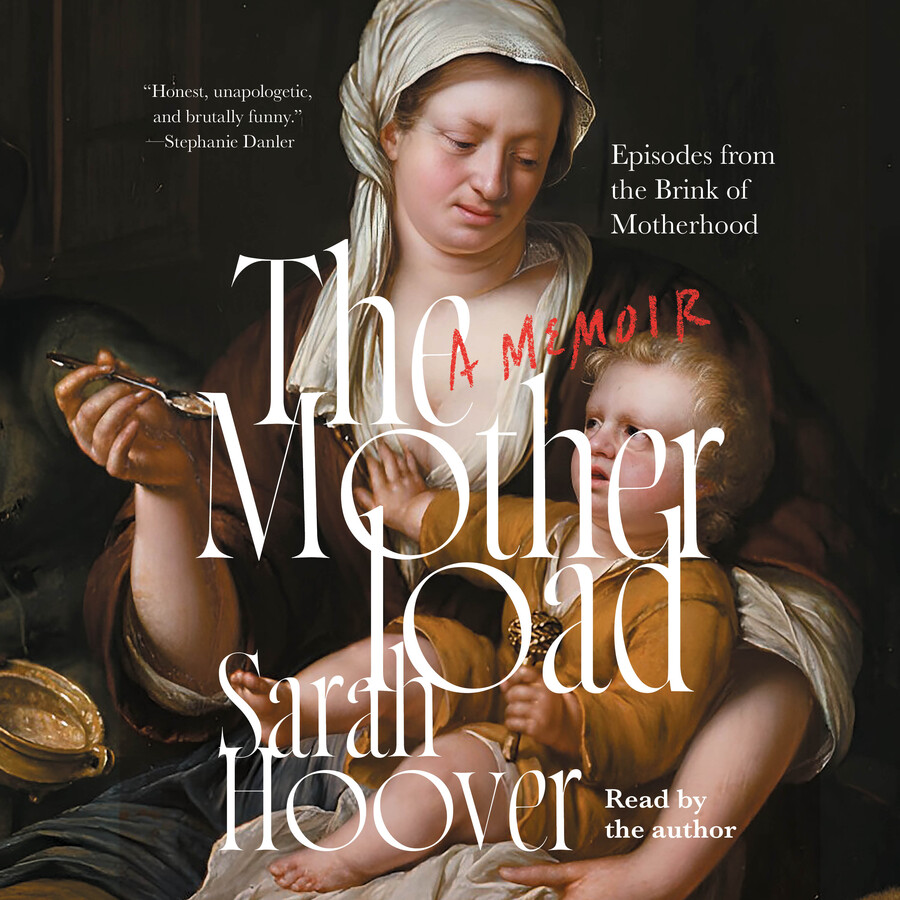
Review the original painting by Willem van Mieris used for the jacket art by visiting the website for the Art Institute of Chicago and searching A Mother Feeding her Child (The Happy Mother). Did your interpretation of the painting evolve as you read the book? If you could match the tone of the jacket art with another image, what would it be? Ask group members to come prepared to share a visual interpretation of The Motherload.
Questions for the Author
Q: The Motherload is remarkably candid in its depiction of deeply personal experiences. What motivated you to embrace such openness, and what were the emotional challenges of sharing these aspects of your life so publicly?
A: When I was in the depths of postpartum, and I mean really in the thick of it, I started writing about how I was feeling, mostly because I couldn’t find any books that aligned with my experience. I am a voracious reader interested in material across all genres, but no matter how many pages I consumed, searching for a story like mine, I never found myself reflected in what was out there. If I did, there was something about the story that made me feel like the grace was there but the grit was excluded, or maybe vice versa. I wanted to write about a woman bleeding into a diaper who had entirely lost her sense of self overnight, a woman who hated her life and herself, because that was what had happened to me. And what I really wanted was to write the book that I wished I’d had for myself in that year after my son was born.
I realized once I started writing that every time I would jot something down, I felt shame about . . . I felt lighter. And every time I shared it in writing class or with friends, someone would tell me they had at some point felt the same way, or at least similarly. All those years spent ashamed, embarrassed, and thinking I was alone—I came to realize quite quickly that it wasn’t getting me anywhere, and I was better off abandoning the self-imposed humiliation and coming to terms with all that had happened in my life. I haven’t really looked back since I realized that it’s a lighter way to live.
By the time my book was out in the world, I didn’t feel embarrassed about any of my emotional journey anymore. You have to own these things to be able to control the narrative about them with your words. And anyway, it’s all just the reality of what happened. I can’t change it—why waste time letting it make me feel bad?
Additionally, I’m the daughter of a former sex crimes prosecutor—my mom was in the second sex crimes unit founded in America, in the early 1980s in Indianapolis. She took the job out of law school because it was, well, available; in fact, no men wanted to work in the department at all. I grew up being taught that the world was not safe for girls; my mom nodding from the front seat of our station wagon at a grassy, inconspicuous hill beside some cornfields, just off the interstate—I worked on a case of a young girl who was raped over there during a midnight thunderstorm. I grew up knowing that I was one choice, one step, one mistake away from another tragedy at all times. And by the time I emerged from my late teens and twenties, dating in New York City, I felt traumatized and exhausted by my experiences with men. But because none of my stories ended like the stories my mother told on the interstate, I had some sort of impostor syndrome about my own history, even though I knew a lot of what had happened to me with certain boys and, later, men had been at best unwanted.
So I’m not sure it was an emotional challenge sharing these gritty personal details of my life as much as it was an imperative to convey not only my birth trauma but other attendant traumas.
Q: Throughout the memoir, you critically examine societal and personal expectations placed on women. How do you believe parenthood contributes to these pressures, and what do you think can be done to dismantle them?
A: A very brilliant Gen X friend of mine put it this way: There was a commercial in the eighties for a perfume called Enjoli. In the commercial, a very attractive woman comes home from work in a power suit and then changes into a hot, sexy dress that she wears while cooking up dinner. “I can bring home the bacon, fry it up in a pan,” she sings. The idea being that the perfect woman goes to work in a power suit, comes home to cook dinner, then avails her body happily. She is never tired or in a bad mood. Her hair is perfect. She context switches with aplomb. The reality, as most women who work know, is that this standard is very difficult, even impossible. Again, I reiterate here that I had a nanny. I had in-laws. But after I gave birth, something drastic happened to me hormonally. The floodgates opened, and it was very hard for me to fake being in a good headspace. Maybe I would have benefited from a rage room, but it was deeper than smashing old printers and soup bowls.
Can we ever dismantle any system, or does some part of the old one remain, like verses on a palimpsest? Part of dismantling any system is about rethinking the way we articulate these roles and their corresponding modifiers—for instance, the archetypal “good mother.” Depending on your politics, “good” and “mother” are homonyms that have culturally different meanings and expectations that shift over time. I knew that with my second child, the emotional labor couldn’t be mine alone. I needed my husband to also be a “good mother.” He needed to shoulder the burden and to experience what it was like to be the worried, anxious parent. To be the parent who left work early when our kid had a fever, even in the middle of an essential creative breakthrough. However much this is possible in late-stage capitalism, the quintessential dismantling of the system, occurs when the emotional, sexual, and parental economy equalizes. When I can bring home the bacon but don’t have to fry it up in anyone’s pan.
Q: Tom emerges as a deeply nuanced figure in the narrative. How did the act of writing about your partnership shape your understanding of its dynamics and the role of love and compromise within it?
A: Marriage is a beast. Everyone always tells you marriages are a lot of work, but they never tell you that marriage is a mirror whose purpose is to show you who you are on any given day. Also, your spouse may well be your partner or your best friend, but he or she is not you. This thing called free will exists, and you can’t make your spouse do anything. (Believe me, I find this quite annoying.) They have to learn all their life lessons and make all their mistakes on their own time. That’s one of the biggest things I learned writing this book—not just the importance of keeping my side of the street clean but not expecting my spouse to have alternate side of the street parking on the same day. I think people often want to blame their spouse without examining their own part in whatever happened.
Initially, perhaps because I got married at a time in my life when I wasn’t yet as critical of cultural clichés and systems, I think I believed in a more idyllic, fairy-tale existence. I romanticized marriage, thinking it would be more like my parents’ union. The book actually helped me to understand Tom as an artist and as a husband. He was extremely generous with me when I was writing and repeatedly told me I could be as honest as I needed to be about him and our relationship. He supported this project 100 percent because he knew that I needed to express myself fully as a writer to write this book well. He didn’t ask me to hide anything, even the thorniest parts of our relationship when I was in the deepest, darkest doldrums. I will always love him for that. Writing the book reminded me that these dynamics are not static. They shift kaleidoscopically. The beast grows and sheds its scales.
My husband and I are both fallible, and we will both continue to make mistakes, and that’s the nature of the beast. But damn, do I feel lucky that I met a man who is willing to listen to me—to analyze himself, to make a concerted effort to change. What more can you ask of a person?
Q: The importance of therapy is a recurring element in your story. Did the process of writing this memoir feel akin to therapy, or did it reveal challenges distinct from other forms of self-reflection?
A: Unlike therapy, the purpose of my memoir wasn’t to heal myself. (I had my therapist, Judi Dench, for that.) The purpose of The Motherload was to tell a story of motherhood that I felt wasn’t being told. In fact, I don’t think I would have been able to write it at all if I wasn’t already in charge of the traumas that had happened to me, if I hadn’t already been healed; I wouldn’t have known what I wanted to say, or been able to command the language properly. I wouldn’t have been able to write something that might help people if I myself still needed help. You know how they say hurt people hurt people? Well, healed people are usually interested in the healing of others. And I think that’s a better place from which to write a compelling and effective book.
There’s this painting by Peter Paul Rubens, who was an Antwerp-dwelling artist (1577–1640) and probably the best representative of the Flemish Baroque, titled Leda and the Swan (1601). The sensual and lush work depicts the eponymous goddess of Greek mythology who was coerced into sex by Zeus, who had disguised himself as a swan in order to get close to her and then rape her. At the time Rubens made his painting, it was considered more appropriate to show a human copulating with an animal than with a fellow human, making this subject quite popular. As time passed, and appetites grew, it became more eroticized and sexualized; rather tame versions from the Renaissance led to ravishing nudes copulating with elegant animals by the seventeenth century, when Rubens made this work. Leda was considered one of the two great beauties of antiquity—the other being her daughter, Helen of Troy; the implication is that because of her beauty, Zeus was entitled to his inability to control himself, and his rape was worthy of being painted. That woman was asking for it. From a swan.
Looking back at my own personal history—sexual and non—I started to think of a lot of my experiences as getting swanned. I’d been on the defensive, fooled into doing things I didn’t really want to do, in a hierarchical structure where I could never reach the top, where the power dynamics of our world meant I was in a lot of situations that didn’t feel equitable to me. Things I’d considered very normal behavior in this world at the hands of men, and of women trained by men, I began to see as exploitative and abusive, but I had reservations against complaining about them.
Thanks to therapy I was able to rethink my relationship to sex and to men and to power structures, and thanks to writing this book I was able to really articulate and expound upon that. Refining the language helped me continue to stop being a good girl.
Q: Your tone in The Motherload masterfully balances raw vulnerability with humor. How deliberate was this interplay, and what purpose did it serve in framing the heavy themes explored in the book?
A: Thank you! It sort of sounds like I wrote that question to make myself sound good. I promise I didn’t.
My favorite kinds of books to read are propulsive and fairly conversational—they read as being natural, they make you feel like you’re in the room with the protagonist. So it was a goal for me to write like that, and let me tell you—it’s hard to write how you talk, bizarrely. You think it would be organic to simply write how your voice sounds in real life, but I really had to work at it. I wanted the book to be my little unique mix of vulnerable and funny—I mean, everyone has their own particular mix of that, I’m not special, but I am myself—and I wanted this book to be identifiable as me.
An early reader of The Motherload said, “Wow, there’s a lot of shit in this book.” (She meant poop, by the way.) And I think that’s when I realized I’d written something that violates social norms with bodily humor—a favorite type of humor for me, but maybe something that makes a lot of people feel slightly out of their comfort zone. I’ve found that the obsession with women as these flawless beings whose bodies are sterile, pristine, and perfect is its own form of misogyny. So I wanted to break down that wall a little bit by leaning into the grossness. And come on—we have to be able to laugh at ourselves. That’s one of the best parts of life.
Is the book darkly humorous? Humorously dark? Like life, I shot for a delicate balance. For sure levity helps certain scenes not be too heavy. It helps the reader access my state of mind without feeling like they are being overly bludgeoned. Maybe because so few voices out there are talking about the diaper part of pregnancy, it felt like a personal mission to be loud and proudly humorous where I could.
Q: Was there a particular chapter or moment in the book that you found especially difficult to write? What made it so challenging, and how did you work through that process?
A: I think many readers might expect the answer to this question to be the chapter about the Wolf, but actually the hardest chapter for me to write was “Mother Wound.” What can I say? My mother is a brilliant, complicated woman, and we have a complex relationship. Still, I didn’t want it to read like a harangue, and yet the book is called The Motherload. It’s about tracing the line from my mother to me to my children—even to my daughter, Fred, who was born after the events of the book took place—to my children’s children’s children.
I wanted to examine the barbed sword of the mother-daughter relationship, to interrogate not only my mom but also how these tiny wounds accumulate over time, the way they morph into habit and the habit hardens into choices. I remember reading truly great memoirs about mothers and daughters like The Glass Castle and The Liars’ Club and thinking the reason each book was so effective was the way the author managed to paint these nuanced, challenging progenitors as painfully, gloriously flawed and human. They neither castigated nor blindly forgave, nor told a lopsided story in which the maternal figure was a monolithic, Dickensian villain.
Again, I think moms, especially working moms, get a bad rap. They get blamed for all the problems of the world, all the way back to Eve and Lady MacBeth. I spent a lot of my childhood and teenage years mad at my mom for working and not being available to play with me or pick me up after school. She seemed bored by me. Later, I realized that a lot of the labor of mothering is, in fact, boring: playing with the same blocks, reading the same books, going to Mommy and Me music classes. Every time I had to do any of these tasks with my son, I felt my soul turn to sand. Was this how my mother felt every night preparing dinner? Was this the wellspring of her resentment? I remember so many nights during high school, partying in a field, wondering about my mom’s adolescence. Had she had terrible sex in the back of a car behind a silo? Had she wanted more from her own mother? Is the mother wound an endless unspooling of viscera from one generation to another? Is it this shared maternal pain that connects us to the quiet breath of the morning? I wanted to convey my mother (and Indiana) in all her depth and complexity. Her dry humor and her mercurial rage that could knock my socks off. It was actually easier for me to write about my most private shame than to write that chapter. I love her so much that it kills me, and facing a love that powerful and looking at it straight in the face, then interrogating and critiquing it, is incredibly hard.
Q: If readers were to walk away from The Motherload with one core takeaway or insight, what would you hope that to be? How does this message reflect the broader intentions you had when crafting this memoir?
A: In 2020, I decided I wanted my son to have a sibling. Maybe it was just biology keeping the human race afloat, but I found myself longing to be pregnant again. Even though I was anxious that my postpartum experience would repeat itself, I wanted a do-over to see if I could love a baby joyfully and without the deep sadness. I wanted my kid to have a buddy. I wanted a bigger family. My instincts told me I needed more.
There was a whole IVF journey in there, loss and sorrow and a roller coaster, of course. But from the moment my last pregnancy test came back positive, I knew I needed a plan. And while that plan included therapy and types of self-care I hadn’t known with my firstborn—like journaling, taking meds, and building in extra time with the network of women and friends who understood what had happened to me on a visceral level—the number one priority for me was ensuring a different kind of medical care and experience. I think every person who gives birth deserves a shot at finding delight as a mother. If I learned anything from Round One, it was that joyful and connected motherhood was not possible on the heels of a traumatic birth. It made me think about these experiences in general. How could we make birth experiences better when they are, by nature, physically traumatic?
Well, I made a list. And I brought the list to my new OB-GYN and read it to her. I promised myself that if she wouldn’t agree to try everything I’d written down, I would find a practitioner who would. But I got lucky—my new doctor was committed to my care, and she was happy to work with me. I explained to her that I don’t put my feet in stirrups, and I prefer the use of the lighter plastic speculums. I ask that my doctor request permission before each touch; that she indicate on a scale of one to ten any anticipated pain or discomfort; and that if my experience doesn’t match what she guessed, that neither she nor anyone else dismisses my reaction. I ask that we agree on language: if I say stop, she freezes what she’s doing. If I say out, she removes her hands. I ask her to narrate the entire time she’s performing a procedure. In the delivery room, I asked for quiet, for calm, for low lighting when possible, for an all-female team. This is called trauma-informed care. And if one in three women has reported experiencing sexual assault, then the repercussions for our undergoing a type of care in the hospital that isn’t informed by that trauma are vast.
I hope that the one takeaway from this book for anyone who reads it is that we all deserve to feel safe in our bodies—in the bedroom, in a doctor’s office, in a hospital. And we all deserve to have our boundaries and our consent honored. If you find yourself in a relationship with a person or a doctor where that isn’t happening for you, being a grown-up means teaching yourself how to advocate for you until you get what you need.
Q: What’s your next project? Can you tell us about what you’re working on next?
A: I’m working on a novel about sex and marriage. Wish me luck.
The Motherload by Sarah Hoover
Book Club Discussion Questions
Sarah Hoover describes The Motherload as a “work of narrative nonfiction.” How does the autobiographical nature of the text alter your engagement with its themes and events? To what extent does the proximity of real-life experiences deepen or complicate your reading?
The memoir explores central themes such as motherhood, identity, and mental health. Which theme did you find most compelling, and how did its treatment challenge or affirm your own understanding of those experiences?
The “Birth Story” chapter provides an intimate lens into Sarah’s early days of motherhood. How does this section shape your understanding of her mental and emotional state? Were there moments from this chapter that felt surprising or familiar to your own experiences?
Sarah frequently grapples with feelings of isolation and disconnection during motherhood. How did her experiences either confront or align with societal norms and ideals surrounding motherhood?
The complexities of Sarah’s relationship with Tom emerge as a recurring thread in her narrative. What moments in their dynamic stood out to you, and how does their relationship reflect broader themes of partnership, compromise, and emotional labor?
Societal expectations about motherhood are critically examined throughout the book. How does Sarah’s evolving perspective on these expectations reflect her personal growth? Did her critique of these norms influence your own views on cultural pressures surrounding motherhood?
Postpartum depression is woven deeply into Sarah’s story. Which aspects of her portrayal of postpartum mental health most resonated with you, and what does her openness reveal about the broader conversation around maternal mental health?
Sarah’s reflections on her relationship with her own mother significantly influence her approach to parenting. How does intergenerational influence shape the narrative, and what conclusions can be drawn about the way we inherit and reinterpret familial legacies?
One of the memoir’s most striking qualities is its raw vulnerability. Were there particular confessions or moments of self-revelation that you found especially courageous or thought-provoking?
Sarah frequently contrasts her expectations for roles such as marriage and motherhood with the realities she faces. How did her reflections on these disparities shape your understanding of the complexities of personal identity? Have you encountered similar tensions in managing expectations versus lived experiences?
What role does trauma play in Sarah’s story, and how does it inform the overall narrative?
The memoir is marked by a blend of humor and unflinching candor. How did the interplay of levity and gravity affect your reading experience?
If you could ask Sarah one question about her experience, what would it be?
Enhance Your Book Club
1. Postnatal Mental Health Awareness Exercise
Before your meeting, encourage members to search for information about postpartum depression (such as the Edinburgh Postnatal Depression Scale mentioned in the book). Discuss how the book aligns with or challenges societal messaging about motherhood and mental health.
2. Visual Representations in The Motherload
Review the original painting by Willem van Mieris used for the jacket art by visiting the website for the Art Institute of Chicago and searching A Mother Feeding her Child (The Happy Mother). Did your interpretation of the painting evolve as you read the book? If you could match the tone of the jacket art with another image, what would it be? Ask group members to come prepared to share a visual interpretation of The Motherload.
Questions for the Author
Q: The Motherload is remarkably candid in its depiction of deeply personal experiences. What motivated you to embrace such openness, and what were the emotional challenges of sharing these aspects of your life so publicly?
A: When I was in the depths of postpartum, and I mean really in the thick of it, I started writing about how I was feeling, mostly because I couldn’t find any books that aligned with my experience. I am a voracious reader interested in material across all genres, but no matter how many pages I consumed, searching for a story like mine, I never found myself reflected in what was out there. If I did, there was something about the story that made me feel like the grace was there but the grit was excluded, or maybe vice versa. I wanted to write about a woman bleeding into a diaper who had entirely lost her sense of self overnight, a woman who hated her life and herself, because that was what had happened to me. And what I really wanted was to write the book that I wished I’d had for myself in that year after my son was born.
I realized once I started writing that every time I would jot something down, I felt shame about . . . I felt lighter. And every time I shared it in writing class or with friends, someone would tell me they had at some point felt the same way, or at least similarly. All those years spent ashamed, embarrassed, and thinking I was alone—I came to realize quite quickly that it wasn’t getting me anywhere, and I was better off abandoning the self-imposed humiliation and coming to terms with all that had happened in my life. I haven’t really looked back since I realized that it’s a lighter way to live.
By the time my book was out in the world, I didn’t feel embarrassed about any of my emotional journey anymore. You have to own these things to be able to control the narrative about them with your words. And anyway, it’s all just the reality of what happened. I can’t change it—why waste time letting it make me feel bad?
Additionally, I’m the daughter of a former sex crimes prosecutor—my mom was in the second sex crimes unit founded in America, in the early 1980s in Indianapolis. She took the job out of law school because it was, well, available; in fact, no men wanted to work in the department at all. I grew up being taught that the world was not safe for girls; my mom nodding from the front seat of our station wagon at a grassy, inconspicuous hill beside some cornfields, just off the interstate—I worked on a case of a young girl who was raped over there during a midnight thunderstorm. I grew up knowing that I was one choice, one step, one mistake away from another tragedy at all times. And by the time I emerged from my late teens and twenties, dating in New York City, I felt traumatized and exhausted by my experiences with men. But because none of my stories ended like the stories my mother told on the interstate, I had some sort of impostor syndrome about my own history, even though I knew a lot of what had happened to me with certain boys and, later, men had been at best unwanted.
So I’m not sure it was an emotional challenge sharing these gritty personal details of my life as much as it was an imperative to convey not only my birth trauma but other attendant traumas.
Q: Throughout the memoir, you critically examine societal and personal expectations placed on women. How do you believe parenthood contributes to these pressures, and what do you think can be done to dismantle them?
A: A very brilliant Gen X friend of mine put it this way: There was a commercial in the eighties for a perfume called Enjoli. In the commercial, a very attractive woman comes home from work in a power suit and then changes into a hot, sexy dress that she wears while cooking up dinner. “I can bring home the bacon, fry it up in a pan,” she sings. The idea being that the perfect woman goes to work in a power suit, comes home to cook dinner, then avails her body happily. She is never tired or in a bad mood. Her hair is perfect. She context switches with aplomb. The reality, as most women who work know, is that this standard is very difficult, even impossible. Again, I reiterate here that I had a nanny. I had in-laws. But after I gave birth, something drastic happened to me hormonally. The floodgates opened, and it was very hard for me to fake being in a good headspace. Maybe I would have benefited from a rage room, but it was deeper than smashing old printers and soup bowls.
Can we ever dismantle any system, or does some part of the old one remain, like verses on a palimpsest? Part of dismantling any system is about rethinking the way we articulate these roles and their corresponding modifiers—for instance, the archetypal “good mother.” Depending on your politics, “good” and “mother” are homonyms that have culturally different meanings and expectations that shift over time. I knew that with my second child, the emotional labor couldn’t be mine alone. I needed my husband to also be a “good mother.” He needed to shoulder the burden and to experience what it was like to be the worried, anxious parent. To be the parent who left work early when our kid had a fever, even in the middle of an essential creative breakthrough. However much this is possible in late-stage capitalism, the quintessential dismantling of the system, occurs when the emotional, sexual, and parental economy equalizes. When I can bring home the bacon but don’t have to fry it up in anyone’s pan.
Q: Tom emerges as a deeply nuanced figure in the narrative. How did the act of writing about your partnership shape your understanding of its dynamics and the role of love and compromise within it?
A: Marriage is a beast. Everyone always tells you marriages are a lot of work, but they never tell you that marriage is a mirror whose purpose is to show you who you are on any given day. Also, your spouse may well be your partner or your best friend, but he or she is not you. This thing called free will exists, and you can’t make your spouse do anything. (Believe me, I find this quite annoying.) They have to learn all their life lessons and make all their mistakes on their own time. That’s one of the biggest things I learned writing this book—not just the importance of keeping my side of the street clean but not expecting my spouse to have alternate side of the street parking on the same day. I think people often want to blame their spouse without examining their own part in whatever happened.
Initially, perhaps because I got married at a time in my life when I wasn’t yet as critical of cultural clichés and systems, I think I believed in a more idyllic, fairy-tale existence. I romanticized marriage, thinking it would be more like my parents’ union. The book actually helped me to understand Tom as an artist and as a husband. He was extremely generous with me when I was writing and repeatedly told me I could be as honest as I needed to be about him and our relationship. He supported this project 100 percent because he knew that I needed to express myself fully as a writer to write this book well. He didn’t ask me to hide anything, even the thorniest parts of our relationship when I was in the deepest, darkest doldrums. I will always love him for that. Writing the book reminded me that these dynamics are not static. They shift kaleidoscopically. The beast grows and sheds its scales.
My husband and I are both fallible, and we will both continue to make mistakes, and that’s the nature of the beast. But damn, do I feel lucky that I met a man who is willing to listen to me—to analyze himself, to make a concerted effort to change. What more can you ask of a person?
Q: The importance of therapy is a recurring element in your story. Did the process of writing this memoir feel akin to therapy, or did it reveal challenges distinct from other forms of self-reflection?
A: Unlike therapy, the purpose of my memoir wasn’t to heal myself. (I had my therapist, Judi Dench, for that.) The purpose of The Motherload was to tell a story of motherhood that I felt wasn’t being told. In fact, I don’t think I would have been able to write it at all if I wasn’t already in charge of the traumas that had happened to me, if I hadn’t already been healed; I wouldn’t have known what I wanted to say, or been able to command the language properly. I wouldn’t have been able to write something that might help people if I myself still needed help. You know how they say hurt people hurt people? Well, healed people are usually interested in the healing of others. And I think that’s a better place from which to write a compelling and effective book.
There’s this painting by Peter Paul Rubens, who was an Antwerp-dwelling artist (1577–1640) and probably the best representative of the Flemish Baroque, titled Leda and the Swan (1601). The sensual and lush work depicts the eponymous goddess of Greek mythology who was coerced into sex by Zeus, who had disguised himself as a swan in order to get close to her and then rape her. At the time Rubens made his painting, it was considered more appropriate to show a human copulating with an animal than with a fellow human, making this subject quite popular. As time passed, and appetites grew, it became more eroticized and sexualized; rather tame versions from the Renaissance led to ravishing nudes copulating with elegant animals by the seventeenth century, when Rubens made this work. Leda was considered one of the two great beauties of antiquity—the other being her daughter, Helen of Troy; the implication is that because of her beauty, Zeus was entitled to his inability to control himself, and his rape was worthy of being painted. That woman was asking for it. From a swan.
Looking back at my own personal history—sexual and non—I started to think of a lot of my experiences as getting swanned. I’d been on the defensive, fooled into doing things I didn’t really want to do, in a hierarchical structure where I could never reach the top, where the power dynamics of our world meant I was in a lot of situations that didn’t feel equitable to me. Things I’d considered very normal behavior in this world at the hands of men, and of women trained by men, I began to see as exploitative and abusive, but I had reservations against complaining about them.
Thanks to therapy I was able to rethink my relationship to sex and to men and to power structures, and thanks to writing this book I was able to really articulate and expound upon that. Refining the language helped me continue to stop being a good girl.
Q: Your tone in The Motherload masterfully balances raw vulnerability with humor. How deliberate was this interplay, and what purpose did it serve in framing the heavy themes explored in the book?
A: Thank you! It sort of sounds like I wrote that question to make myself sound good. I promise I didn’t.
My favorite kinds of books to read are propulsive and fairly conversational—they read as being natural, they make you feel like you’re in the room with the protagonist. So it was a goal for me to write like that, and let me tell you—it’s hard to write how you talk, bizarrely. You think it would be organic to simply write how your voice sounds in real life, but I really had to work at it. I wanted the book to be my little unique mix of vulnerable and funny—I mean, everyone has their own particular mix of that, I’m not special, but I am myself—and I wanted this book to be identifiable as me.
An early reader of The Motherload said, “Wow, there’s a lot of shit in this book.” (She meant poop, by the way.) And I think that’s when I realized I’d written something that violates social norms with bodily humor—a favorite type of humor for me, but maybe something that makes a lot of people feel slightly out of their comfort zone. I’ve found that the obsession with women as these flawless beings whose bodies are sterile, pristine, and perfect is its own form of misogyny. So I wanted to break down that wall a little bit by leaning into the grossness. And come on—we have to be able to laugh at ourselves. That’s one of the best parts of life.
Is the book darkly humorous? Humorously dark? Like life, I shot for a delicate balance. For sure levity helps certain scenes not be too heavy. It helps the reader access my state of mind without feeling like they are being overly bludgeoned. Maybe because so few voices out there are talking about the diaper part of pregnancy, it felt like a personal mission to be loud and proudly humorous where I could.
Q: Was there a particular chapter or moment in the book that you found especially difficult to write? What made it so challenging, and how did you work through that process?
A: I think many readers might expect the answer to this question to be the chapter about the Wolf, but actually the hardest chapter for me to write was “Mother Wound.” What can I say? My mother is a brilliant, complicated woman, and we have a complex relationship. Still, I didn’t want it to read like a harangue, and yet the book is called The Motherload. It’s about tracing the line from my mother to me to my children—even to my daughter, Fred, who was born after the events of the book took place—to my children’s children’s children.
I wanted to examine the barbed sword of the mother-daughter relationship, to interrogate not only my mom but also how these tiny wounds accumulate over time, the way they morph into habit and the habit hardens into choices. I remember reading truly great memoirs about mothers and daughters like The Glass Castle and The Liars’ Club and thinking the reason each book was so effective was the way the author managed to paint these nuanced, challenging progenitors as painfully, gloriously flawed and human. They neither castigated nor blindly forgave, nor told a lopsided story in which the maternal figure was a monolithic, Dickensian villain.
Again, I think moms, especially working moms, get a bad rap. They get blamed for all the problems of the world, all the way back to Eve and Lady MacBeth. I spent a lot of my childhood and teenage years mad at my mom for working and not being available to play with me or pick me up after school. She seemed bored by me. Later, I realized that a lot of the labor of mothering is, in fact, boring: playing with the same blocks, reading the same books, going to Mommy and Me music classes. Every time I had to do any of these tasks with my son, I felt my soul turn to sand. Was this how my mother felt every night preparing dinner? Was this the wellspring of her resentment? I remember so many nights during high school, partying in a field, wondering about my mom’s adolescence. Had she had terrible sex in the back of a car behind a silo? Had she wanted more from her own mother? Is the mother wound an endless unspooling of viscera from one generation to another? Is it this shared maternal pain that connects us to the quiet breath of the morning? I wanted to convey my mother (and Indiana) in all her depth and complexity. Her dry humor and her mercurial rage that could knock my socks off. It was actually easier for me to write about my most private shame than to write that chapter. I love her so much that it kills me, and facing a love that powerful and looking at it straight in the face, then interrogating and critiquing it, is incredibly hard.
Q: If readers were to walk away from The Motherload with one core takeaway or insight, what would you hope that to be? How does this message reflect the broader intentions you had when crafting this memoir?
A: In 2020, I decided I wanted my son to have a sibling. Maybe it was just biology keeping the human race afloat, but I found myself longing to be pregnant again. Even though I was anxious that my postpartum experience would repeat itself, I wanted a do-over to see if I could love a baby joyfully and without the deep sadness. I wanted my kid to have a buddy. I wanted a bigger family. My instincts told me I needed more.
There was a whole IVF journey in there, loss and sorrow and a roller coaster, of course. But from the moment my last pregnancy test came back positive, I knew I needed a plan. And while that plan included therapy and types of self-care I hadn’t known with my firstborn—like journaling, taking meds, and building in extra time with the network of women and friends who understood what had happened to me on a visceral level—the number one priority for me was ensuring a different kind of medical care and experience. I think every person who gives birth deserves a shot at finding delight as a mother. If I learned anything from Round One, it was that joyful and connected motherhood was not possible on the heels of a traumatic birth. It made me think about these experiences in general. How could we make birth experiences better when they are, by nature, physically traumatic?
Well, I made a list. And I brought the list to my new OB-GYN and read it to her. I promised myself that if she wouldn’t agree to try everything I’d written down, I would find a practitioner who would. But I got lucky—my new doctor was committed to my care, and she was happy to work with me. I explained to her that I don’t put my feet in stirrups, and I prefer the use of the lighter plastic speculums. I ask that my doctor request permission before each touch; that she indicate on a scale of one to ten any anticipated pain or discomfort; and that if my experience doesn’t match what she guessed, that neither she nor anyone else dismisses my reaction. I ask that we agree on language: if I say stop, she freezes what she’s doing. If I say out, she removes her hands. I ask her to narrate the entire time she’s performing a procedure. In the delivery room, I asked for quiet, for calm, for low lighting when possible, for an all-female team. This is called trauma-informed care. And if one in three women has reported experiencing sexual assault, then the repercussions for our undergoing a type of care in the hospital that isn’t informed by that trauma are vast.
I hope that the one takeaway from this book for anyone who reads it is that we all deserve to feel safe in our bodies—in the bedroom, in a doctor’s office, in a hospital. And we all deserve to have our boundaries and our consent honored. If you find yourself in a relationship with a person or a doctor where that isn’t happening for you, being a grown-up means teaching yourself how to advocate for you until you get what you need.
Q: What’s your next project? Can you tell us about what you’re working on next?
A: I’m working on a novel about sex and marriage. Wish me luck.
About The Author
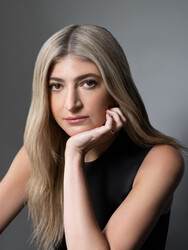
Photography by Beowulf Sheehan
Sarah Hoover holds a master’s degree in cultural theory from Columbia and a BA in art history from NYU. Her writing has been featured in The Wall Street Journal, Harper’s Bazaar, Psychology Today, Mother Tongue, The Strategist, and Vogue. The Motherload is her first book.
About The Reader
Photography by Beowulf Sheehan
Sarah Hoover holds a master’s degree in cultural theory from Columbia and a BA in art history from NYU. Her writing has been featured in The Wall Street Journal, Harper’s Bazaar, Psychology Today, Mother Tongue, The Strategist, and Vogue. The Motherload is her first book.
Product Details
- Publisher: Simon & Schuster Audio (January 14, 2025)
- Runtime: 11 hours and 31 minutes
- ISBN13: 9781797188461
Browse Related Books
Resources and Downloads
High Resolution Images
-
Book Cover Image (jpg): The Motherload
Unabridged Audio Download 9781797188461
-
Author Photo (jpg): Sarah Hoover Photography by Beowulf Sheehan(0.1 MB)
Any use of an author photo must include its respective photo credit
Join our mailing list!
By clicking 'Sign me up' I acknowledge that I have read and agree to the privacy policy and terms of use.