Get our latest staff recommendations, award news and digital catalog links right to your inbox.
Table of Contents
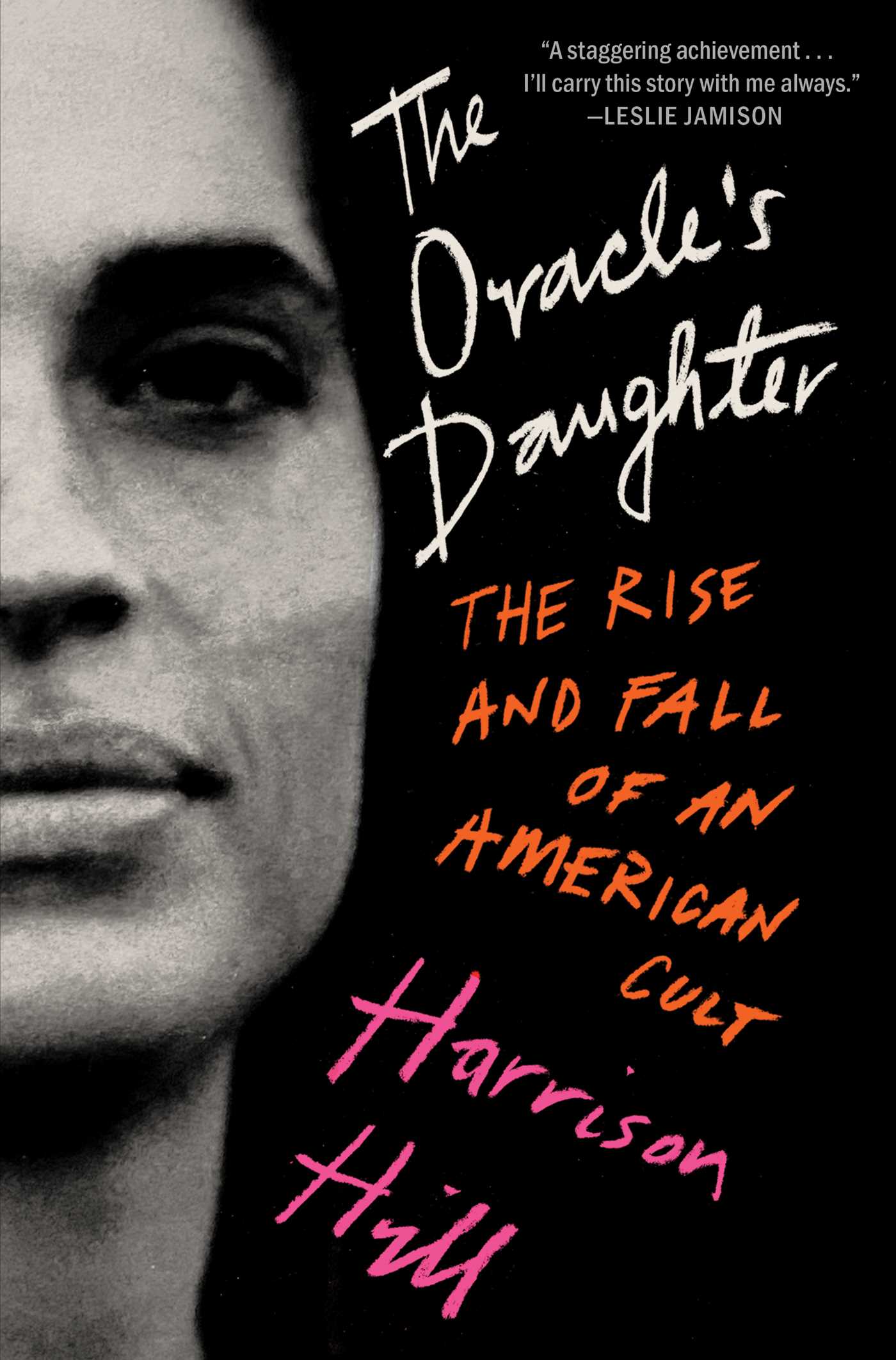
About The Book
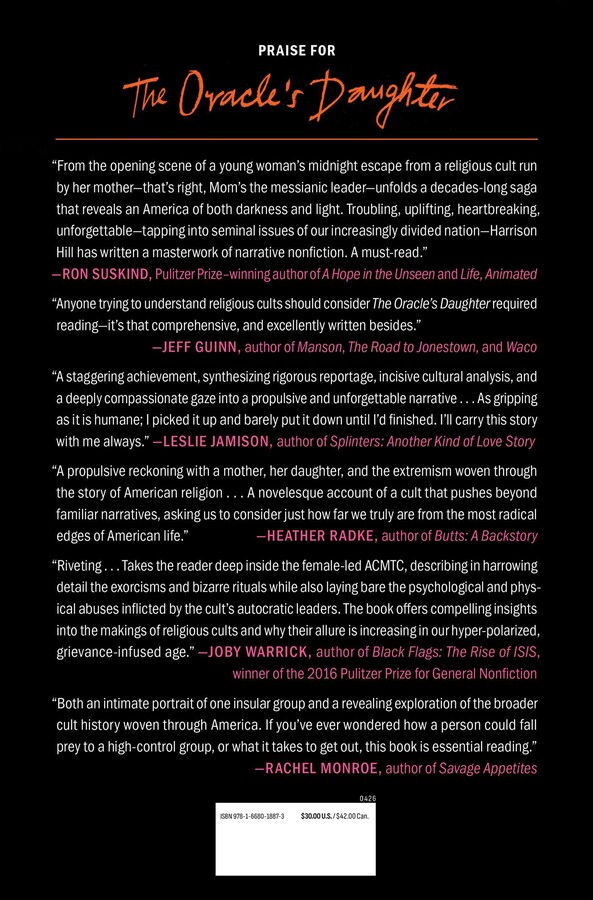
“Terrifying, gripping, all true. I couldn’t put it down.” —Stephen King
“Excellent...told with rare sensitivity...Hill is an extremely skilled writer, and his conscientious, measured reporting is a gift...The immediacy with which Hill portrays [his subjects’] conflicted longings gives the book the propulsive feel of a novel.” —The New York Times Book Review
A “deeply compelling” (Booklist) chronicle of the rise and fall of a woman-led cult—and the enduring allure of extremism across America’s turbulent religious history.
On a cool fall night in 1999, twenty-six-year-old Sarah Green crept out of her house, retrieved a backpack from its hiding place, and ran for her life. She was escaping not just the Aggressive Christianity Missions Training Corps, a paramilitary religious cult based in the New Mexico desert, but also the cruelty of the cult’s leader—her mother, Deborah.
In this “incredible new book” (CrimeReads), Harrison Hill traces the “extraordinary” twists and turns (NPR) of the group’s development, from its early days as an outgrowth of the 1960s counterculture, through its descent into conspiracy-fueled abuse, to the explosive trial that would lead to its downfall. The Oracle’s Daughter is the story of three women—Deborah, the group’s founder and self-proclaimed oracle; Maura, one of its first members; and Sarah, Deborah’s daughter—bound together by a punitive, baroque set of radical beliefs and practices, including exorcism, kidnapping, and the horrific mistreatment of those who fell out of the leaders’ favor.
Though ACMTC was radical in its beliefs and deprivations, its history provides a window into the broader sweep of American faith. The Oracle’s Daughter also explores the fascinating world of cults—and gives “a bracing sense of how mainstream the fringe can get” (Oprah Daily).
“Excellent...told with rare sensitivity...Hill is an extremely skilled writer, and his conscientious, measured reporting is a gift...The immediacy with which Hill portrays [his subjects’] conflicted longings gives the book the propulsive feel of a novel.” —The New York Times Book Review
A “deeply compelling” (Booklist) chronicle of the rise and fall of a woman-led cult—and the enduring allure of extremism across America’s turbulent religious history.
On a cool fall night in 1999, twenty-six-year-old Sarah Green crept out of her house, retrieved a backpack from its hiding place, and ran for her life. She was escaping not just the Aggressive Christianity Missions Training Corps, a paramilitary religious cult based in the New Mexico desert, but also the cruelty of the cult’s leader—her mother, Deborah.
In this “incredible new book” (CrimeReads), Harrison Hill traces the “extraordinary” twists and turns (NPR) of the group’s development, from its early days as an outgrowth of the 1960s counterculture, through its descent into conspiracy-fueled abuse, to the explosive trial that would lead to its downfall. The Oracle’s Daughter is the story of three women—Deborah, the group’s founder and self-proclaimed oracle; Maura, one of its first members; and Sarah, Deborah’s daughter—bound together by a punitive, baroque set of radical beliefs and practices, including exorcism, kidnapping, and the horrific mistreatment of those who fell out of the leaders’ favor.
Though ACMTC was radical in its beliefs and deprivations, its history provides a window into the broader sweep of American faith. The Oracle’s Daughter also explores the fascinating world of cults—and gives “a bracing sense of how mainstream the fringe can get” (Oprah Daily).
Excerpt
Prologue PROLOGUE
Sarah is already awake when the alarm clock goes off. She silences it and pulls herself out of her sleeping bag. It is midnight. Around her, on the floor, lie her husband and three young children. No doubt the alarm has roused them, too, but they’ll fall asleep again before long. They always do.
Sarah pulls on a T-shirt and a long dark skirt. She is twenty-six years old, with swishy nutmeg hair, blue-green eyes, and a bracing, falcon-like beauty. She steps over and around the warm little bodies at her feet. In the darkness she watches their chests rise and fall, rise and fall. And then, silently, she says good-bye.
In western New Mexico, a single sky can contain a multitude of weather systems—rain in one area, sun in another, haze in a third. But on this particular night in September 1999, the sky screams with a uniform, navy clarity. The moon casts a chalky paleness over the scrub trees and the wildflower patches Sarah rushes past—quickly, quietly—on her way to the wood stack, maybe forty feet from the house.
Already her heart is racing with terror, with excitement, with guilt. What if she’s caught? What if someone walks into the kitchen and notices she isn’t there, baking banana bread, as she has so many thousands of midnights before this one? What if the dogs catch a whiff of her scent in the cool, loamy air? She can hear them even now, whining and trotting along the bluffs out back.
At the wood stack Sarah digs out a backpack she has hidden in preparation for her escape. It contains everything of value Sarah owns, plus supplies for the journey ahead: a water bottle, a passport, some granola bars, about $200 cash. She has also packed a flat metal cheese grater that belongs—belonged—to her mother, who bought it at a sidewalk sale many years earlier. The grater is a reminder, to Sarah, of who her mother once was. Before she changed. Before she realized she was God’s holy chosen oracle.
Nervous sweat trickles down Sarah’s back as she turns and takes in the compound before her. It’s a jumble of rusty vehicles, wooden shacks, and thick, teeming orchards. An old school bus sits parked near a massive metal warehouse. About thirty men, women, and children live here under the leadership of Sarah’s parents, self-proclaimed Generals of the Aggressive Christianity Missions Training Corps. “True Spirit-led Christianity is war,” the couple preaches. “Civilian Christians” have gone “whoring from God,” transforming his temple into an “orgy parlor.” The Generals’ idiom always veers toward the extreme, often with a distinctly sexual emphasis. The mainstream church is a “harlot,” they say, an “abomination,” a “spiritual brothel.” It is a “monster” covered in “cankered, oozing sores”; a “repugnant,” “putrefying mess”; a “morgue.”
The group, by contrast, is actually serious about its faith. “WE ARE A WAR MACHINE,” Sarah’s parents insist. “God is absolute and He is a dictator.”
Since its earliest days in Sacramento, California, in the eighties, the Aggressive Christianity Missions Training Corps has warded off prying investigators, angry families, conniving journalists—even a million-dollar lawsuit. As a result of these persecutions the group has been forced to flee here, to the land of jackrabbits and mule deer, along the western flank of the Continental Divide, where only the coyotes can find them.
There is a self-evident extremism to the Aggressive Christianity Missions Training Corps. But the group has also long embodied more mainstream trends in American religious life—trends evident not just since the late 1960s, when Sarah’s parents were hippies, but from the very founding of the country. What appears radical about the group is, in fact, a product of the same forces that have given the United States its particular spiritual character; and in this way, Sarah’s parents have illuminated how hazy, indeed, are the lines between faith and fanaticism, between devotion and destruction.
It is a haziness evident in ACMTC members themselves, most of them otherwise ordinary men and women who have, through years of inurement, come to accept the brutality of their lives as ordinary. They are a self-contained unit, this group, almost entirely off the grid. They wake early, at around four o’clock in the morning, and submit to violent “deliverance” ceremonies where demons of lust and laziness and a thousand other vices are purged from their bodies. They eat little and fast often; children are forced to go weeks at a time living only on broth. They take biblical names like Joab, Obadiah, and Philemon. They have no contact with friends and family on the outside.
Sarah wants more than this. She wants a proper education. She wants to wear regular clothes, not military uniforms. She wants to eat junk food, to be touched by a man other than her husband, whose mere presence repels her. Five years earlier, following the birth of her first child, she’d felt as if she had something to live for. But Sarah’s love of being a mother has been counterbalanced by an oppressive sense, equally strong, that if she doesn’t leave now, she will remain chained here forever.
Sarah gazes through the darkness for the young man who has agreed to come with her. Anthony is a recent recruit, a handsome drifter type from New Zealand who has only ever planned to stay at ACMTC for a short time, until his visa expires. He and Sarah have grown close in the months since his arrival—too close. They’ve taken walks on the trail behind the compound. They’ve held hands. They’ve kissed.
Sarah was the one to propose leaving together. What if they headed north, to Seattle, where Sarah could enroll in midwifery school and Anthony could catch a ride up to Canada? Then, after getting a job and a place to live, she would return to New Mexico for her kids. By this point she’d accepted the impossibility of bringing them with her. She could never get away with three young children in tow, to say nothing of the journey ahead. This, in any case, is what she has told herself. It has been an agonizing decision, and one that lays bare the most fundamental, conflicting loyalties of Sarah’s life—to herself on the one hand, and to her children on the other. To her own survival, and to theirs.
Sarah has been crouched at the wood stack no more than a minute or two when she stands up and starts walking toward the front of the compound. She avoids the driveway, where the crunch of the gravel may give her away, passing instead through the orchard, where the soil is soft, moist, muffling.
Near the entryway Anthony materializes out of the darkness. She says nothing to him, nor he to her. Is he as nervous as she is? Does he worry that, by leaving the group, he is damning himself to hell? Sarah can’t tell. She’s more concerned with the practicalities of escape than with God’s judgment, but she still has her misgivings.
Together they arrive at the front of the driveway—and there it is. The road.
They walk slowly at first, taking care not to make a sound. And then, when the compound is decisively behind them, when their fear has rearranged itself into a kind of anxious euphoria—then, at last, they run.
Sarah is already awake when the alarm clock goes off. She silences it and pulls herself out of her sleeping bag. It is midnight. Around her, on the floor, lie her husband and three young children. No doubt the alarm has roused them, too, but they’ll fall asleep again before long. They always do.
Sarah pulls on a T-shirt and a long dark skirt. She is twenty-six years old, with swishy nutmeg hair, blue-green eyes, and a bracing, falcon-like beauty. She steps over and around the warm little bodies at her feet. In the darkness she watches their chests rise and fall, rise and fall. And then, silently, she says good-bye.
In western New Mexico, a single sky can contain a multitude of weather systems—rain in one area, sun in another, haze in a third. But on this particular night in September 1999, the sky screams with a uniform, navy clarity. The moon casts a chalky paleness over the scrub trees and the wildflower patches Sarah rushes past—quickly, quietly—on her way to the wood stack, maybe forty feet from the house.
Already her heart is racing with terror, with excitement, with guilt. What if she’s caught? What if someone walks into the kitchen and notices she isn’t there, baking banana bread, as she has so many thousands of midnights before this one? What if the dogs catch a whiff of her scent in the cool, loamy air? She can hear them even now, whining and trotting along the bluffs out back.
At the wood stack Sarah digs out a backpack she has hidden in preparation for her escape. It contains everything of value Sarah owns, plus supplies for the journey ahead: a water bottle, a passport, some granola bars, about $200 cash. She has also packed a flat metal cheese grater that belongs—belonged—to her mother, who bought it at a sidewalk sale many years earlier. The grater is a reminder, to Sarah, of who her mother once was. Before she changed. Before she realized she was God’s holy chosen oracle.
Nervous sweat trickles down Sarah’s back as she turns and takes in the compound before her. It’s a jumble of rusty vehicles, wooden shacks, and thick, teeming orchards. An old school bus sits parked near a massive metal warehouse. About thirty men, women, and children live here under the leadership of Sarah’s parents, self-proclaimed Generals of the Aggressive Christianity Missions Training Corps. “True Spirit-led Christianity is war,” the couple preaches. “Civilian Christians” have gone “whoring from God,” transforming his temple into an “orgy parlor.” The Generals’ idiom always veers toward the extreme, often with a distinctly sexual emphasis. The mainstream church is a “harlot,” they say, an “abomination,” a “spiritual brothel.” It is a “monster” covered in “cankered, oozing sores”; a “repugnant,” “putrefying mess”; a “morgue.”
The group, by contrast, is actually serious about its faith. “WE ARE A WAR MACHINE,” Sarah’s parents insist. “God is absolute and He is a dictator.”
Since its earliest days in Sacramento, California, in the eighties, the Aggressive Christianity Missions Training Corps has warded off prying investigators, angry families, conniving journalists—even a million-dollar lawsuit. As a result of these persecutions the group has been forced to flee here, to the land of jackrabbits and mule deer, along the western flank of the Continental Divide, where only the coyotes can find them.
There is a self-evident extremism to the Aggressive Christianity Missions Training Corps. But the group has also long embodied more mainstream trends in American religious life—trends evident not just since the late 1960s, when Sarah’s parents were hippies, but from the very founding of the country. What appears radical about the group is, in fact, a product of the same forces that have given the United States its particular spiritual character; and in this way, Sarah’s parents have illuminated how hazy, indeed, are the lines between faith and fanaticism, between devotion and destruction.
It is a haziness evident in ACMTC members themselves, most of them otherwise ordinary men and women who have, through years of inurement, come to accept the brutality of their lives as ordinary. They are a self-contained unit, this group, almost entirely off the grid. They wake early, at around four o’clock in the morning, and submit to violent “deliverance” ceremonies where demons of lust and laziness and a thousand other vices are purged from their bodies. They eat little and fast often; children are forced to go weeks at a time living only on broth. They take biblical names like Joab, Obadiah, and Philemon. They have no contact with friends and family on the outside.
Sarah wants more than this. She wants a proper education. She wants to wear regular clothes, not military uniforms. She wants to eat junk food, to be touched by a man other than her husband, whose mere presence repels her. Five years earlier, following the birth of her first child, she’d felt as if she had something to live for. But Sarah’s love of being a mother has been counterbalanced by an oppressive sense, equally strong, that if she doesn’t leave now, she will remain chained here forever.
Sarah gazes through the darkness for the young man who has agreed to come with her. Anthony is a recent recruit, a handsome drifter type from New Zealand who has only ever planned to stay at ACMTC for a short time, until his visa expires. He and Sarah have grown close in the months since his arrival—too close. They’ve taken walks on the trail behind the compound. They’ve held hands. They’ve kissed.
Sarah was the one to propose leaving together. What if they headed north, to Seattle, where Sarah could enroll in midwifery school and Anthony could catch a ride up to Canada? Then, after getting a job and a place to live, she would return to New Mexico for her kids. By this point she’d accepted the impossibility of bringing them with her. She could never get away with three young children in tow, to say nothing of the journey ahead. This, in any case, is what she has told herself. It has been an agonizing decision, and one that lays bare the most fundamental, conflicting loyalties of Sarah’s life—to herself on the one hand, and to her children on the other. To her own survival, and to theirs.
Sarah has been crouched at the wood stack no more than a minute or two when she stands up and starts walking toward the front of the compound. She avoids the driveway, where the crunch of the gravel may give her away, passing instead through the orchard, where the soil is soft, moist, muffling.
Near the entryway Anthony materializes out of the darkness. She says nothing to him, nor he to her. Is he as nervous as she is? Does he worry that, by leaving the group, he is damning himself to hell? Sarah can’t tell. She’s more concerned with the practicalities of escape than with God’s judgment, but she still has her misgivings.
Together they arrive at the front of the driveway—and there it is. The road.
They walk slowly at first, taking care not to make a sound. And then, when the compound is decisively behind them, when their fear has rearranged itself into a kind of anxious euphoria—then, at last, they run.
About The Author
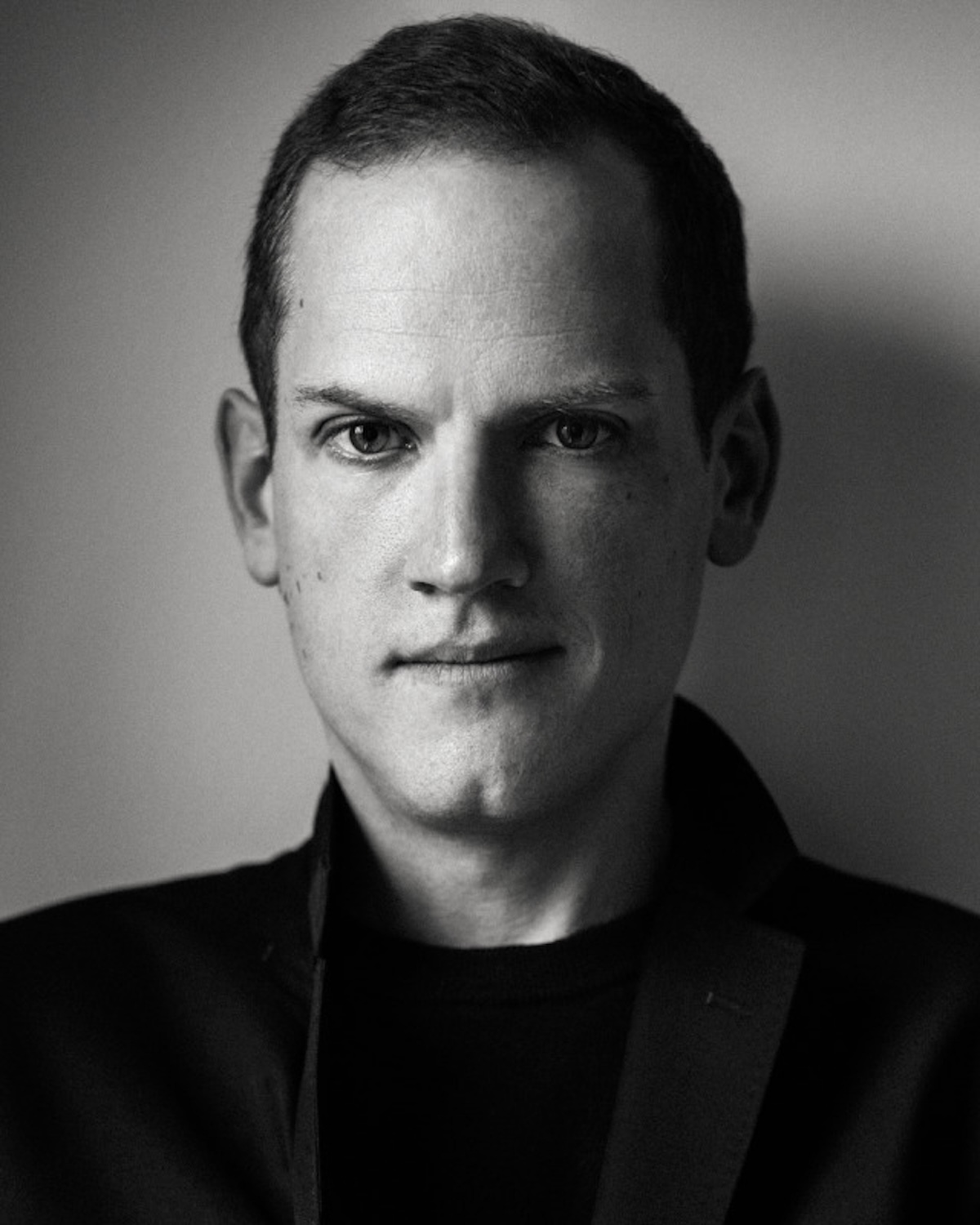
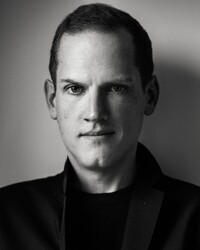
Photo by Sebastian Kim
Harrison Hill grew up in Charlottesville, Virginia, and lives in Brooklyn, New York. He received his MFA in nonfiction from Columbia University, where he also taught undergraduate writing. His journalism and essays have appeared in The Cut, GQ, Vogue, Travel + Leisure, AFAR, The Guardian, and other outlets. The Oracle’s Daughter is his first book. Follow him @1harrisonhill.
Product Details
- Publisher: Scribner (April 7, 2026)
- Length: 352 pages
- ISBN13: 9781668018873
Browse Related Books
Raves and Reviews
One of Town & Country and Alta's Best Books of April
One of Oprah Daily's Best Books of Spring
“Terrifying, gripping, all true. I couldn’t put it down.”
—Stephen King
"Excellent ... told with rare sensitivity ... Hill is an extremely skilled writer, and his conscientious, measured reporting is a gift. He’s also a reliable guide who’s managed to create stunningly vivid scenes from the memories with which his subjects have trusted him ... The immediacy with which Hill portrays their conflicted longings gives the book the propulsive feel of a novel."
—New York Times Book Review
"The twists and turns Hill follows throughout this true story are extraordinary, and the author does a wonderful job of contextualizing the painful, sometimes horrifying choices his subjects made ... The Oracle's Daughter is a story about the terror of losing the self but it's also, gratifyingly, a story about finding the way back to it."
—NPR
"This true crime cult story opens with a scene straight from an action movie ... The Oracle's Daughter reads like immersive, on-the-ground reportage, charting how a small, idealistic community corrodes into a regime of cruelty, its practices so outlandish they’d feel invented if Hill didn’t render them with such concrete, lived-in specificity ... You come for the propulsive mother-daughter nightmare and the granular portrait of a survival in a closed world; you leave with a bracing sense of how mainstream the fringe can get."
—Oprah Daily, Best Books of Spring
“An incredible new book that cast some sort of inexplicable spell over me demanding I follow its read-me now orders.”
—CrimeReads
"Hill uses the story of this one isolated group to tell a much larger history, showing how the desires that drive cults to choose one's own spiritual destiny, to follow a charismatic leader rather than the established order, to cross into new territory and begin a new order, are the same forces that shaped the nation's origin story. Hill draws a clean line from founding era separatist heat through Mormonism, Shaker mysticism, Hippieism, and inevitably, Trumpism."
—NPR Weekly Reader
“With dogged research and rare access to victims and their stories, Harrison Hill has created a riveting portrait of one of the strangest American cults in recent memory. The Oracle’s Daughter takes the reader deep inside the female-led AMCTC, describing in harrowing detail the exorcisms and bizarre rituals while also laying bare the psychological and physical abuses inflicted by the cult’s autocratic leaders. With a cast of unforgettable characters—including courageous former cult members who broke free—the book offers compelling insights into the makings of religious cults and why their allure is increasing in our hyper-polarized, grievance-infused age.”
—Joby Warrick, author of Black Flags: The Rise of ISIS, winner of the 2016 Pulitzer Prize for General Nonfiction
“Harrison Hill’s The Oracle’s Daughter is a staggering achievement, synthesizing rigorous reportage, incisive cultural analysis, and a deeply compassionate gaze into a propulsive and unforgettable narrative. Its gaze is both intimate and expansive: attuned to the texture of individual lives even as it surveys the broad, unsettling sweep of American freedom. With nuance and integrity, Hill takes a story many people would feel more comfortable banishing to the fringe and instead asks us to see the ways it illuminates all of America. All the way through, The Oracle’s Daughter is as gripping as it is humane; I picked it up and barely put it down until I’d finished. I'll carry this story with me always.”
—Leslie Jamison, author of Splinters: Another Kind of Love Story
"From the opening scene of a young woman’s midnight escape from a religious cult run by her mother — that’s right, mom’s the messianic leader — unfolds a decades-long saga that reveals an America of both darkness and light. Troubling, uplifting, heartbreaking, unforgettable — tapping into seminal issues of our increasingly divided nation — Harrison Hill has written a masterwork of narrative nonfiction. A must-read."
—Ron Suskind, Pulitzer Prize-winning author of A Hope in the Unseen and Life, Animated
“Harrison Hill's The Oracle’s Daughter does far more than delineate in vivid detail the alarming story of the Aggressive Christianity Mission Training Corps, surely one of the most frightening cults in modern religious history. Hill also provides essential cultural context, focusing not only on what happened involving that quasi-military group but also on how and why such a group can emerge. Anyone trying to understand religious cults should consider The Oracle’s Daughter required reading—it's that comprehensive and excellently written besides.”
—Jeff Guinn, author of Manson, The Road to Jonestown and Waco
“The Oracle’s Daughter is a propulsive reckoning with a mother, her daughter, and the extremism woven through the story of American religion. Beautifully told, un-put-downable, and urgently necessary, Hill offers a novelesque account of a cult that pushes beyond familiar narratives, asking us to consider just how far we truly are from the most radical edges of American life.”
—Heather Radke, author of Butts: A Backstory
"A hair-raising chronicle ... drawing on firsthand accounts and the history of fundamentalism, this rigorous study of religious abuse isn't easy to shake. Readers will be haunted."
—Publishers Weekly
"Hill is unsparing in his reportage. But more, he offers thoughtful notes on how cults work...A compelling study of the meeting of religious zealotry with the cult of personality."
—Kirkus
"An unsettling tale of a uniquely extremist American religious movement ... A chilling American “city upon a hill” narrative turned in on itself."
—Library Journal
“A deeply compelling experience… This thoughtful and absorbing work will appeal to readers drawn to explorations of religious extremism, such as Under the Banner of Heaven (2003) by Jon Krakauer and Breaking Free (2017) by Rachel Jeffs."
—Booklist
Resources and Downloads
High Resolution Images
-
Book Cover Image (jpg): The Oracle's Daughter
Hardcover 9781668018873
-
Author Photo (jpg): Harrison Hill Photo by Sebastian Kim(0.1 MB)
Any use of an author photo must include its respective photo credit
Join our mailing list!
By clicking 'Sign me up' I acknowledge that I have read and agree to the privacy policy and terms of use.