Get our latest staff recommendations, award news and digital catalog links right to your inbox.
Untangling a Red, White, and Black Heritage
A Personal History of the Allotment Era
Published by UNM Press
Distributed by Simon & Schuster
Table of Contents
About The Book
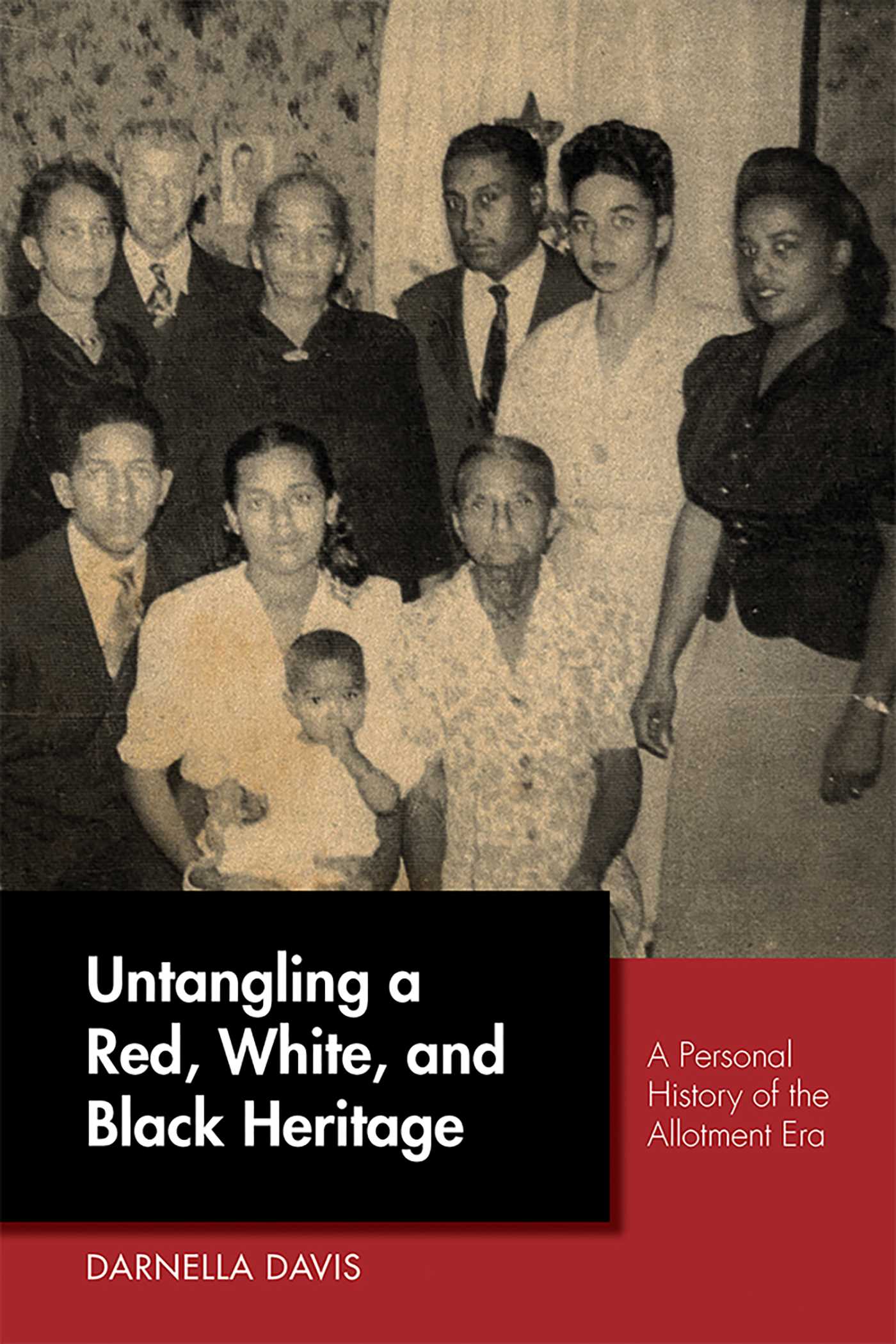
Examining the legacy of racial mixing in Indian Territory through the land and lives of two families, one of Cherokee Freedman descent and one of Muscogee Creek heritage, Darnella Davis's memoir writes a new chapter in the history of racial mixing on the frontier.
Product Details
- Publisher: UNM Press (November 1, 2018)
- Length: 312 pages
- ISBN13: 9780826359797
Browse Related Books
Raves and Reviews
As accessible as it is engrossing . . . Untangling a Red, White, and Black Heritage aids understanding of who the nation is, both in the past and in the present.--Brandy Thomas Wells, Chronicles of Oklahoma
Davis evocatively details family memories of the deeply problematic Dawes allotment process. . . . Family memories such as this one--highlighting the diversity of ways in which individuals chose to navigate this complex moment--demand scholarly attention.--Kendra T. Field, Western Historical Quarterly
Davis evocatively details family memories of the deeply problematic Dawes allotment process. . . . Family memories such as this one--highlighting the diversity of ways in which individuals chose to navigate this complex moment--demand scholarly attention.--Kendra T. Field, Western Historical Quarterly
Davis's book is part family genealogy, part academic text and a completely sobering look at how former black slaves of Native American tribes, and mixed-race descendants, have been treated. . . . In the end, the study is a fascinating exercise in personal identity and how we regard who we are.
--The Washington Post
The language and the methodology clearly link this book to what was once called 'the new social history.' Maybe it is time to revisit 'the new' and see the outcomes of that intellectual movement in how we 'do' and how we understand history. Untangling a Red, White, and Black Heritage would be a good place to start.
--The Independent Scholar
Resources and Downloads
High Resolution Images
-
Book Cover Image (jpg): Untangling a Red, White, and Black Heritage
Hardcover 9780826359797
Untangling a Red, White, and Black Heritage
A Personal History of the Allotment Era
Published by UNM Press
Distributed by Simon & Schuster
Join our mailing list!
By clicking 'Sign me up' I acknowledge that I have read and agree to the privacy policy and terms of use.