
Get our latest staff recommendations, award news and digital catalog links right to your inbox.
Island Creatures
Table of Contents
About The Book
A Golden Kite Award Winner for Young Adult Fiction
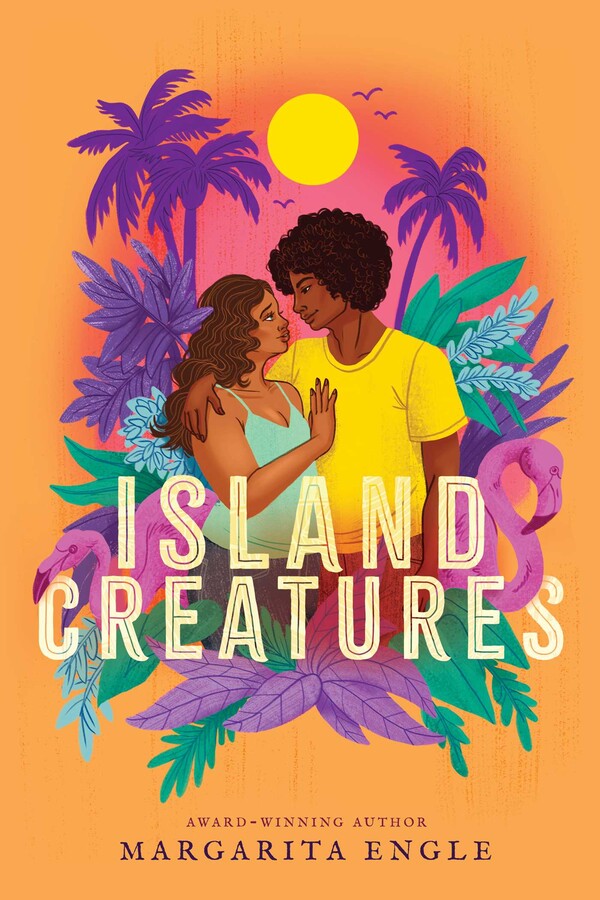
From award-winning author Margarita Engle comes a “[f]anciful, hopeful, and heartfelt” (Kirkus Reviews) love story told in verse about childhood friends, once lost and now reconnected, and their fight to protect endangered animals.
Every day, Vida reads to the creatures at the wildlife rescue center and dreams of her childhood in Cuba, where she and her best friend Adán adventured through the island rescuing animals from harm. Unbeknownst to her, Adán has also moved to Florida and is feeling trapped in his new home, buffeted by the stormy fights between his abuelo and papi. When a chance encounter with a captive fox leads to their reunion, Vida and Adán are able to find refuge from the cruelty that surrounds them in their soaring, rekindled romance.
Their love reaches new heights as they work together at the zoo that rescues rare species, but soon they realize that this peace is only temporary. Much like the wildlife they want to protect, Vida and Adán are caught in a cycle of distrust and heartlessness. As old family grudges and painful memories come to light, can they and their families learn to heal and forgive each other for a brighter, kinder future?
From award-winning author Margarita Engle comes a “[f]anciful, hopeful, and heartfelt” (Kirkus Reviews) love story told in verse about childhood friends, once lost and now reconnected, and their fight to protect endangered animals.
Every day, Vida reads to the creatures at the wildlife rescue center and dreams of her childhood in Cuba, where she and her best friend Adán adventured through the island rescuing animals from harm. Unbeknownst to her, Adán has also moved to Florida and is feeling trapped in his new home, buffeted by the stormy fights between his abuelo and papi. When a chance encounter with a captive fox leads to their reunion, Vida and Adán are able to find refuge from the cruelty that surrounds them in their soaring, rekindled romance.
Their love reaches new heights as they work together at the zoo that rescues rare species, but soon they realize that this peace is only temporary. Much like the wildlife they want to protect, Vida and Adán are caught in a cycle of distrust and heartlessness. As old family grudges and painful memories come to light, can they and their families learn to heal and forgive each other for a brighter, kinder future?
Reading Group Guide
Join our mailing list! Get our latest staff recommendations, award news and digital catalog links right to your inbox.
By clicking 'Sign me up' I acknowledge that I have read and agree to the privacy policy and terms of use.
Reading Group Guide
Island Creatures
By Margarita Engle
About the Book
As children, Vida and Adán rescued vulnerable animals in central Cuba until illness, political strife, and natural disasters split them up. Ten years later, they reconnect in Florida through a wildlife rescue center and a feminist book club with Adán’s sisters. Along with renewed trust and bravery, Vida and Adán explore their romance until a family grudge threatens to separate them forever. Can their love survive the violence that surrounds them and their animal friends?
Discussion Questions
1. What is the significance of the main characters’ names? Why does it matter that they both had different names as teenagers?
2. Luci contracted polio because her parents chose not to vaccinate her. Adán claims they made this decision because of anti-vaccination conspiracy theories learned “in the mythically free US / where anyone can spread false rumors / and there’s no way to identify the truth.” (p. 47) As a group, discuss what Adán thought on this topic and whether you agree. What are some examples of misinformation, and how can you identify it? What kinds of resources should you use to learn about an issue?
3. Vida decides to share her experience of sexual assault with Adán. Why does she trust him?
4. After Vida kisses Adán and gains back some of her confidence, she thinks, “Courage is like one of those extinct species / suddenly rediscovered alive.” (p. 69) Think of a moment when you felt you lacked courage or a time when you felt extra brave. Discuss this experience with a partner, and share how you think courage is built.
5. Adán is frustrated by his father’s and grandfather’s behavior especially when it harms women and children. What are some ways Adán counteracts the machismo culture he was raised in? Women and girls experience more negative effects of sexism, but so do men, boys, and other genders. What are examples of how sexism affects each gender differently? What current events demonstrate that women and girls are being punished like Vida describes in the poem, “STEMinism” on page 77?
6. In pairs, discuss your thoughts about the “Masculinidades” art created by Cuban photographer Monik Molinet. How does it make you feel when you read about it? (p. 83) If possible, present some of the images to the group or class, and debate the artist’s meaning. Is art enough to change people’s minds about a certain topic? What do you think is the most effective way to make social change? Explain your answers and include examples from the book that may support your thoughts.
7. Before Adán’s surprise party, Vida is picking an outfit and wonders, “Will his parents and abuelos hate me / if the first time I meet them / I look / sexy?” (p. 91) Why does she think this? Use examples from the text or your personal experiences to explain your answer.
8. Why do Cubans in Florida hate exiles that return to the island? Use examples from the text to answer and explain whether you think their feelings are justified.
9. In pairs, share how you felt reading Adán’s abuelo’s reaction toward Rita. How would you have reacted if you’d witnessed this? Is there a correct way to react as a bystander? Explain.
10. Rita shares with Vida that she “doesn’t expect anyone to forgive her / for that early work, the articles that resulted / in suffering instead of government reform.” (p. 105) Why does Rita need to be forgiven for the government’s actions? Explain your answer using examples from the book or even your own experiences. Have you ever felt at fault for something out of your control? Share with the class.
11. In “Melancholy Birthday,” we learn that “each creature in this refuge / has suffered because of humans.” (p. 153) In small groups, discuss why you think humans hurt animals, using personal anecdotes, research, and examples from the book to support your claims. What are some ways people accidentally hurt animals, and how can someone help, even if they don’t have access to an animal rescue or sanctuary?
12. Vida suspects that Chet and the other boys got away with attempted rape because “influence is respected / more than facts.” (p. 171) As a class, discuss how privilege can derail justice. What are examples from current events where people with wealth or other privileges have not received consequences for the harm they have caused? What can be done to change this?
13. Discuss how the memories in between chapters relate to the main story. What purpose do these italicized poems serve?
14. Luci and Vida discuss careers and Dr. Lila Miller, the first Black woman to graduate from the Cornell University College of Veterinary Medicine. Dr. Miller’s journey was full of strife because of her identity as a Black woman. Luci and Vida are both girls of color, and Luci also has a disability. Think about your own identities and how they may affect your life. In pairs, share your experiences. What barriers may you come up against in your future? What gives you the motivation to persevere? What resources are available to help you succeed?
15. Instead of building resentment about her illness or toward her family, Luci remains generally positive and even has an idea for reconciling with her abuelo. Why do you think she is able to remain so optimistic? Explain your answer.
16. What was the final straw that caused the females of Adán’s family to change the locks on the door? Why do you think they didn’t do it sooner?
17. Vida decides to include a self-portrait in her rebuilt exhibit to show she is a survivor. Find examples in the book that showcase the similarities between Vida and the endangered animal survivors.
18. Discuss the symbolism of the animals mentioned in the story. How do the animals connect to the actions and emotions in the sections where they’re referenced?
Extension Activities
1. Write a poem about who you are, like Vida was assigned in her English class.
2. Think about all the beautiful images created by Vida’s well-timed photographs and vivid descriptions throughout Island Creatures. Choose a poem written by one of the poets listed in the book, and create an image that represents it. You can take a photograph, build a digital collage, make a painting, or create a collage using magazine clippings.
3. Plan your own Feminist Book Club. Choose a feminist topic and find a book that fits the theme. Then read the book and craft at least ten discussion questions you would ask in the book discussion.
4. Vida loves etymology and frequently thinks about the origin of different words. Considering that the grudge Adán’s abuelo has against Rita stemmed from the power of words and the censorship of the newspaper, look up the etymology of censorship. How does censorship appear in current events? Why does censorship exist? Write a reflection essay answering these questions.
5. Adán feels he has no choice but to break up with Vida, and this causes a major turning point in the book. Imagine Adán had chosen to defy his abuelo sooner. How would the story change? Draft an outline of your revised story, and write at least three new chapters that set up your changes.
6. Vida and Adán teach campers about endangered species. Research organizations in your area that support wildlife conservation, and contact them to learn about ways to become involved. Alternatively, select an endangered species and research the different organizations that exist worldwide to protect them. How can you become involved from a distance?
7. Help Vida restore her exhibit. Choose three endangered animals, find compelling photographs, and create brief statements to explain why conservation for them matters.
Note: Page numbers refer to the hardcover edition of this title.
Guide written by Cynthia Medrano, Librarian at the Highland Park Public Library.
This guide has been provided by Simon & Schuster for classroom, library, and reading group use. It may be reproduced in its entirety or excerpted for these purposes. For more Simon & Schuster guides and classroom materials, please visit simonandschuster.net/m/prek12-teachers-librarians/teaching-resources.
Island Creatures
By Margarita Engle
About the Book
As children, Vida and Adán rescued vulnerable animals in central Cuba until illness, political strife, and natural disasters split them up. Ten years later, they reconnect in Florida through a wildlife rescue center and a feminist book club with Adán’s sisters. Along with renewed trust and bravery, Vida and Adán explore their romance until a family grudge threatens to separate them forever. Can their love survive the violence that surrounds them and their animal friends?
Discussion Questions
1. What is the significance of the main characters’ names? Why does it matter that they both had different names as teenagers?
2. Luci contracted polio because her parents chose not to vaccinate her. Adán claims they made this decision because of anti-vaccination conspiracy theories learned “in the mythically free US / where anyone can spread false rumors / and there’s no way to identify the truth.” (p. 47) As a group, discuss what Adán thought on this topic and whether you agree. What are some examples of misinformation, and how can you identify it? What kinds of resources should you use to learn about an issue?
3. Vida decides to share her experience of sexual assault with Adán. Why does she trust him?
4. After Vida kisses Adán and gains back some of her confidence, she thinks, “Courage is like one of those extinct species / suddenly rediscovered alive.” (p. 69) Think of a moment when you felt you lacked courage or a time when you felt extra brave. Discuss this experience with a partner, and share how you think courage is built.
5. Adán is frustrated by his father’s and grandfather’s behavior especially when it harms women and children. What are some ways Adán counteracts the machismo culture he was raised in? Women and girls experience more negative effects of sexism, but so do men, boys, and other genders. What are examples of how sexism affects each gender differently? What current events demonstrate that women and girls are being punished like Vida describes in the poem, “STEMinism” on page 77?
6. In pairs, discuss your thoughts about the “Masculinidades” art created by Cuban photographer Monik Molinet. How does it make you feel when you read about it? (p. 83) If possible, present some of the images to the group or class, and debate the artist’s meaning. Is art enough to change people’s minds about a certain topic? What do you think is the most effective way to make social change? Explain your answers and include examples from the book that may support your thoughts.
7. Before Adán’s surprise party, Vida is picking an outfit and wonders, “Will his parents and abuelos hate me / if the first time I meet them / I look / sexy?” (p. 91) Why does she think this? Use examples from the text or your personal experiences to explain your answer.
8. Why do Cubans in Florida hate exiles that return to the island? Use examples from the text to answer and explain whether you think their feelings are justified.
9. In pairs, share how you felt reading Adán’s abuelo’s reaction toward Rita. How would you have reacted if you’d witnessed this? Is there a correct way to react as a bystander? Explain.
10. Rita shares with Vida that she “doesn’t expect anyone to forgive her / for that early work, the articles that resulted / in suffering instead of government reform.” (p. 105) Why does Rita need to be forgiven for the government’s actions? Explain your answer using examples from the book or even your own experiences. Have you ever felt at fault for something out of your control? Share with the class.
11. In “Melancholy Birthday,” we learn that “each creature in this refuge / has suffered because of humans.” (p. 153) In small groups, discuss why you think humans hurt animals, using personal anecdotes, research, and examples from the book to support your claims. What are some ways people accidentally hurt animals, and how can someone help, even if they don’t have access to an animal rescue or sanctuary?
12. Vida suspects that Chet and the other boys got away with attempted rape because “influence is respected / more than facts.” (p. 171) As a class, discuss how privilege can derail justice. What are examples from current events where people with wealth or other privileges have not received consequences for the harm they have caused? What can be done to change this?
13. Discuss how the memories in between chapters relate to the main story. What purpose do these italicized poems serve?
14. Luci and Vida discuss careers and Dr. Lila Miller, the first Black woman to graduate from the Cornell University College of Veterinary Medicine. Dr. Miller’s journey was full of strife because of her identity as a Black woman. Luci and Vida are both girls of color, and Luci also has a disability. Think about your own identities and how they may affect your life. In pairs, share your experiences. What barriers may you come up against in your future? What gives you the motivation to persevere? What resources are available to help you succeed?
15. Instead of building resentment about her illness or toward her family, Luci remains generally positive and even has an idea for reconciling with her abuelo. Why do you think she is able to remain so optimistic? Explain your answer.
16. What was the final straw that caused the females of Adán’s family to change the locks on the door? Why do you think they didn’t do it sooner?
17. Vida decides to include a self-portrait in her rebuilt exhibit to show she is a survivor. Find examples in the book that showcase the similarities between Vida and the endangered animal survivors.
18. Discuss the symbolism of the animals mentioned in the story. How do the animals connect to the actions and emotions in the sections where they’re referenced?
Extension Activities
1. Write a poem about who you are, like Vida was assigned in her English class.
2. Think about all the beautiful images created by Vida’s well-timed photographs and vivid descriptions throughout Island Creatures. Choose a poem written by one of the poets listed in the book, and create an image that represents it. You can take a photograph, build a digital collage, make a painting, or create a collage using magazine clippings.
3. Plan your own Feminist Book Club. Choose a feminist topic and find a book that fits the theme. Then read the book and craft at least ten discussion questions you would ask in the book discussion.
4. Vida loves etymology and frequently thinks about the origin of different words. Considering that the grudge Adán’s abuelo has against Rita stemmed from the power of words and the censorship of the newspaper, look up the etymology of censorship. How does censorship appear in current events? Why does censorship exist? Write a reflection essay answering these questions.
5. Adán feels he has no choice but to break up with Vida, and this causes a major turning point in the book. Imagine Adán had chosen to defy his abuelo sooner. How would the story change? Draft an outline of your revised story, and write at least three new chapters that set up your changes.
6. Vida and Adán teach campers about endangered species. Research organizations in your area that support wildlife conservation, and contact them to learn about ways to become involved. Alternatively, select an endangered species and research the different organizations that exist worldwide to protect them. How can you become involved from a distance?
7. Help Vida restore her exhibit. Choose three endangered animals, find compelling photographs, and create brief statements to explain why conservation for them matters.
Note: Page numbers refer to the hardcover edition of this title.
Guide written by Cynthia Medrano, Librarian at the Highland Park Public Library.
This guide has been provided by Simon & Schuster for classroom, library, and reading group use. It may be reproduced in its entirety or excerpted for these purposes. For more Simon & Schuster guides and classroom materials, please visit simonandschuster.net/m/prek12-teachers-librarians/teaching-resources.
About The Author
Photograph (c) Shevaun Williams
Margarita Engle is the Cuban American author of many books including the verse novels Rima’s Rebellion; Your Heart, My Sky; With a Star in My Hand; The Surrender Tree, a Newbery Honor winner; The Lightning Dreamer; and Wild Dreamers, a Pura Belpré Young Adult Author Honor book. Her verse memoirs include Soaring Earth and Enchanted Air, which received the Pura Belpré Award, a Walter Dean Myers Award Honor, and was a finalist for the YALSA Award for Excellence in Nonfiction, among others. Her picture books include Drum Dream Girl, Dancing Hands, and The Flying Girl. Visit her at MargaritaEngle.com.
Product Details
- Publisher: Atheneum Books for Young Readers (July 8, 2025)
- Length: 272 pages
- ISBN13: 9781665959971
- Grades: 7 and up
- Ages: 12 - 99
Browse Related Books
Raves and Reviews
“Lush yet careful language packs intentionality into few words without sacrificing nuance or character complexity. Many endangered animals, discussions of best zoological practices, and meticulously detailed science juxtapose playful layouts and creative poetic form.”
– Booklist
“Engle’s verse narrative boasts rich language steeped in nature’s spiritual beauty and the reciprocal connection between humans and animals. A sweet slow-burner with tight, evocative poems, this tale of adolescent love glows.”
– Kirkus Reviews
"Engle illuminates the unintended effects of past events on future generations in a moving love story rooted in two teens’ devotion to wildlife and the dangers of climate change.”
– Publishers Weekly
Awards and Honors
- Golden Kite Award Honor
Resources and Downloads
High Resolution Images
-
Book Cover Image (jpg): Island Creatures
eBook 9781665959971
-
Author Photo (jpg): Margarita Engle Photograph (c) Shevaun Williams(0.1 MB)
Any use of an author photo must include its respective photo credit
Island Creatures
Join our mailing list!
By clicking 'Sign me up' I acknowledge that I have read and agree to the privacy policy and terms of use.