Get our latest staff recommendations, award news and digital catalog links right to your inbox.
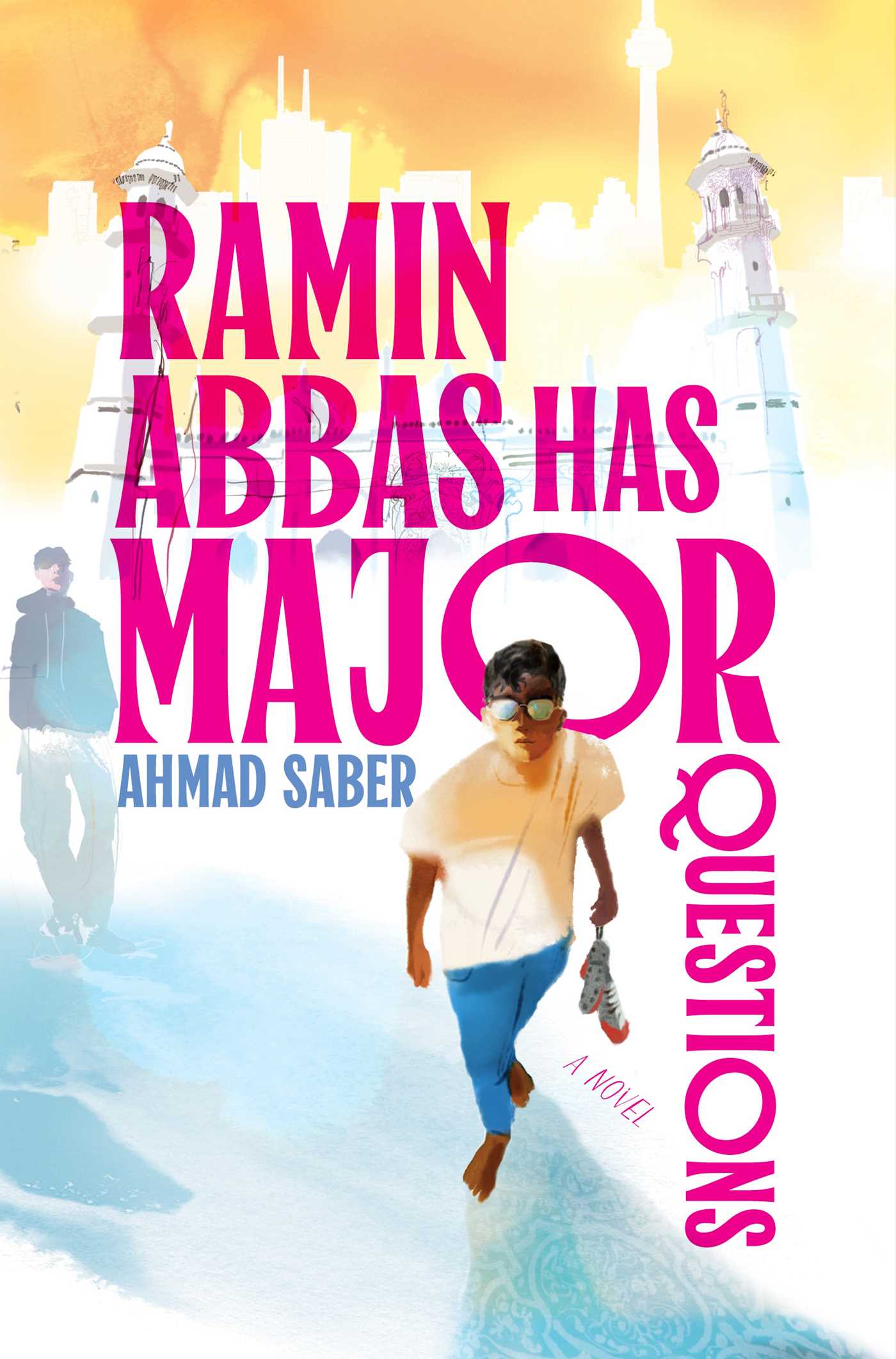
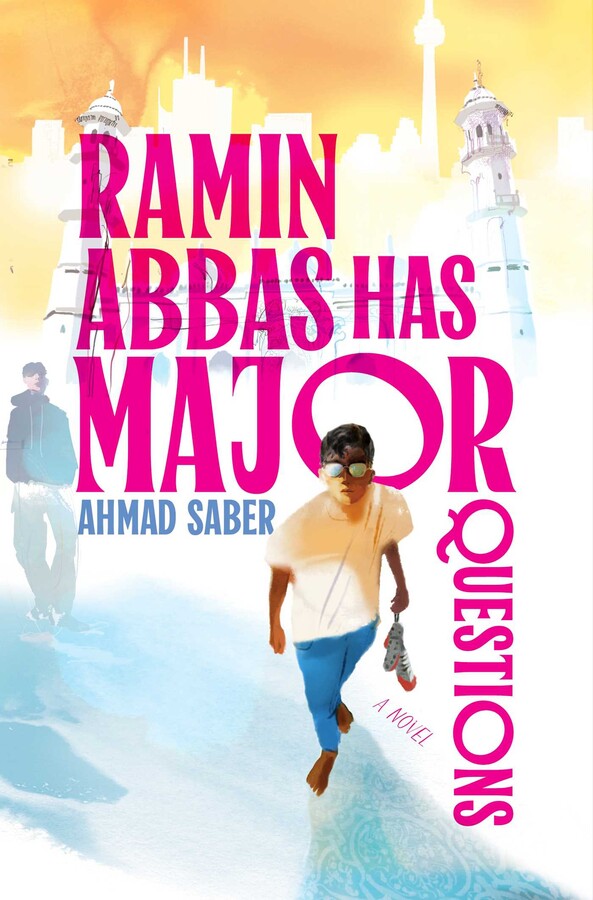
Ramin Abbas Has MAJOR Questions
By Ahmad Saber
Table of Contents
About The Book
“An ode to the courage it takes to live with authenticity.” —Kirkus Reviews (starred review)
A “sparkling…ambitious, thoughtful, and funny” (Teen Vogue) debut novel about a gay Muslim teen who has to choose between being true to himself or his faith—and his realization that maybe they aren’t as separate as he thought.
Ramin Abbas has spent his whole life obeying his parents, his Imam, and, of course, Allah—no questions asked. But when he starts crushing on the ridiculously handsome captain of the soccer team, so many things he’d always been so sure about are becoming questions:
1. Music is haram. But what if the Wicked soundtrack is the only thing keeping you sane because you’re being forced to play on the soccer team? With Captain Handsome?!
2. A boy crush is double haram, and Ramin’s parents will never accept it. But can he really be the only Muslim on Earth who feels this way?
3. Allah is merciful and makes no mistakes. Then isn’t Ramin just the way Allah intended him to be?
And so why should living your truth but losing everything—or living a lie and losing yourself—have to be a choice?!
A “sparkling…ambitious, thoughtful, and funny” (Teen Vogue) debut novel about a gay Muslim teen who has to choose between being true to himself or his faith—and his realization that maybe they aren’t as separate as he thought.
Ramin Abbas has spent his whole life obeying his parents, his Imam, and, of course, Allah—no questions asked. But when he starts crushing on the ridiculously handsome captain of the soccer team, so many things he’d always been so sure about are becoming questions:
1. Music is haram. But what if the Wicked soundtrack is the only thing keeping you sane because you’re being forced to play on the soccer team? With Captain Handsome?!
2. A boy crush is double haram, and Ramin’s parents will never accept it. But can he really be the only Muslim on Earth who feels this way?
3. Allah is merciful and makes no mistakes. Then isn’t Ramin just the way Allah intended him to be?
And so why should living your truth but losing everything—or living a lie and losing yourself—have to be a choice?!
Excerpt
Chapter One ONE
I was making an origami heart when my parents broke the news.
Literally two weeks before eighth grade finished, they announced I would NOT be going to Lone Pine High School—they’d enrolled me at Hikma High, Toronto’s top-ranked private Muslim high school, instead. According to them, the public school system is way too rooted in “Western values.” They were worried that I’d end up engaging in unprotected premarital hand-holding with a girl. I’m pretty sure puberty doesn’t care if you go to a religious school. And my parents didn’t have to worry because I’d have worn gloves, but they don’t trust me with anything.
So, obviously, I didn’t want to change schools, didn’t wanna have to leave my friends, who were pretty much all going to Lone Pine High. But when my new principal said on orientation day that Hikma had the highest rate in the entire province of admissions into top colleges (and eventually to medical school!), I stopped whining. My parents left everything behind and crossed two continents and an ocean to move here, all the way from Pakistan. So the prospect of becoming a doctor someday, of making their sacrifices worth it, made my own move—just across the city—feel slightly less awful.
As it turns out, an Islamic school isn’t that different from a public school. Yes, we have lockers, and no, we don’t store bombs in them. We don’t have to wear uniforms, either, but we do have to follow the Islamic dress code: hijabs and loose, full-body clothes for the sisters, and either pants or below-the-knee shorts for the brothers. Another glaring difference is how guys and girls have to stay apart. We can be in the same classroom, but the brothers have to sit on one side and the sisters on the other. The code of conduct also stipulates “no unnecessary socializing” between the genders. Which means I can only be around the brothers. We’re a small school, maybe two hundred total, so you end up seeing the same guys over and over. Some days that can be torture.
Take today for example. Dude energy is crackling through the hallway like lightning. It’s practically raining testosterone. Last night was fight night. UFC came to Toronto, and I am probably the only guy in the entire school (possibly the entire city) who didn’t watch. But it sure fired up all these guys.
Assim Qureshi proves my point as I’m hurtling down to my locker. He’s leaning against the wall, one sneaker pressed on the chipped paint, hands in the pockets of his black hoodie.
“Bruh!” he shouts to Habib, one of the soccer jocks, who is typing on his phone with force that seems excessive. “Told you Holloway was gonna get his ass handed to him. He looked like a little girl!”
Habib looks up. “Try saying that to his face, bro! You wouldn’t last a minute in the Octagon.”
I try not to roll my eyes, but they roll themselves anyway. I mean, if UFC stood for United Fans of Cats (the musical!), then I’d maybe stick around. Or, if I could brave up enough to remind them that the UFC also has badass girl fighters who can beat the shit out of guys like Assim and Habib in, like, three seconds. But I sneak past them, hoping to God that Assim doesn’t see me—it’s way too early on a Monday morning to have to deal with Assim Qureshi.
Rows of pastel-blue lockers line the hallway bustling with backpacked students. A soapy, faintly citrus smell floats in the air, and the freshly mopped vinyl floor reflects the fluorescent ceiling lights. Two hijabi sisters stand by the water fountain near my locker, giggling like they’re at a Hasan Minhaj show. Based on prior eavesdropping experience, they’re also into musicals. Pretty sure they’re gushing over Darling Poppy Jones today—the show just opened in Toronto.
One of them, Sister Nadia, stops giggling when she notices me.
I smile and wave.
But Nadia doesn’t even wave, let alone smile back.
I look down and pass her and her bestie without saying anything.
What was I expecting? Guys are supposed to lower their gaze around girls. I guess the sisters have no clue that I… I’m not at all like the other brothers. I just want to be friends. It’d be sweet to have fiery discussions about the species-ist policies in Wicked or get some tips on foundation and concealers. The accident that fractured my arm also left a scar under my eye, and while I’d rather get a head transplant than wear makeup to school, I’m thinking about trying concealer when I go to college.
But no big deal. I’m pretty used to the cold shoulder. Plus, if Allah wants guys and girls to observe the Islamic code of modesty around one another, then I need to stop complaining.
As I’m twisting the dials on the neon-green padlock on my locker (which, I’ll admit right now, is inspired by Wicked) rapid footsteps approach from behind, and then a sharp-nailed finger pokes me in the lower back. There’s only one person in the entire school who’d do that. Assim freakin’ Qureshi. In my head I call him Ass-im. Because he’s an asshole.
“Oh, hey, Ramen Noodles!” he says so loudly, it could be grounds for an ear damage lawsuit.
Of course I want to sublimate into thin air right now, but I yank open the locker, hang my parka, and turn to face him.
“Avoiding me, are we?” He’s spraying saliva all over.
“Uh… no?” I take a step back to avoid the spit shower. “Everything okay with the English essay? ’Cause I swear I didn’t plagiarize it off my own.”
“Nah, bro.” He takes off his beanie, whorls of thick hair mushrooming over his head like an atomic cloud. “The essay was good. It’s about somethin’ else.” He leans against my neighbor’s locker, a sly smirk on his face.
I drop two books into my backpack. “Class is about to start. Can we talk later?” The supersized bell just above my locker is spiking my blood with anxiety.
“He picked you.” Assim runs his eyes up and down, assessing me from head to toe, making sure to sear judgment into my skin.
I zip my backpack and fling it onto one shoulder. “Who picked me for what?”
He clicks his tongue. “Wait, Jamal hasn’t told you yet?”
“Dude, I have no clue what you’re talking about.”
“Hmm. Funny how you don’t know the first thing about soccer,” he says, making sure to narrow his eyes. “And now you’re on our team.”
Hold on. Me? I’m tempted to look around. Is he talking to someone else? The only things I get picked for are doing the dishes and taking out the trash after dinner.
“Hey, don’t worry,” Assim says, offering fake sympathy. “You can just say no and give back Ahmed’s spot. The team needs him.”
I’m pretty sure Assim used the word “soccer.” I’d rather be forced to listen to death metal for the rest of my life than play soccer.
“Here he comes!” Assim now nods at a man in a gray suit briskly approaching. “Listen up, Ramen. I’d stay away from soccer if I were you.” Then he does the I’m-watching-you thing with two fingers and takes off.
Leaving me in the presence of Lucifer.
I mean, Mr. Jamal, our principal. His overly pronounced widow’s peak could pass for a pair of horns, but that’s not why I call him Lucifer. It’s his obsession with rules and micromanaging every single student’s life. I’m surprised he hasn’t hung a banner in the atrium that reads, “Welcome to Hikma High. Leave mediocrity at the doorstep.”
“Ramin Noor Abbas. We have something urgent to discuss.” Mr. Jamal pulls out his infamous green fountain pen and a small notepad from his front pocket. “Meet me in my office, um… let’s see… after the morning sermon. I’ll have fifteen minutes.”
“After the sermon?” I protest. “I’ll miss astronomy!”
Mr. Jamal looks up from his notepad. “Are you going to land humanity on Mars?”
“Uh, no?”
“So it doesn’t matter if you miss astronomy class. This is more important.”
My toes curl inside my Chucks. “Is this about… soccer?”
Mr. Jamal says, “So you already know,” just as the bell clangs. “See you in my office.”
He flips the notepad shut and heads toward the gym, the proverbial watering hole where two hundred students gather each morning to fill up on faith.
By the time I walk in, clutching the Holy Quran to my heart and praying that this soccer thing isn’t a thing (because what the HELL?), most of the bleacher seats cascading down the walls in waterfalls of blue plastic have been claimed. The sisters sit on one side of the gym, the brothers on the other. Everyone’s got their Holy Qurans open in front of them on the foldable lecterns attached to the bleacher chairs. Mr. Jamal stands at the front podium, his copy also open on a wooden lectern.
I clamber to a vacant spot, unzip mine from its shimmering golden case, kiss it the way Mom taught me, and gently place it on my lectern.
Before Mr. Jamal can begin, though, Sister Nadia, one of the giggly girls who ignored me earlier, cuts across the stage and basically snatches the microphone from him. She gets away with it because she’s the valedictorian and the student council president.
“Assalamu alaikum, dear sisters and brothers,” she says. “This is a friendly reminder that our annual Eid party is tomorrow morning, inshallah, in collaboration with the Grand Mosque. School will be off starting tomorrow for Eid holidays and resumes next Monday. Stay blessed and may Allah accept all your prayers and worship on this last day of Ramadan!”
Mr. Jamal reclaims the mic as soon as she’s done. “And don’t forget about the Eid prayer service, folks. It’ll be held before the party.”
He then moves on to the daily Quran recitation.
Today we’re reading from Surah Al-An’am. The longer the recitation goes on, the more my guilt meter fills up. Allah’s words deserve my full attention, but my brain won’t shut up about soccer. I mean, what the heck is going on? What did Assim even mean? The mere thought of playing pelts me with a hailstorm of bad memories. Like, I haven’t kicked a ball since I was ten. And when I used to play with my dad and a bunch of kids from the mosque, I’d excelled at making an ass out of myself. Why would I be put on the soccer team? And hello, how about asking if I wanted to?! Like, I can’t be scrambling around a soccer field like a headless chicken. The team would laugh me off to my grave.
The recitation!
Focus, Ramin, focus.
I run a finger over the word “Allah” etched in Arabic on my lectern. Not quite as effective as folding origami, but it still helps calm me down. Mr. Jamal finishes the recitation and moves on to the sermon.
Today’s topic is how to prepare for life after Muslim school. We’re obviously sheltered in a cocoon here, and Mr. Jamal is warning about the vices of modern Western society that are just waiting to rain down on us like frogs on the people of Moses the minute we graduate. This is exactly why my parents wanted me to stay here in Toronto for college. It wasn’t until I explained how my strategy to go to college in America would open so many more doors—drastically increasing my chances of getting into medical schools in both Canada and the US—that they got on board. The consent, however, came with two nonnegotiables: (1) I must join the Muslim Students Association at whichever college I end up at, and, (2) I have to receive a full ride, presumably so my parents won’t have to sell their kidneys to send me to college in America.
We settled on applying to NYU, Tufts, and Brown. Of course, the backup was University of Toronto, which I’d already gotten an early offer from. I wasn’t gonna get into Brown, and my heart wasn’t really into moving to Boston, so I hyperfocused on NYU and made my application deliciously irresistible. Everyone applying would have straight A’s and a 1550 on the SAT. I had to stand out in other ways.
Killer letters of recommendation, including one from a city councillor for initiating a community street cleanup service?
Check.
Founding the first ever origami art club at his school, which won an award from the school district’s office?
Check.
Solid volunteering experience with the Patient Pals program at the Hospital for Sick Children (a.k.a. SickKids) and getting featured on the local news?
Check.
Answering the optional supplemental essay question “In the age of science and reason, does man still need God?” in ONLY 250 words?
Check.
Rescuing abandoned puppies from the streets of India?
I mean, I’d do it if required. Short of homicide, I’d do ANYTHING for New York. It’s New freakin’ York! Times Square and the skyscrapers! Central Park in the snow! Broadway, home of Wicked! If I could marry a city, NYC would surely be it.
And then there’s the real reason I need to leave Toronto. Here, I have to watch Heartstopper and Love, Victor with my bedroom door locked. Here, I have to listen to haram Broadway songs in secret. Here, I can only dance when no one’s home. Here, I shove down my true feelings until I don’t feel them anymore.
I’m hoping life in New York will be… different. Even though I don’t think I’m ever coming out of the closet to members of the general public, at least I wouldn’t have to pretend full-time that everything’s okay. I’d be on my own. Free to think for myself without interference from my parents. Free to come face-to-face with my questions. Questions like, How could someone be queer and Muslim at the same time? Why am I like this? Nothing happens without Allah’s will, right? So then why would He make me like this?
I don’t know. When I’m alone in New York, maybe—just maybe—I’ll figure out the answers.
I was making an origami heart when my parents broke the news.
Literally two weeks before eighth grade finished, they announced I would NOT be going to Lone Pine High School—they’d enrolled me at Hikma High, Toronto’s top-ranked private Muslim high school, instead. According to them, the public school system is way too rooted in “Western values.” They were worried that I’d end up engaging in unprotected premarital hand-holding with a girl. I’m pretty sure puberty doesn’t care if you go to a religious school. And my parents didn’t have to worry because I’d have worn gloves, but they don’t trust me with anything.
So, obviously, I didn’t want to change schools, didn’t wanna have to leave my friends, who were pretty much all going to Lone Pine High. But when my new principal said on orientation day that Hikma had the highest rate in the entire province of admissions into top colleges (and eventually to medical school!), I stopped whining. My parents left everything behind and crossed two continents and an ocean to move here, all the way from Pakistan. So the prospect of becoming a doctor someday, of making their sacrifices worth it, made my own move—just across the city—feel slightly less awful.
As it turns out, an Islamic school isn’t that different from a public school. Yes, we have lockers, and no, we don’t store bombs in them. We don’t have to wear uniforms, either, but we do have to follow the Islamic dress code: hijabs and loose, full-body clothes for the sisters, and either pants or below-the-knee shorts for the brothers. Another glaring difference is how guys and girls have to stay apart. We can be in the same classroom, but the brothers have to sit on one side and the sisters on the other. The code of conduct also stipulates “no unnecessary socializing” between the genders. Which means I can only be around the brothers. We’re a small school, maybe two hundred total, so you end up seeing the same guys over and over. Some days that can be torture.
Take today for example. Dude energy is crackling through the hallway like lightning. It’s practically raining testosterone. Last night was fight night. UFC came to Toronto, and I am probably the only guy in the entire school (possibly the entire city) who didn’t watch. But it sure fired up all these guys.
Assim Qureshi proves my point as I’m hurtling down to my locker. He’s leaning against the wall, one sneaker pressed on the chipped paint, hands in the pockets of his black hoodie.
“Bruh!” he shouts to Habib, one of the soccer jocks, who is typing on his phone with force that seems excessive. “Told you Holloway was gonna get his ass handed to him. He looked like a little girl!”
Habib looks up. “Try saying that to his face, bro! You wouldn’t last a minute in the Octagon.”
I try not to roll my eyes, but they roll themselves anyway. I mean, if UFC stood for United Fans of Cats (the musical!), then I’d maybe stick around. Or, if I could brave up enough to remind them that the UFC also has badass girl fighters who can beat the shit out of guys like Assim and Habib in, like, three seconds. But I sneak past them, hoping to God that Assim doesn’t see me—it’s way too early on a Monday morning to have to deal with Assim Qureshi.
Rows of pastel-blue lockers line the hallway bustling with backpacked students. A soapy, faintly citrus smell floats in the air, and the freshly mopped vinyl floor reflects the fluorescent ceiling lights. Two hijabi sisters stand by the water fountain near my locker, giggling like they’re at a Hasan Minhaj show. Based on prior eavesdropping experience, they’re also into musicals. Pretty sure they’re gushing over Darling Poppy Jones today—the show just opened in Toronto.
One of them, Sister Nadia, stops giggling when she notices me.
I smile and wave.
But Nadia doesn’t even wave, let alone smile back.
I look down and pass her and her bestie without saying anything.
What was I expecting? Guys are supposed to lower their gaze around girls. I guess the sisters have no clue that I… I’m not at all like the other brothers. I just want to be friends. It’d be sweet to have fiery discussions about the species-ist policies in Wicked or get some tips on foundation and concealers. The accident that fractured my arm also left a scar under my eye, and while I’d rather get a head transplant than wear makeup to school, I’m thinking about trying concealer when I go to college.
But no big deal. I’m pretty used to the cold shoulder. Plus, if Allah wants guys and girls to observe the Islamic code of modesty around one another, then I need to stop complaining.
As I’m twisting the dials on the neon-green padlock on my locker (which, I’ll admit right now, is inspired by Wicked) rapid footsteps approach from behind, and then a sharp-nailed finger pokes me in the lower back. There’s only one person in the entire school who’d do that. Assim freakin’ Qureshi. In my head I call him Ass-im. Because he’s an asshole.
“Oh, hey, Ramen Noodles!” he says so loudly, it could be grounds for an ear damage lawsuit.
Of course I want to sublimate into thin air right now, but I yank open the locker, hang my parka, and turn to face him.
“Avoiding me, are we?” He’s spraying saliva all over.
“Uh… no?” I take a step back to avoid the spit shower. “Everything okay with the English essay? ’Cause I swear I didn’t plagiarize it off my own.”
“Nah, bro.” He takes off his beanie, whorls of thick hair mushrooming over his head like an atomic cloud. “The essay was good. It’s about somethin’ else.” He leans against my neighbor’s locker, a sly smirk on his face.
I drop two books into my backpack. “Class is about to start. Can we talk later?” The supersized bell just above my locker is spiking my blood with anxiety.
“He picked you.” Assim runs his eyes up and down, assessing me from head to toe, making sure to sear judgment into my skin.
I zip my backpack and fling it onto one shoulder. “Who picked me for what?”
He clicks his tongue. “Wait, Jamal hasn’t told you yet?”
“Dude, I have no clue what you’re talking about.”
“Hmm. Funny how you don’t know the first thing about soccer,” he says, making sure to narrow his eyes. “And now you’re on our team.”
Hold on. Me? I’m tempted to look around. Is he talking to someone else? The only things I get picked for are doing the dishes and taking out the trash after dinner.
“Hey, don’t worry,” Assim says, offering fake sympathy. “You can just say no and give back Ahmed’s spot. The team needs him.”
I’m pretty sure Assim used the word “soccer.” I’d rather be forced to listen to death metal for the rest of my life than play soccer.
“Here he comes!” Assim now nods at a man in a gray suit briskly approaching. “Listen up, Ramen. I’d stay away from soccer if I were you.” Then he does the I’m-watching-you thing with two fingers and takes off.
Leaving me in the presence of Lucifer.
I mean, Mr. Jamal, our principal. His overly pronounced widow’s peak could pass for a pair of horns, but that’s not why I call him Lucifer. It’s his obsession with rules and micromanaging every single student’s life. I’m surprised he hasn’t hung a banner in the atrium that reads, “Welcome to Hikma High. Leave mediocrity at the doorstep.”
“Ramin Noor Abbas. We have something urgent to discuss.” Mr. Jamal pulls out his infamous green fountain pen and a small notepad from his front pocket. “Meet me in my office, um… let’s see… after the morning sermon. I’ll have fifteen minutes.”
“After the sermon?” I protest. “I’ll miss astronomy!”
Mr. Jamal looks up from his notepad. “Are you going to land humanity on Mars?”
“Uh, no?”
“So it doesn’t matter if you miss astronomy class. This is more important.”
My toes curl inside my Chucks. “Is this about… soccer?”
Mr. Jamal says, “So you already know,” just as the bell clangs. “See you in my office.”
He flips the notepad shut and heads toward the gym, the proverbial watering hole where two hundred students gather each morning to fill up on faith.
By the time I walk in, clutching the Holy Quran to my heart and praying that this soccer thing isn’t a thing (because what the HELL?), most of the bleacher seats cascading down the walls in waterfalls of blue plastic have been claimed. The sisters sit on one side of the gym, the brothers on the other. Everyone’s got their Holy Qurans open in front of them on the foldable lecterns attached to the bleacher chairs. Mr. Jamal stands at the front podium, his copy also open on a wooden lectern.
I clamber to a vacant spot, unzip mine from its shimmering golden case, kiss it the way Mom taught me, and gently place it on my lectern.
Before Mr. Jamal can begin, though, Sister Nadia, one of the giggly girls who ignored me earlier, cuts across the stage and basically snatches the microphone from him. She gets away with it because she’s the valedictorian and the student council president.
“Assalamu alaikum, dear sisters and brothers,” she says. “This is a friendly reminder that our annual Eid party is tomorrow morning, inshallah, in collaboration with the Grand Mosque. School will be off starting tomorrow for Eid holidays and resumes next Monday. Stay blessed and may Allah accept all your prayers and worship on this last day of Ramadan!”
Mr. Jamal reclaims the mic as soon as she’s done. “And don’t forget about the Eid prayer service, folks. It’ll be held before the party.”
He then moves on to the daily Quran recitation.
Today we’re reading from Surah Al-An’am. The longer the recitation goes on, the more my guilt meter fills up. Allah’s words deserve my full attention, but my brain won’t shut up about soccer. I mean, what the heck is going on? What did Assim even mean? The mere thought of playing pelts me with a hailstorm of bad memories. Like, I haven’t kicked a ball since I was ten. And when I used to play with my dad and a bunch of kids from the mosque, I’d excelled at making an ass out of myself. Why would I be put on the soccer team? And hello, how about asking if I wanted to?! Like, I can’t be scrambling around a soccer field like a headless chicken. The team would laugh me off to my grave.
The recitation!
Focus, Ramin, focus.
I run a finger over the word “Allah” etched in Arabic on my lectern. Not quite as effective as folding origami, but it still helps calm me down. Mr. Jamal finishes the recitation and moves on to the sermon.
Today’s topic is how to prepare for life after Muslim school. We’re obviously sheltered in a cocoon here, and Mr. Jamal is warning about the vices of modern Western society that are just waiting to rain down on us like frogs on the people of Moses the minute we graduate. This is exactly why my parents wanted me to stay here in Toronto for college. It wasn’t until I explained how my strategy to go to college in America would open so many more doors—drastically increasing my chances of getting into medical schools in both Canada and the US—that they got on board. The consent, however, came with two nonnegotiables: (1) I must join the Muslim Students Association at whichever college I end up at, and, (2) I have to receive a full ride, presumably so my parents won’t have to sell their kidneys to send me to college in America.
We settled on applying to NYU, Tufts, and Brown. Of course, the backup was University of Toronto, which I’d already gotten an early offer from. I wasn’t gonna get into Brown, and my heart wasn’t really into moving to Boston, so I hyperfocused on NYU and made my application deliciously irresistible. Everyone applying would have straight A’s and a 1550 on the SAT. I had to stand out in other ways.
Killer letters of recommendation, including one from a city councillor for initiating a community street cleanup service?
Check.
Founding the first ever origami art club at his school, which won an award from the school district’s office?
Check.
Solid volunteering experience with the Patient Pals program at the Hospital for Sick Children (a.k.a. SickKids) and getting featured on the local news?
Check.
Answering the optional supplemental essay question “In the age of science and reason, does man still need God?” in ONLY 250 words?
Check.
Rescuing abandoned puppies from the streets of India?
I mean, I’d do it if required. Short of homicide, I’d do ANYTHING for New York. It’s New freakin’ York! Times Square and the skyscrapers! Central Park in the snow! Broadway, home of Wicked! If I could marry a city, NYC would surely be it.
And then there’s the real reason I need to leave Toronto. Here, I have to watch Heartstopper and Love, Victor with my bedroom door locked. Here, I have to listen to haram Broadway songs in secret. Here, I can only dance when no one’s home. Here, I shove down my true feelings until I don’t feel them anymore.
I’m hoping life in New York will be… different. Even though I don’t think I’m ever coming out of the closet to members of the general public, at least I wouldn’t have to pretend full-time that everything’s okay. I’d be on my own. Free to think for myself without interference from my parents. Free to come face-to-face with my questions. Questions like, How could someone be queer and Muslim at the same time? Why am I like this? Nothing happens without Allah’s will, right? So then why would He make me like this?
I don’t know. When I’m alone in New York, maybe—just maybe—I’ll figure out the answers.
Reading Group Guide
Join our mailing list! Get our latest staff recommendations, award news and digital catalog links right to your inbox.
By clicking 'Sign me up' I acknowledge that I have read and agree to the privacy policy and terms of use.
Reading Group Guide
Ramin Abbas Has MAJOR Questions
By Ahmad Saber
About the Book
Ramin Abbas is a gay Muslim teenager who has worked to hide his identity from everyone around him his whole life—his parents, his friends, his community, and all his peers at the Islamic school he attends. Now in his senior year of high school, he dreams of attending NYU and leaving his life of secrets behind. But when he is forced to join the soccer team to avoid failing because of a lack of PE credits, his entire life turns upside down. Grappling with a crush on the soccer team captain and the threat of having his identity made public by a peer, Ramin must finally take a look inward and look for answers to the many questions arising in his life.
Discussion Questions
1. How can religion be both a source of comfort and a source of struggle for LGBTQ+ youth? In what ways did Ramin’s faith trouble him while navigating his identity? At the end of the novel, he says to his parents, “‘I’ve made peace with Allah. Maybe you need to do the same.’” (Chapter forty) Who are the people in Ramin’s life that helped give him the courage to reach this peace, and how did they support him?
2. How does media representation influence how teens see themselves?
3. In the prologue, Ramin imagines his guilt and shame as a “two-headed monster living rent-free” in the back of his mind, constantly questioning all his decisions and pointing out potential sins. How does Ramin let the monster affect his behavior throughout the novel? How does he build up the courage to stand up against the monster?
4. How might different cultural or religious communities vary in how they understand LGBTQ+ identities? How might religious and cultural expectations affect how families respond to LGBTQ+ identities?
5. Describe Ramin’s relationship with his parents. Compare Ramin’s relationship with his parents to his relationship with his brother, Zayn. Do you think his parents are loving or harsh, or both? Explain your answers with in-text examples.
6. What does it mean to respect someone’s faith while also respecting their sexual orientation? How can people foster positive relationships if they do not share the same beliefs?
7. How might someone navigate having multiple identities (religious, cultural, sexual, etc.) at the same time? How did Ramin succeed in separating his identities? How did he struggle?
8. Ramin often found comfort in the music he listened to and the origami he created. Why do you think artistic expression might be an important outlet for people? As a group, talk about any artistic outlets you have, and why they feel important to you.
9. Ramin isn’t very athletic and doesn’t do well in his first soccer practice, so the team captain, Fahad, offers him private coaching sessions, which Ramin initially declines. Ramin explains again that he’s only on the team to earn his physical education hours, and Fahad replies, “‘This isn’t just about you.’” (Chapter fourteen) Consider how both Ramin and Fahad feel about this situation. Is one more “right” in their feelings? How so? How do you feel about performing certain obligations, especially if others do so willingly, such as a sport, community service, class, or project?
10. Islam teaches respect and empathy toward all. What are some ways peers can support someone who is struggling with acceptance from their family, community, or themselves?
11. When Ramin goes to Mufti Luqman to ask about the Halal-ness of being queer, he’s disappointed with the Imam’s answers. Luqman says resisting queer urges is like a test from Allah, and Ramin wonders why he must pass a test “every day of [his] entire life when [he] never chose to take the test to begin with.” (Chapter thirty) What parts of your religion or culture feel difficult to you? Is there someone you can reach out to for a similar debate or that you trust with your challenging questions? What parts of your religion or culture feel supportive to you?
12. Ramin was called Ramen Noodles and was teased in other ways by his peers. How can name-calling affect someone’s emotional and mental health?
13. Assim was blackmailing Ramin. What pressures or fears stopped Ramin from asking for help? In a situation where someone is being blackmailed, how can talking to a trusted adult help? How may it have helped Ramin?
14. Ramin blamed his parents’ lack of understanding of his identity on them being traditional and conservative. What role did community play in Ramin’s exploration and acceptance of his queer identity? Do you think a lack of open-mindedness can affect a person’s personal growth? Why or why not? How does one’s community help foster or stunt a person’s personal growth?
Extension Activities
1. Arrange a hands-on origami workshop where youth are introduced to origami designs based on varying skill levels. Incorporate timed origami creation challenges to increase engagement and motivation.
2. Ramin Abbas had a vision board for his life after high school. Make a vision board for how you imagine your life after high school will look like. Ramin was also very focused on what he needed to do to be admitted into the college of his dreams. Make a list of your dream colleges, and research what steps are necessary to take while in high school to achieve your goal.
3. Ramin’s brother, Zayn, runs a samosa stand in the cafeteria at lunch as a project for his business studies class, which teaches them about supply and demand, economics and finances, and business competition. As a class, discuss school-appropriate businesses to run, and create a business model on how they would start and maintain the business. Consider start-up and maintenance costs, product fees, profit margins, employee wages, equipment and skills required, and possible competitive outlets. Consider going a step further and starting this business (with school administration approval).
4. Organize a multistation sports activity where teens try board games or sports they have never played before, rotating through the different challenges. Each station should focus on a different skill, allowing everyone to participate regardless of athletic ability.
5. The novel ends on a bittersweet note with the letter from Ramin’s father to his son on his way to New York. Based on what you learned about Ramin throughout the book, work in pairs or groups to imagine what the next year of Ramin’s life will look like, both at NYU and back in Toronto. As a creative writing exercise, consider having the students write an epilogue about Ramin returning to Toronto’s Union Station at the end of his first year of college.
Guide prepared by Noureen Qadir-Jafar, Youth Services Librarian at the Levittown Public Library in New York.
This guide has been provided by Simon & Schuster for classroom, library, and reading group use. It may be reproduced in its entirety or excerpted for these purposes. For more Simon & Schuster guides and classroom materials, please visit simonandschuster.net/m/prek12-teachers-librarians/teaching-resources
Ramin Abbas Has MAJOR Questions
By Ahmad Saber
About the Book
Ramin Abbas is a gay Muslim teenager who has worked to hide his identity from everyone around him his whole life—his parents, his friends, his community, and all his peers at the Islamic school he attends. Now in his senior year of high school, he dreams of attending NYU and leaving his life of secrets behind. But when he is forced to join the soccer team to avoid failing because of a lack of PE credits, his entire life turns upside down. Grappling with a crush on the soccer team captain and the threat of having his identity made public by a peer, Ramin must finally take a look inward and look for answers to the many questions arising in his life.
Discussion Questions
1. How can religion be both a source of comfort and a source of struggle for LGBTQ+ youth? In what ways did Ramin’s faith trouble him while navigating his identity? At the end of the novel, he says to his parents, “‘I’ve made peace with Allah. Maybe you need to do the same.’” (Chapter forty) Who are the people in Ramin’s life that helped give him the courage to reach this peace, and how did they support him?
2. How does media representation influence how teens see themselves?
3. In the prologue, Ramin imagines his guilt and shame as a “two-headed monster living rent-free” in the back of his mind, constantly questioning all his decisions and pointing out potential sins. How does Ramin let the monster affect his behavior throughout the novel? How does he build up the courage to stand up against the monster?
4. How might different cultural or religious communities vary in how they understand LGBTQ+ identities? How might religious and cultural expectations affect how families respond to LGBTQ+ identities?
5. Describe Ramin’s relationship with his parents. Compare Ramin’s relationship with his parents to his relationship with his brother, Zayn. Do you think his parents are loving or harsh, or both? Explain your answers with in-text examples.
6. What does it mean to respect someone’s faith while also respecting their sexual orientation? How can people foster positive relationships if they do not share the same beliefs?
7. How might someone navigate having multiple identities (religious, cultural, sexual, etc.) at the same time? How did Ramin succeed in separating his identities? How did he struggle?
8. Ramin often found comfort in the music he listened to and the origami he created. Why do you think artistic expression might be an important outlet for people? As a group, talk about any artistic outlets you have, and why they feel important to you.
9. Ramin isn’t very athletic and doesn’t do well in his first soccer practice, so the team captain, Fahad, offers him private coaching sessions, which Ramin initially declines. Ramin explains again that he’s only on the team to earn his physical education hours, and Fahad replies, “‘This isn’t just about you.’” (Chapter fourteen) Consider how both Ramin and Fahad feel about this situation. Is one more “right” in their feelings? How so? How do you feel about performing certain obligations, especially if others do so willingly, such as a sport, community service, class, or project?
10. Islam teaches respect and empathy toward all. What are some ways peers can support someone who is struggling with acceptance from their family, community, or themselves?
11. When Ramin goes to Mufti Luqman to ask about the Halal-ness of being queer, he’s disappointed with the Imam’s answers. Luqman says resisting queer urges is like a test from Allah, and Ramin wonders why he must pass a test “every day of [his] entire life when [he] never chose to take the test to begin with.” (Chapter thirty) What parts of your religion or culture feel difficult to you? Is there someone you can reach out to for a similar debate or that you trust with your challenging questions? What parts of your religion or culture feel supportive to you?
12. Ramin was called Ramen Noodles and was teased in other ways by his peers. How can name-calling affect someone’s emotional and mental health?
13. Assim was blackmailing Ramin. What pressures or fears stopped Ramin from asking for help? In a situation where someone is being blackmailed, how can talking to a trusted adult help? How may it have helped Ramin?
14. Ramin blamed his parents’ lack of understanding of his identity on them being traditional and conservative. What role did community play in Ramin’s exploration and acceptance of his queer identity? Do you think a lack of open-mindedness can affect a person’s personal growth? Why or why not? How does one’s community help foster or stunt a person’s personal growth?
Extension Activities
1. Arrange a hands-on origami workshop where youth are introduced to origami designs based on varying skill levels. Incorporate timed origami creation challenges to increase engagement and motivation.
2. Ramin Abbas had a vision board for his life after high school. Make a vision board for how you imagine your life after high school will look like. Ramin was also very focused on what he needed to do to be admitted into the college of his dreams. Make a list of your dream colleges, and research what steps are necessary to take while in high school to achieve your goal.
3. Ramin’s brother, Zayn, runs a samosa stand in the cafeteria at lunch as a project for his business studies class, which teaches them about supply and demand, economics and finances, and business competition. As a class, discuss school-appropriate businesses to run, and create a business model on how they would start and maintain the business. Consider start-up and maintenance costs, product fees, profit margins, employee wages, equipment and skills required, and possible competitive outlets. Consider going a step further and starting this business (with school administration approval).
4. Organize a multistation sports activity where teens try board games or sports they have never played before, rotating through the different challenges. Each station should focus on a different skill, allowing everyone to participate regardless of athletic ability.
5. The novel ends on a bittersweet note with the letter from Ramin’s father to his son on his way to New York. Based on what you learned about Ramin throughout the book, work in pairs or groups to imagine what the next year of Ramin’s life will look like, both at NYU and back in Toronto. As a creative writing exercise, consider having the students write an epilogue about Ramin returning to Toronto’s Union Station at the end of his first year of college.
Guide prepared by Noureen Qadir-Jafar, Youth Services Librarian at the Levittown Public Library in New York.
This guide has been provided by Simon & Schuster for classroom, library, and reading group use. It may be reproduced in its entirety or excerpted for these purposes. For more Simon & Schuster guides and classroom materials, please visit simonandschuster.net/m/prek12-teachers-librarians/teaching-resources
About The Author
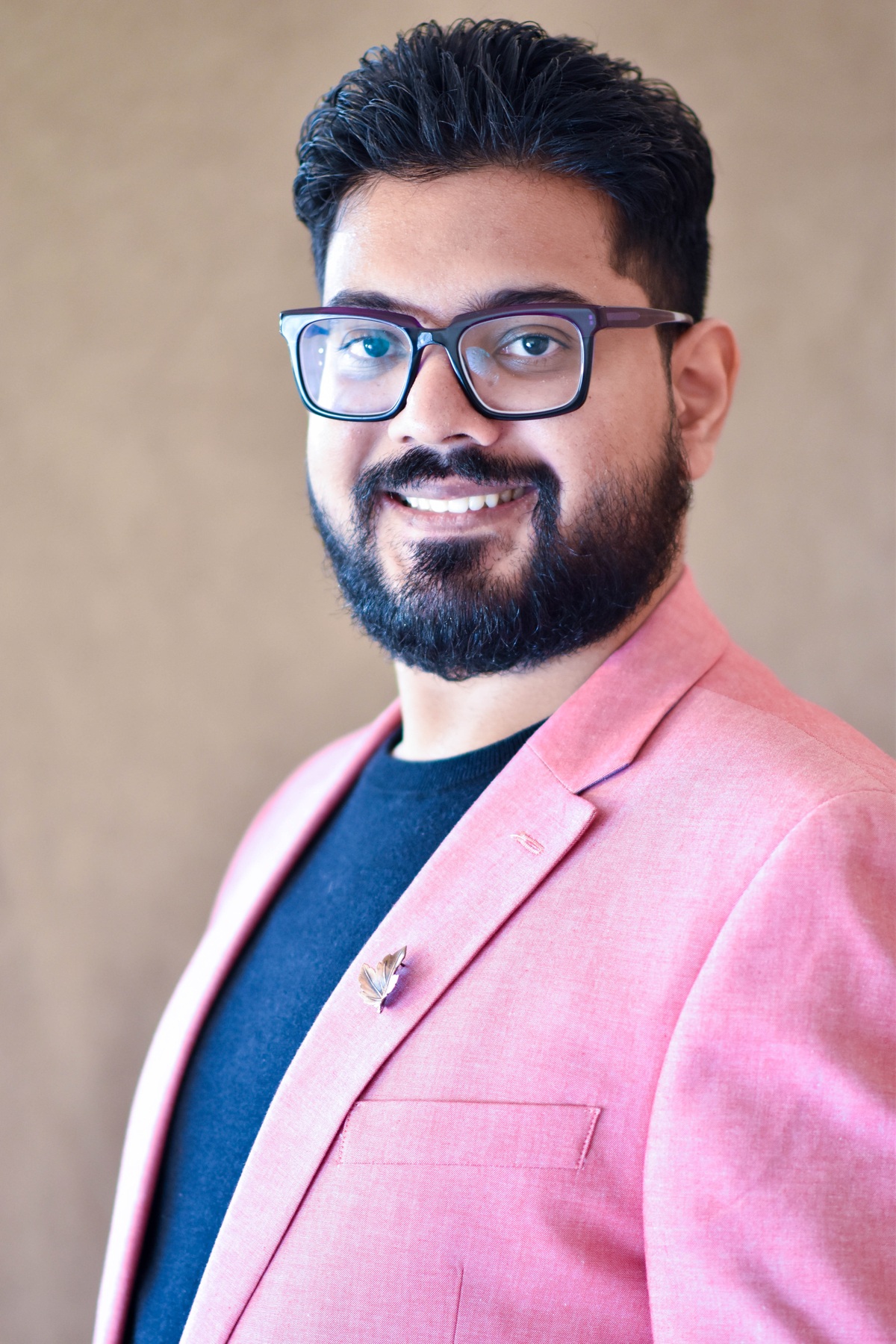
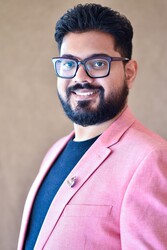
Photograph (c) Ahmad Abdullah
Ahmad Saber grew up on an all-girls college campus next to a massive fort in Pakistan before his family moved to Canada when he was in high school. While the move totally sucked at the time, it was one of the best things to ever happen to him. He’s now a medical doctor specializing in rheumatology, and when the clinic lights dim, he channels his passion into telling stories full of heart. Ahmad loves Broadway (favorite show = The Phantom of the Opera), Taylor Swift (favorite album = folklore), and chocolate chip cookies (he has crowned New York City’s Culture Espresso’s the best in the world). Ramin Abbas Has MAJOR Questions is his debut novel and is based in part on his own lived experience. Follow him around on social media @TheAhmadSaber or visit his website at SaberBooks.ca.
Product Details
- Publisher: Atheneum/Caitlyn Dlouhy Books (March 3, 2026)
- Length: 416 pages
- ISBN13: 9781665960694
- Grades: 9 and up
- Ages: 14 - 99
Browse Related Books
Raves and Reviews
"Funny, tender, and evocative, RAMIN ABBAS had me laughing out loud, kicking my feet, and clutching my heart in equal measure, with its unique yet all-too-relatable protagonist that keeps you rooting for him to figure out the answers to those Major Questions of faith that could cost him everything and to find the light amidst the darkness of doubt. A queer Muslim journey of the heart that boldly holds on to both a prayer mat and a pride flag.”
–Xiran Jay Zhao, bestselling author of the Iron Widow series and Zachary Ying and the Dragon Emperor.
"Ramin Abbas Has MAJOR Questions is the perfect blend of heart and humor, while earnestly exploring faith, love, and family. A powerful and unputdownable book."
– Adiba Jagirdar, award-winning author of The Henna Wars
"Equal parts heart-wrenching and endlessly hopeful, Ramin Abbas Has MAJOR Questions does not pull any punches. With a tender love story amid a world of pressure, and a sibling dynamic to cheer us up in the darkest of moments, this book felt like the gift my younger self desperately needed." -- Sonora Reyes, National Book Award Finalist and bestselling author of The Lesbiana's Guide to Catholic School.
– Sonora Reyes, National Book Award Finalist and bestselling author of The Lesbiana's Guide to Catholic School.
"A sparking debut: ambitious, thoughtful, and funny."
– Teen Vogue
A gay Muslim teen forced to join his school’s soccer team navigates parental pressure, internalized prejudice, and bullying in Saber’s touching debut. [...] Punchy dialogue brightens sensitive portrayals of religious identity and its intersection with queerness, resulting in a fresh and compassionate read.
– Publishers Weekly, 12/8/2025
A closeted Muslim Pakistani Canadian teenager yearns for acceptance and belonging. Debut author Saber handles [the] conflicts sensitively, drawing readers into the complicated experience of being both Muslim and gay, offering visibility to teens who share these identities, and expanding conversations about how queer individuals often turn to religion for solace even when family and faith-based communities reject them. Through the supporting cast members, Saber highlights the healing power of love, friendship, sibling bonds, and trusted adults in a queer teenager’s life. He emphasizes how inclusive interpretations of scripture can create room for queer-affirming religious life and compellingly explores the guilt associated with emigration and the stigma around seeking professional mental health support in many South Asian and Muslim families. These heavier elements are beautifully contrasted with Ramin’s humorous voice and his ability to soothe himself through the joy he finds in origami and Broadway musicals. An ode to the courage it takes to live with authenticity.
– Kirkus, January 15, 2026
A wonderful story about school, sports, religion, and acceptance. [...] The prose flows like a friend calling on FaceTime. Ramin is funny, relatable, and filled with pop culture knowledge. This is a story that will show people they aren’t alone. [...] An excellent addition to any library. This would be a great recommendation for readers looking for LGBTQIA+ books, stories about friendship, books about sports, and realistic fiction.
– School Library Journal, 2/1/26
Ramin takes his Muslim faith seriously, trying to live up to the ideals that his parents and imam espouse and avoiding anything that is forbidden—which makes his secret love of music and, far more concerning, his attraction to boys all the more distressing. [...] Ramin is immediately sympathetic, a reliable narrator to his own misery as he navigates Muslim school, deeply religious parents, and his own complicated feelings about whether there is room for him within his religion, or if he will have to reject core things about himself in order to be saved.
– BCCB, February 2026
Resources and Downloads
High Resolution Images
-
Book Cover Image (jpg): Ramin Abbas Has MAJOR Questions
Hardcover 9781665960694
-
Author Photo (jpg): Ahmad Saber Photograph (c) Ahmad Abdullah(0.1 MB)
Any use of an author photo must include its respective photo credit
Ramin Abbas Has MAJOR Questions
By Ahmad Saber
Join our mailing list!
By clicking 'Sign me up' I acknowledge that I have read and agree to the privacy policy and terms of use.