
Get our latest staff recommendations, award news and digital catalog links right to your inbox.
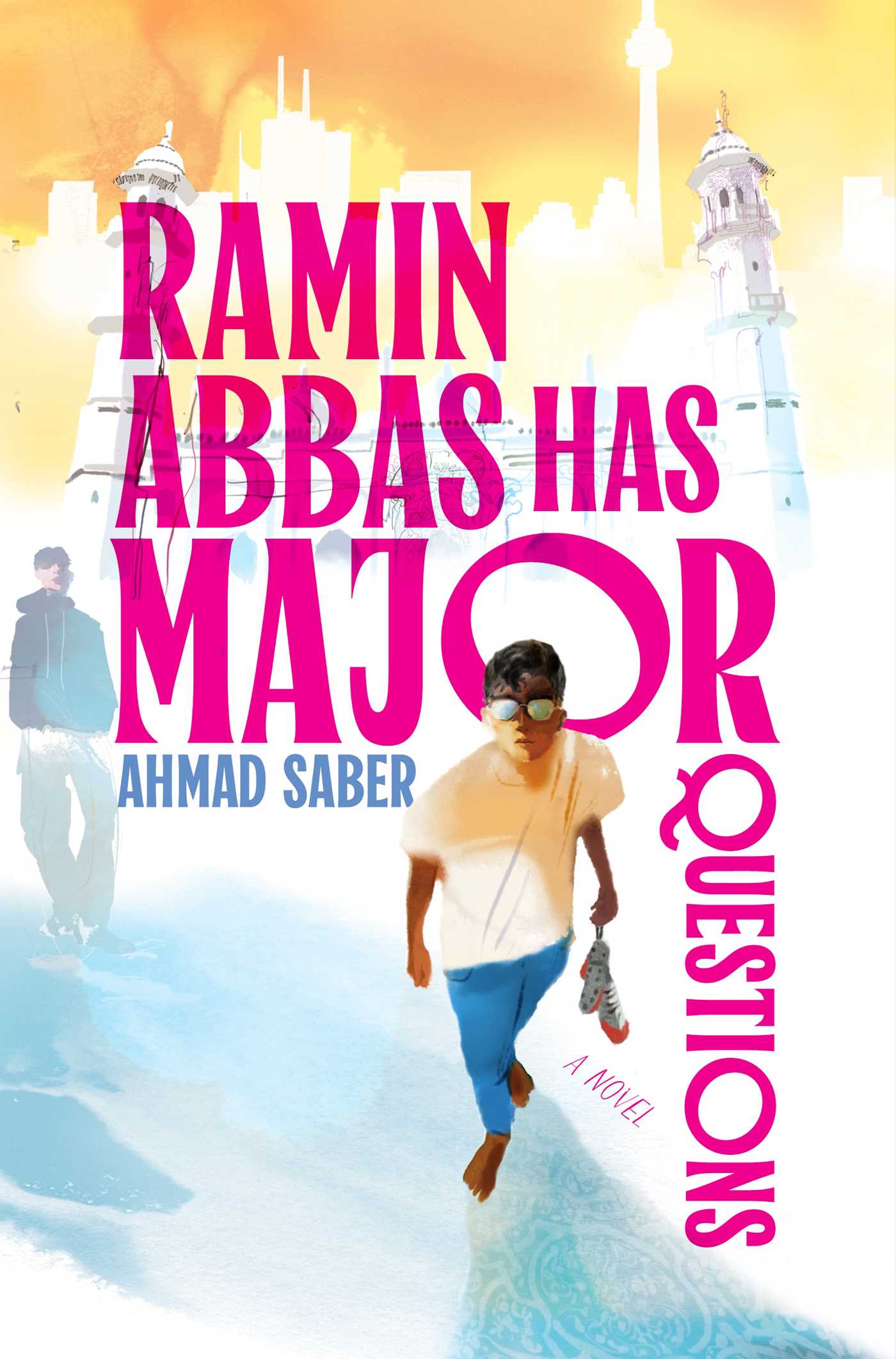
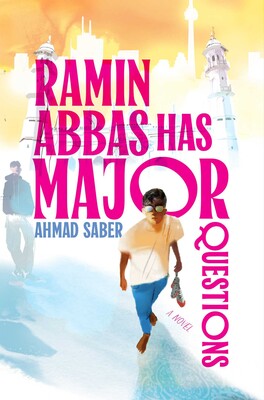
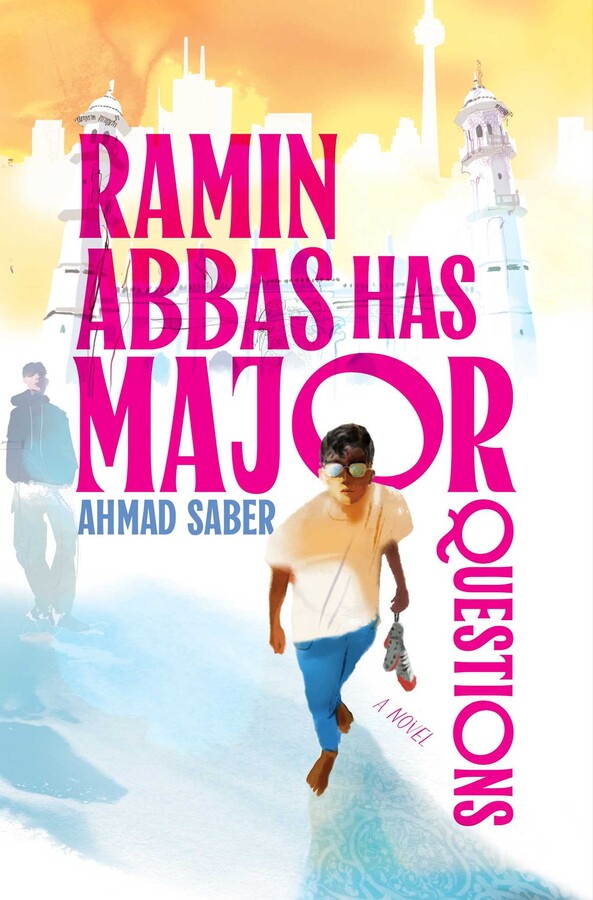
Ramin Abbas Has MAJOR Questions
By Ahmad Saber
Table of Contents
About The Book
“An ode to the courage it takes to live with authenticity.” —Kirkus Reviews (starred review)
A “sparkling…ambitious, thoughtful, and funny” (Teen Vogue) debut novel about a gay Muslim teen who has to choose between being true to himself or his faith—and his realization that maybe they aren’t as separate as he thought.
Ramin Abbas has spent his whole life obeying his parents, his Imam, and, of course, Allah—no questions asked. But when he starts crushing on the ridiculously handsome captain of the soccer team, so many things he’d always been so sure about are becoming questions:
1. Music is haram. But what if the Wicked soundtrack is the only thing keeping you sane because you’re being forced to play on the soccer team? With Captain Handsome?!
2. A boy crush is double haram, and Ramin’s parents will never accept it. But can he really be the only Muslim on Earth who feels this way?
3. Allah is merciful and makes no mistakes. Then isn’t Ramin just the way Allah intended him to be?
And so why should living your truth but losing everything—or living a lie and losing yourself—have to be a choice?!
A “sparkling…ambitious, thoughtful, and funny” (Teen Vogue) debut novel about a gay Muslim teen who has to choose between being true to himself or his faith—and his realization that maybe they aren’t as separate as he thought.
Ramin Abbas has spent his whole life obeying his parents, his Imam, and, of course, Allah—no questions asked. But when he starts crushing on the ridiculously handsome captain of the soccer team, so many things he’d always been so sure about are becoming questions:
1. Music is haram. But what if the Wicked soundtrack is the only thing keeping you sane because you’re being forced to play on the soccer team? With Captain Handsome?!
2. A boy crush is double haram, and Ramin’s parents will never accept it. But can he really be the only Muslim on Earth who feels this way?
3. Allah is merciful and makes no mistakes. Then isn’t Ramin just the way Allah intended him to be?
And so why should living your truth but losing everything—or living a lie and losing yourself—have to be a choice?!
Reading Group Guide
Join our mailing list! Get our latest staff recommendations, award news and digital catalog links right to your inbox.
By clicking 'Sign me up' I acknowledge that I have read and agree to the privacy policy and terms of use.
Reading Group Guide
Ramin Abbas Has MAJOR Questions
By Ahmad Saber
About the Book
Ramin Abbas is a gay Muslim teenager who has worked to hide his identity from everyone around him his whole life—his parents, his friends, his community, and all his peers at the Islamic school he attends. Now in his senior year of high school, he dreams of attending NYU and leaving his life of secrets behind. But when he is forced to join the soccer team to avoid failing because of a lack of PE credits, his entire life turns upside down. Grappling with a crush on the soccer team captain and the threat of having his identity made public by a peer, Ramin must finally take a look inward and look for answers to the many questions arising in his life.
Discussion Questions
1. How can religion be both a source of comfort and a source of struggle for LGBTQ+ youth? In what ways did Ramin’s faith trouble him while navigating his identity? At the end of the novel, he says to his parents, “‘I’ve made peace with Allah. Maybe you need to do the same.’” (Chapter forty) Who are the people in Ramin’s life that helped give him the courage to reach this peace, and how did they support him?
2. How does media representation influence how teens see themselves?
3. In the prologue, Ramin imagines his guilt and shame as a “two-headed monster living rent-free” in the back of his mind, constantly questioning all his decisions and pointing out potential sins. How does Ramin let the monster affect his behavior throughout the novel? How does he build up the courage to stand up against the monster?
4. How might different cultural or religious communities vary in how they understand LGBTQ+ identities? How might religious and cultural expectations affect how families respond to LGBTQ+ identities?
5. Describe Ramin’s relationship with his parents. Compare Ramin’s relationship with his parents to his relationship with his brother, Zayn. Do you think his parents are loving or harsh, or both? Explain your answers with in-text examples.
6. What does it mean to respect someone’s faith while also respecting their sexual orientation? How can people foster positive relationships if they do not share the same beliefs?
7. How might someone navigate having multiple identities (religious, cultural, sexual, etc.) at the same time? How did Ramin succeed in separating his identities? How did he struggle?
8. Ramin often found comfort in the music he listened to and the origami he created. Why do you think artistic expression might be an important outlet for people? As a group, talk about any artistic outlets you have, and why they feel important to you.
9. Ramin isn’t very athletic and doesn’t do well in his first soccer practice, so the team captain, Fahad, offers him private coaching sessions, which Ramin initially declines. Ramin explains again that he’s only on the team to earn his physical education hours, and Fahad replies, “‘This isn’t just about you.’” (Chapter fourteen) Consider how both Ramin and Fahad feel about this situation. Is one more “right” in their feelings? How so? How do you feel about performing certain obligations, especially if others do so willingly, such as a sport, community service, class, or project?
10. Islam teaches respect and empathy toward all. What are some ways peers can support someone who is struggling with acceptance from their family, community, or themselves?
11. When Ramin goes to Mufti Luqman to ask about the Halal-ness of being queer, he’s disappointed with the Imam’s answers. Luqman says resisting queer urges is like a test from Allah, and Ramin wonders why he must pass a test “every day of [his] entire life when [he] never chose to take the test to begin with.” (Chapter thirty) What parts of your religion or culture feel difficult to you? Is there someone you can reach out to for a similar debate or that you trust with your challenging questions? What parts of your religion or culture feel supportive to you?
12. Ramin was called Ramen Noodles and was teased in other ways by his peers. How can name-calling affect someone’s emotional and mental health?
13. Assim was blackmailing Ramin. What pressures or fears stopped Ramin from asking for help? In a situation where someone is being blackmailed, how can talking to a trusted adult help? How may it have helped Ramin?
14. Ramin blamed his parents’ lack of understanding of his identity on them being traditional and conservative. What role did community play in Ramin’s exploration and acceptance of his queer identity? Do you think a lack of open-mindedness can affect a person’s personal growth? Why or why not? How does one’s community help foster or stunt a person’s personal growth?
Extension Activities
1. Arrange a hands-on origami workshop where youth are introduced to origami designs based on varying skill levels. Incorporate timed origami creation challenges to increase engagement and motivation.
2. Ramin Abbas had a vision board for his life after high school. Make a vision board for how you imagine your life after high school will look like. Ramin was also very focused on what he needed to do to be admitted into the college of his dreams. Make a list of your dream colleges, and research what steps are necessary to take while in high school to achieve your goal.
3. Ramin’s brother, Zayn, runs a samosa stand in the cafeteria at lunch as a project for his business studies class, which teaches them about supply and demand, economics and finances, and business competition. As a class, discuss school-appropriate businesses to run, and create a business model on how they would start and maintain the business. Consider start-up and maintenance costs, product fees, profit margins, employee wages, equipment and skills required, and possible competitive outlets. Consider going a step further and starting this business (with school administration approval).
4. Organize a multistation sports activity where teens try board games or sports they have never played before, rotating through the different challenges. Each station should focus on a different skill, allowing everyone to participate regardless of athletic ability.
5. The novel ends on a bittersweet note with the letter from Ramin’s father to his son on his way to New York. Based on what you learned about Ramin throughout the book, work in pairs or groups to imagine what the next year of Ramin’s life will look like, both at NYU and back in Toronto. As a creative writing exercise, consider having the students write an epilogue about Ramin returning to Toronto’s Union Station at the end of his first year of college.
Guide prepared by Noureen Qadir-Jafar, Youth Services Librarian at the Levittown Public Library in New York.
This guide has been provided by Simon & Schuster for classroom, library, and reading group use. It may be reproduced in its entirety or excerpted for these purposes. For more Simon & Schuster guides and classroom materials, please visit simonandschuster.net/m/prek12-teachers-librarians/teaching-resources
Ramin Abbas Has MAJOR Questions
By Ahmad Saber
About the Book
Ramin Abbas is a gay Muslim teenager who has worked to hide his identity from everyone around him his whole life—his parents, his friends, his community, and all his peers at the Islamic school he attends. Now in his senior year of high school, he dreams of attending NYU and leaving his life of secrets behind. But when he is forced to join the soccer team to avoid failing because of a lack of PE credits, his entire life turns upside down. Grappling with a crush on the soccer team captain and the threat of having his identity made public by a peer, Ramin must finally take a look inward and look for answers to the many questions arising in his life.
Discussion Questions
1. How can religion be both a source of comfort and a source of struggle for LGBTQ+ youth? In what ways did Ramin’s faith trouble him while navigating his identity? At the end of the novel, he says to his parents, “‘I’ve made peace with Allah. Maybe you need to do the same.’” (Chapter forty) Who are the people in Ramin’s life that helped give him the courage to reach this peace, and how did they support him?
2. How does media representation influence how teens see themselves?
3. In the prologue, Ramin imagines his guilt and shame as a “two-headed monster living rent-free” in the back of his mind, constantly questioning all his decisions and pointing out potential sins. How does Ramin let the monster affect his behavior throughout the novel? How does he build up the courage to stand up against the monster?
4. How might different cultural or religious communities vary in how they understand LGBTQ+ identities? How might religious and cultural expectations affect how families respond to LGBTQ+ identities?
5. Describe Ramin’s relationship with his parents. Compare Ramin’s relationship with his parents to his relationship with his brother, Zayn. Do you think his parents are loving or harsh, or both? Explain your answers with in-text examples.
6. What does it mean to respect someone’s faith while also respecting their sexual orientation? How can people foster positive relationships if they do not share the same beliefs?
7. How might someone navigate having multiple identities (religious, cultural, sexual, etc.) at the same time? How did Ramin succeed in separating his identities? How did he struggle?
8. Ramin often found comfort in the music he listened to and the origami he created. Why do you think artistic expression might be an important outlet for people? As a group, talk about any artistic outlets you have, and why they feel important to you.
9. Ramin isn’t very athletic and doesn’t do well in his first soccer practice, so the team captain, Fahad, offers him private coaching sessions, which Ramin initially declines. Ramin explains again that he’s only on the team to earn his physical education hours, and Fahad replies, “‘This isn’t just about you.’” (Chapter fourteen) Consider how both Ramin and Fahad feel about this situation. Is one more “right” in their feelings? How so? How do you feel about performing certain obligations, especially if others do so willingly, such as a sport, community service, class, or project?
10. Islam teaches respect and empathy toward all. What are some ways peers can support someone who is struggling with acceptance from their family, community, or themselves?
11. When Ramin goes to Mufti Luqman to ask about the Halal-ness of being queer, he’s disappointed with the Imam’s answers. Luqman says resisting queer urges is like a test from Allah, and Ramin wonders why he must pass a test “every day of [his] entire life when [he] never chose to take the test to begin with.” (Chapter thirty) What parts of your religion or culture feel difficult to you? Is there someone you can reach out to for a similar debate or that you trust with your challenging questions? What parts of your religion or culture feel supportive to you?
12. Ramin was called Ramen Noodles and was teased in other ways by his peers. How can name-calling affect someone’s emotional and mental health?
13. Assim was blackmailing Ramin. What pressures or fears stopped Ramin from asking for help? In a situation where someone is being blackmailed, how can talking to a trusted adult help? How may it have helped Ramin?
14. Ramin blamed his parents’ lack of understanding of his identity on them being traditional and conservative. What role did community play in Ramin’s exploration and acceptance of his queer identity? Do you think a lack of open-mindedness can affect a person’s personal growth? Why or why not? How does one’s community help foster or stunt a person’s personal growth?
Extension Activities
1. Arrange a hands-on origami workshop where youth are introduced to origami designs based on varying skill levels. Incorporate timed origami creation challenges to increase engagement and motivation.
2. Ramin Abbas had a vision board for his life after high school. Make a vision board for how you imagine your life after high school will look like. Ramin was also very focused on what he needed to do to be admitted into the college of his dreams. Make a list of your dream colleges, and research what steps are necessary to take while in high school to achieve your goal.
3. Ramin’s brother, Zayn, runs a samosa stand in the cafeteria at lunch as a project for his business studies class, which teaches them about supply and demand, economics and finances, and business competition. As a class, discuss school-appropriate businesses to run, and create a business model on how they would start and maintain the business. Consider start-up and maintenance costs, product fees, profit margins, employee wages, equipment and skills required, and possible competitive outlets. Consider going a step further and starting this business (with school administration approval).
4. Organize a multistation sports activity where teens try board games or sports they have never played before, rotating through the different challenges. Each station should focus on a different skill, allowing everyone to participate regardless of athletic ability.
5. The novel ends on a bittersweet note with the letter from Ramin’s father to his son on his way to New York. Based on what you learned about Ramin throughout the book, work in pairs or groups to imagine what the next year of Ramin’s life will look like, both at NYU and back in Toronto. As a creative writing exercise, consider having the students write an epilogue about Ramin returning to Toronto’s Union Station at the end of his first year of college.
Guide prepared by Noureen Qadir-Jafar, Youth Services Librarian at the Levittown Public Library in New York.
This guide has been provided by Simon & Schuster for classroom, library, and reading group use. It may be reproduced in its entirety or excerpted for these purposes. For more Simon & Schuster guides and classroom materials, please visit simonandschuster.net/m/prek12-teachers-librarians/teaching-resources
About The Author
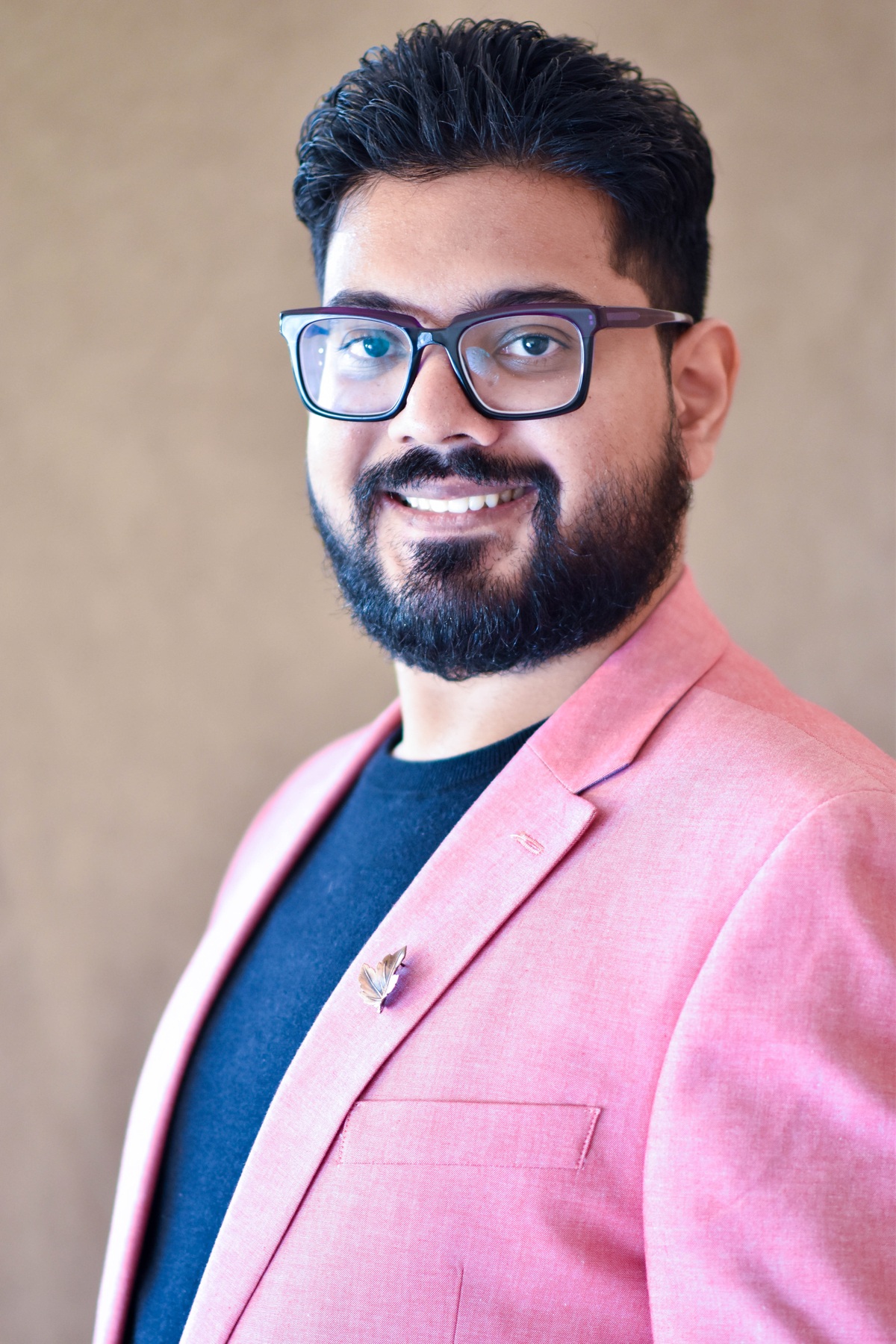
Photograph (c) Ahmad Abdullah
Ahmad Saber grew up on an all-girls college campus next to a massive fort in Pakistan before his family moved to Canada when he was in high school. While the move totally sucked at the time, it was one of the best things to ever happen to him. He’s now a medical doctor specializing in rheumatology, and when the clinic lights dim, he channels his passion into telling stories full of heart. Ahmad loves Broadway (favorite show = The Phantom of the Opera), Taylor Swift (favorite album = folklore), and chocolate chip cookies (he has crowned New York City’s Culture Espresso’s the best in the world). Ramin Abbas Has MAJOR Questions is his debut novel and is based in part on his own lived experience. Follow him around on social media @TheAhmadSaber or visit his website at SaberBooks.ca.
Product Details
- Publisher: Atheneum/Caitlyn Dlouhy Books (March 3, 2026)
- Length: 416 pages
- ISBN13: 9781665960717
- Grades: 9 and up
- Ages: 14 - 99
Browse Related Books
Raves and Reviews
"Funny, tender, and evocative, RAMIN ABBAS had me laughing out loud, kicking my feet, and clutching my heart in equal measure, with its unique yet all-too-relatable protagonist that keeps you rooting for him to figure out the answers to those Major Questions of faith that could cost him everything and to find the light amidst the darkness of doubt. A queer Muslim journey of the heart that boldly holds on to both a prayer mat and a pride flag.”
–Xiran Jay Zhao, bestselling author of the Iron Widow series and Zachary Ying and the Dragon Emperor.
"Ramin Abbas Has MAJOR Questions is the perfect blend of heart and humor, while earnestly exploring faith, love, and family. A powerful and unputdownable book."
– Adiba Jagirdar, award-winning author of The Henna Wars
"Equal parts heart-wrenching and endlessly hopeful, Ramin Abbas Has MAJOR Questions does not pull any punches. With a tender love story amid a world of pressure, and a sibling dynamic to cheer us up in the darkest of moments, this book felt like the gift my younger self desperately needed." -- Sonora Reyes, National Book Award Finalist and bestselling author of The Lesbiana's Guide to Catholic School.
– Sonora Reyes, National Book Award Finalist and bestselling author of The Lesbiana's Guide to Catholic School.
"A sparking debut: ambitious, thoughtful, and funny."
– Teen Vogue
A gay Muslim teen forced to join his school’s soccer team navigates parental pressure, internalized prejudice, and bullying in Saber’s touching debut. [...] Punchy dialogue brightens sensitive portrayals of religious identity and its intersection with queerness, resulting in a fresh and compassionate read.
– Publishers Weekly, 12/8/2025
A closeted Muslim Pakistani Canadian teenager yearns for acceptance and belonging. Debut author Saber handles [the] conflicts sensitively, drawing readers into the complicated experience of being both Muslim and gay, offering visibility to teens who share these identities, and expanding conversations about how queer individuals often turn to religion for solace even when family and faith-based communities reject them. Through the supporting cast members, Saber highlights the healing power of love, friendship, sibling bonds, and trusted adults in a queer teenager’s life. He emphasizes how inclusive interpretations of scripture can create room for queer-affirming religious life and compellingly explores the guilt associated with emigration and the stigma around seeking professional mental health support in many South Asian and Muslim families. These heavier elements are beautifully contrasted with Ramin’s humorous voice and his ability to soothe himself through the joy he finds in origami and Broadway musicals. An ode to the courage it takes to live with authenticity.
– Kirkus, January 15, 2026
A wonderful story about school, sports, religion, and acceptance. [...] The prose flows like a friend calling on FaceTime. Ramin is funny, relatable, and filled with pop culture knowledge. This is a story that will show people they aren’t alone. [...] An excellent addition to any library. This would be a great recommendation for readers looking for LGBTQIA+ books, stories about friendship, books about sports, and realistic fiction.
– School Library Journal, 2/1/26
Ramin takes his Muslim faith seriously, trying to live up to the ideals that his parents and imam espouse and avoiding anything that is forbidden—which makes his secret love of music and, far more concerning, his attraction to boys all the more distressing. [...] Ramin is immediately sympathetic, a reliable narrator to his own misery as he navigates Muslim school, deeply religious parents, and his own complicated feelings about whether there is room for him within his religion, or if he will have to reject core things about himself in order to be saved.
– BCCB, February 2026
Resources and Downloads
High Resolution Images
-
Book Cover Image (jpg): Ramin Abbas Has MAJOR Questions
eBook 9781665960717
-
Author Photo (jpg): Ahmad Saber Photograph (c) Ahmad Abdullah(0.1 MB)
Any use of an author photo must include its respective photo credit
Ramin Abbas Has MAJOR Questions
By Ahmad Saber
Join our mailing list!
By clicking 'Sign me up' I acknowledge that I have read and agree to the privacy policy and terms of use.