
Get our latest staff recommendations, award news and digital catalog links right to your inbox.
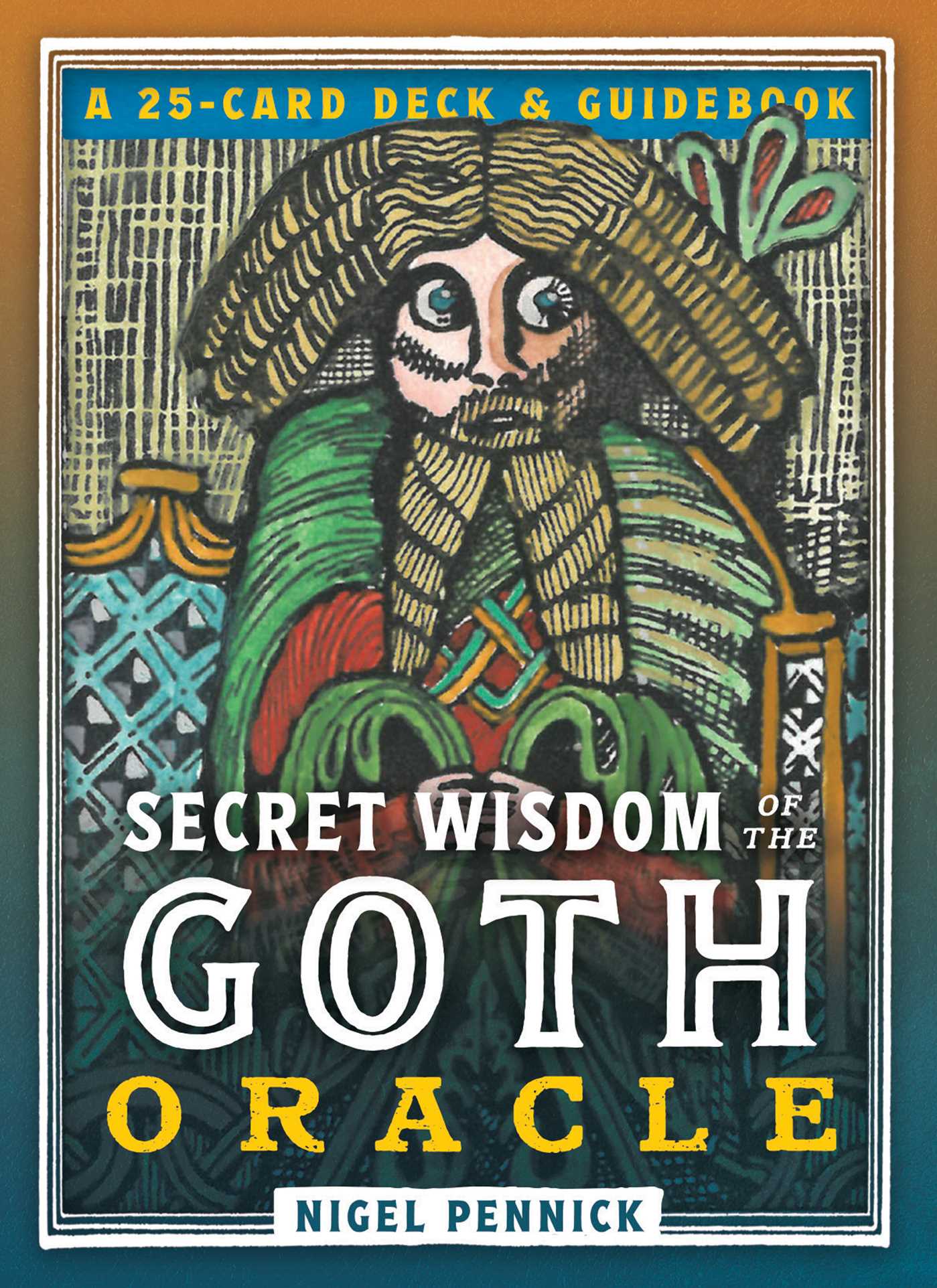
Published by Destiny Books
Distributed by Simon & Schuster
Table of Contents
About The Book
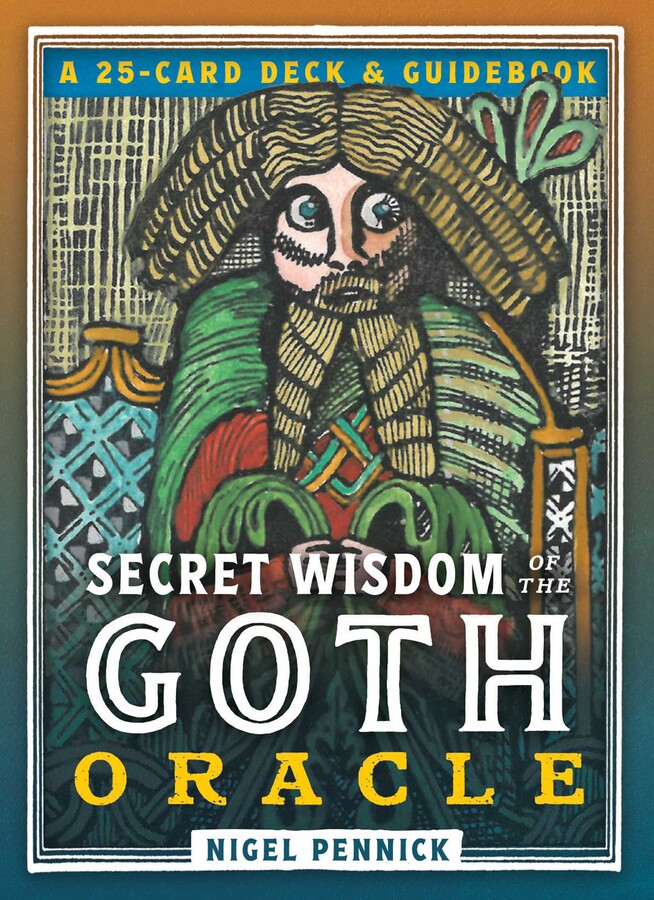
Using the Gothic alphabet for runic divination
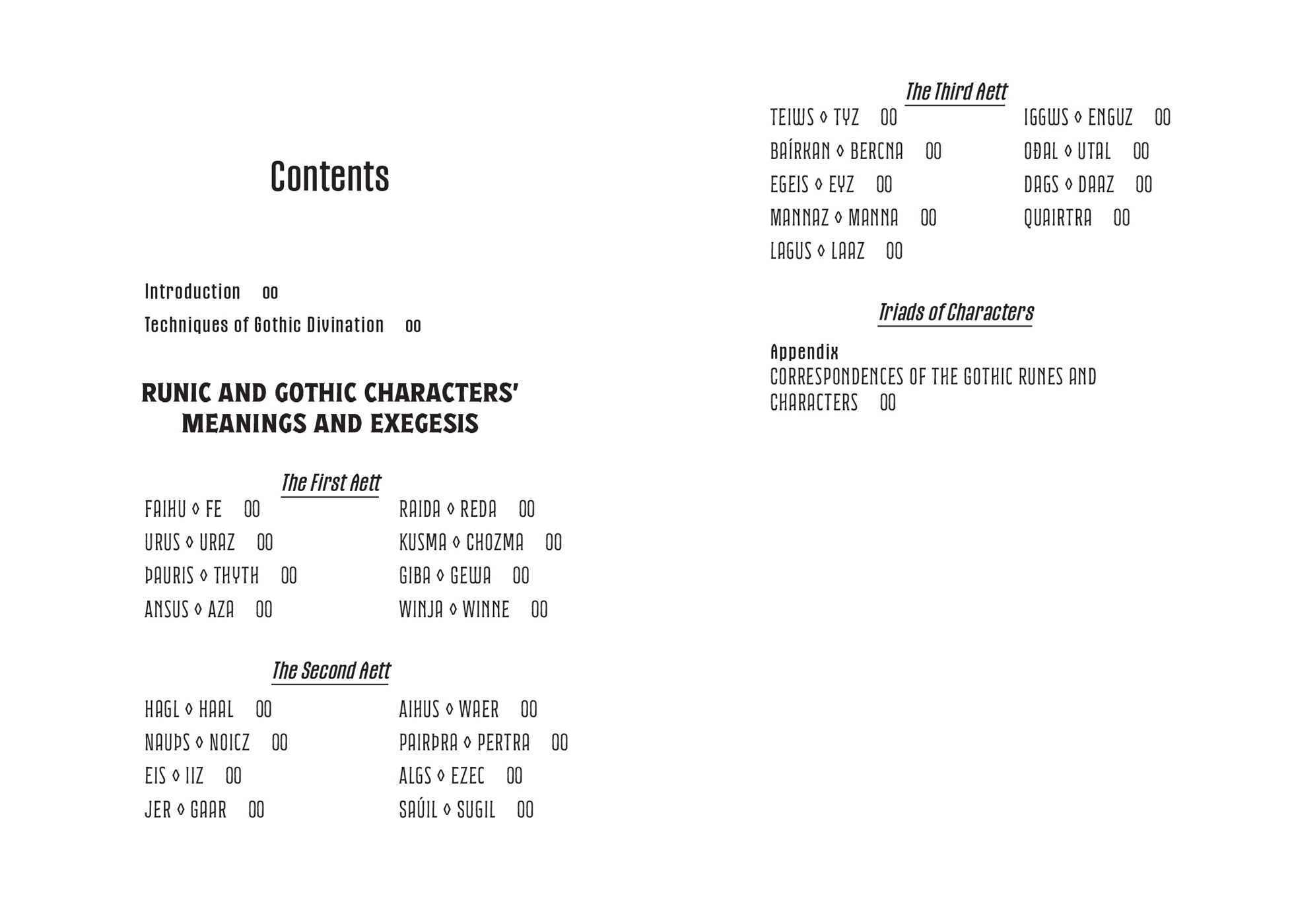
• Examines the divinatory meanings of the 25 Gothic staves and how they correspond with the 24 runes of the Norse Futhark
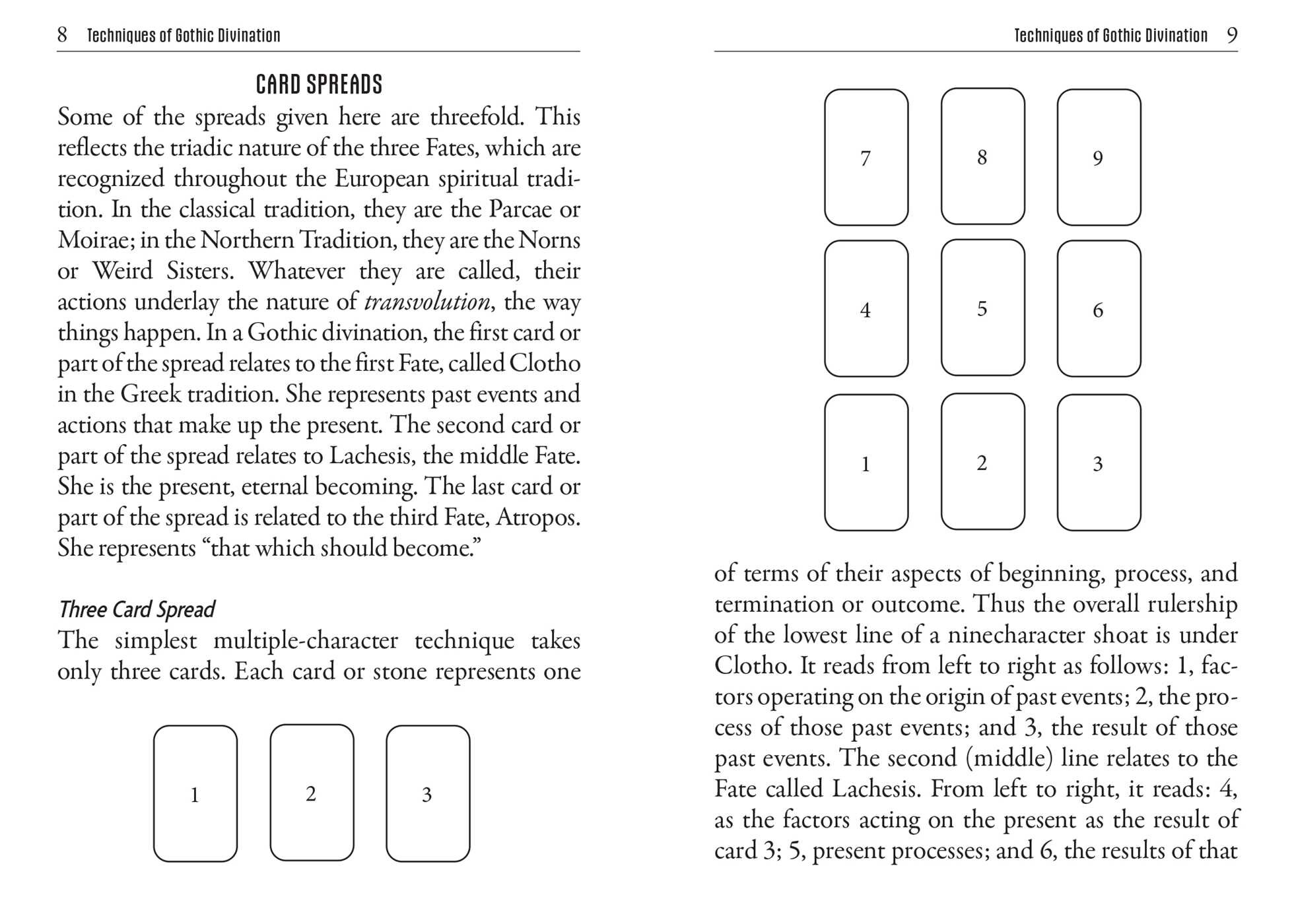
• Provides a series of rune spreads and several divination techniques for different approaches to questioning and gaining insight
• Explores the Goths’ spiritual beliefs, cosmology, and magical systems
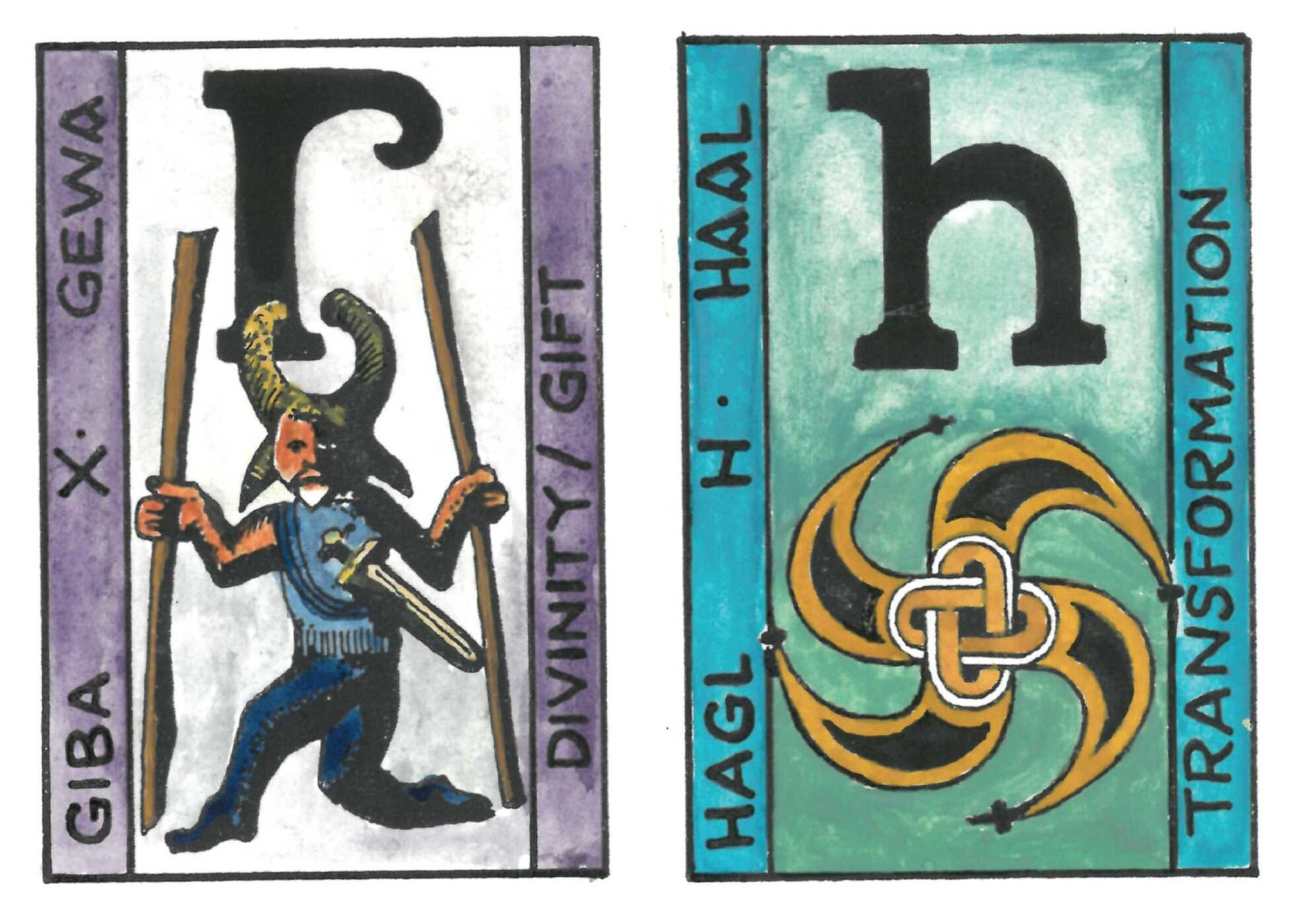
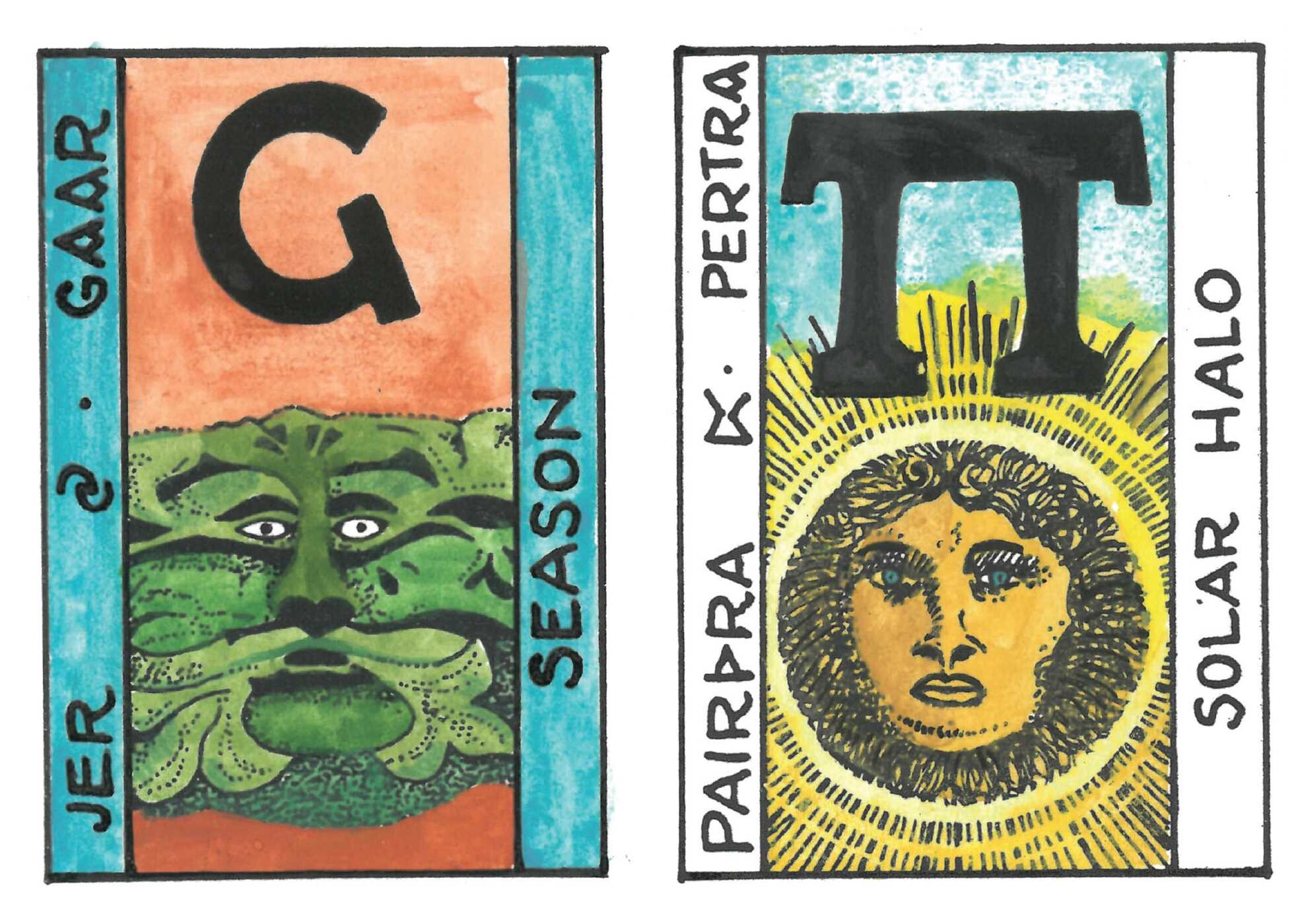
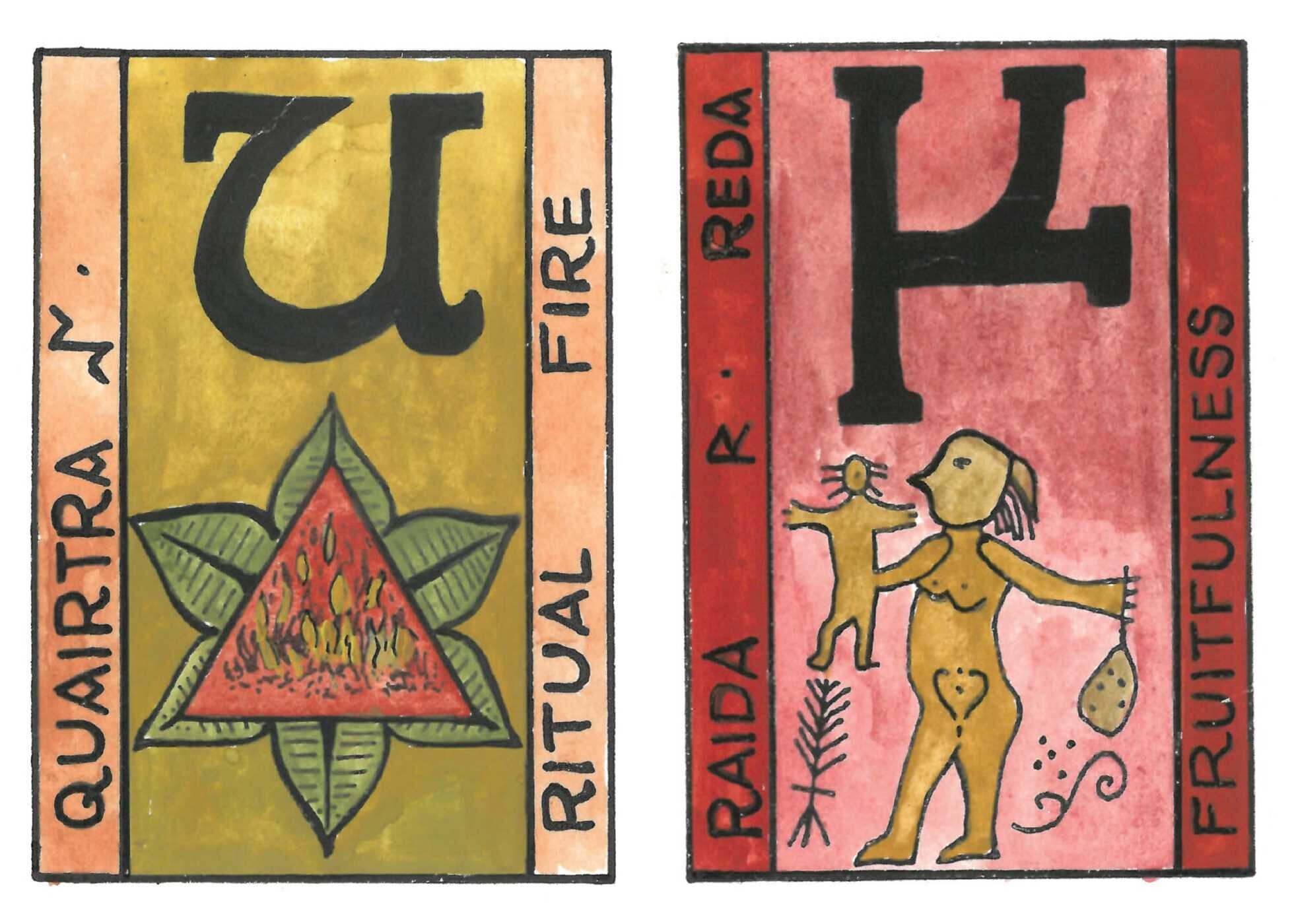
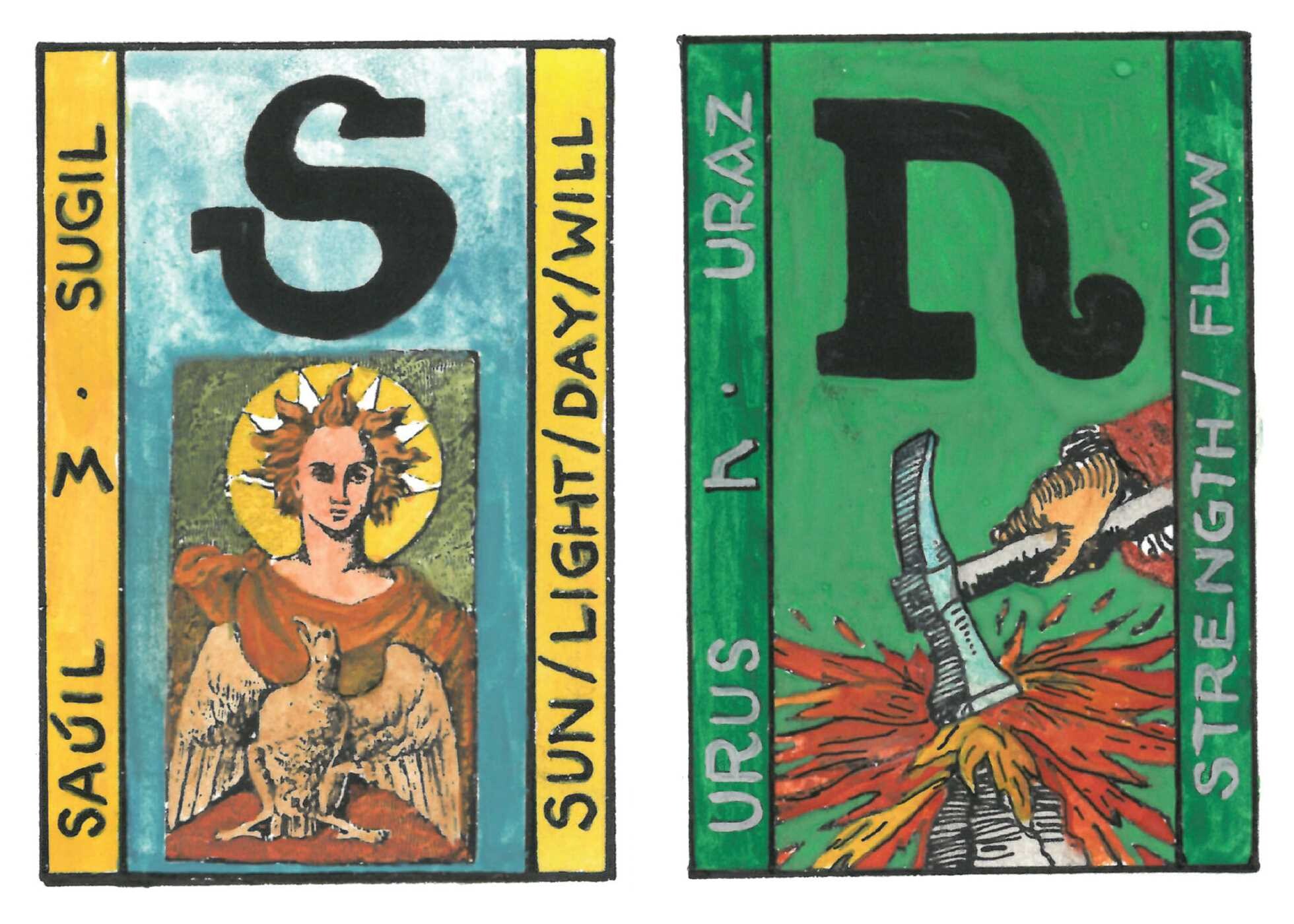
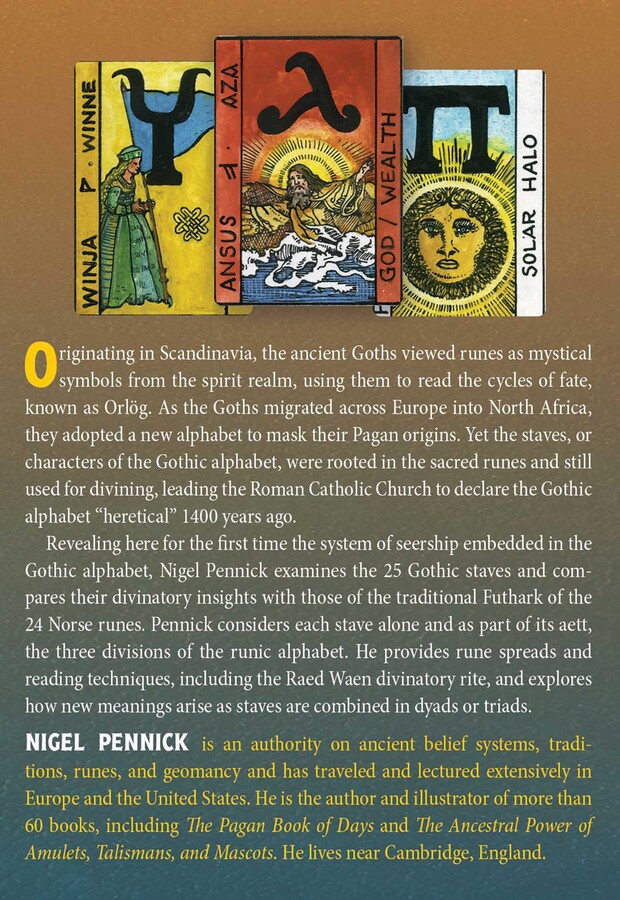
Originating in Scandinavia, the ancient Goths viewed runes as mystical symbols from the spirit realm, using them to read the cycles of fate, known as Orlög. As the Goths migrated across Europe into North Africa, they adopted a new alphabet to mask their Pagan origins. Yet the staves, or characters of the Gothic alphabet, were rooted in the sacred runes and still used for divining, leading the Roman Catholic Church to declare the Gothic alphabet “heretical” 1400 years ago.
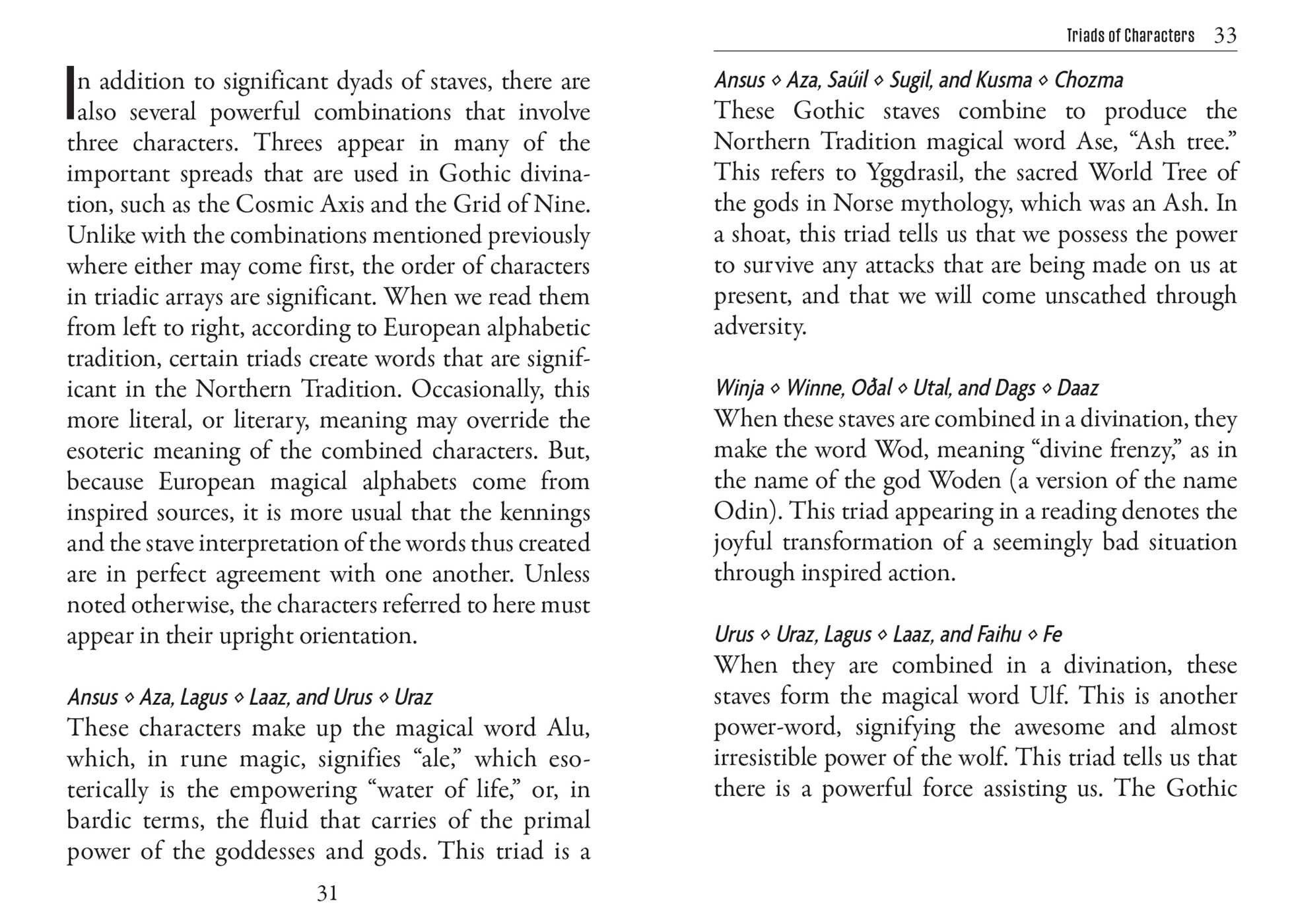
Revealing here for the first time the system of seership embedded in the Gothic alphabet, Nigel Pennick examines the 25 Gothic staves and compares their divinatory insights with those of the traditional Futhark of the 24 Norse runes. Pennick considers each stave alone and as part of its aett, the three divisions of the runic alphabet. He provides rune spreads and reading techniques, including the Raed Waen divinatory rite, and explores how new meanings arise as staves are combined in dyads or triads.
• Examines the divinatory meanings of the 25 Gothic staves and how they correspond with the 24 runes of the Norse Futhark
• Provides a series of rune spreads and several divination techniques for different approaches to questioning and gaining insight
• Explores the Goths’ spiritual beliefs, cosmology, and magical systems
Originating in Scandinavia, the ancient Goths viewed runes as mystical symbols from the spirit realm, using them to read the cycles of fate, known as Orlög. As the Goths migrated across Europe into North Africa, they adopted a new alphabet to mask their Pagan origins. Yet the staves, or characters of the Gothic alphabet, were rooted in the sacred runes and still used for divining, leading the Roman Catholic Church to declare the Gothic alphabet “heretical” 1400 years ago.
Revealing here for the first time the system of seership embedded in the Gothic alphabet, Nigel Pennick examines the 25 Gothic staves and compares their divinatory insights with those of the traditional Futhark of the 24 Norse runes. Pennick considers each stave alone and as part of its aett, the three divisions of the runic alphabet. He provides rune spreads and reading techniques, including the Raed Waen divinatory rite, and explores how new meanings arise as staves are combined in dyads or triads.
Excerpt
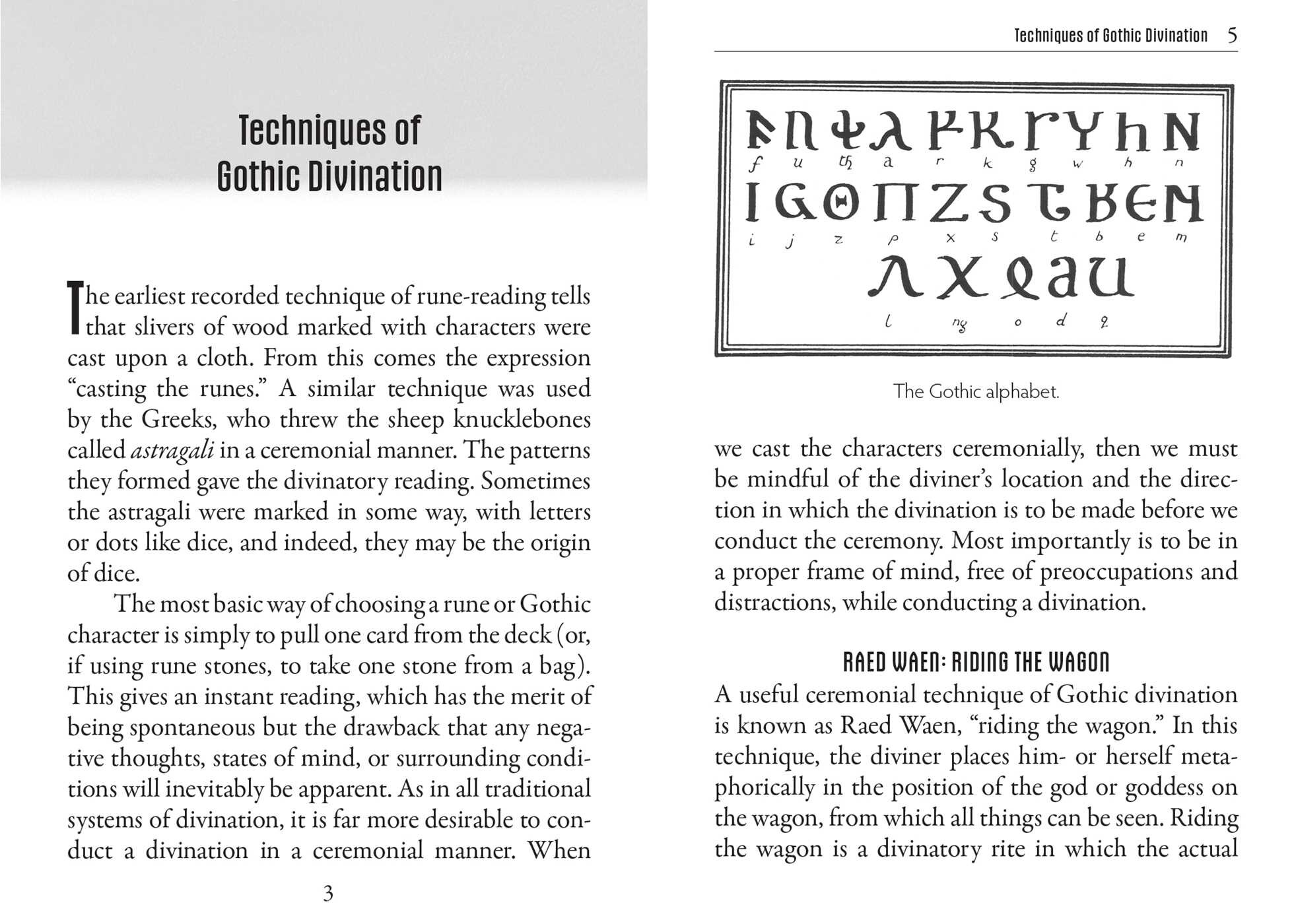
Techniques of Gothic Divination
The earliest recorded technique of rune-reading tells that slivers of wood marked with characters were cast upon a cloth. From this comes the expression “casting the runes.” A similar technique was used by the Greeks, who threw the sheep knucklebones called astragali in a ceremonial manner. The patterns they formed gave the divinatory reading. Sometimes the astragali were marked in some way, with letters or dots like dice, and indeed, they may be the origin of dice.
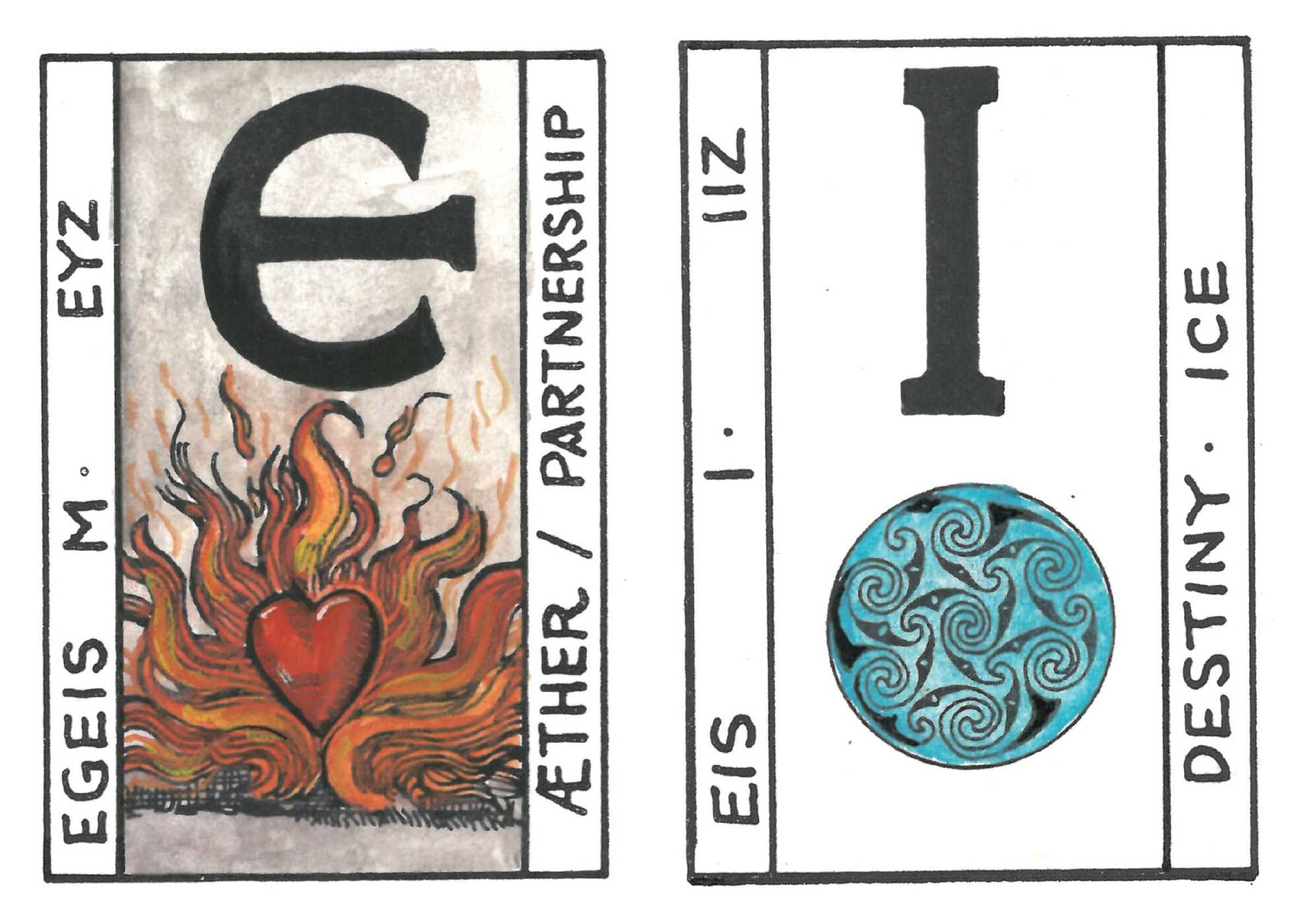
Significantly, Icelandic folklore ascribed the invention of both the runes and of dice to Odin. Like the runes, dice originated as a technique of divination. They are related to numerical and combinatorial oracles like divinatory geomancy.* Although at one time the runes were cast, developments in technique mean that today there are many other possibilities of using symbolic letters in divination. There are two basic forms that can be used. Either the letters or runes are carved or drawn upon stones, or some form of cards can be made. Either kind lends itself to the following methods.
The most basic way of choosing a rune or Gothic character is simply to pull one card from the deck (or, if using rune stones, to take one stone from a bag). This gives an instant reading, which has the merit of being spontaneous but the drawback that any negative thoughts, states of mind, or surrounding conditions will inevitably be apparent. As in all traditional systems of divination, it is far more desirable to conduct a divination in a ceremonial manner. When we cast the characters ceremonially, then we must be mindful of the diviner’s location and the direction in which the divination is to be made before we conduct the ceremony. Most importantly is to be in a proper frame of mind, free of preoccupations and distractions, while conducting a divination.
RAED WAEN: RIDING THE WAGON
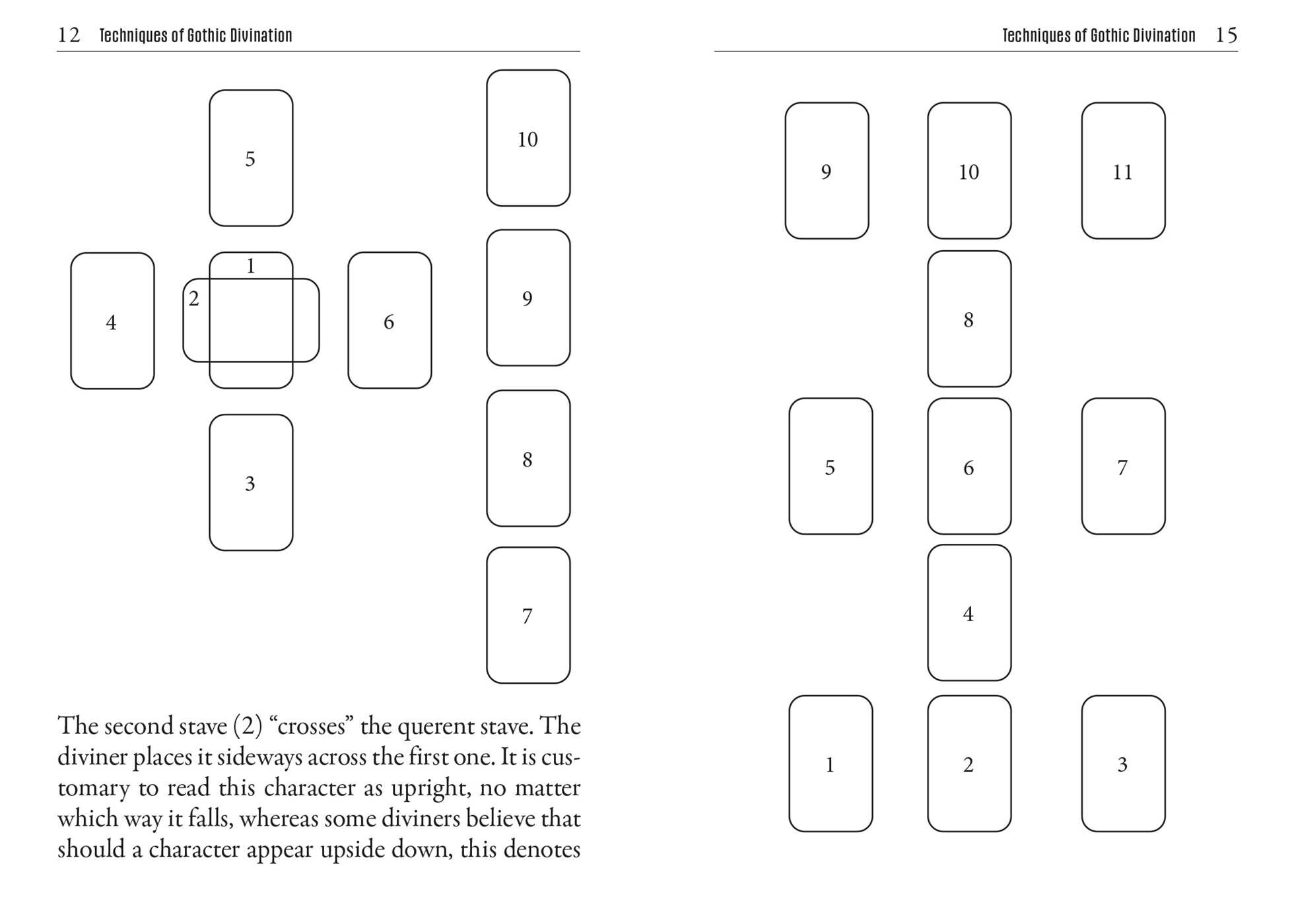
A useful ceremonial technique of Gothic divination is known as Raed Waen, “riding the wagon.” In this technique, the diviner places him- or herself metaphorically in the position of the god or goddess on the wagon, from which all things can be seen. Riding the wagon is a divinatory rite in which the actual casting, called the shoat or shoot, is carried out. When we conduct the ceremony of Raed Waen, we always consider the surrounding physical and psychic environment. As with any activity that requires harmony with prevailing conditions, it is necessary be aware of their effects upon the proceedings.
When we choose to conduct Raed Waen indoors, then the axis of the shoat should coincide with the main axis of the room—the rig or right line. This can be visualized as an imaginary straight line drawn across the floor. It need not be accurate in surveying terms, and it can be worked out easily. Theoretically, the right line should be the alignment that is best in harmony with the energies of the Earth in that room, and is therefore an aspect of the ancient art of location. In a building where the walls are oriented correctly—that is, facing the four cardinal directions—the axis should lie in the direction east–west. In the Northern Tradition, this is the direction of non-adversarial interactions, lying at right angles to the presence, which is the place of the gods located in the north.
In the Northern Tradition, the adversarial orientation has the “plaintiff“ facing northward to be judged by the judge, who faces him or her southward from the presence in the north. But as in all areas of locational practice, if it is impractical to lay an east–west axis, then the rig should be laid out parallel to the longer wall, dividing the floor space into two parts.
Once the line has been determined, then the casting cloth, also called a shoat, can be aligned along this axial rig. The shoat’s dimensions should be taken from the bodily dimensions of the diviner. This measure is the diviner’s own length from his or her feet to the fingertips, when they are held at full stretch above the head. The cloth’s width should be identical with the distance between the diviner’s outstretched arms, measured from fingertip to fingertip. This is the traditional measure of the personal fathom. Of course, the cloth should be made ceremonially well in advance of the time it is needed for divination.
When a divination is to be made, we place the cloth on the floor in such a way that its central point is located one-third of the way along the right line. Ideally, the view of the diviner is thus along the longer part of the room. The wall in front of the diviner then becomes positive, and the wall behind her or him, negative. Proper orientation according to the traditional European principles of locational geomancy means that east is positive, west negative, with the presence north to the left and south to the right. From the inquirer’s (also known as the querent, the subject of the reading who is present with the diviner) viewpoint, the direction along the rig toward the positive wall is considered “up,” and that nearer to the diviner, “down.” “Left” and “right” refer to the diviner’s actual left and right.
Out of doors, Gothic divination has two orientational principles. It is possible either to do an orientation by the sun, as described below, or to align the shoat toward the holy island of Gotland, the spiritual homeland of the Goths. This ancestral island lies in the Baltic Sea to the east of Sweden. Its geographical location is N 57˚30’, E 18˚30’, approximately. Use a map if necessary. By orientating toward Gotland, we can partake of the spiritual qualities of the sacred land when we use the Gothic technique. Alternatively, we can orientate the right line toward the sun at the time that we are performing the ceremony. According to traditional belief, human energy flows toward the sun, while the sun’s energy comes toward us in a complementary manner. Naturally, this direction is changing continuously, and its actual orientation depends on the time of day. At true midday, the sun stands due south, and at midnight, though it invisible to us “beneath the Earth,” it stands at due north. The other times of day and night have their own proper solar orientation, with the sun appearing to complete a whole cycle in twenty-four hours. In the Northern Tradition correspondence used here, each of these twenty-four hours corresponds with one of the twenty-four Gothic runes, and the first twenty-four Gothic letters. Only the Gothic character Quairtra is outside and beyond the cycle.
We can visualize this whole character-circle if we think of ourselves standing inside a circular building with a series of twenty-four stained glass windows all around us. Each of the windows is filled with radiant glass depicting one of the Gothic characters in its appropriate position. Each occupies one twenty-fourth part of the circle. During the daylight hours, we could see the sun illuminating each character in its proper turn at the correct hour. This is because each character is located at a certain airt (compass direction) that corresponds with the direction of the sun at a specific hour of the twenty-four-hour cycle.
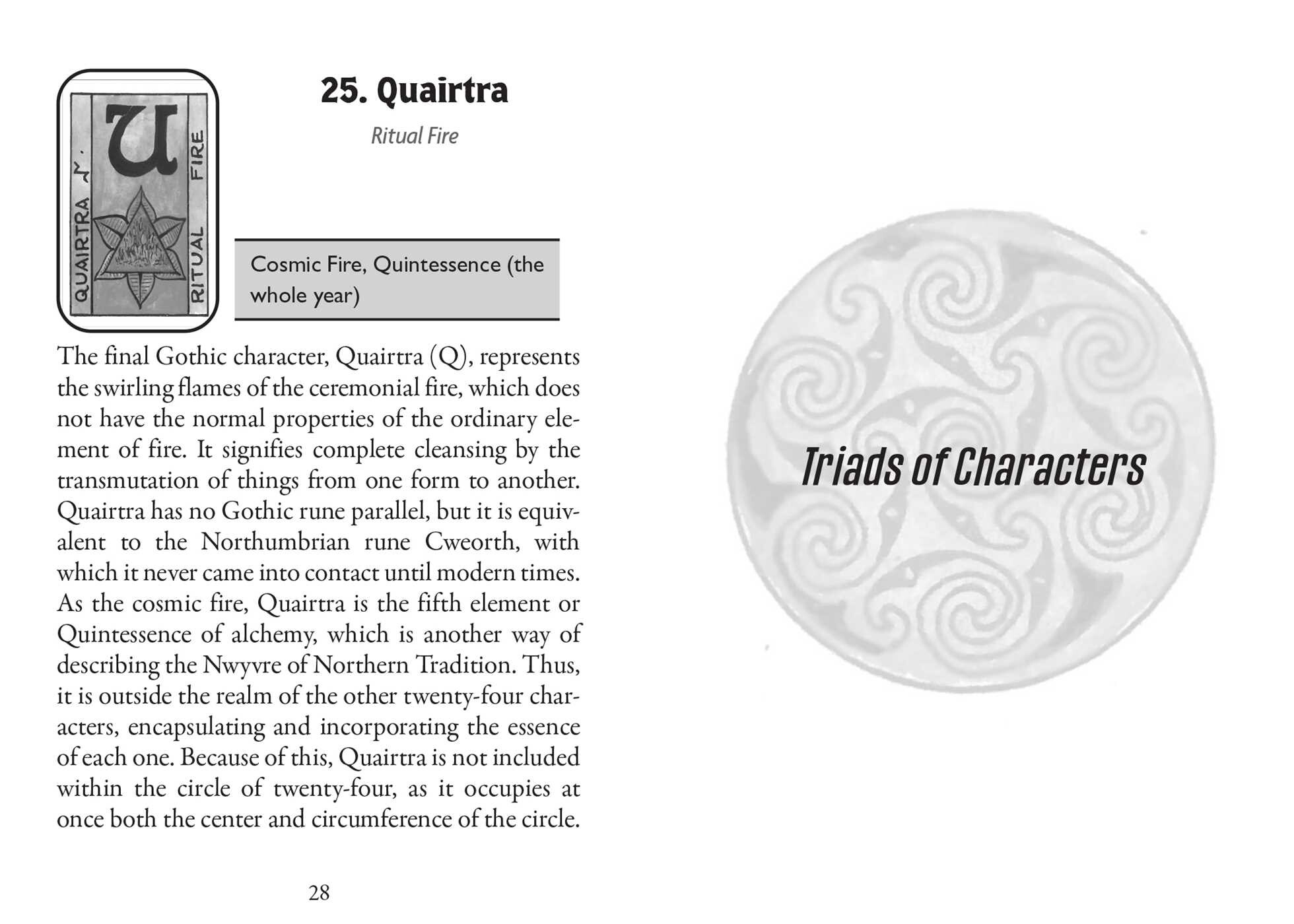
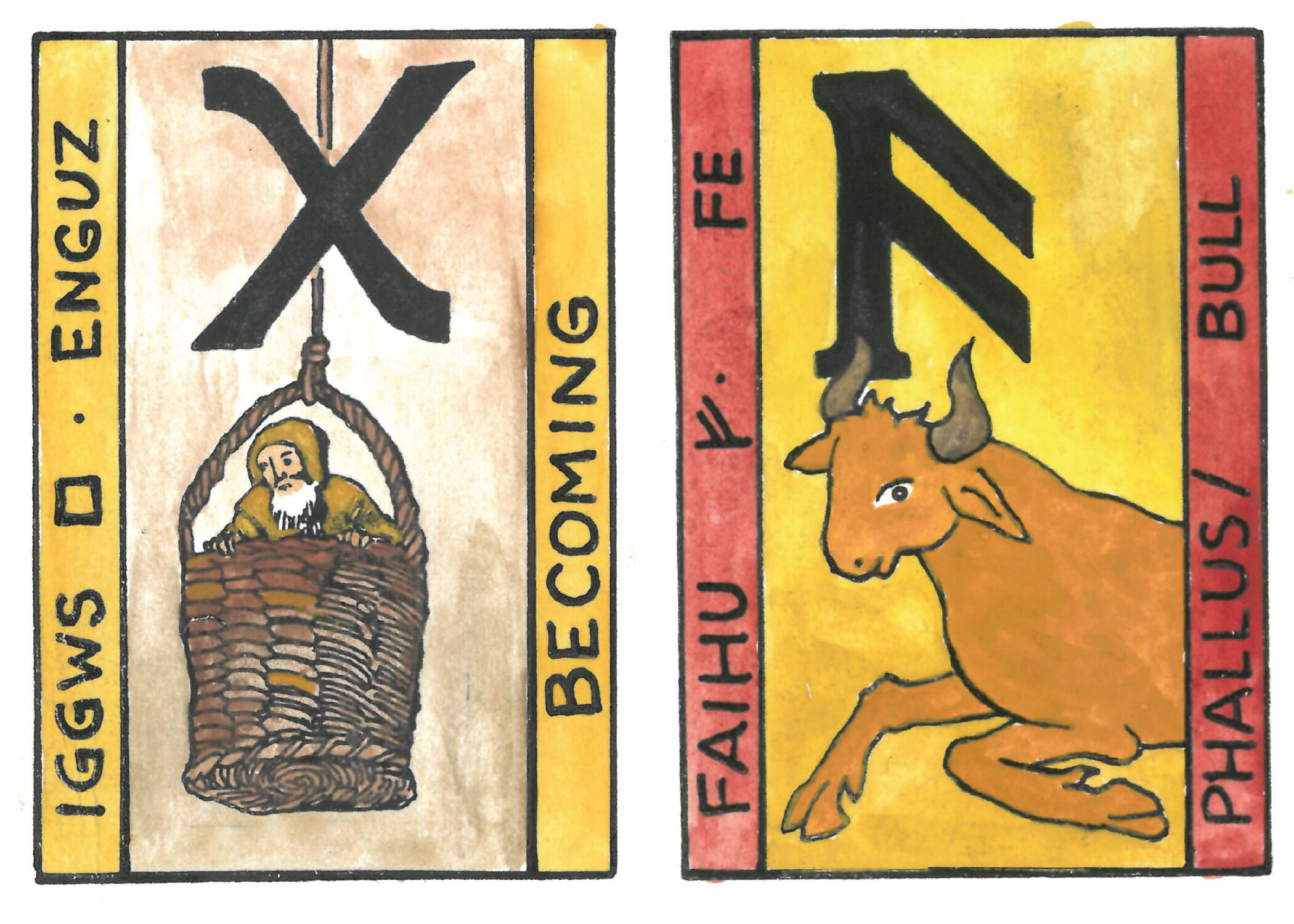
The day cycle begins with the character Faihu, or the Gothic letter Fe. It commences at 12:30 and runs until 13:30. When we use local solar time, which is shown by a sundial, then the sun is in any one Gothic character-direction at its corresponding time of day. Correspondingly, the rune Jer or the character Gaar occupies the northernmost slot, while Dags/Daaz is the most southerly. The character guarding the eastern airt is Bairkan or Bercna, while Kusma or Chozma stands as the representative of the west.
The other characters occupy their corresponding positions in the day circle. Each Gothic character- hour runs from the half before the “hour” until the half after it. Using the twenty-four-hour clock, we can see that the character hour of Jer/ Gaar begins at 23:30 hours and is active until 00:30 hours. The next character hour, Aihus/Waer, runs from 00:30 until 1:30, and so on. The final Gothic character hour in the circle, ruled by Dags/Daaz, begins at 11:30 and ends at 12:30 hours.
It is a general principle that, unless there are exceptional circumstances, it is undesirable to conduct divinations during the hours of darkness. According to Northern Tradition teachings, divinatory procedures should take place “In the face of the Sun, and the eye of the light.” But when a divination must be carried out for a special reason in relation to a certain character and its corresponding direction, then it may have to be performed at night. This comes about because sometimes it is necessary to make the shoat in the direction of a specific character at the corresponding character-hour of the day or night. In these cases, the rig that we use must face toward the apparent position of the sun, whether it is visible or not.
The earliest recorded technique of rune-reading tells that slivers of wood marked with characters were cast upon a cloth. From this comes the expression “casting the runes.” A similar technique was used by the Greeks, who threw the sheep knucklebones called astragali in a ceremonial manner. The patterns they formed gave the divinatory reading. Sometimes the astragali were marked in some way, with letters or dots like dice, and indeed, they may be the origin of dice.
Significantly, Icelandic folklore ascribed the invention of both the runes and of dice to Odin. Like the runes, dice originated as a technique of divination. They are related to numerical and combinatorial oracles like divinatory geomancy.* Although at one time the runes were cast, developments in technique mean that today there are many other possibilities of using symbolic letters in divination. There are two basic forms that can be used. Either the letters or runes are carved or drawn upon stones, or some form of cards can be made. Either kind lends itself to the following methods.
The most basic way of choosing a rune or Gothic character is simply to pull one card from the deck (or, if using rune stones, to take one stone from a bag). This gives an instant reading, which has the merit of being spontaneous but the drawback that any negative thoughts, states of mind, or surrounding conditions will inevitably be apparent. As in all traditional systems of divination, it is far more desirable to conduct a divination in a ceremonial manner. When we cast the characters ceremonially, then we must be mindful of the diviner’s location and the direction in which the divination is to be made before we conduct the ceremony. Most importantly is to be in a proper frame of mind, free of preoccupations and distractions, while conducting a divination.
RAED WAEN: RIDING THE WAGON
A useful ceremonial technique of Gothic divination is known as Raed Waen, “riding the wagon.” In this technique, the diviner places him- or herself metaphorically in the position of the god or goddess on the wagon, from which all things can be seen. Riding the wagon is a divinatory rite in which the actual casting, called the shoat or shoot, is carried out. When we conduct the ceremony of Raed Waen, we always consider the surrounding physical and psychic environment. As with any activity that requires harmony with prevailing conditions, it is necessary be aware of their effects upon the proceedings.
When we choose to conduct Raed Waen indoors, then the axis of the shoat should coincide with the main axis of the room—the rig or right line. This can be visualized as an imaginary straight line drawn across the floor. It need not be accurate in surveying terms, and it can be worked out easily. Theoretically, the right line should be the alignment that is best in harmony with the energies of the Earth in that room, and is therefore an aspect of the ancient art of location. In a building where the walls are oriented correctly—that is, facing the four cardinal directions—the axis should lie in the direction east–west. In the Northern Tradition, this is the direction of non-adversarial interactions, lying at right angles to the presence, which is the place of the gods located in the north.
In the Northern Tradition, the adversarial orientation has the “plaintiff“ facing northward to be judged by the judge, who faces him or her southward from the presence in the north. But as in all areas of locational practice, if it is impractical to lay an east–west axis, then the rig should be laid out parallel to the longer wall, dividing the floor space into two parts.
Once the line has been determined, then the casting cloth, also called a shoat, can be aligned along this axial rig. The shoat’s dimensions should be taken from the bodily dimensions of the diviner. This measure is the diviner’s own length from his or her feet to the fingertips, when they are held at full stretch above the head. The cloth’s width should be identical with the distance between the diviner’s outstretched arms, measured from fingertip to fingertip. This is the traditional measure of the personal fathom. Of course, the cloth should be made ceremonially well in advance of the time it is needed for divination.
When a divination is to be made, we place the cloth on the floor in such a way that its central point is located one-third of the way along the right line. Ideally, the view of the diviner is thus along the longer part of the room. The wall in front of the diviner then becomes positive, and the wall behind her or him, negative. Proper orientation according to the traditional European principles of locational geomancy means that east is positive, west negative, with the presence north to the left and south to the right. From the inquirer’s (also known as the querent, the subject of the reading who is present with the diviner) viewpoint, the direction along the rig toward the positive wall is considered “up,” and that nearer to the diviner, “down.” “Left” and “right” refer to the diviner’s actual left and right.
Out of doors, Gothic divination has two orientational principles. It is possible either to do an orientation by the sun, as described below, or to align the shoat toward the holy island of Gotland, the spiritual homeland of the Goths. This ancestral island lies in the Baltic Sea to the east of Sweden. Its geographical location is N 57˚30’, E 18˚30’, approximately. Use a map if necessary. By orientating toward Gotland, we can partake of the spiritual qualities of the sacred land when we use the Gothic technique. Alternatively, we can orientate the right line toward the sun at the time that we are performing the ceremony. According to traditional belief, human energy flows toward the sun, while the sun’s energy comes toward us in a complementary manner. Naturally, this direction is changing continuously, and its actual orientation depends on the time of day. At true midday, the sun stands due south, and at midnight, though it invisible to us “beneath the Earth,” it stands at due north. The other times of day and night have their own proper solar orientation, with the sun appearing to complete a whole cycle in twenty-four hours. In the Northern Tradition correspondence used here, each of these twenty-four hours corresponds with one of the twenty-four Gothic runes, and the first twenty-four Gothic letters. Only the Gothic character Quairtra is outside and beyond the cycle.
We can visualize this whole character-circle if we think of ourselves standing inside a circular building with a series of twenty-four stained glass windows all around us. Each of the windows is filled with radiant glass depicting one of the Gothic characters in its appropriate position. Each occupies one twenty-fourth part of the circle. During the daylight hours, we could see the sun illuminating each character in its proper turn at the correct hour. This is because each character is located at a certain airt (compass direction) that corresponds with the direction of the sun at a specific hour of the twenty-four-hour cycle.
The day cycle begins with the character Faihu, or the Gothic letter Fe. It commences at 12:30 and runs until 13:30. When we use local solar time, which is shown by a sundial, then the sun is in any one Gothic character-direction at its corresponding time of day. Correspondingly, the rune Jer or the character Gaar occupies the northernmost slot, while Dags/Daaz is the most southerly. The character guarding the eastern airt is Bairkan or Bercna, while Kusma or Chozma stands as the representative of the west.
The other characters occupy their corresponding positions in the day circle. Each Gothic character- hour runs from the half before the “hour” until the half after it. Using the twenty-four-hour clock, we can see that the character hour of Jer/ Gaar begins at 23:30 hours and is active until 00:30 hours. The next character hour, Aihus/Waer, runs from 00:30 until 1:30, and so on. The final Gothic character hour in the circle, ruled by Dags/Daaz, begins at 11:30 and ends at 12:30 hours.
It is a general principle that, unless there are exceptional circumstances, it is undesirable to conduct divinations during the hours of darkness. According to Northern Tradition teachings, divinatory procedures should take place “In the face of the Sun, and the eye of the light.” But when a divination must be carried out for a special reason in relation to a certain character and its corresponding direction, then it may have to be performed at night. This comes about because sometimes it is necessary to make the shoat in the direction of a specific character at the corresponding character-hour of the day or night. In these cases, the rig that we use must face toward the apparent position of the sun, whether it is visible or not.
Product Details
- Publisher: Destiny Books (June 30, 2026)
- Length: 160 pages
- ISBN13: 9798888501597
Browse Related Books
Resources and Downloads
High Resolution Images
-
Book Cover Image (jpg): Secret Wisdom of the Goth Oracle
Cards 9798888501597
Published by Destiny Books
Distributed by Simon & Schuster
Join our mailing list!
By clicking 'Sign me up' I acknowledge that I have read and agree to the privacy policy and terms of use.