
Get our latest staff recommendations, award news and digital catalog links right to your inbox.
Table of Contents
About The Book
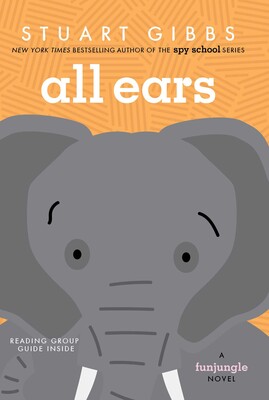
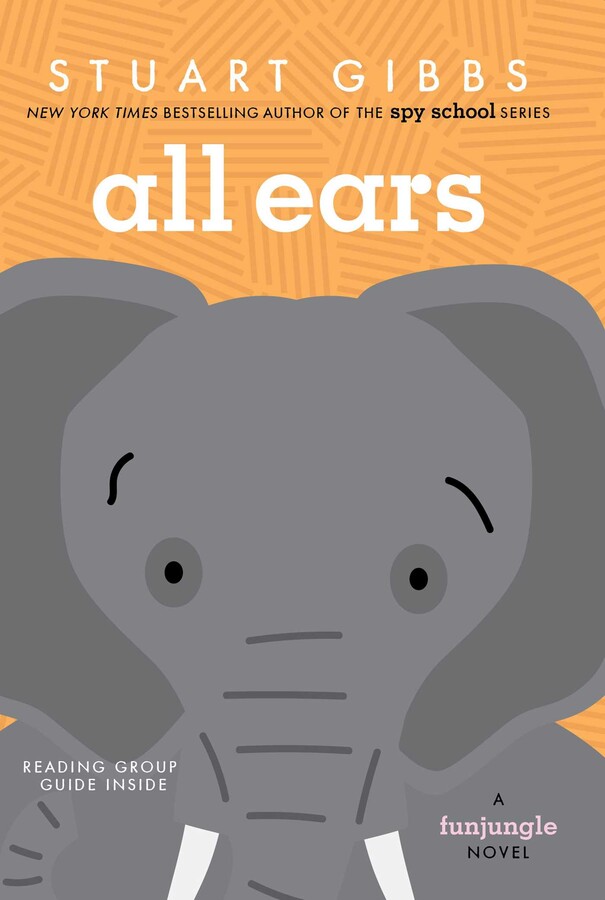
In the ninth novel in New York Times bestselling author Stuart Gibbs’s FunJungle series, resident sleuth Teddy Fitzroy is on the case to find a missing elephant and clear his friend of vandalism.
When a herd of elephants interrupts the big Friday night football game, the police enlist Teddy and his father to assist them in getting the animals safely back home to the elephant sanctuary. Only when they arrive, their owners realize one of the elephants has gone missing! The lone African elephant, Tanzy, is still out there somewhere.
Then Teddy’s best friend, Xavier, is accused of vandalizing a bulldozer in protest of a builder ruining a beloved piece of land they call TurtleTown. Teddy is torn. His best friend needs him but so does Tanzy. Can Teddy crack both cases before someone gets hurt?
When a herd of elephants interrupts the big Friday night football game, the police enlist Teddy and his father to assist them in getting the animals safely back home to the elephant sanctuary. Only when they arrive, their owners realize one of the elephants has gone missing! The lone African elephant, Tanzy, is still out there somewhere.
Then Teddy’s best friend, Xavier, is accused of vandalizing a bulldozer in protest of a builder ruining a beloved piece of land they call TurtleTown. Teddy is torn. His best friend needs him but so does Tanzy. Can Teddy crack both cases before someone gets hurt?
Excerpt
Chapter 1: Weirdest Crime Ever 1 WEIRDEST CRIME EVER
I was on the scene when the elephant vanished, because I’d been hired to catch a urine thief.
I realize that “detective” is an unusual job for an eighth grader. The other kids at my middle school did chores for their parents or mowed lawns for their neighbors. I solved mysteries. I hadn’t really chosen to do this; it just sort of happened. I was in the right place at the right time to crack a few cases, and word got out that I had a knack for it.
So when the Common Scents Company called me up and offered to pay me to solve a crime, I was intrigued. Up until that point, I’d been helping everyone for free. Making money to do it sounded much better—and far less sweaty than mowing lawns.
Although the crime turned out to be absolutely bizarre.
“How much do you know about the deer urine business, Teddy?” asked Tessa Claymore.
“Er… nothing,” I admitted.
It was a Friday evening in late September, and we were in Tessa’s pickup truck, jouncing along one of the dusty four-wheel-drive roads on her ranch. Like much of the Texas Hill Country, her land was covered by a scrubby forest of live oak and cedar trees, with the occasional grassy clearing or patch of prickly pear cactus. From the road, it had looked like a typical cattle ranch, although it now occurred to me that I hadn’t seen any cattle.
Tessa’s pickup was brand new. It smelled fresh and clean inside, and there were only 216 miles on the odometer.
Tessa was about my parents’ age, dressed in standard ranching garb: boots, jeans, button-down shirt, and cowboy hat. She had the dark tan of someone who spent a lot of time outdoors, and her long black hair was woven into a braid that ran down her back.
“How about you?” Tessa asked my father. Dad was along for the ride; he had driven me to the ranch as soon as I got home from soccer practice after school. I could have ridden my bike there, but it was old and only had one working gear. It would have taken me half an hour each way, and it was already getting late. The roads in the Hill Country weren’t safe after dark; they were narrow and windy, and people often drove way too fast on them. I had offered to visit the ranch the next morning, but Tessa wanted me to get started right away, so Dad had brought me.
“I’ve used urine on occasion,” Dad said.
“You’re a hunter?” Tessa asked.
“Wildlife photographer,” Dad corrected.
I suddenly realized what they were talking about. “People use the urine to lure deer?”
“And to conceal their own scent,” Tessa added. “We make a variety of products here to aid hunters in their pursuit of game.” She looked to Dad again. “Although I never considered the wildlife photographer market before.”
“It’s probably a lot smaller than the hunter market,” Dad told her. “And since I’m always working in new places, I usually make my own scents. I’m not sure that an African antelope would be attracted to urine from a Texan deer.”
“Don’t be so sure,” Tessa said. “You ought to try my Hot Mama Doe Lure next time you go on assignment. I promise you, if there’s a male with hooves close enough to smell it, he’ll come running.”
She steered around a stand of trees, and what I assumed to be the urine collection facility came into view: a large white barn that looked almost as new as Tessa’s truck. It was built into the slope of a low hill so that the end closest to us was six feet above the ground and rested on a series of struts.
Both sides of the barn were flanked by several fenced-in paddocks, each of which held dozens of white-tailed deer.
“Beautiful, isn’t it?” Tessa asked. She parked her truck right beside the barn and hopped out.
Dad and I did too. The moment we exited the air-conditioned cab, we were walloped by the heat.
Central Texas had suffered through a brutally hot August, and to everyone’s dismay, September was even worse. The heat had been relentless. Even though it was close to sunset, it was still ninety degrees—and the extreme humidity made it seem closer to a hundred.
I immediately felt extra thankful that my father had driven me to Tessa’s ranch. Soccer practice had been bad enough; cycling along baking asphalt roads on such a sweltering day would have been agony.
Several large air conditioners beside the barn were humming at full blast.
“Are we going inside?” I asked hopefully.
“Sure thing.” Tessa took a key ring from her pocket and led us toward the door. “If you’re gonna help me, you need to understand how the urine business works.”
Dad had recognized how new the building was too, because he said, “Looks like this is a relatively young business.”
“Yes and no,” Tessa replied. “My husband’s family has been raising cattle here for generations, but that line of work isn’t what it used to be. Meanwhile, we’d heard the urine business was lucrative. So a few years back, we decided to experiment with it. We built some pens, then got some deer and a few portable collection units.” She pointed down the hill to several specialized sheds. They all were about four feet on each side and built on wheels so that they could be moved around.
“Are those Porta-Potties for deer?” I asked.
“That’s right. It’s pretty labor intensive to lure the deer in there one by one, but they paid off enough to make us realize urine was the future. So we built this facility last year.” Tessa unlocked the barn and led us in.
On the inside, it didn’t look much like a barn at all.
To begin with, it was clean. Every barn I had ever been in was filthy, which made sense, given that animals lived in them. The dirt floors were always littered with hay, and, more often than not, the animals had relieved themselves inside. Therefore, barns usually smelled.
But this building wasn’t merely clean; it was practically sterile.
It was a big, empty space with white walls and a white ceiling. There was a steel grating instead of a floor. And even though several dozen female deer were inside, the whole place smelled like antiseptic.
It was cooler than it had been outside, but still not quite as cold as I’d hoped. The space was too big and open. It appeared that the job of the air conditioners was to keep the deer inside from being cooked alive, rather than making the place bearable for humans.
“We rotate our does through here during the day,” Tessa explained proudly. “When they go to the bathroom, everything drops through the grating into a system I designed myself. There’s a few layers of mesh below us that filter out the feces, and then the pure, unadulterated urine flows into the collection unit.”
The deer looked extremely out of place in the industrial setting, but they seemed surprisingly content. One of them casually urinated right in front of us, as though it wanted to help demonstrate how the system worked.
I considered the entire facility. It looked like it had been expensive to build. “Exactly how lucrative is this business?”
Tessa grinned. “A single deer can earn us over twenty thousand dollars a year.”
I gaped at her in surprise, unsure if I had heard her correctly. “You get that much money for deer pee?”
“That’s right,” Tessa confirmed.
Dad whistled appreciatively.
That explains the brand-new truck, I thought.
“It’s a heck of a lot more profitable than ranching was,” Tessa reported. “Plus, urine is a great resource to harvest. It’s environmentally sustainable, cheap to make, and extremely renewable.”
Another deer urinated in front of us.
“Obviously,” Dad observed.
“So what’s the problem?” I asked.
“Someone’s been stealing our urine,” Tessa said.
Only a minute earlier, I would have thought this was the most pointless crime I’d ever heard of. But now that I knew how much deer urine was worth, it made sense.
“How?” I asked.
“I’ll show you.” Tessa led us back out of the barn. I reluctantly followed her into the heat again. We headed toward the end of the barn that jutted out from the hill, passing a few of the corrals full of deer.
“Was it hard to get permits to have all these deer?” Dad asked.
Tessa laughed. “Are you kidding? The government practically begged us to take them. The state’s being overrun with deer. It’s an epidemic.”
That wasn’t exactly true. The deer population in the United States had certainly exploded, which was often attributed to a decline in the number of hunters and the fact that most predators of deer, like wolves and bears, had been exterminated in much of their range. But deer weren’t overpopulating; their numbers had simply rebounded to where they had been before European settlers arrived. For several centuries, the settlers had a devastating effect on the deer, mostly due to habitat loss rather than hunting; millions of acres of forest had been cleared and replaced with small farms. By 1900, the situation was so dire that experts feared deer might go extinct in the United States. But then, as America became more industrial, the farms were replaced by suburbs, which turned out to be surprisingly good habitat for deer, with plenty of lawns to graze on. Now there were estimated to be over thirty-five million deer in the United States, with nearly six million in Texas alone.
This led to all sorts of human–wildlife conflict issues. Deer were hosts to ticks that carried Lyme disease and Rocky Mountain spotted fever. They devoured expensive landscaping. And they got hit by cars a lot: over a million times a year. I’d heard most people call the spike in the deer population an epidemic, but the real problem was that an increasing number of humans were moving into deer territory. The reason so many deer were getting hit by cars wasn’t that there were too many deer, but because there were too many cars.
I didn’t say any of this to Tessa, though. It didn’t seem like a good idea to pick a fight with someone who wanted to hire me. And from what I could see, the deer on her ranch looked like they were being treated well, with ample space and food.
Tessa led us down a flight of steps to the end of the barn that was set on struts. From there, we could see the substructure of the building. Beneath the foundation, a pipe sloped downward, shunting the deer urine to a clear plastic barrel that sat atop a small wooden pedestal.
The barrel was smaller than I’d expected, only big enough to hold about five gallons, and was over three-quarters full of light yellow fluid. As we approached, more urine dribbled into it from the pipe. It was all surprisingly low-tech.
“That’s it?” I asked, pointing toward the barrel. “I thought you’d need a much bigger container for the urine from so many deer.”
“Not if you want high-quality urine,” Tessa said. “If we let it collect in a big old drum and sit around for a while, it’d get stale. And the last thing anyone wants is a hundred gallons of stale urine.”
“Not that many people would want a hundred gallons of fresh urine either,” Dad whispered to me.
“Old urine makes for bad product,” Tessa explained. “We want ours to be harvested as recently as possible. So we swap that container out several times a day. Plus, a small barrel is a lot easier to carry. Five gallons of deer pee weighs over forty pounds.”
I considered the barrel as we approached. There was nothing to secure it in place. “So the thief just swiped the barrel?”
“Er… no,” Tessa corrected. “They only swiped the urine. They must have poured it into another container and then left the barrel behind.”
Dad looked at her curiously. “That seems like a lot more trouble than just taking the barrel.”
“Yes, but they bought themselves some time this way,” Tessa said. “If the barrel was gone, we would have noticed right away. But instead, they filled it back up again.”
“With what?” I asked.
Tessa flushed, embarrassed. “Lemonade.”
I nodded appreciatively. “I guess that looks the same as urine.”
“More than you’d think,” Tessa said. “They used a cheap brand that didn’t have any pulp or seeds in it. My husband didn’t even notice the difference until he was pouring it into our lure-making machine. Which was a disaster. Not only did it ruin several batches of lure, but we had to get the machine serviced, which shut us down for a week. Cost us tens of thousands of dollars. We were hoping it was a one-time thing—but last week, the thief struck again.”
I glanced at my father. I felt bad for Tessa, but at the same time, the idea that a thief was substituting lemonade for deer urine still seemed funny to me. It appeared Dad felt the same way. I could tell he was trying not to laugh.
“Luckily, we were on the alert for trouble,” Tessa went on. “My husband noticed the urine had been swapped out before he made the same mistake. We called the sheriff’s department, but they seemed to think the whole thing was a joke.”
Dad stifled his laughter and tried to look aghast. “That’s just terrible.”
“No kidding.” Tessa looked to me expectantly. “Then we thought of you. Everyone knows about all the crimes you’ve solved over at FunJungle.”
FunJungle was the biggest tourist attraction in central Texas. It was the most state-of-the-art zoo in the world, and it had a theme park as well. My mother was the chief primatologist there, while Dad was the lead photographer. We had lived in the park’s employee housing until a few weeks before, when it had all burned down after a bizarre mishap involving several boxes of discount fireworks and an agitated male kangaroo. FunJungle was renting us an apartment closer to town until new accommodations were built.
I considered the barrel of urine again. There was no security around it. No cameras. No fencing. The plastic barrel wasn’t even secured to the wooden pedestal. “Have you thought about making that harder to steal?”
“Of course,” Tessa replied. “But security’s expensive, and it’ll take a while to install. And it still won’t address the real problem, which is that someone is pilfering our urine. We want to find this yahoo, get our money back, and then send him to jail.”
I now noticed something else about the barrel of urine.
Water had beaded on the sides, like it did on a glass of cold soda on a hot day. But that didn’t make any sense, because the urine should have been even warmer than the air outside, given that it had recently come out of a bunch of live deer. Unless…
I ran to the barrel and pressed my hand against the side. It was much cooler than it should have been.
“This is lemonade,” I said. “The thief has struck again.”
Tessa gasped. “When?”
“This lemonade is still pretty cold,” I told her. “And it’s nasty hot out today. So it couldn’t have been placed here very long ago. The thief probably left just before we got here.”
Tessa’s eyes narrowed angrily.
“Find him,” she said.
I was on the scene when the elephant vanished, because I’d been hired to catch a urine thief.
I realize that “detective” is an unusual job for an eighth grader. The other kids at my middle school did chores for their parents or mowed lawns for their neighbors. I solved mysteries. I hadn’t really chosen to do this; it just sort of happened. I was in the right place at the right time to crack a few cases, and word got out that I had a knack for it.
So when the Common Scents Company called me up and offered to pay me to solve a crime, I was intrigued. Up until that point, I’d been helping everyone for free. Making money to do it sounded much better—and far less sweaty than mowing lawns.
Although the crime turned out to be absolutely bizarre.
“How much do you know about the deer urine business, Teddy?” asked Tessa Claymore.
“Er… nothing,” I admitted.
It was a Friday evening in late September, and we were in Tessa’s pickup truck, jouncing along one of the dusty four-wheel-drive roads on her ranch. Like much of the Texas Hill Country, her land was covered by a scrubby forest of live oak and cedar trees, with the occasional grassy clearing or patch of prickly pear cactus. From the road, it had looked like a typical cattle ranch, although it now occurred to me that I hadn’t seen any cattle.
Tessa’s pickup was brand new. It smelled fresh and clean inside, and there were only 216 miles on the odometer.
Tessa was about my parents’ age, dressed in standard ranching garb: boots, jeans, button-down shirt, and cowboy hat. She had the dark tan of someone who spent a lot of time outdoors, and her long black hair was woven into a braid that ran down her back.
“How about you?” Tessa asked my father. Dad was along for the ride; he had driven me to the ranch as soon as I got home from soccer practice after school. I could have ridden my bike there, but it was old and only had one working gear. It would have taken me half an hour each way, and it was already getting late. The roads in the Hill Country weren’t safe after dark; they were narrow and windy, and people often drove way too fast on them. I had offered to visit the ranch the next morning, but Tessa wanted me to get started right away, so Dad had brought me.
“I’ve used urine on occasion,” Dad said.
“You’re a hunter?” Tessa asked.
“Wildlife photographer,” Dad corrected.
I suddenly realized what they were talking about. “People use the urine to lure deer?”
“And to conceal their own scent,” Tessa added. “We make a variety of products here to aid hunters in their pursuit of game.” She looked to Dad again. “Although I never considered the wildlife photographer market before.”
“It’s probably a lot smaller than the hunter market,” Dad told her. “And since I’m always working in new places, I usually make my own scents. I’m not sure that an African antelope would be attracted to urine from a Texan deer.”
“Don’t be so sure,” Tessa said. “You ought to try my Hot Mama Doe Lure next time you go on assignment. I promise you, if there’s a male with hooves close enough to smell it, he’ll come running.”
She steered around a stand of trees, and what I assumed to be the urine collection facility came into view: a large white barn that looked almost as new as Tessa’s truck. It was built into the slope of a low hill so that the end closest to us was six feet above the ground and rested on a series of struts.
Both sides of the barn were flanked by several fenced-in paddocks, each of which held dozens of white-tailed deer.
“Beautiful, isn’t it?” Tessa asked. She parked her truck right beside the barn and hopped out.
Dad and I did too. The moment we exited the air-conditioned cab, we were walloped by the heat.
Central Texas had suffered through a brutally hot August, and to everyone’s dismay, September was even worse. The heat had been relentless. Even though it was close to sunset, it was still ninety degrees—and the extreme humidity made it seem closer to a hundred.
I immediately felt extra thankful that my father had driven me to Tessa’s ranch. Soccer practice had been bad enough; cycling along baking asphalt roads on such a sweltering day would have been agony.
Several large air conditioners beside the barn were humming at full blast.
“Are we going inside?” I asked hopefully.
“Sure thing.” Tessa took a key ring from her pocket and led us toward the door. “If you’re gonna help me, you need to understand how the urine business works.”
Dad had recognized how new the building was too, because he said, “Looks like this is a relatively young business.”
“Yes and no,” Tessa replied. “My husband’s family has been raising cattle here for generations, but that line of work isn’t what it used to be. Meanwhile, we’d heard the urine business was lucrative. So a few years back, we decided to experiment with it. We built some pens, then got some deer and a few portable collection units.” She pointed down the hill to several specialized sheds. They all were about four feet on each side and built on wheels so that they could be moved around.
“Are those Porta-Potties for deer?” I asked.
“That’s right. It’s pretty labor intensive to lure the deer in there one by one, but they paid off enough to make us realize urine was the future. So we built this facility last year.” Tessa unlocked the barn and led us in.
On the inside, it didn’t look much like a barn at all.
To begin with, it was clean. Every barn I had ever been in was filthy, which made sense, given that animals lived in them. The dirt floors were always littered with hay, and, more often than not, the animals had relieved themselves inside. Therefore, barns usually smelled.
But this building wasn’t merely clean; it was practically sterile.
It was a big, empty space with white walls and a white ceiling. There was a steel grating instead of a floor. And even though several dozen female deer were inside, the whole place smelled like antiseptic.
It was cooler than it had been outside, but still not quite as cold as I’d hoped. The space was too big and open. It appeared that the job of the air conditioners was to keep the deer inside from being cooked alive, rather than making the place bearable for humans.
“We rotate our does through here during the day,” Tessa explained proudly. “When they go to the bathroom, everything drops through the grating into a system I designed myself. There’s a few layers of mesh below us that filter out the feces, and then the pure, unadulterated urine flows into the collection unit.”
The deer looked extremely out of place in the industrial setting, but they seemed surprisingly content. One of them casually urinated right in front of us, as though it wanted to help demonstrate how the system worked.
I considered the entire facility. It looked like it had been expensive to build. “Exactly how lucrative is this business?”
Tessa grinned. “A single deer can earn us over twenty thousand dollars a year.”
I gaped at her in surprise, unsure if I had heard her correctly. “You get that much money for deer pee?”
“That’s right,” Tessa confirmed.
Dad whistled appreciatively.
That explains the brand-new truck, I thought.
“It’s a heck of a lot more profitable than ranching was,” Tessa reported. “Plus, urine is a great resource to harvest. It’s environmentally sustainable, cheap to make, and extremely renewable.”
Another deer urinated in front of us.
“Obviously,” Dad observed.
“So what’s the problem?” I asked.
“Someone’s been stealing our urine,” Tessa said.
Only a minute earlier, I would have thought this was the most pointless crime I’d ever heard of. But now that I knew how much deer urine was worth, it made sense.
“How?” I asked.
“I’ll show you.” Tessa led us back out of the barn. I reluctantly followed her into the heat again. We headed toward the end of the barn that jutted out from the hill, passing a few of the corrals full of deer.
“Was it hard to get permits to have all these deer?” Dad asked.
Tessa laughed. “Are you kidding? The government practically begged us to take them. The state’s being overrun with deer. It’s an epidemic.”
That wasn’t exactly true. The deer population in the United States had certainly exploded, which was often attributed to a decline in the number of hunters and the fact that most predators of deer, like wolves and bears, had been exterminated in much of their range. But deer weren’t overpopulating; their numbers had simply rebounded to where they had been before European settlers arrived. For several centuries, the settlers had a devastating effect on the deer, mostly due to habitat loss rather than hunting; millions of acres of forest had been cleared and replaced with small farms. By 1900, the situation was so dire that experts feared deer might go extinct in the United States. But then, as America became more industrial, the farms were replaced by suburbs, which turned out to be surprisingly good habitat for deer, with plenty of lawns to graze on. Now there were estimated to be over thirty-five million deer in the United States, with nearly six million in Texas alone.
This led to all sorts of human–wildlife conflict issues. Deer were hosts to ticks that carried Lyme disease and Rocky Mountain spotted fever. They devoured expensive landscaping. And they got hit by cars a lot: over a million times a year. I’d heard most people call the spike in the deer population an epidemic, but the real problem was that an increasing number of humans were moving into deer territory. The reason so many deer were getting hit by cars wasn’t that there were too many deer, but because there were too many cars.
I didn’t say any of this to Tessa, though. It didn’t seem like a good idea to pick a fight with someone who wanted to hire me. And from what I could see, the deer on her ranch looked like they were being treated well, with ample space and food.
Tessa led us down a flight of steps to the end of the barn that was set on struts. From there, we could see the substructure of the building. Beneath the foundation, a pipe sloped downward, shunting the deer urine to a clear plastic barrel that sat atop a small wooden pedestal.
The barrel was smaller than I’d expected, only big enough to hold about five gallons, and was over three-quarters full of light yellow fluid. As we approached, more urine dribbled into it from the pipe. It was all surprisingly low-tech.
“That’s it?” I asked, pointing toward the barrel. “I thought you’d need a much bigger container for the urine from so many deer.”
“Not if you want high-quality urine,” Tessa said. “If we let it collect in a big old drum and sit around for a while, it’d get stale. And the last thing anyone wants is a hundred gallons of stale urine.”
“Not that many people would want a hundred gallons of fresh urine either,” Dad whispered to me.
“Old urine makes for bad product,” Tessa explained. “We want ours to be harvested as recently as possible. So we swap that container out several times a day. Plus, a small barrel is a lot easier to carry. Five gallons of deer pee weighs over forty pounds.”
I considered the barrel as we approached. There was nothing to secure it in place. “So the thief just swiped the barrel?”
“Er… no,” Tessa corrected. “They only swiped the urine. They must have poured it into another container and then left the barrel behind.”
Dad looked at her curiously. “That seems like a lot more trouble than just taking the barrel.”
“Yes, but they bought themselves some time this way,” Tessa said. “If the barrel was gone, we would have noticed right away. But instead, they filled it back up again.”
“With what?” I asked.
Tessa flushed, embarrassed. “Lemonade.”
I nodded appreciatively. “I guess that looks the same as urine.”
“More than you’d think,” Tessa said. “They used a cheap brand that didn’t have any pulp or seeds in it. My husband didn’t even notice the difference until he was pouring it into our lure-making machine. Which was a disaster. Not only did it ruin several batches of lure, but we had to get the machine serviced, which shut us down for a week. Cost us tens of thousands of dollars. We were hoping it was a one-time thing—but last week, the thief struck again.”
I glanced at my father. I felt bad for Tessa, but at the same time, the idea that a thief was substituting lemonade for deer urine still seemed funny to me. It appeared Dad felt the same way. I could tell he was trying not to laugh.
“Luckily, we were on the alert for trouble,” Tessa went on. “My husband noticed the urine had been swapped out before he made the same mistake. We called the sheriff’s department, but they seemed to think the whole thing was a joke.”
Dad stifled his laughter and tried to look aghast. “That’s just terrible.”
“No kidding.” Tessa looked to me expectantly. “Then we thought of you. Everyone knows about all the crimes you’ve solved over at FunJungle.”
FunJungle was the biggest tourist attraction in central Texas. It was the most state-of-the-art zoo in the world, and it had a theme park as well. My mother was the chief primatologist there, while Dad was the lead photographer. We had lived in the park’s employee housing until a few weeks before, when it had all burned down after a bizarre mishap involving several boxes of discount fireworks and an agitated male kangaroo. FunJungle was renting us an apartment closer to town until new accommodations were built.
I considered the barrel of urine again. There was no security around it. No cameras. No fencing. The plastic barrel wasn’t even secured to the wooden pedestal. “Have you thought about making that harder to steal?”
“Of course,” Tessa replied. “But security’s expensive, and it’ll take a while to install. And it still won’t address the real problem, which is that someone is pilfering our urine. We want to find this yahoo, get our money back, and then send him to jail.”
I now noticed something else about the barrel of urine.
Water had beaded on the sides, like it did on a glass of cold soda on a hot day. But that didn’t make any sense, because the urine should have been even warmer than the air outside, given that it had recently come out of a bunch of live deer. Unless…
I ran to the barrel and pressed my hand against the side. It was much cooler than it should have been.
“This is lemonade,” I said. “The thief has struck again.”
Tessa gasped. “When?”
“This lemonade is still pretty cold,” I told her. “And it’s nasty hot out today. So it couldn’t have been placed here very long ago. The thief probably left just before we got here.”
Tessa’s eyes narrowed angrily.
“Find him,” she said.
Reading Group Guide
Join our mailing list! Get our latest staff recommendations, award news and digital catalog links right to your inbox.
By clicking 'Sign me up' I acknowledge that I have read and agree to the privacy policy and terms of use.
Reading Group Guide
All Ears
A FunJungle Novel
By Stuart Gibbs
Discussion Questions
1. In the opening of All Ears, Teddy shares, “I realize that ‘detective’ is an unusual job for an eighth grader. . . . I solved mysteries. I hadn’t really chosen to do this; it just sort of happened. I was in the right place at the right time to crack a few cases, and word got out that I had a knack for it.” From what you read about Teddy in this novel or in previous books in the FunJungle series, what specific qualities does Teddy possess that make him particularly adept at detective work?
2. Teddy relates, “When the Common Scents Company called me up and offered to pay me to solve a crime, I was intrigued. Up until that point, I’d been helping everyone for free.” (Chapter one) Are you surprised to learn that thus far, Teddy has been solving mysteries for free? Do you think it’s fair that he hasn’t been paid by those he helps? Why or why not?
3. As Teddy investigates the urine theft, Teddy and Tessa chase the thief to Drake High School, where they discover a herd of elephants has gotten loose on the football field. This bizarre situation becomes a major distraction for the local police force. Why is Teddy concerned about their ability to handle the situation? Why are the behaviors of the crowd so problematic?
4. While trying to convince the police officers to accept their assistance with securing the loose elephants at the local high school football game, Teddy’s dad tells the police, “‘We know plenty. Trust me, you need us.’” (Chapter three) Why might the police be naturally inclined to pass on their offer, rather than accept their help? What do Teddy and his father have to offer?
5. As the police tell Teddy and his father about the significant challenges they already face at the football game due to the intense rivalry of the teams, Teddy’s dad states, “‘Teenagers can be awfully passionate,’” to which the police correct him by offering, “‘Oh it’s not the teens we’re concerned about. It’s the adults. The hate runs deep in this community. Last year, an all-out brawl erupted when a Drake parent mooned Danville’s principal in the parking lot.’” (Chapter three) Does it surprise you to learn that the parents behave more poorly than their kids? Why or why not?
6. While trying to uncover the mystery of the disappearance of Tanzy, an African elephant from the Sinclair Family Wildlife Sanctuary, Teddy states that “the Sanctuary fell under the jurisdiction of Sheriff Lyle Esquivel, which was a problem. My previous encounters with him hadn’t been good ones. He was gruff, grumpy, and not very interested in detective work. He and his deputies didn’t do much except hand out speeding tickets." (Chapter four) Based on the history between them and the description of the sheriff provided by Teddy, why might Sheriff Esquivel take issue with Teddy and his search for Tanzy?
7. When Teddy inquires whether Summer is going to help work on the case, she tells him, “‘You can’t Sherlock without Watson.’” (Chapter four) What makes Summer’s assistance in investigating so invaluable to Teddy? In what ways are their individual skills unique? What are some of the specific ways in which Summer shines?
8. After reading All Ears, what do you believe would be the most rewarding part of participating in an investigation such as this one? Discuss any major drawbacks to this kind of experience, as well.
9. As Teddy and the Sinclairs attempt to focus on possible suspects for Tanzy’s disappearance, Teddy sees a photo of the African elephant and states, “‘Those are really big tusks. . . . I’ll bet they’re worth a lot of money. Maybe someone wanted them.’” (Chapter five) Why is this possibility so worrisome? How does realizing all the ways Tanzy might prove financially valuable to her kidnapper make this investigation more urgent?
10. After Teddy’s dad presses to better understand Anna’s evidence that the elephants were assisted in escaping, she tells him, “‘My elephants would never break through that fence, even if the electricity was down. They have all the food and affection they could possibly want at the Sanctuary. Why would they try to escape? Someone definitely let them out.’” (Chapter six) Consider her logic and debate as a group why you believe she’s right or wrong.
11. Teddy tells Xavier, “‘That’s not an emergency . . . I have a missing elephant to find. She could be in danger.’” Xavier retorts by crying, “‘I could get sent to juvenile hall!’” (Chapter seven) Why does Teddy not realize how anxious Xavier is about being falsely accused of vandalism?
12. Xavier is accused of vandalizing construction equipment at TurtleTown, a former reptile habitat. The habitat is being turned into a wind farm by J.J. McCracken, the owner of FunJungle, and Summer’s father. Summer notes that “‘a whole lot of land like this got destroyed for the park. Which means that even though FunJungle teaches people about conservation and helps protect endangered species, a bunch of local animals lost their habitat and maybe even died because of it. Is it worth that?’” (Chapter nine) As a class, debate the ethics of Xavier’s attempt to halt construction, and whether FunJungle’s existence is moral.
13. Though they both agree it’s probable that someone stole Tanzy in order to hunt her locally, Teddy and Summer argue about who they believe is the most likely suspect. Summer makes a case for Mel Frewer, an orthodontist, and argues that orthodontists have “‘basically found a way to torture people and get their victims to pay for it. That’s sadistic. A person who has a job where they cause children pain would absolutely be willing to steal and hunt an elephant.’” (Chapter twelve) Consider Summer’s logic about orthodontists. Do you think her rationale makes sense? Why or why not?
14. Why is Tessa Claymore ultimately not surprised to learn that the thief stealing her deer urine is her “no-good brother-in-law,” Travis. Why might Travis be motivated to continue to target Tessa?
15. Is Xavier’s ongoing frustration with Teddy warranted when Teddy doesn’t shift all his attention to proving his best friend’s innocence after Xavier is arrested for vandalizing construction equipment at TurtleTown? Why or why not? How do you think this will impact their relationship going forward?
16. Describe Waldo Grimes. Explain why you were surprised (or not, supported by evidence in the novel) to learn he was orchestrating crimes to drum up business for his security company.
17. Throughout All Ears, readers learn a lot about elephants. What were some of your favorite things to learn? What makes elephants so special and worth protecting?
18. As the story ends, Teddy and Summer have once again solved another important case. Predict what new mystery will come their way in the next installment of the FunJungle books.
Extension Activities
- In All Ears, readers learn a myriad of interesting facts about elephants. Begin by reviewing elephant species here: https://www.worldwildlife.org/species/elephant.
After these readings, research to learn more about today’s conservation efforts for these majestic creatures. Using gathered new knowledge, have students take that information and, using the medium of their choice, create a visual that can be showcased and shared with others.
- Readers are introduced to Tessa Claymore, a farmer who sells deer urine to hunters. Use the following article from the Seattle Times to learn more about a real-life deer urine farmer in Pennsylvania: https://www.seattletimes.com/nation-world/pennsylvanias-golden-harvest-deer-urine/.
While reading, be sure to look for the following:
o How much urine does this farmer harvest?
o How much does deer urine typically sell for?
o Why do hunters utilize deer urine?
o What are the biggest challenges to this work?
As an extension, review the following to learn about other strange occupations: https://theweek.com/speedreads/448924/deer-urine-farmers-are-real-thing-25-other-strange-occupations.
After reading, select one that intrigues you and make a case for why you might be willing to give it a try.
- In All Ears, readers learn that TurtleTown, a former reptile habit, is being destroyed to build a wind farm in its place. This habitat destruction causes environmental concern and highlights the conflict between development and nature. Using resources from the National Wildlife Federation (https://www.nwf.org/Educational-Resources/Wildlife-Guide/Threats-to-Wildlife/Habitat-Loss), work together with a small group to research and learn more, also focusing on the following questions:
o How is habitat destruction defined?
o What are the main causes of habitat loss?
o What are ways to combat habitat loss?
o How can individuals make a personal difference?
o Are there any local campaigns in your area dealing with this issue?
Work together to build an awareness campaign that can be shared with classmates or your school’s community.
- Save the Elephants (https://savetheelephants.org/) is an organization that works to secure a future for elephants like those highlighted in All Ears. Using library resources and the internet, have students research to learn more about their important work and the outcomes of these endeavors.
Be sure to learn the following:
o What are their primary goals?
o Who makes up their team?
o Do they have unique focuses that other elephant-focused organizations don’t have?
o Who are the other collaborators of these programs?
o What are some of the biggest challenges faced?
o Are there specific things young people can do to help?
After gathering this information, have students create a visual presentation that illustrates their findings.
- Throughout the novel, readers learn that the elephants are endangered from a variety of human-led activities. Working together, examine National Geographic’s website resources here: https://www.nationalgeographic.com/animals/article/both-african-elephant-species-are-now-endangered-one-critically.
While reading and examining their resources, have students journal or create a “What I’ve Learned” notes page, detailing what information is new to them, and why they believe it to be significant. After finishing, be sure to have students share their findings with others.
This guide was created by Dr. Rose Brock, an associate professor at Sam Houston State University. Dr. Brock holds a Ph.D. in Library Science, specializing in children’s and young adult literature.
The websites referenced above are provided for informational purposes only and are not intended as an endorsement or promotion of any website. Simon & Schuster is not responsible for the functionality or content of any external website and expressly disclaims all responsibility and liability in connection therewith.
This guide has been provided by Simon & Schuster for classroom, library, and reading group use. It may be reproduced in its entirety or excerpted for these purposes. For more Simon & Schuster guides and classroom materials, please visit simonandschuster.net/g
All Ears
A FunJungle Novel
By Stuart Gibbs
Discussion Questions
1. In the opening of All Ears, Teddy shares, “I realize that ‘detective’ is an unusual job for an eighth grader. . . . I solved mysteries. I hadn’t really chosen to do this; it just sort of happened. I was in the right place at the right time to crack a few cases, and word got out that I had a knack for it.” From what you read about Teddy in this novel or in previous books in the FunJungle series, what specific qualities does Teddy possess that make him particularly adept at detective work?
2. Teddy relates, “When the Common Scents Company called me up and offered to pay me to solve a crime, I was intrigued. Up until that point, I’d been helping everyone for free.” (Chapter one) Are you surprised to learn that thus far, Teddy has been solving mysteries for free? Do you think it’s fair that he hasn’t been paid by those he helps? Why or why not?
3. As Teddy investigates the urine theft, Teddy and Tessa chase the thief to Drake High School, where they discover a herd of elephants has gotten loose on the football field. This bizarre situation becomes a major distraction for the local police force. Why is Teddy concerned about their ability to handle the situation? Why are the behaviors of the crowd so problematic?
4. While trying to convince the police officers to accept their assistance with securing the loose elephants at the local high school football game, Teddy’s dad tells the police, “‘We know plenty. Trust me, you need us.’” (Chapter three) Why might the police be naturally inclined to pass on their offer, rather than accept their help? What do Teddy and his father have to offer?
5. As the police tell Teddy and his father about the significant challenges they already face at the football game due to the intense rivalry of the teams, Teddy’s dad states, “‘Teenagers can be awfully passionate,’” to which the police correct him by offering, “‘Oh it’s not the teens we’re concerned about. It’s the adults. The hate runs deep in this community. Last year, an all-out brawl erupted when a Drake parent mooned Danville’s principal in the parking lot.’” (Chapter three) Does it surprise you to learn that the parents behave more poorly than their kids? Why or why not?
6. While trying to uncover the mystery of the disappearance of Tanzy, an African elephant from the Sinclair Family Wildlife Sanctuary, Teddy states that “the Sanctuary fell under the jurisdiction of Sheriff Lyle Esquivel, which was a problem. My previous encounters with him hadn’t been good ones. He was gruff, grumpy, and not very interested in detective work. He and his deputies didn’t do much except hand out speeding tickets." (Chapter four) Based on the history between them and the description of the sheriff provided by Teddy, why might Sheriff Esquivel take issue with Teddy and his search for Tanzy?
7. When Teddy inquires whether Summer is going to help work on the case, she tells him, “‘You can’t Sherlock without Watson.’” (Chapter four) What makes Summer’s assistance in investigating so invaluable to Teddy? In what ways are their individual skills unique? What are some of the specific ways in which Summer shines?
8. After reading All Ears, what do you believe would be the most rewarding part of participating in an investigation such as this one? Discuss any major drawbacks to this kind of experience, as well.
9. As Teddy and the Sinclairs attempt to focus on possible suspects for Tanzy’s disappearance, Teddy sees a photo of the African elephant and states, “‘Those are really big tusks. . . . I’ll bet they’re worth a lot of money. Maybe someone wanted them.’” (Chapter five) Why is this possibility so worrisome? How does realizing all the ways Tanzy might prove financially valuable to her kidnapper make this investigation more urgent?
10. After Teddy’s dad presses to better understand Anna’s evidence that the elephants were assisted in escaping, she tells him, “‘My elephants would never break through that fence, even if the electricity was down. They have all the food and affection they could possibly want at the Sanctuary. Why would they try to escape? Someone definitely let them out.’” (Chapter six) Consider her logic and debate as a group why you believe she’s right or wrong.
11. Teddy tells Xavier, “‘That’s not an emergency . . . I have a missing elephant to find. She could be in danger.’” Xavier retorts by crying, “‘I could get sent to juvenile hall!’” (Chapter seven) Why does Teddy not realize how anxious Xavier is about being falsely accused of vandalism?
12. Xavier is accused of vandalizing construction equipment at TurtleTown, a former reptile habitat. The habitat is being turned into a wind farm by J.J. McCracken, the owner of FunJungle, and Summer’s father. Summer notes that “‘a whole lot of land like this got destroyed for the park. Which means that even though FunJungle teaches people about conservation and helps protect endangered species, a bunch of local animals lost their habitat and maybe even died because of it. Is it worth that?’” (Chapter nine) As a class, debate the ethics of Xavier’s attempt to halt construction, and whether FunJungle’s existence is moral.
13. Though they both agree it’s probable that someone stole Tanzy in order to hunt her locally, Teddy and Summer argue about who they believe is the most likely suspect. Summer makes a case for Mel Frewer, an orthodontist, and argues that orthodontists have “‘basically found a way to torture people and get their victims to pay for it. That’s sadistic. A person who has a job where they cause children pain would absolutely be willing to steal and hunt an elephant.’” (Chapter twelve) Consider Summer’s logic about orthodontists. Do you think her rationale makes sense? Why or why not?
14. Why is Tessa Claymore ultimately not surprised to learn that the thief stealing her deer urine is her “no-good brother-in-law,” Travis. Why might Travis be motivated to continue to target Tessa?
15. Is Xavier’s ongoing frustration with Teddy warranted when Teddy doesn’t shift all his attention to proving his best friend’s innocence after Xavier is arrested for vandalizing construction equipment at TurtleTown? Why or why not? How do you think this will impact their relationship going forward?
16. Describe Waldo Grimes. Explain why you were surprised (or not, supported by evidence in the novel) to learn he was orchestrating crimes to drum up business for his security company.
17. Throughout All Ears, readers learn a lot about elephants. What were some of your favorite things to learn? What makes elephants so special and worth protecting?
18. As the story ends, Teddy and Summer have once again solved another important case. Predict what new mystery will come their way in the next installment of the FunJungle books.
Extension Activities
- In All Ears, readers learn a myriad of interesting facts about elephants. Begin by reviewing elephant species here: https://www.worldwildlife.org/species/elephant.
After these readings, research to learn more about today’s conservation efforts for these majestic creatures. Using gathered new knowledge, have students take that information and, using the medium of their choice, create a visual that can be showcased and shared with others.
- Readers are introduced to Tessa Claymore, a farmer who sells deer urine to hunters. Use the following article from the Seattle Times to learn more about a real-life deer urine farmer in Pennsylvania: https://www.seattletimes.com/nation-world/pennsylvanias-golden-harvest-deer-urine/.
While reading, be sure to look for the following:
o How much urine does this farmer harvest?
o How much does deer urine typically sell for?
o Why do hunters utilize deer urine?
o What are the biggest challenges to this work?
As an extension, review the following to learn about other strange occupations: https://theweek.com/speedreads/448924/deer-urine-farmers-are-real-thing-25-other-strange-occupations.
After reading, select one that intrigues you and make a case for why you might be willing to give it a try.
- In All Ears, readers learn that TurtleTown, a former reptile habit, is being destroyed to build a wind farm in its place. This habitat destruction causes environmental concern and highlights the conflict between development and nature. Using resources from the National Wildlife Federation (https://www.nwf.org/Educational-Resources/Wildlife-Guide/Threats-to-Wildlife/Habitat-Loss), work together with a small group to research and learn more, also focusing on the following questions:
o How is habitat destruction defined?
o What are the main causes of habitat loss?
o What are ways to combat habitat loss?
o How can individuals make a personal difference?
o Are there any local campaigns in your area dealing with this issue?
Work together to build an awareness campaign that can be shared with classmates or your school’s community.
- Save the Elephants (https://savetheelephants.org/) is an organization that works to secure a future for elephants like those highlighted in All Ears. Using library resources and the internet, have students research to learn more about their important work and the outcomes of these endeavors.
Be sure to learn the following:
o What are their primary goals?
o Who makes up their team?
o Do they have unique focuses that other elephant-focused organizations don’t have?
o Who are the other collaborators of these programs?
o What are some of the biggest challenges faced?
o Are there specific things young people can do to help?
After gathering this information, have students create a visual presentation that illustrates their findings.
- Throughout the novel, readers learn that the elephants are endangered from a variety of human-led activities. Working together, examine National Geographic’s website resources here: https://www.nationalgeographic.com/animals/article/both-african-elephant-species-are-now-endangered-one-critically.
While reading and examining their resources, have students journal or create a “What I’ve Learned” notes page, detailing what information is new to them, and why they believe it to be significant. After finishing, be sure to have students share their findings with others.
This guide was created by Dr. Rose Brock, an associate professor at Sam Houston State University. Dr. Brock holds a Ph.D. in Library Science, specializing in children’s and young adult literature.
The websites referenced above are provided for informational purposes only and are not intended as an endorsement or promotion of any website. Simon & Schuster is not responsible for the functionality or content of any external website and expressly disclaims all responsibility and liability in connection therewith.
This guide has been provided by Simon & Schuster for classroom, library, and reading group use. It may be reproduced in its entirety or excerpted for these purposes. For more Simon & Schuster guides and classroom materials, please visit simonandschuster.net/g
About The Author
Photograph by Dashiell Gibbs
Stuart Gibbs is the author of five New York Times bestselling series: Spy School, FunJungle, Moon Base Alpha, Charlie Thorne, and Once Upon a Tim—as well as the new nonfiction series Spy School Secret Files. He has written screenplays, worked on a whole bunch of animated films, developed TV shows, been a newspaper columnist, and researched capybaras. Stuart lives with his family in Los Angeles. You can learn more about what he’s up to at StuartGibbs.com.
Product Details
- Publisher: Simon & Schuster Books for Young Readers (March 24, 2026)
- Length: 336 pages
- ISBN13: 9781665956499
- Grades: 3 - 7
- Ages: 8 - 12
Browse Related Books
Resources and Downloads
High Resolution Images
-
Book Cover Image (jpg): All Ears
Trade Paperback 9781665956499
-
Author Photo (jpg): Stuart Gibbs Photograph by Dashiell Gibbs(0.1 MB)
Any use of an author photo must include its respective photo credit
Join our mailing list!
By clicking 'Sign me up' I acknowledge that I have read and agree to the privacy policy and terms of use.