
Get our latest staff recommendations, award news and digital catalog links right to your inbox.
Table of Contents
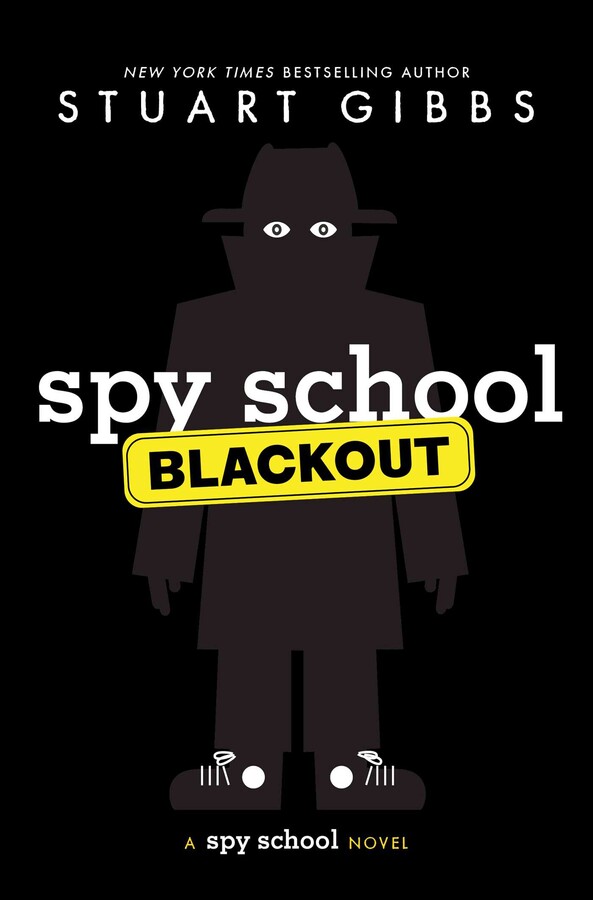
About The Book
In the thirteenth book in Stuart Gibbs’s New York Times bestselling Spy School series, superspy middle schooler Ben Ripley goes off the grid to eliminate a cybersecurity threat.
After a devious computer hacker pulls off the CIA’s worst-case scenario, shutting down power networks all over the world, Ben and his fellow spies-in-training are forced to make a harrowing emergency landing of their plane in Indonesia. While chaos begins to erupt around the planet, Ben deduces that his team is closer to the mysterious hacker’s base than anyone else. But with all computers and phones down, there’s no way to communicate with anyone at the CIA.
On their latest mission to save the world, Ben and his friends face a conniving villain, assassins, pirates, sharks, and very big lizards in the most remote—and deadly—location of any spy school yet!
After a devious computer hacker pulls off the CIA’s worst-case scenario, shutting down power networks all over the world, Ben and his fellow spies-in-training are forced to make a harrowing emergency landing of their plane in Indonesia. While chaos begins to erupt around the planet, Ben deduces that his team is closer to the mysterious hacker’s base than anyone else. But with all computers and phones down, there’s no way to communicate with anyone at the CIA.
On their latest mission to save the world, Ben and his friends face a conniving villain, assassins, pirates, sharks, and very big lizards in the most remote—and deadly—location of any spy school yet!
Excerpt
Chapter 1: Emergency Procedures 1 EMERGENCY PROCEDURES
Somewhere over the island of Java, Indonesia
August 18
2200 hours
As far as I’m concerned, the most frightening word in the English language is “uh-oh.”
There are thousands of situations in which those two simple syllables can make your blood run cold. You don’t want to hear your doctor say them during surgery. You don’t want to hear a member of your team say them while you’re sneaking through an enemy compound patrolled by homicidal henchmen. You don’t want to hear an explosives expert say them when they’re defusing a bomb.
And you certainly don’t want to hear the pilot of your airplane say them while you’re coming in for a landing.
I had heard Alexander Hale say “uh-oh” hundreds of times. Alexander was an operative for the Central Intelligence Agency, but he wasn’t a very good one. His long and distinguished career had been built on luck, lies, and taking credit for other people’s work. However, he was a talented pilot, which was why he was at the controls of our plane.
Alexander said the word “uh-oh” so often, I had learned to recognize the different variations of it. A somewhat exasperated “uh-oh” indicated that Alexander had done something absent-minded, like forgetting his gun in a taxi, and wasn’t much cause for alarm. A more breathless “uh-oh” signaled that a threat was close by, such as a heavily armed thug or a perturbed grizzly bear, and meant that everyone should go on the alert. The extremely worried “uh-oh” that had just come from the cockpit was the worst by far: It meant that something had gone seriously wrong and that our lives were in grave danger.
“What did you screw up this time?” Cyrus Hale barked from the copilot’s seat. Cyrus was Alexander’s father, and he also worked for the CIA. He was a much better spy but a far less kind person. I could tell from the grogginess in his voice that he had nodded off and just woken up.
“Nothing,” Alexander said defensively, then added, “I think. The airport sort of disappeared.”
I glanced out the window next to my seat. We were supposed to be landing in Yogyakarta, a city on the southern coast of Java, the most populous island in Indonesia. A minute earlier, the ground below us had been ablaze with the lights from millions of homes. Now everything was dark.
“What happened to the city?” I asked.
“I don’t know,” Alexander replied meekly. “That disappeared too.”
I turned to face the six other passengers on the plane. Five of them were my age; four, like me, were junior spies-in-training. The sixth passenger was Mary Hale, Alexander’s mother and Cyrus’s wife, who had been a top CIA analyst until her retirement.
Mary looked extremely concerned, as did Mike Brezinski, Zoe Zibbell, and Trixie Hale.
The other two passengers appeared perfectly calm.
That wasn’t a surprise.
Erica Hale and Svetlana Shumovsky had trained to be spies from a very young age. Erica was Alexander’s daughter and Cyrus’s granddaughter and had come from a long line of spies dating all the way back to the American Revolution. Meanwhile, Svetlana came from an equally long line of Russian agents, although she had defected to train with us earlier that summer. Both were far more used to crisis situations than normal people; each would have probably been calm and collected in the midst of a zombie apocalypse.
I had been in a surprising number of crisis situations myself, given that I was only fourteen. Twenty months earlier, Alexander had recruited me to the CIA’s top secret Academy of Espionage. Ideally, the next six years should have been devoted to training and education at spy school, but things hadn’t gone as planned. Due to a series of unusual circumstances, I had already been involved in twelve missions, confronted numerous evil organizations, and nearly been killed 156 times. (Most kids my age kept track of things like how many soccer games they had played or how many books they had read. I had a running tally of my near-death experiences.) Much of that had been extremely frightening—and yet, it had still been far more enjoyable than attending my regular middle school.
Things hadn’t gone that well for the academy, either. A few months before, it had been destroyed by enemy agents. (That was near-death experience #127.) Thankfully, no one had been hurt, but fearful of another attack, the CIA had sent most of the agents-in-training home. Only those of us sitting on that plane had been allowed to continue our education, this time at a remote wilderness facility in Alaska. The program was such a secret that most people at the CIA didn’t even know it existed.
All of us were currently returning to school from our latest mission. Like most of the missions we had been on, this one hadn’t been officially sanctioned by the CIA. Instead, it had begun with me getting double-crossed and kidnapped by an American agent who had hauled me off to the country of Botswana and handed me over to a bad guy named Rufus Shang, who wanted revenge on me because I had previously thwarted the evil plans of his brother. My friends had gone rogue to rescue me, traveling halfway around the world from Alaska to Botswana. By the time they arrived, I had managed to escape Rufus on my own but also deduced that he had an evil scheme in the works. So my team had helped me prevent it, which had been very dangerous and exhausting. (And resulted in near-death experiences #149–156.)
All in all, it was a typical week at spy school.
After our mission, no one felt like making the long slog all the way back to Alaska. Even Cyrus, who could be crustier than a week-old loaf of bread, thought we deserved some rest and relaxation. Luckily, an acquaintance of ours from a previous mission—a staggeringly wealthy young computer hacker named Orion—had a beachfront compound on the eastern coast of Java (as well as an estate in England, a château in France, a penthouse in Manhattan, a mega-mansion in Beverly Hills, a safari lodge in Tanzania, and possibly several other places that he’d forgotten he even owned). We had once saved Orion’s life, so he had given us free rein to stay at his properties whenever we wanted, as long as there was space available—which was usually the case, as many of them had enough bedrooms to house an army platoon. Obviously, the Tanzanian safari lodge was closer to Botswana, but Orion had already lent it out to the United Nations, which was holding an economic summit there, so we opted for Indonesia, which was on the way home. As an added bonus, Orion was currently staying there, learning to surf, and he was excited to host us.
Indonesia isn’t particularly close to Botswana; we still had to fly there. Luckily, Rufus Shang had a private jet that he didn’t need anymore, because he was in jail. Cyrus had commandeered it for us on behalf of the United States government.
Rufus had enjoyed his luxuries. The jet was the most expensive one on the market, and he had spent lavishly on the interior decorations as well. I didn’t know much about private jets, but I would have bet this was the only one on earth with a crystal chandelier over the dining table. In addition, the passenger seats were fully reclining with built-in heating and massage functions, and the gourmet kitchen had one of those machines that made every kind of soda you could imagine (although sadly, the cartridge that provided cherry flavor was tapped out).
Even with all the amenities, it had been a long flight over the Indian Ocean. I was looking forward to being back on solid ground.
Only the solid ground didn’t seem to be there anymore.
Everyone else gathered at the windows, trying to figure out what had happened.
“Maybe Alexander veered out over the ocean by accident?” suggested Zoe. Whip-smart and an excellent fighter, Zoe had been one of the top students in my class at spy school before it had exploded. We had quickly become close friends after my recruitment.
“No,” Erica replied. “We’re still over land. You can see the headlights from all the cars.”
I looked down and realized that Erica was correct, as usual. I could see the occasional glow of headlights moving through the darkness far below. They looked like fireflies on a moonless night.
“The power must have gone out,” I said. I couldn’t think of any other reason the buildings would be dark and not the headlights, which would work as long as the cars had gas or batteries.
“The power for the entire city?” asked Mike Brezinski skeptically. “Usually, blackouts are more localized.” I had known Mike almost my whole life. He had been my best friend before I was recruited to spy school. Despite the academy’s secrecy, Mike had determined that it existed and ended up getting recruited himself. He specialized in coming up with outside-the-box solutions to problems and was an intensely loyal friend.
“Plus, the airport should have backup power in case of emergencies,” added Trixie. “It doesn’t make sense that it would be dark too.” Trixie was Erica’s younger sister, the one member of the Hale family who had not been deemed spy material. Instead, the family had kept their careers a secret from her for years, sending her to normal school while covertly training Erica to be a spy. This had always seemed wrong to me, as Trixie was one of the most intelligent people I had ever met, possessing encyclopedic knowledge about hundreds of subjects. With the proper education, it seemed to me that she would have made a better spy than most of the other students at spy school.
Trixie normally wouldn’t have been on a mission with us. The Hale family liked to keep her a good distance away from us to protect her—and a good distance away from Mike as well, since they had serious crushes on each other. Mary Hale had been tasked with this; she had been homeschooling Trixie on a European tour when I had been kidnapped. Thanks to her analytical skills, Mary had figured out that I was en route to Botswana before I had even known I was en route to Botswana. Being the closest Hale to Africa, she had rushed to help rescue me with Trixie in tow.
Catherine Hale, Erica and Trixie’s mother, had also been with us in Botswana, but she was not on the flight with us. She was British MI6, rather than American CIA, and she had received emergency orders to head to London two days earlier.
“It doesn’t matter why the power is out,” Mary told all of us. “What matters is how we are going to deal with the situation. We’ve been flying for a very long time, so I suspect we are quite low on fuel. Is that correct, Alexander?”
“Yes, Mother,” her son replied from the cockpit. “We’re nearly out. I’m trying to locate the airport as fast as I can.”
“Don’t,” Mary said sternly. “That’s the last place we want to be headed right now.”
“It is?” Mike asked, voicing the very question I had been thinking. “I’m pretty sure that, if you have to land a plane in a hurry, then you should probably find a place that’s designed for landing planes.”
“Normally, yes,” Mary replied. “But right now, we’re not the only plane in a hurry to land.”
I looked back out the window. I had been so focused on the ground, I hadn’t thought to look in the air. Now I saw there were several other planes around us. Many were a lot closer to us than they probably should have been.
“Good gravy!” Cyrus exclaimed, gaping out the cockpit window. “They’re all on a collision course with us!”
“More or less,” Mary agreed solemnly. “They’re all trying to find the airport too. Or they’re circling it, hoping the lights will come back on. Either way, it’s way too crowded up here, and we’re a lot smaller than those jumbo jets. They’ll knock us right out of the sky.”
I focused more closely on the other planes in the area. Mary was right; they were all commercial passenger planes. Next to them, our private jet was like a minnow in a sea full of whales.
“What is the control tower doing about all this?” Svetlana asked, sounding amazingly calm given the circumstances.
“We haven’t heard a peep from them,” Cyrus reported. “The blackout must have taken them out too.”
“So what do we do?” Alexander asked worriedly. “We don’t have enough fuel to head to a different airport—if we could even find one. This blackout seems to have hit all of Java.”
Mary made an extremely quiet gasp of concern. It was so soft as to be almost inaudible. In fact, I didn’t even hear it.
Erica did. Her senses were far more highly tuned than most people’s. “What was that for?” she asked Mary suspiciously.
Mary turned to her, caught by surprise. “What was what for?”
“The gasp you made.”
“I didn’t gasp,” Mary said.
“You did,” said Svetlana, whose senses were equally as accurate as Erica’s. “You sounded very worried about something.”
“Well, of course I’m worried,” Mary insisted. “We’re in quite a pickle here!” Although she sounded convincing, I got the sense that she was lying. Something else was bothering her about our situation, and she was trying to cover it up.
Erica started to say something, but Mary cut her off.
“We need to find somewhere else safe to land,” she said, then headed for the cockpit before Erica could continue her questioning. “Benjamin, come with me.”
“Me?” I asked, surprised.
“Yes. You’re our math prodigy, and we’ll need some fast calculating.”
I quickly tore myself from the window and followed Mary.
I didn’t have nearly as many talents as Erica or Svetlana did—or even Zoe, for that matter. But I did have two big strengths: I was very good at figuring out what our enemies were plotting. And I was naturally gifted at math.
The cockpit of the jet was small, with only enough room for the pilot and copilot. The doorway was narrow, and even though Mary Hale wasn’t that big, she filled the entire space, preventing me from being able to see inside.
“Cyrus, give Benjamin your seat,” Mary ordered.
“What?” Cyrus asked. “He doesn’t know how to land a plane!”
“Neither do you,” Mary reminded him. “You’re only taking up space. Benjamin needs to be here so he can help us through this mess.”
If anyone else had given him the order, Cyrus certainly would have balked, but with Mary, he was as obedient as a show dog. “Of course, dear,” he agreed, then promptly evacuated his seat and slipped past us into the passenger area.
I took his place in the cockpit. From there, the view of the surrounding airspace was far better—and much more worrisome. I could now see there weren’t merely planes to our left and right, but above and below us as well. Normally, planes approaching an airport follow a carefully defined path to avoid collisions, but since no one knew where the airport actually was, all the planes were moving in different directions around us.
I considered the control panel in front of me. There was a state-of-the-art heads-up display with multiple screens. Since the jet had its own power, all the screens were still operational, but there was a bewildering array of information on them.
Luckily, for once, Alexander knew what he was doing. “Use this.” He tapped a screen to bring up a three-dimensional map that showed all the aircraft around us, with data about each one’s velocity, size, direction, and distance from us. It even showed the planes behind us, which turned out to be extremely important at that moment, as a massive passenger jet was descending straight toward us. It looked like a battleship bearing down on a rowboat.
“A jumbo jet’s about to land on top of us!” I yelled.
Alexander started in surprise, then asked, “Which way do I go to avoid it?”
Scanning the three-dimensional display, I quickly calculated the path that would take us away from all of the other planes. “Down that way,” I announced, pointing through the floor of our jet to the right.
“Hold on back there!” Alexander yelled to everyone in the cabin, then took us into a dive.
Our jet dropped so quickly that I would have flown out of my seat if my seat belt hadn’t been buckled. In the cabin, everyone else had prepared for trouble and strapped in as well—except Cyrus, who hadn’t had time. I heard him cry out in surprise, followed by a loud thump as he whacked into the ceiling, followed by a great deal of cursing.
The jumbo jet roared through the air above us, creating a wash of turbulence. We would have been batted around like a leaf if Alexander hadn’t done an incredible job of holding us steady as we plunged. Our plane still trembled mightily, though. The crystal chandelier jangled like the world’s most expensive set of wind chimes.
After a few seconds, we came out of the turbulence, and our plane stopped shaking. We had escaped one threat. But there was now another right in front of us. An exceptionally large one. Planet Earth.
“The ground’s coming up fast,” I warned Alexander.
“Oh. Right,” Alexander remarked, as though our planet’s existence had managed to slip his mind. He yanked back hard on the control stick, leveling the plane out.
There was another thump as Cyrus dropped back from the ceiling to the floor, followed by more cursing.
We were now low enough to be below all the other aircraft, but that indicated yet another problem to me. I managed to locate our altitude on a different screen. “We’re only a thousand feet above the ground,” I informed Alexander.
“Ah,” he said. “Are there many skyscrapers in Yogyakarta?”
“I’m not sure,” I replied. “But I think there’s mountains.”
Alexander tapped a third screen, which brought up the topography of the area around us. It showed lots of large lumps in the surrounding terrain, including one two miles ahead of us that was etched in bright red, as though to indicate danger. A warning system began to beep urgently.
“Yes, definitely mountains,” I confirmed.
“We should probably avoid those,” Alexander said.
“We should definitely avoid them!” Mike shouted from the back of the plane.
I quickly made some additional calculations. “Veer sixty degrees to the right.”
Alexander complied. The approaching mountain shifted out of our path. The urgent beeping stopped.
And was replaced by a different, more urgent beeping a second later.
I glanced back at our heads-up display and discovered what the new problem was.
“We’re almost out of fuel,” I told Alexander, trying to keep my voice low so that no one in the back of the plane would hear us.
It didn’t work. It is extremely hard to keep anything a secret on a plane full of spies and spies-in-training. All of them were riveted to what was going on in the cockpit, except for Cyrus, who was still cursing.
“We’re out of fuel?” Zoe repeated, horrified.
“Almost out of fuel,” Alexander corrected, trying to be reassuring. “All those emergency maneuvers really burned up a lot of it. But we still have enough to keep flying for a bit longer.”
“How much longer?” Svetlana asked.
Alexander considered the controls. “Two minutes.”
“Two minutes?” Mike exclaimed.
“Assuming we don’t do any more aggressive flying,” Alexander confirmed.
“So we need to land immediately,” Zoe announced. “Does anyone see a safe place to do that? Like a road or a field?”
“No,” Mary responded. “The roads are all full of cars, and in the darkness, I can’t tell the difference between a field and a forest.”
To my dismay, she was right. It was easy to make out the roads; every one of them was filled with cars, even at this late hour. Blackouts tend to create traffic jams; when traffic lights go dark, accidents and chaos ensue. Meanwhile, everything else was just shadow. Our plane had lights, but they were oriented ahead of us, rather than down, making it impossible to tell what was below.
“How much distance does this jet need to land?” I asked Alexander.
“At least a quarter mile,” he replied.
I frowned. “That’s an awfully long stretch of flat land we need to find.”
“That’s why they build runways,” Alexander noted. “Yikes!”
A very large bird had suddenly appeared in the glow of our lights. It was too small to show up on the radar system but large enough to do some serious damage to the plane if we hit it. The bird had an impressive red crest and radiant plumage, and at other times, I might have been struck by how beautiful it was, but at the moment, all I could think about was that at the speed we were traveling, it would come through our windshield like a feathered cannonball.
Alexander veered to the left, tilting the plane wildly. Once again, my seat belt kept me from being tossed about—and once again, there was a thump from the main cabin, followed by lots of cursing.
“For Pete’s sake, Cyrus,” Mary snapped, “will you put your seat belt on?”
“I’m trying to!” Cyrus snapped back. “But our son’s flying like he’s never been in a plane before!”
“I’m doing my best!” Alexander yelled. “This isn’t easy!”
He had avoided the bird, but we were now so low that our left wing grazed the treetops below. He quickly leveled the plane out again.
The emergency alert system shifted from urgent beeping to declaring immediate danger. On the screens, the fuel gauge indicated the tank was empty. After our last evasive maneuver, we were cruising on fumes.
And if that wasn’t bad enough, the topographical mapping system sounded another alert. A new set of mountains popped up on the screen, etched in red. Only, these mountains looked very different from the others I had seen. There were three of them, and they all had very similar shapes. Rather than being thick and wide, they were skinny and narrow, with multiple spiked peaks.
“Prambanan!” Trixie shouted from the back of the plane.
I spun around to face her, worried that she had been thrown about like Cyrus and suffered a bump to the head that made her shout nonsense.
She was buckled into the first seat behind the cockpit, from which she could see the topo screen. She did not seem addled or bewildered. Instead, she was clear-eyed and desperate. “Land the plane!” she shouted. “Land it now!”
I glanced back at the topo map and noticed the distance indications. It turned out, the objects weren’t mountains several miles ahead of us. They were human-made structures—and they were only five hundred yards away.
We didn’t have enough fuel to attempt any more evasive maneuvers.
We were about to crash into them.
Somewhere over the island of Java, Indonesia
August 18
2200 hours
As far as I’m concerned, the most frightening word in the English language is “uh-oh.”
There are thousands of situations in which those two simple syllables can make your blood run cold. You don’t want to hear your doctor say them during surgery. You don’t want to hear a member of your team say them while you’re sneaking through an enemy compound patrolled by homicidal henchmen. You don’t want to hear an explosives expert say them when they’re defusing a bomb.
And you certainly don’t want to hear the pilot of your airplane say them while you’re coming in for a landing.
I had heard Alexander Hale say “uh-oh” hundreds of times. Alexander was an operative for the Central Intelligence Agency, but he wasn’t a very good one. His long and distinguished career had been built on luck, lies, and taking credit for other people’s work. However, he was a talented pilot, which was why he was at the controls of our plane.
Alexander said the word “uh-oh” so often, I had learned to recognize the different variations of it. A somewhat exasperated “uh-oh” indicated that Alexander had done something absent-minded, like forgetting his gun in a taxi, and wasn’t much cause for alarm. A more breathless “uh-oh” signaled that a threat was close by, such as a heavily armed thug or a perturbed grizzly bear, and meant that everyone should go on the alert. The extremely worried “uh-oh” that had just come from the cockpit was the worst by far: It meant that something had gone seriously wrong and that our lives were in grave danger.
“What did you screw up this time?” Cyrus Hale barked from the copilot’s seat. Cyrus was Alexander’s father, and he also worked for the CIA. He was a much better spy but a far less kind person. I could tell from the grogginess in his voice that he had nodded off and just woken up.
“Nothing,” Alexander said defensively, then added, “I think. The airport sort of disappeared.”
I glanced out the window next to my seat. We were supposed to be landing in Yogyakarta, a city on the southern coast of Java, the most populous island in Indonesia. A minute earlier, the ground below us had been ablaze with the lights from millions of homes. Now everything was dark.
“What happened to the city?” I asked.
“I don’t know,” Alexander replied meekly. “That disappeared too.”
I turned to face the six other passengers on the plane. Five of them were my age; four, like me, were junior spies-in-training. The sixth passenger was Mary Hale, Alexander’s mother and Cyrus’s wife, who had been a top CIA analyst until her retirement.
Mary looked extremely concerned, as did Mike Brezinski, Zoe Zibbell, and Trixie Hale.
The other two passengers appeared perfectly calm.
That wasn’t a surprise.
Erica Hale and Svetlana Shumovsky had trained to be spies from a very young age. Erica was Alexander’s daughter and Cyrus’s granddaughter and had come from a long line of spies dating all the way back to the American Revolution. Meanwhile, Svetlana came from an equally long line of Russian agents, although she had defected to train with us earlier that summer. Both were far more used to crisis situations than normal people; each would have probably been calm and collected in the midst of a zombie apocalypse.
I had been in a surprising number of crisis situations myself, given that I was only fourteen. Twenty months earlier, Alexander had recruited me to the CIA’s top secret Academy of Espionage. Ideally, the next six years should have been devoted to training and education at spy school, but things hadn’t gone as planned. Due to a series of unusual circumstances, I had already been involved in twelve missions, confronted numerous evil organizations, and nearly been killed 156 times. (Most kids my age kept track of things like how many soccer games they had played or how many books they had read. I had a running tally of my near-death experiences.) Much of that had been extremely frightening—and yet, it had still been far more enjoyable than attending my regular middle school.
Things hadn’t gone that well for the academy, either. A few months before, it had been destroyed by enemy agents. (That was near-death experience #127.) Thankfully, no one had been hurt, but fearful of another attack, the CIA had sent most of the agents-in-training home. Only those of us sitting on that plane had been allowed to continue our education, this time at a remote wilderness facility in Alaska. The program was such a secret that most people at the CIA didn’t even know it existed.
All of us were currently returning to school from our latest mission. Like most of the missions we had been on, this one hadn’t been officially sanctioned by the CIA. Instead, it had begun with me getting double-crossed and kidnapped by an American agent who had hauled me off to the country of Botswana and handed me over to a bad guy named Rufus Shang, who wanted revenge on me because I had previously thwarted the evil plans of his brother. My friends had gone rogue to rescue me, traveling halfway around the world from Alaska to Botswana. By the time they arrived, I had managed to escape Rufus on my own but also deduced that he had an evil scheme in the works. So my team had helped me prevent it, which had been very dangerous and exhausting. (And resulted in near-death experiences #149–156.)
All in all, it was a typical week at spy school.
After our mission, no one felt like making the long slog all the way back to Alaska. Even Cyrus, who could be crustier than a week-old loaf of bread, thought we deserved some rest and relaxation. Luckily, an acquaintance of ours from a previous mission—a staggeringly wealthy young computer hacker named Orion—had a beachfront compound on the eastern coast of Java (as well as an estate in England, a château in France, a penthouse in Manhattan, a mega-mansion in Beverly Hills, a safari lodge in Tanzania, and possibly several other places that he’d forgotten he even owned). We had once saved Orion’s life, so he had given us free rein to stay at his properties whenever we wanted, as long as there was space available—which was usually the case, as many of them had enough bedrooms to house an army platoon. Obviously, the Tanzanian safari lodge was closer to Botswana, but Orion had already lent it out to the United Nations, which was holding an economic summit there, so we opted for Indonesia, which was on the way home. As an added bonus, Orion was currently staying there, learning to surf, and he was excited to host us.
Indonesia isn’t particularly close to Botswana; we still had to fly there. Luckily, Rufus Shang had a private jet that he didn’t need anymore, because he was in jail. Cyrus had commandeered it for us on behalf of the United States government.
Rufus had enjoyed his luxuries. The jet was the most expensive one on the market, and he had spent lavishly on the interior decorations as well. I didn’t know much about private jets, but I would have bet this was the only one on earth with a crystal chandelier over the dining table. In addition, the passenger seats were fully reclining with built-in heating and massage functions, and the gourmet kitchen had one of those machines that made every kind of soda you could imagine (although sadly, the cartridge that provided cherry flavor was tapped out).
Even with all the amenities, it had been a long flight over the Indian Ocean. I was looking forward to being back on solid ground.
Only the solid ground didn’t seem to be there anymore.
Everyone else gathered at the windows, trying to figure out what had happened.
“Maybe Alexander veered out over the ocean by accident?” suggested Zoe. Whip-smart and an excellent fighter, Zoe had been one of the top students in my class at spy school before it had exploded. We had quickly become close friends after my recruitment.
“No,” Erica replied. “We’re still over land. You can see the headlights from all the cars.”
I looked down and realized that Erica was correct, as usual. I could see the occasional glow of headlights moving through the darkness far below. They looked like fireflies on a moonless night.
“The power must have gone out,” I said. I couldn’t think of any other reason the buildings would be dark and not the headlights, which would work as long as the cars had gas or batteries.
“The power for the entire city?” asked Mike Brezinski skeptically. “Usually, blackouts are more localized.” I had known Mike almost my whole life. He had been my best friend before I was recruited to spy school. Despite the academy’s secrecy, Mike had determined that it existed and ended up getting recruited himself. He specialized in coming up with outside-the-box solutions to problems and was an intensely loyal friend.
“Plus, the airport should have backup power in case of emergencies,” added Trixie. “It doesn’t make sense that it would be dark too.” Trixie was Erica’s younger sister, the one member of the Hale family who had not been deemed spy material. Instead, the family had kept their careers a secret from her for years, sending her to normal school while covertly training Erica to be a spy. This had always seemed wrong to me, as Trixie was one of the most intelligent people I had ever met, possessing encyclopedic knowledge about hundreds of subjects. With the proper education, it seemed to me that she would have made a better spy than most of the other students at spy school.
Trixie normally wouldn’t have been on a mission with us. The Hale family liked to keep her a good distance away from us to protect her—and a good distance away from Mike as well, since they had serious crushes on each other. Mary Hale had been tasked with this; she had been homeschooling Trixie on a European tour when I had been kidnapped. Thanks to her analytical skills, Mary had figured out that I was en route to Botswana before I had even known I was en route to Botswana. Being the closest Hale to Africa, she had rushed to help rescue me with Trixie in tow.
Catherine Hale, Erica and Trixie’s mother, had also been with us in Botswana, but she was not on the flight with us. She was British MI6, rather than American CIA, and she had received emergency orders to head to London two days earlier.
“It doesn’t matter why the power is out,” Mary told all of us. “What matters is how we are going to deal with the situation. We’ve been flying for a very long time, so I suspect we are quite low on fuel. Is that correct, Alexander?”
“Yes, Mother,” her son replied from the cockpit. “We’re nearly out. I’m trying to locate the airport as fast as I can.”
“Don’t,” Mary said sternly. “That’s the last place we want to be headed right now.”
“It is?” Mike asked, voicing the very question I had been thinking. “I’m pretty sure that, if you have to land a plane in a hurry, then you should probably find a place that’s designed for landing planes.”
“Normally, yes,” Mary replied. “But right now, we’re not the only plane in a hurry to land.”
I looked back out the window. I had been so focused on the ground, I hadn’t thought to look in the air. Now I saw there were several other planes around us. Many were a lot closer to us than they probably should have been.
“Good gravy!” Cyrus exclaimed, gaping out the cockpit window. “They’re all on a collision course with us!”
“More or less,” Mary agreed solemnly. “They’re all trying to find the airport too. Or they’re circling it, hoping the lights will come back on. Either way, it’s way too crowded up here, and we’re a lot smaller than those jumbo jets. They’ll knock us right out of the sky.”
I focused more closely on the other planes in the area. Mary was right; they were all commercial passenger planes. Next to them, our private jet was like a minnow in a sea full of whales.
“What is the control tower doing about all this?” Svetlana asked, sounding amazingly calm given the circumstances.
“We haven’t heard a peep from them,” Cyrus reported. “The blackout must have taken them out too.”
“So what do we do?” Alexander asked worriedly. “We don’t have enough fuel to head to a different airport—if we could even find one. This blackout seems to have hit all of Java.”
Mary made an extremely quiet gasp of concern. It was so soft as to be almost inaudible. In fact, I didn’t even hear it.
Erica did. Her senses were far more highly tuned than most people’s. “What was that for?” she asked Mary suspiciously.
Mary turned to her, caught by surprise. “What was what for?”
“The gasp you made.”
“I didn’t gasp,” Mary said.
“You did,” said Svetlana, whose senses were equally as accurate as Erica’s. “You sounded very worried about something.”
“Well, of course I’m worried,” Mary insisted. “We’re in quite a pickle here!” Although she sounded convincing, I got the sense that she was lying. Something else was bothering her about our situation, and she was trying to cover it up.
Erica started to say something, but Mary cut her off.
“We need to find somewhere else safe to land,” she said, then headed for the cockpit before Erica could continue her questioning. “Benjamin, come with me.”
“Me?” I asked, surprised.
“Yes. You’re our math prodigy, and we’ll need some fast calculating.”
I quickly tore myself from the window and followed Mary.
I didn’t have nearly as many talents as Erica or Svetlana did—or even Zoe, for that matter. But I did have two big strengths: I was very good at figuring out what our enemies were plotting. And I was naturally gifted at math.
The cockpit of the jet was small, with only enough room for the pilot and copilot. The doorway was narrow, and even though Mary Hale wasn’t that big, she filled the entire space, preventing me from being able to see inside.
“Cyrus, give Benjamin your seat,” Mary ordered.
“What?” Cyrus asked. “He doesn’t know how to land a plane!”
“Neither do you,” Mary reminded him. “You’re only taking up space. Benjamin needs to be here so he can help us through this mess.”
If anyone else had given him the order, Cyrus certainly would have balked, but with Mary, he was as obedient as a show dog. “Of course, dear,” he agreed, then promptly evacuated his seat and slipped past us into the passenger area.
I took his place in the cockpit. From there, the view of the surrounding airspace was far better—and much more worrisome. I could now see there weren’t merely planes to our left and right, but above and below us as well. Normally, planes approaching an airport follow a carefully defined path to avoid collisions, but since no one knew where the airport actually was, all the planes were moving in different directions around us.
I considered the control panel in front of me. There was a state-of-the-art heads-up display with multiple screens. Since the jet had its own power, all the screens were still operational, but there was a bewildering array of information on them.
Luckily, for once, Alexander knew what he was doing. “Use this.” He tapped a screen to bring up a three-dimensional map that showed all the aircraft around us, with data about each one’s velocity, size, direction, and distance from us. It even showed the planes behind us, which turned out to be extremely important at that moment, as a massive passenger jet was descending straight toward us. It looked like a battleship bearing down on a rowboat.
“A jumbo jet’s about to land on top of us!” I yelled.
Alexander started in surprise, then asked, “Which way do I go to avoid it?”
Scanning the three-dimensional display, I quickly calculated the path that would take us away from all of the other planes. “Down that way,” I announced, pointing through the floor of our jet to the right.
“Hold on back there!” Alexander yelled to everyone in the cabin, then took us into a dive.
Our jet dropped so quickly that I would have flown out of my seat if my seat belt hadn’t been buckled. In the cabin, everyone else had prepared for trouble and strapped in as well—except Cyrus, who hadn’t had time. I heard him cry out in surprise, followed by a loud thump as he whacked into the ceiling, followed by a great deal of cursing.
The jumbo jet roared through the air above us, creating a wash of turbulence. We would have been batted around like a leaf if Alexander hadn’t done an incredible job of holding us steady as we plunged. Our plane still trembled mightily, though. The crystal chandelier jangled like the world’s most expensive set of wind chimes.
After a few seconds, we came out of the turbulence, and our plane stopped shaking. We had escaped one threat. But there was now another right in front of us. An exceptionally large one. Planet Earth.
“The ground’s coming up fast,” I warned Alexander.
“Oh. Right,” Alexander remarked, as though our planet’s existence had managed to slip his mind. He yanked back hard on the control stick, leveling the plane out.
There was another thump as Cyrus dropped back from the ceiling to the floor, followed by more cursing.
We were now low enough to be below all the other aircraft, but that indicated yet another problem to me. I managed to locate our altitude on a different screen. “We’re only a thousand feet above the ground,” I informed Alexander.
“Ah,” he said. “Are there many skyscrapers in Yogyakarta?”
“I’m not sure,” I replied. “But I think there’s mountains.”
Alexander tapped a third screen, which brought up the topography of the area around us. It showed lots of large lumps in the surrounding terrain, including one two miles ahead of us that was etched in bright red, as though to indicate danger. A warning system began to beep urgently.
“Yes, definitely mountains,” I confirmed.
“We should probably avoid those,” Alexander said.
“We should definitely avoid them!” Mike shouted from the back of the plane.
I quickly made some additional calculations. “Veer sixty degrees to the right.”
Alexander complied. The approaching mountain shifted out of our path. The urgent beeping stopped.
And was replaced by a different, more urgent beeping a second later.
I glanced back at our heads-up display and discovered what the new problem was.
“We’re almost out of fuel,” I told Alexander, trying to keep my voice low so that no one in the back of the plane would hear us.
It didn’t work. It is extremely hard to keep anything a secret on a plane full of spies and spies-in-training. All of them were riveted to what was going on in the cockpit, except for Cyrus, who was still cursing.
“We’re out of fuel?” Zoe repeated, horrified.
“Almost out of fuel,” Alexander corrected, trying to be reassuring. “All those emergency maneuvers really burned up a lot of it. But we still have enough to keep flying for a bit longer.”
“How much longer?” Svetlana asked.
Alexander considered the controls. “Two minutes.”
“Two minutes?” Mike exclaimed.
“Assuming we don’t do any more aggressive flying,” Alexander confirmed.
“So we need to land immediately,” Zoe announced. “Does anyone see a safe place to do that? Like a road or a field?”
“No,” Mary responded. “The roads are all full of cars, and in the darkness, I can’t tell the difference between a field and a forest.”
To my dismay, she was right. It was easy to make out the roads; every one of them was filled with cars, even at this late hour. Blackouts tend to create traffic jams; when traffic lights go dark, accidents and chaos ensue. Meanwhile, everything else was just shadow. Our plane had lights, but they were oriented ahead of us, rather than down, making it impossible to tell what was below.
“How much distance does this jet need to land?” I asked Alexander.
“At least a quarter mile,” he replied.
I frowned. “That’s an awfully long stretch of flat land we need to find.”
“That’s why they build runways,” Alexander noted. “Yikes!”
A very large bird had suddenly appeared in the glow of our lights. It was too small to show up on the radar system but large enough to do some serious damage to the plane if we hit it. The bird had an impressive red crest and radiant plumage, and at other times, I might have been struck by how beautiful it was, but at the moment, all I could think about was that at the speed we were traveling, it would come through our windshield like a feathered cannonball.
Alexander veered to the left, tilting the plane wildly. Once again, my seat belt kept me from being tossed about—and once again, there was a thump from the main cabin, followed by lots of cursing.
“For Pete’s sake, Cyrus,” Mary snapped, “will you put your seat belt on?”
“I’m trying to!” Cyrus snapped back. “But our son’s flying like he’s never been in a plane before!”
“I’m doing my best!” Alexander yelled. “This isn’t easy!”
He had avoided the bird, but we were now so low that our left wing grazed the treetops below. He quickly leveled the plane out again.
The emergency alert system shifted from urgent beeping to declaring immediate danger. On the screens, the fuel gauge indicated the tank was empty. After our last evasive maneuver, we were cruising on fumes.
And if that wasn’t bad enough, the topographical mapping system sounded another alert. A new set of mountains popped up on the screen, etched in red. Only, these mountains looked very different from the others I had seen. There were three of them, and they all had very similar shapes. Rather than being thick and wide, they were skinny and narrow, with multiple spiked peaks.
“Prambanan!” Trixie shouted from the back of the plane.
I spun around to face her, worried that she had been thrown about like Cyrus and suffered a bump to the head that made her shout nonsense.
She was buckled into the first seat behind the cockpit, from which she could see the topo screen. She did not seem addled or bewildered. Instead, she was clear-eyed and desperate. “Land the plane!” she shouted. “Land it now!”
I glanced back at the topo map and noticed the distance indications. It turned out, the objects weren’t mountains several miles ahead of us. They were human-made structures—and they were only five hundred yards away.
We didn’t have enough fuel to attempt any more evasive maneuvers.
We were about to crash into them.
Reading Group Guide
Join our mailing list! Get our latest staff recommendations, award news and digital catalog links right to your inbox.
By clicking 'Sign me up' I acknowledge that I have read and agree to the privacy policy and terms of use.
Reading Group Guide
Spy School Blackout
By Stuart Gibbs
About the Book
In the thirteenth book in Stuart Gibbs’s New York Times bestselling Spy School series, superspy middle schooler Ben Ripley goes off the grid to eliminate a cybersecurity threat.
After a devious computer hacker pulls off the CIA’s worst-case scenario, shutting down power networks all over the world, Ben and his fellow spies-in-training are forced to make a harrowing emergency landing of their plane in Indonesia. While chaos begins to erupt around the planet, Ben deduces that his team is closer to the mysterious hacker’s base than anyone else. But with all computers and phones down, there’s no way to communicate with anyone at the CIA. On their latest mission to save the world, Ben and his friends face a conniving villain, assassins, pirates, sharks, and very big lizards in the most remote—and deadly—location of any spy school yet!
Discussion Questions
1. In the opening redacted memo to agent Catherine Hale, the sender shares: “I know that you have just taken care of some nasty business in Botswana and are certainly due some time to rest and recuperate, but sadly, evil never sleeps. And at the moment, it appears to be wide awake and itching for trouble.” How does this ominous message set the stage for the events to come in Spy School Blackout?
2. As the novel begins, Ben tells readers,
As far as I’m concerned, the most frightening word in the English language is “uh-oh.”
There are thousands of situations in which those two simple syllables can make your blood run cold. You don’t want to hear your doctor say them during surgery. . . And you certainly don’t want to hear the pilot of your airplane say them while you’re coming in for a landing.
What does the team’s emergency landing arrival and CIA operative Alexander Hale’s reaction to it indicate about him and the rest of the group?
3. As the group tries to process the blackout and lack of lighting at the airport, Mary Hale emphatically states, “‘It doesn’t matter why the power is out . . . What matters is how we are going to deal with the situation.’” (Chapter one) Do you agree? Why is figuring out how to react even more important in this case? How is this also a useful strategy in general, such as in less dire situations?
4. How does Trixie Hale’s specialized knowledge prove crucial during the plane’s emergency landing at Prambanan? Considering what she shares throughout Spy School Blackout, what can readers glean about her skill set that makes her a unique but important contribution to the team?
5. Realizing her grandmother isn’t being honest with the group, Trixie states, “‘You always tell me not to lie. And yet, that’s exactly what you’re doing right now. It’s obvious that you’re worried about something. I think the team deserves to know what that is.’” (Chapter two) Why might Mary choose to withhold information from the team? Do you believe there are times when doing so is warranted? Why or why not?
6. Why is Orion initially considered a potential asset by the CIA and MI6, and what specific capability do they believe he possesses that could help? Why is learning the truth about his role in the Birthday Cake blackout so disappointing?
7. After Erica promises to get the power back on, her grandmother Mary tells her, “‘Erica, you know I think the world of you . . . but even you can’t guarantee that for sure.’” (Chapter three) Using your prior knowledge about Erica, in what ways is it surprising that she seems upset about having her abilities questioned?
8. Analyze the role of specific knowledge and diverse skill sets among the spy-in-training characters (Ben, Erica, Trixie, Mike, Zoe, Svetlana, Jawa, and Chip). How do their individual strengths, as well as their weaknesses, contribute to or hinder the team’s progress throughout Spy School Blackout?
9. When discussing their desire to accompany the adults as they depart to chase down Pulsar, the alleged culprit for the Birthday Cake blackout, Ben tells Erica, “‘I do want to go on the mission . . . but like Cyrus said, he gave us an order. You know he’s not going to change his mind. So why waste time arguing?’” to which Erica retorts, “‘Let’s try this again. Only, when you answer me, make it the truth this time.’” (Chapter seven) Based on what you know about their relationship and work together on past missions, how does Erica know Ben isn’t being honest? Given all he’s been through in past missions, why does this one cause him enough fear to make him want to leave the challenges to the adults?
10. For the Spy School team, why does learning that Orion isn’t who they believed him to be so disappointing? Do you believe they should be surprised by his lack of morality? Why or why not?
11. Based on what you learn in the novel, though it seems like an easy solution, why don’t governments just pay the ransoms in terrorist situations like the one explored in Spy School Blackout? Are there ways in which this lesson can be applied to everyday life?
12. How is Orion a formidable foe? What resources does he have that make him a threat to Ben, his team, and the world at large?
13. Describe the relationship between Erica and Svetlana. How does their relationship evolve over the course of the novel? Do you believe they’ve made progress in their time working together?
14. When Erica accuses Ben of making excuses instead of engaging in the mission, he retorts by saying, “‘No I’m not. I’m saying there are other solutions than going off on a poorly thought-out commando mission. The Hales aren’t the only people capable of saving the world.’” (Chapter seven) Consider this idea of the Hales as regular saviors of the world. Do you think Ben is right in his assessment? Why or why not?
15. What is the significance of Orion’s global blackout? How does this worldwide event serve as a catalyst for revealing character, escalating the story stakes, and exploring the fragility of modern society and technology in Spy School Blackout?
16. Throughout the novel, each member of the Spy School team has to face a personal fear. Consider your favorite character, and share what you believe them to be most afraid of during this mission and what they do to work through it.
17. Why does Orion seem upset to learn that he’s been double-crossed by Virgo? In what ways is his reaction ironic? How does it seem like a fitting outcome?
18. Thinking about the events of Spy School Blackout and the Spy School series in general, what’s been your favorite mission the Spy School team has undertaken so far? Why?
Extension Activities
1. Besides being the place where Ben and the team crash-land and begin their adventures in this book, readers learn that the Prambanan Temple complex in Indonesia is culturally significant to the country, as well as to the greater world. Using https://whc.unesco.org/en/list/642/ and other trusted resources, and working with a small group, research to learn more about the Prambanan Temple complex, a UNESCO World Heritage site, including:
o Where is the temple complex located?
o How large is it?
o What is it best known for?
o In what ways does Indonesia show its commitment to the Prambanan Temple complex?
o What are five unusual facts that you uncovered?
After completing this research, share the three most interesting things you learned with your peers.
2. In Spy School Blackout, the global Birthday Cake blackout renders modern navigation systems like GPS inoperable, along with cellular networks and the internet. Consider the ways in which the team must rely on traditional methods and their diverse skills to learn how to adapt and navigate in a world without using modern technology. Using the events in the novel, select one character and highlight what they do and use to overcome the lack of modern technology. Additionally, consider a task or chore in your daily life, and write a short paragraph about how that task could be different if you couldn’t use technology, including your phone, computer/tablet, the internet, or even lights and electricity.
3. While real widespread blackouts are extraordinarily rare, in Spy School Blackout readers witness the outcomes of the global crisis when fictional power grids are shut down. To better understand the complications of such an event, read the following article about Europe’s largest blackout in twenty years:https://www.theguardian.com/business/2025/may/02/blackouts-energy-outage-risks-europe-worldwide-spain-portugal-france. After reading, research more to learn about blackouts, and how they cause real-world problems.
o What are the most common causes of blackouts?
o Who typically is responsible for restoring power?
o What are the greatest obstacles for ordinary people during a massive blackout?
o What additional information did you find interesting and why?
4. In Spy School Blackout, readers discover that Indonesia is filled with unique animals like Balinese long-tailed macaques, and not found widely elsewhere in the world. Use library and trusted internet resources to explore and learn more about these unique creatures. After everyone has an opportunity to complete their investigation, share what you learned with others. Educators, consider assigning small groups a specific Indonesia-based animal to research, and allow time for presentations on each native creature.
5. As they attempt to undo the global destructive blackout work of Orion, Ben and the Spy School team encounter modern-day pirates who attempt to hijack the yacht the team plans to commandeer. Using library and internet resources, research modern pirates. Begin with reading this MSN article: https://www.msn.com/en-au/news/world/the-ocean-threat-costing-the-global-economy-37-billion-per-year/ar-AA1swv3L. Next, working in groups, continue to investigate to learn more about modern piracy and why it’s so problematic across the globe. Share your findings with others.
This guide was created by Dr. Rose Brock, an associate professor in the Library Science Department in the College of Education at Sam Houston State University. Dr. Brock holds a Ph.D. in Library Science, specializing in children’s and young adult literature.
The websites referenced above are provided for informational purposes only and are not intended as an endorsement or promotion of any website. Simon & Schuster is not responsible for the functionality or content of any external website and expressly disclaims all responsibility and liability in connection therewith.
This guide has been provided by Simon & Schuster for classroom, library, and reading group use. It may be reproduced in its entirety or excerpted for these purposes. For more Simon & Schuster guides and classroom materials, please visit https://www.simonandschuster.net/m/prek12-teachers-librarians/teaching-resources
Spy School Blackout
By Stuart Gibbs
About the Book
In the thirteenth book in Stuart Gibbs’s New York Times bestselling Spy School series, superspy middle schooler Ben Ripley goes off the grid to eliminate a cybersecurity threat.
After a devious computer hacker pulls off the CIA’s worst-case scenario, shutting down power networks all over the world, Ben and his fellow spies-in-training are forced to make a harrowing emergency landing of their plane in Indonesia. While chaos begins to erupt around the planet, Ben deduces that his team is closer to the mysterious hacker’s base than anyone else. But with all computers and phones down, there’s no way to communicate with anyone at the CIA. On their latest mission to save the world, Ben and his friends face a conniving villain, assassins, pirates, sharks, and very big lizards in the most remote—and deadly—location of any spy school yet!
Discussion Questions
1. In the opening redacted memo to agent Catherine Hale, the sender shares: “I know that you have just taken care of some nasty business in Botswana and are certainly due some time to rest and recuperate, but sadly, evil never sleeps. And at the moment, it appears to be wide awake and itching for trouble.” How does this ominous message set the stage for the events to come in Spy School Blackout?
2. As the novel begins, Ben tells readers,
As far as I’m concerned, the most frightening word in the English language is “uh-oh.”
There are thousands of situations in which those two simple syllables can make your blood run cold. You don’t want to hear your doctor say them during surgery. . . And you certainly don’t want to hear the pilot of your airplane say them while you’re coming in for a landing.
What does the team’s emergency landing arrival and CIA operative Alexander Hale’s reaction to it indicate about him and the rest of the group?
3. As the group tries to process the blackout and lack of lighting at the airport, Mary Hale emphatically states, “‘It doesn’t matter why the power is out . . . What matters is how we are going to deal with the situation.’” (Chapter one) Do you agree? Why is figuring out how to react even more important in this case? How is this also a useful strategy in general, such as in less dire situations?
4. How does Trixie Hale’s specialized knowledge prove crucial during the plane’s emergency landing at Prambanan? Considering what she shares throughout Spy School Blackout, what can readers glean about her skill set that makes her a unique but important contribution to the team?
5. Realizing her grandmother isn’t being honest with the group, Trixie states, “‘You always tell me not to lie. And yet, that’s exactly what you’re doing right now. It’s obvious that you’re worried about something. I think the team deserves to know what that is.’” (Chapter two) Why might Mary choose to withhold information from the team? Do you believe there are times when doing so is warranted? Why or why not?
6. Why is Orion initially considered a potential asset by the CIA and MI6, and what specific capability do they believe he possesses that could help? Why is learning the truth about his role in the Birthday Cake blackout so disappointing?
7. After Erica promises to get the power back on, her grandmother Mary tells her, “‘Erica, you know I think the world of you . . . but even you can’t guarantee that for sure.’” (Chapter three) Using your prior knowledge about Erica, in what ways is it surprising that she seems upset about having her abilities questioned?
8. Analyze the role of specific knowledge and diverse skill sets among the spy-in-training characters (Ben, Erica, Trixie, Mike, Zoe, Svetlana, Jawa, and Chip). How do their individual strengths, as well as their weaknesses, contribute to or hinder the team’s progress throughout Spy School Blackout?
9. When discussing their desire to accompany the adults as they depart to chase down Pulsar, the alleged culprit for the Birthday Cake blackout, Ben tells Erica, “‘I do want to go on the mission . . . but like Cyrus said, he gave us an order. You know he’s not going to change his mind. So why waste time arguing?’” to which Erica retorts, “‘Let’s try this again. Only, when you answer me, make it the truth this time.’” (Chapter seven) Based on what you know about their relationship and work together on past missions, how does Erica know Ben isn’t being honest? Given all he’s been through in past missions, why does this one cause him enough fear to make him want to leave the challenges to the adults?
10. For the Spy School team, why does learning that Orion isn’t who they believed him to be so disappointing? Do you believe they should be surprised by his lack of morality? Why or why not?
11. Based on what you learn in the novel, though it seems like an easy solution, why don’t governments just pay the ransoms in terrorist situations like the one explored in Spy School Blackout? Are there ways in which this lesson can be applied to everyday life?
12. How is Orion a formidable foe? What resources does he have that make him a threat to Ben, his team, and the world at large?
13. Describe the relationship between Erica and Svetlana. How does their relationship evolve over the course of the novel? Do you believe they’ve made progress in their time working together?
14. When Erica accuses Ben of making excuses instead of engaging in the mission, he retorts by saying, “‘No I’m not. I’m saying there are other solutions than going off on a poorly thought-out commando mission. The Hales aren’t the only people capable of saving the world.’” (Chapter seven) Consider this idea of the Hales as regular saviors of the world. Do you think Ben is right in his assessment? Why or why not?
15. What is the significance of Orion’s global blackout? How does this worldwide event serve as a catalyst for revealing character, escalating the story stakes, and exploring the fragility of modern society and technology in Spy School Blackout?
16. Throughout the novel, each member of the Spy School team has to face a personal fear. Consider your favorite character, and share what you believe them to be most afraid of during this mission and what they do to work through it.
17. Why does Orion seem upset to learn that he’s been double-crossed by Virgo? In what ways is his reaction ironic? How does it seem like a fitting outcome?
18. Thinking about the events of Spy School Blackout and the Spy School series in general, what’s been your favorite mission the Spy School team has undertaken so far? Why?
Extension Activities
1. Besides being the place where Ben and the team crash-land and begin their adventures in this book, readers learn that the Prambanan Temple complex in Indonesia is culturally significant to the country, as well as to the greater world. Using https://whc.unesco.org/en/list/642/ and other trusted resources, and working with a small group, research to learn more about the Prambanan Temple complex, a UNESCO World Heritage site, including:
o Where is the temple complex located?
o How large is it?
o What is it best known for?
o In what ways does Indonesia show its commitment to the Prambanan Temple complex?
o What are five unusual facts that you uncovered?
After completing this research, share the three most interesting things you learned with your peers.
2. In Spy School Blackout, the global Birthday Cake blackout renders modern navigation systems like GPS inoperable, along with cellular networks and the internet. Consider the ways in which the team must rely on traditional methods and their diverse skills to learn how to adapt and navigate in a world without using modern technology. Using the events in the novel, select one character and highlight what they do and use to overcome the lack of modern technology. Additionally, consider a task or chore in your daily life, and write a short paragraph about how that task could be different if you couldn’t use technology, including your phone, computer/tablet, the internet, or even lights and electricity.
3. While real widespread blackouts are extraordinarily rare, in Spy School Blackout readers witness the outcomes of the global crisis when fictional power grids are shut down. To better understand the complications of such an event, read the following article about Europe’s largest blackout in twenty years:https://www.theguardian.com/business/2025/may/02/blackouts-energy-outage-risks-europe-worldwide-spain-portugal-france. After reading, research more to learn about blackouts, and how they cause real-world problems.
o What are the most common causes of blackouts?
o Who typically is responsible for restoring power?
o What are the greatest obstacles for ordinary people during a massive blackout?
o What additional information did you find interesting and why?
4. In Spy School Blackout, readers discover that Indonesia is filled with unique animals like Balinese long-tailed macaques, and not found widely elsewhere in the world. Use library and trusted internet resources to explore and learn more about these unique creatures. After everyone has an opportunity to complete their investigation, share what you learned with others. Educators, consider assigning small groups a specific Indonesia-based animal to research, and allow time for presentations on each native creature.
5. As they attempt to undo the global destructive blackout work of Orion, Ben and the Spy School team encounter modern-day pirates who attempt to hijack the yacht the team plans to commandeer. Using library and internet resources, research modern pirates. Begin with reading this MSN article: https://www.msn.com/en-au/news/world/the-ocean-threat-costing-the-global-economy-37-billion-per-year/ar-AA1swv3L. Next, working in groups, continue to investigate to learn more about modern piracy and why it’s so problematic across the globe. Share your findings with others.
This guide was created by Dr. Rose Brock, an associate professor in the Library Science Department in the College of Education at Sam Houston State University. Dr. Brock holds a Ph.D. in Library Science, specializing in children’s and young adult literature.
The websites referenced above are provided for informational purposes only and are not intended as an endorsement or promotion of any website. Simon & Schuster is not responsible for the functionality or content of any external website and expressly disclaims all responsibility and liability in connection therewith.
This guide has been provided by Simon & Schuster for classroom, library, and reading group use. It may be reproduced in its entirety or excerpted for these purposes. For more Simon & Schuster guides and classroom materials, please visit https://www.simonandschuster.net/m/prek12-teachers-librarians/teaching-resources
About The Author
Photograph by Dashiell Gibbs
Stuart Gibbs is the author of five New York Times bestselling series: Spy School, FunJungle, Moon Base Alpha, Charlie Thorne, and Once Upon a Tim—as well as the new nonfiction series Spy School Secret Files. He has written screenplays, worked on a whole bunch of animated films, developed TV shows, been a newspaper columnist, and researched capybaras. Stuart lives with his family in Los Angeles. You can learn more about what he’s up to at StuartGibbs.com.
Product Details
- Publisher: Simon & Schuster Books for Young Readers (October 7, 2025)
- Length: 336 pages
- ISBN13: 9781665956512
- Grades: 3 - 7
- Ages: 8 - 12
Browse Related Books
Resources and Downloads
High Resolution Images
-
Book Cover Image (jpg): Spy School Blackout
Hardcover 9781665956512
-
Author Photo (jpg): Stuart Gibbs Photograph by Dashiell Gibbs(0.1 MB)
Any use of an author photo must include its respective photo credit
Join our mailing list!
By clicking 'Sign me up' I acknowledge that I have read and agree to the privacy policy and terms of use.